AI Medical Documentation Software: How Hospitals and Clinics Reduce Admin Workload
For many clinicians, the appointment ends before the documentation does. Notes still need to be reconstructed, checked, and signed, and unfinished records slow coding, billing, and care handoffs.
- Medical software
- AI
- EHR integration
September 02, 2026
 AI Overview
AI medical documentation software turns clinical conversations and permitted electronic health record (EHR) data into structured draft notes for clinician review. Published studies more consistently report lower clinician exhaustion and cognitive load than reductions in note time, which vary with product fit, baseline workload, regular use, and EHR integration.

A time-and-motion study predating ambient tools found roughly two hours of EHR and desk work for every hour of direct patient care. A hospital addressing that burden can turn on a feature already present in its EHR, integrate a third-party scribe, or work with a healthcare software development company on a custom layer.
This article explains what AI medical documentation automates, why published results differ, what fails in generated notes, and how to choose between those routes.
What AI Medical Documentation Automates
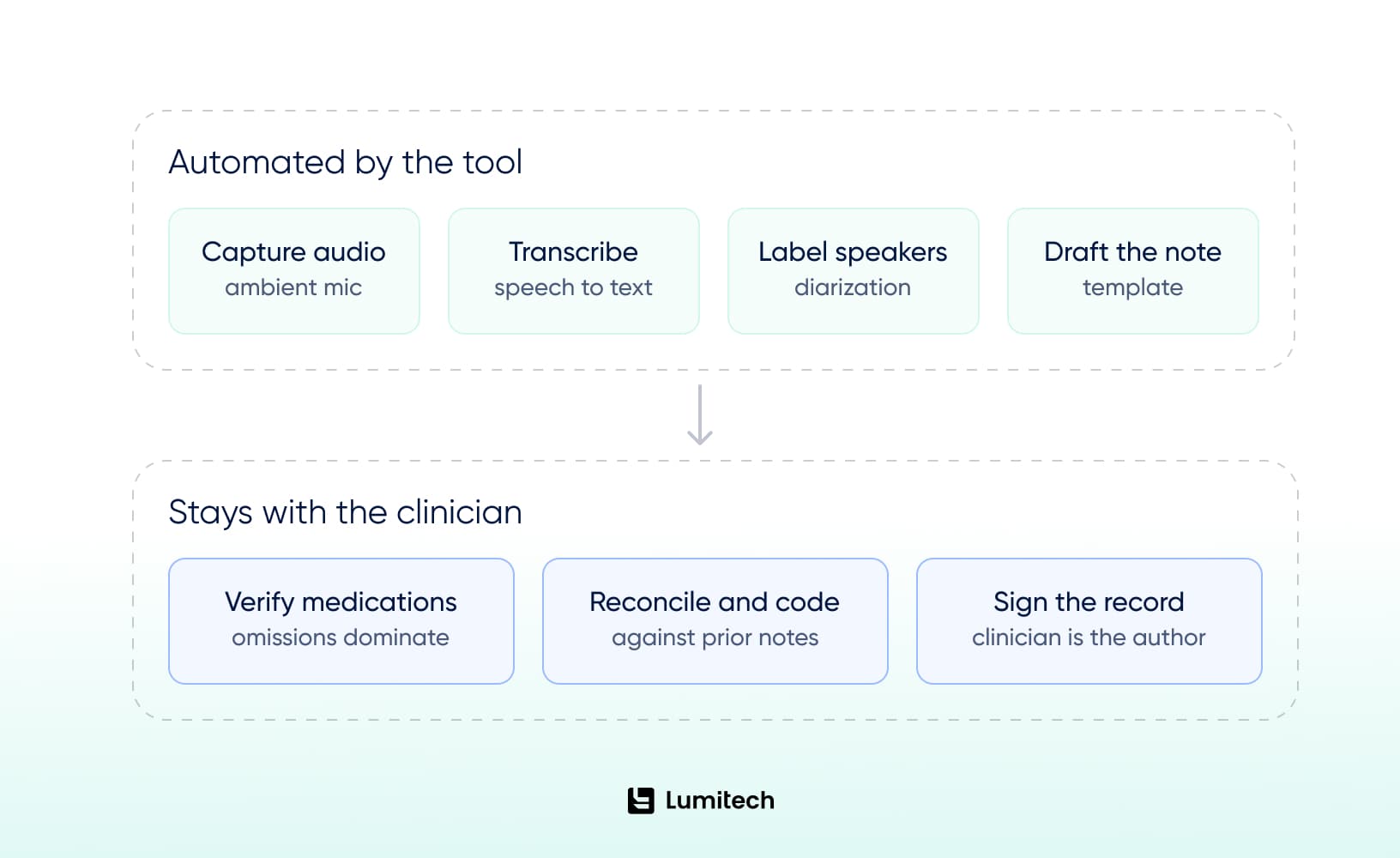
AI medical documentation software can automate capture, draft creation, document structuring, and routing. In the most common setup, it listens to the visit through an ambient microphone, separates who is speaking, transcribes the conversation, and returns a structured draft in the right template. The clinician remains responsible for the final record.
That said, voice capture is only one route into the documentation workflow. Intelligent document processing can extract information from referral letters, scanned forms, and external reports. Medical documentation AI may also structure dictated content or summarize approved record data without recording the encounter itself. Adjacent tools such as AI-powered remote patient monitoring may also generate summaries, but they enter the record through a separate source and validation path.
For this reason, teams should define AI medical documentation around the source material and the record the system is expected to produce. A transcript, a draft note, and a signed clinical document are separate artifacts with different owners and controls. Automation can shorten the path between them, while each handoff still needs to remain visible and accountable.
AI Medical Scribe or Full Documentation Platform?
An AI medical scribe and a full documentation platform may produce similar notes while covering different parts of the workflow. The scribe prepares a draft from the encounter. A platform may also retrieve chart context, route documents, support coding, and monitor quality, which widens the data access and validation scope.
This difference becomes clearer at the EHR boundary. An AI scribe for doctors may operate as a standalone application that exports text, while AI medical scribe software integrated into the EHR can open with the correct patient and encounter, receive permitted context, and write to a defined note type. In this case, a claim of FHIR support says little about how reliably those steps work together.
Medical scribe AI usually refers to the same voice-to-note function. The broader category also covers text and document workflows without ambient recording. Decision support or clinical actions add another control boundary.
For that reason, buyers should compare the data each product accesses, the tasks it performs, and the controls attached to those tasks. The product label alone does not define the implementation scope.
What Published Studies Show About AI Clinical Documentation
AI clinical documentation can reduce burnout and note time, although the size of the benefit varies. Self-reported burden improves more consistently than objective electronic health record (EHR) measures.
Clinician-Reported Burden
A 2025 study of 263 clinicians across six US health systems found that self-reported burnout fell from 51.9% to 38.8% after 30 days. Participants also reported lower mental effort and less after-hours work, although the uncontrolled survey design cannot isolate the product’s effect.
A randomized UCLA trial of two products found that physicians using either one scored about 7% better on the burnout instruments the trial used than the control group. The gain may make the work feel lighter without creating enough capacity to change staffing.
Time Savings Vary by Product and Workflow
Program | Reported Effect | Study Design |
|---|---|---|
Permanente Medical Group | About 18 seconds per appointment; nearly 16,000 hours across 2.58 million encounters | Observational |
UCLA Health | Nabla reduced note time by 9.5% against usual care; DAX showed no significant change | Randomized trial |
UChicago Medicine | 8.5% less total EHR time and 15.9% less time in notes | Matched cohort |
Intermountain Health | No significant productivity gain; after-hours EHR time increased | Matched cohort |
The two Permanente figures come from different calculations and should not be read as a discrepancy: 18 seconds is the modeled difference against non-users, while dividing nearly 16,000 hours by 2.58 million encounters gives about 22 seconds as a simple average. Either way, large totals can hide modest gains at the individual appointment level.
Specialty, existing documentation burden, and EHR integration help explain the spread. Clinicians who already spend a long time writing notes have greater room to save time. An integrated draft also avoids the copying and reformatting required by a separate application, which makes healthcare data interoperability part of the buying decision, not an implementation detail. Judged this way, AI medical documentation software earns its place when it shortens the whole path from encounter to signed note.
The Error Profile: What Goes Wrong in AI Clinical Notes
AI clinical notes arrive as drafts, and polished language can hide missing or unsupported information. This problem appeared in a 2026 Veterans Health Administration study, in which 16 specialists tested two ambient systems during simulated encounters with standardized patients.
The notes averaged 36.2 out of a possible 50 on the nine-item quality scale the reviewers used, and reviewers found invented examination findings, omitted pertinent negatives, unsupported diagnostic certainty, and poor use of earlier EHR data. The sample was too small to rank specialties against each other, so AI medical documentation software for specialists still needs testing on local encounters.
Accuracy scores need the same scrutiny. A 2026 systematic review of 37 studies found that most evaluations compare the draft with a reference note word by word, which penalizes a valid rewording and can miss a changed dose or a dropped negation. When a vendor quotes an accuracy figure, ask how it was calculated and whether a clinician reviewed the errors the metric ignored.
AI Medical Scribe Challenges in Clinical Notes
Note accuracy is one production risk. The other AI medical scribe challenges come from reviewer behavior and product changes, and each needs an owner before AI clinical documentation software reaches production: automation bias, note bloat, and product drift.
Automation bias grows as drafts become dependable, so keep them visibly unsigned and train reviewers on the specific error patterns above instead of general caution. Note bloat shifts effort to the next reader when AI clinical notes grow longer than the encounter warrants, which makes note length worth tracking alongside editing time. Product drift arrives quietly when a model, prompt, or template changes, so record versions and revalidate after any material change.
Version history and review records have to reach the chart as well. If they live only in the vendor's application, an auditor reading the record later cannot tell which text the model produced and which the clinician wrote.
EHR Integration Determines Whether Work Disappears
EHR integration determines whether a generated note removes work or creates another manual step. It must connect the draft to the correct patient, encounter, template, reviewer, and final record. A failed handoff can turn AI clinical documentation software into another source of copying and reconciliation.
A production workflow usually covers six stages:
The EHR provides permitted patient and encounter context.
The application records consent or notification.
The system receives speech, dictation, or source data.
The model creates a versioned draft using the correct template.
The clinician reviews, edits, rejects, or signs it.
Monitoring captures changes, errors, incidents, and downstream effects.
Standards Do Not Complete the Workflow
Fast Healthcare Interoperability Resources (FHIR) can support parts of this exchange, but the standard does not define the clinical review, signature, or monitoring rules around it. Health Level Seven International's US Core Implementation Guide, currently published as version 9.0.0, requires support for ten common clinical note types through DocumentReference and DiagnosticReport. Its scope is the exchange of stored notes, so AI authoring sits outside it, and AI clinical documentation software carries its own governance burden.
Substitutable Medical Applications and Reusable Technologies (SMART) App Launch uses OAuth scopes to control access to FHIR resources and launch context, such as the current patient, and the EHR's own permissions still apply. Where a product retrieves earlier notes or results, RAG and AI assistants can ground the draft in approved sources, provided every inserted fact carries provenance and a rule for stale data. Products that use agentic AI workflows to create orders or referrals need separate authorization and safety controls.
How HIPAA Applies to AI Documentation Software
A vendor may describe its product as HIPAA-compliant AI medical documentation software, and for a hospital, that claim is the start of the review. Compliance depends on the configured data flow, user access, hosting, retention, and the responsibilities each party accepts.
Cloud hosting illustrates the point. Guidance from the US Department of Health and Human Services (HHS) explains that a provider can remain a business associate while storing only encrypted electronic protected health information (ePHI) without holding the key. Encryption covers confidentiality and leaves access management, integrity, and administrative safeguards with the hospital.
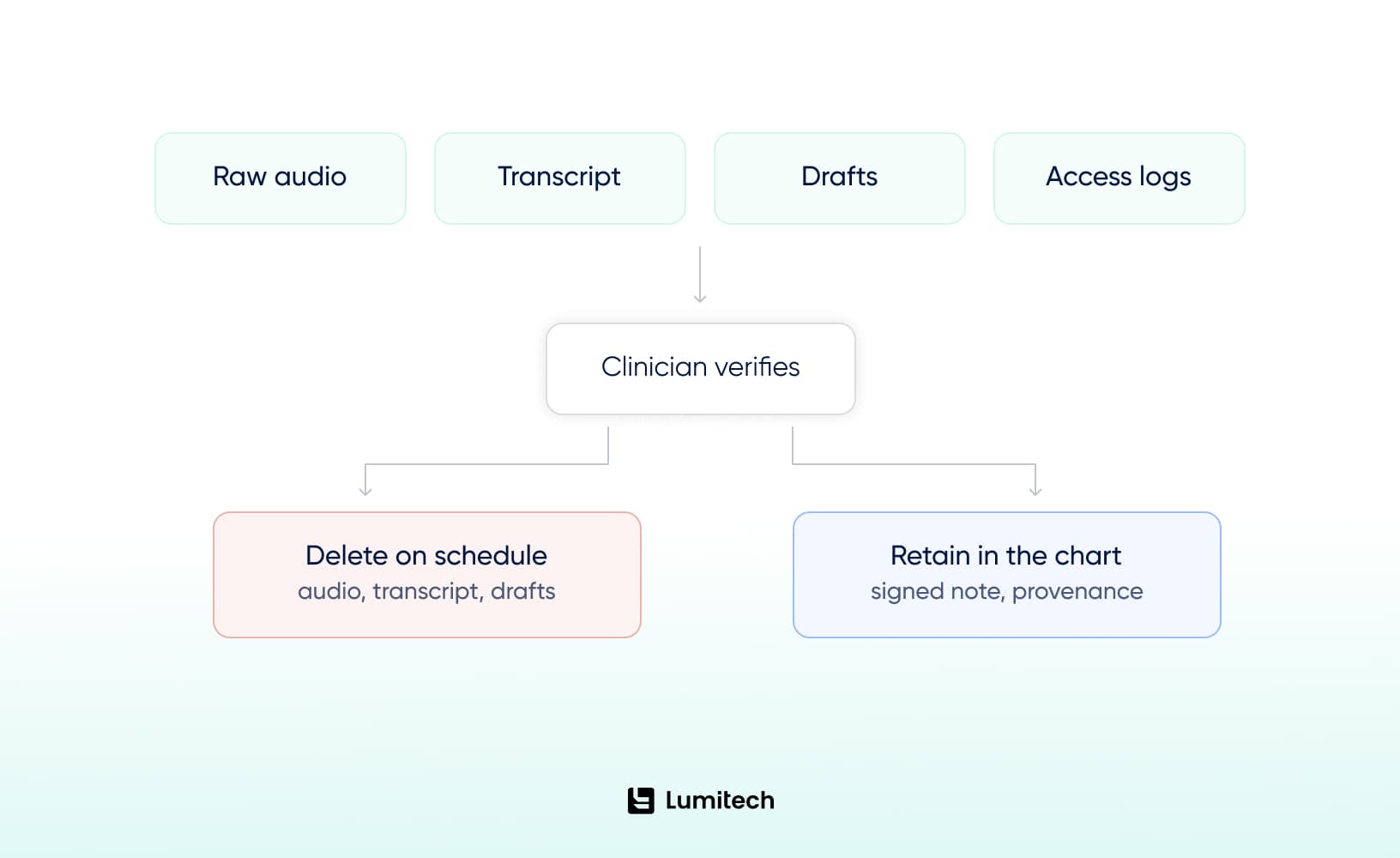
The business associate agreement (BAA) should follow the data through the whole system, covering permitted use, subcontractors, incidents, patient rights, and deletion. For an ambient tool, the list is longer than buyers expect because healthcare data processing here includes the recording, transcript, prompt, intermediate drafts, logs, support copies, and the signed note. Decide before go-live what is deleted after verification, since undefined audio can become a parallel record that conflicts with the chart. HHS does not endorse private HIPAA certifications, so a badge cannot substitute for the BAA, the architecture, and the operating controls when comparing HIPAA-compliant AI medical documentation software.
Consent and the Rules Beyond HIPAA
Federal privacy rules and recording laws address different issues. Depending on the state and care setting, an organization may need specific patient consent before recording. The Veterans Health Administration program asks for verbal consent and allows patients to opt out at any time.
Two further rules depend on the data and the feature set. Substance use disorder records under Title 42 of the Code of Federal Regulations (42 CFR) Part 2 carry additional confidentiality protections, and compliance with the 2024 final rule became mandatory on February 16, 2026. On product scope, the Clinical Decision Support Software guidance issued by the US Food and Drug Administration in January 2026 explains when professional decision-support functions fall outside the device definition.
Drafting documentation does not make a tool a medical device, while diagnostic or recommendation functions can change that analysis. NHS England has also issued guidance on AI-enabled ambient scribing, treating summarization capability as a reason for regulatory scrutiny. Settle both questions for each care setting before the rollout widens.
Rolling Out Across Clinics and Hospitals
Clinical documentation automation scales unevenly because most published evidence comes from ambulatory visits where the patient, clinician, encounter, and template are known in advance. It cannot validate inpatient discharge, emergency, or handoff documentation.
An AI scribe for clinics follows a predictable path of one patient, one clinician, one familiar template, and even there the team owns consent, write-back, review, and exceptions. Hospitals introduce conditions the products were not built for. Teams deploying AI documentation across inpatient areas contend with rotating care teams, shared devices, transfers, interpreters, and encounters that change before the note closes, alongside alarms, overlapping speakers, and capture from a single device.
The Veterans Health Administration sequenced accordingly: it began at ten medical centers, reached all primary care providers in its patient-aligned care teams by June 2026, and then moved toward selected outpatient specialty care.
The setting also changes what counts as improvement. A time-motion study of 169 outpatient consultations at a Singapore academic center found documentation time down and eye contact up, with consultation duration and patient cycle time unchanged: the gain appeared as attention, not throughput.
Patient acceptance belongs in the plan. In the Permanente program, 84% of physicians reported a positive effect on the visit interaction, and 56% of surveyed patients said the same about visit quality. Both measures are self-reported, which is why ambient AI clinical documentation needs clear notice and a visible review step, and why any use of ambient clinical documentation should leave a patient who declines recording with unchanged access to care.
Specialty Design Starts With the Source of Truth
Specialty fit depends on where each clinical fact originates. Neurology notes lean on the patient's account, while cardiology and oncology often need earlier imaging, laboratory results, and treatment history. An ambient AI scribe works only with the conversation and the chart data it may access, so it cannot supply an unspoken examination or a result it has no permission to read.
Test AI medical scribe software on specialty encounters that include interpreters, family members, and interruptions, and judge errors by clinical consequence. The wider field of AI solutions in healthcare spans functions with different evidence requirements, and Lumitech's review of AI applications in healthcare focuses on the UAE market.
Preparing to test an AI scribe in your EHR?
Lumitech can help define the note workflow, EHR access, security boundaries, and release criteria before the pilot begins.

Use the EHR's Scribe, Extend It, or Build?
Check the current EHR first: native coverage changed during 2026. Epic released AI Charting in February 2026 as a built-in feature that drafts the note and queues orders from the conversation. athenahealth offers Ambient Notes as an embedded, multi-model solution, and its August 2026 release describes AI-native athenaOne capabilities as available across its network. Buyers should confirm which option their contract, specialty, and workflow support.
Route | When it fits | What to verify |
|---|---|---|
Use the native EHR feature | It covers the required note types, specialties, permissions, and write-back | Note quality by specialty, retention, audit logs, BAA terms |
Extend an existing product | Capture and drafting work, but templates, chart retrieval, or legacy integration are missing | API limits, version ownership, monitoring, change control |
Build a custom layer | The workflow depends on proprietary data, unusual documents, or actions no product supports safely | Validation ownership, maintenance cost, security testing |
Before commissioning a separate integration, find out why the native EHR option falls short. If the notes are clinically usable but cannot reach a legacy system or land in the right note type, the missing piece is integration. If the draft contains unsupported statements, new interfaces will not solve the problem.
A fragmented clinical platform changes the scope of the work. Missing interfaces and unclear data ownership may need digital transformation services before the model is touched. A medical documentation AI license cannot compensate for unreliable data exchange. The source of each failure matters here: a wrong-patient link comes from integration, while an invented finding comes from generation or validation.
This surrounding platform work appears in Lumitech’s clinical platform modernization case study. The team redesigned workflows, physician interfaces, and reporting for a Toronto clinical diagnostics platform. (It was not an AI scribe project, but it addressed the systems that clinical documentation depends on.) Once those systems work properly, AI/ML development services can focus on the functions the existing platform still lacks.
Customer Stories
Explore What We've Built
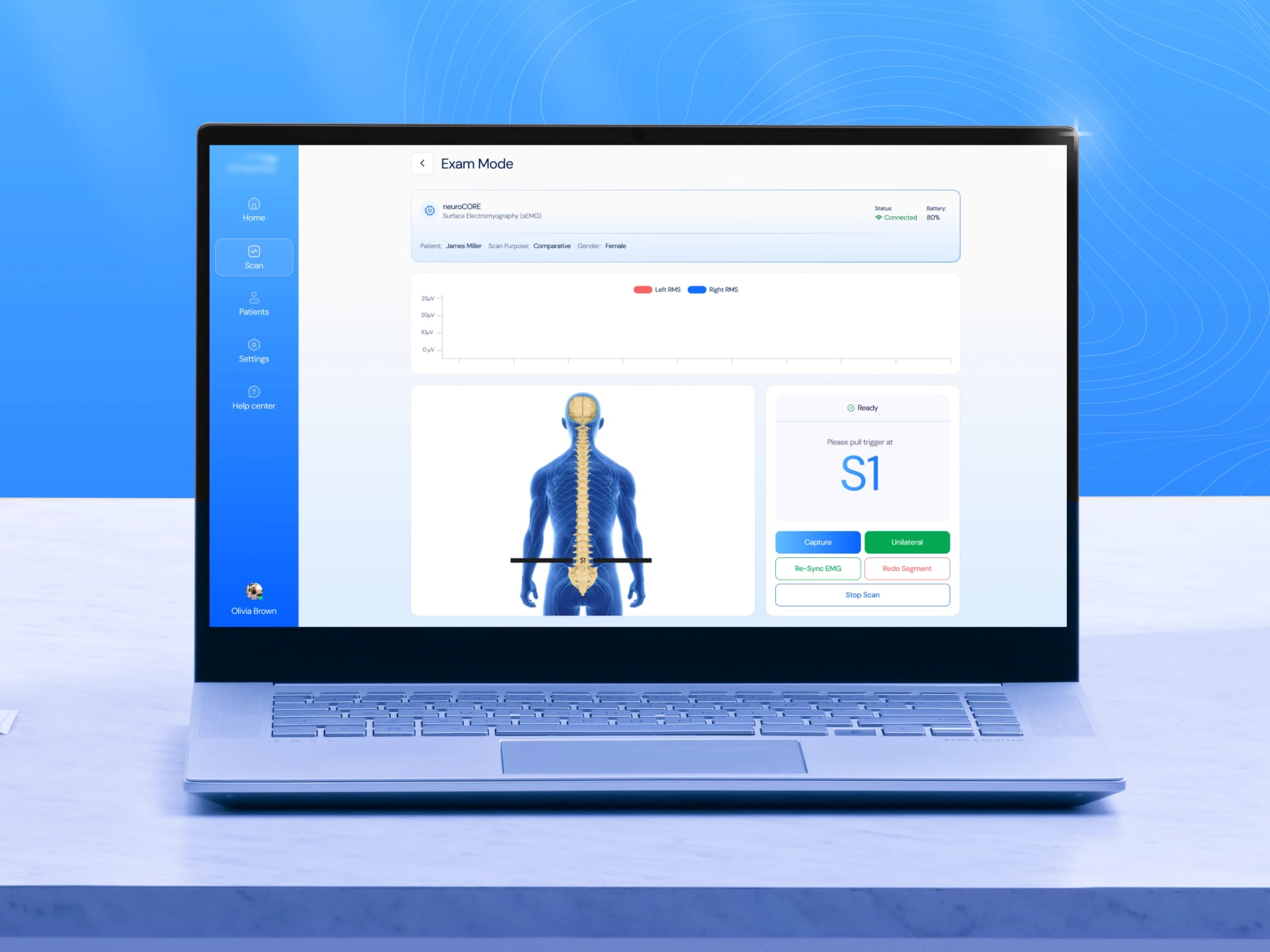
Redesign & Modernization of a Clinical Diagnostics Platform
Redesigning a clinical neurotechnology platform by improving data visualization, decision-support workflows, and patient-facing reporting across a complex hardware-software diagnostic ecosystem.

Toronto
Sept '25 - Feb '26
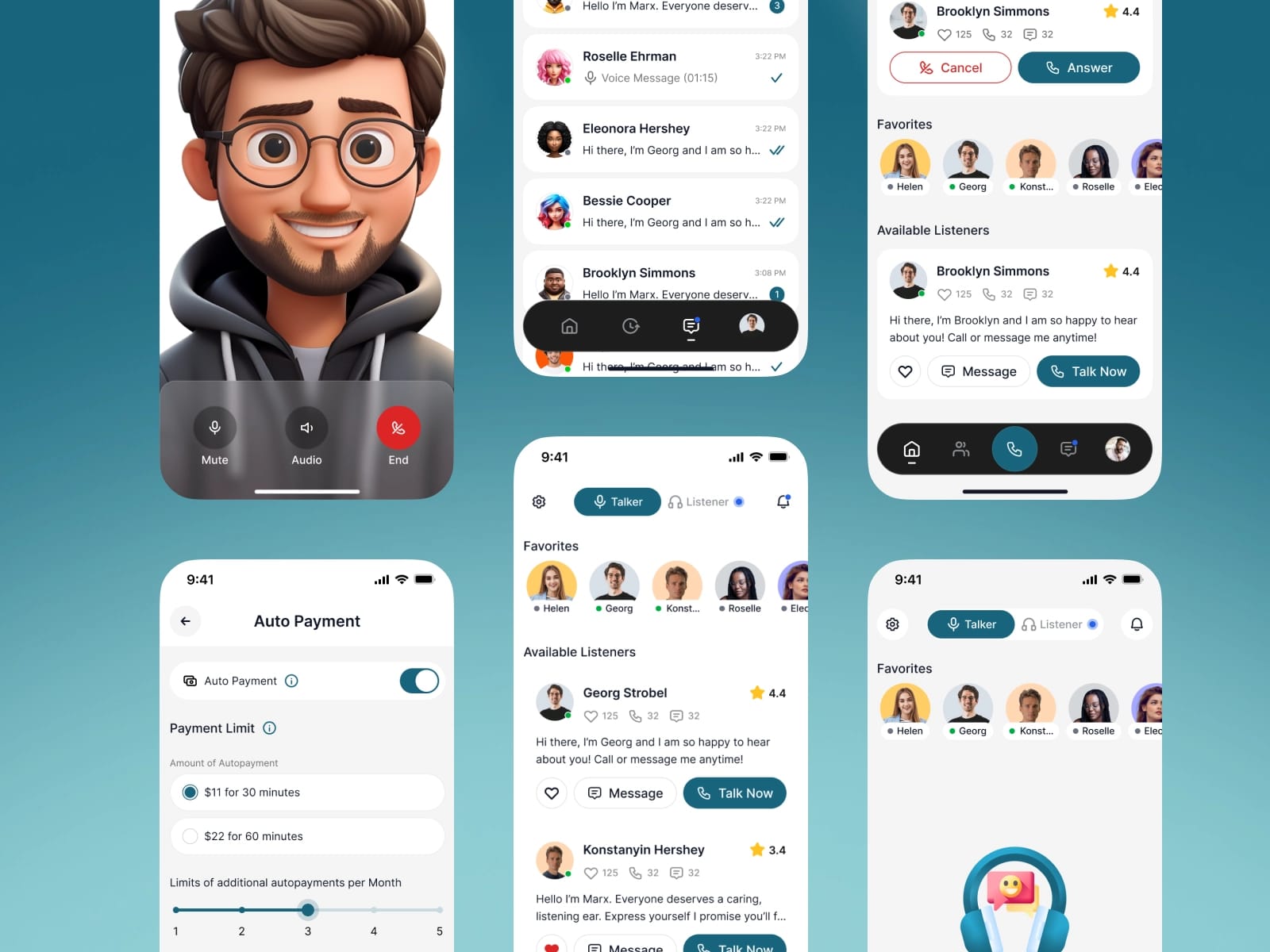
Mental Health App Built for Wellness and Real-Time Support
Learn more about our mental health app development process, the technology behind this powerful application, and how we helped a first responder from the Second City create it.

Chicago
Jun ’24 – Oct ’24
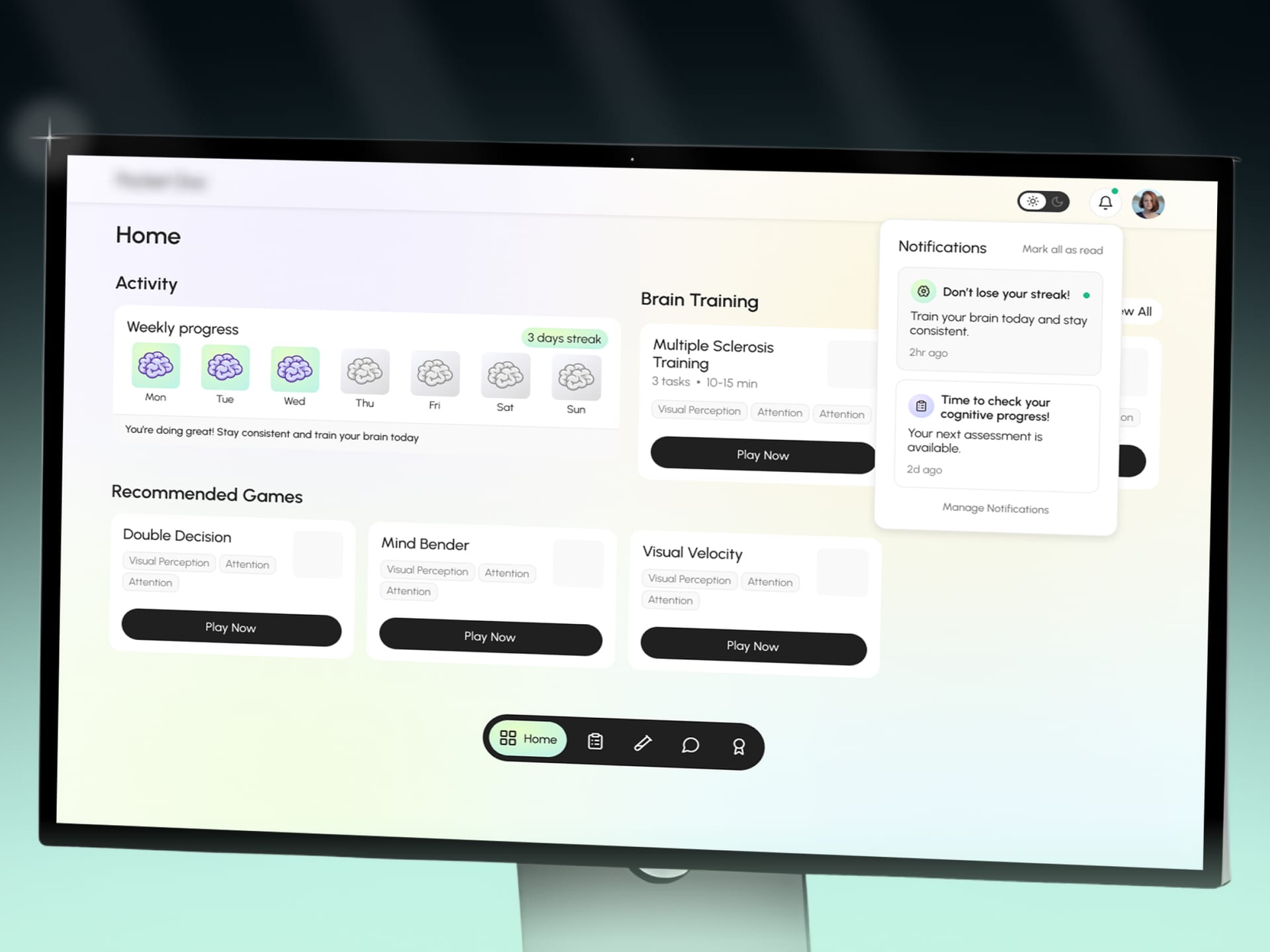
An AI‑Powered Cognitive Training and Brain Health Platform
Turning generic “brain games” into a personalized, data‑driven cognitive training experience – combining adaptive daily workouts, real health data insights, and a conversational AI assistant in one product.
Houston
Oct '25 — Mar '26
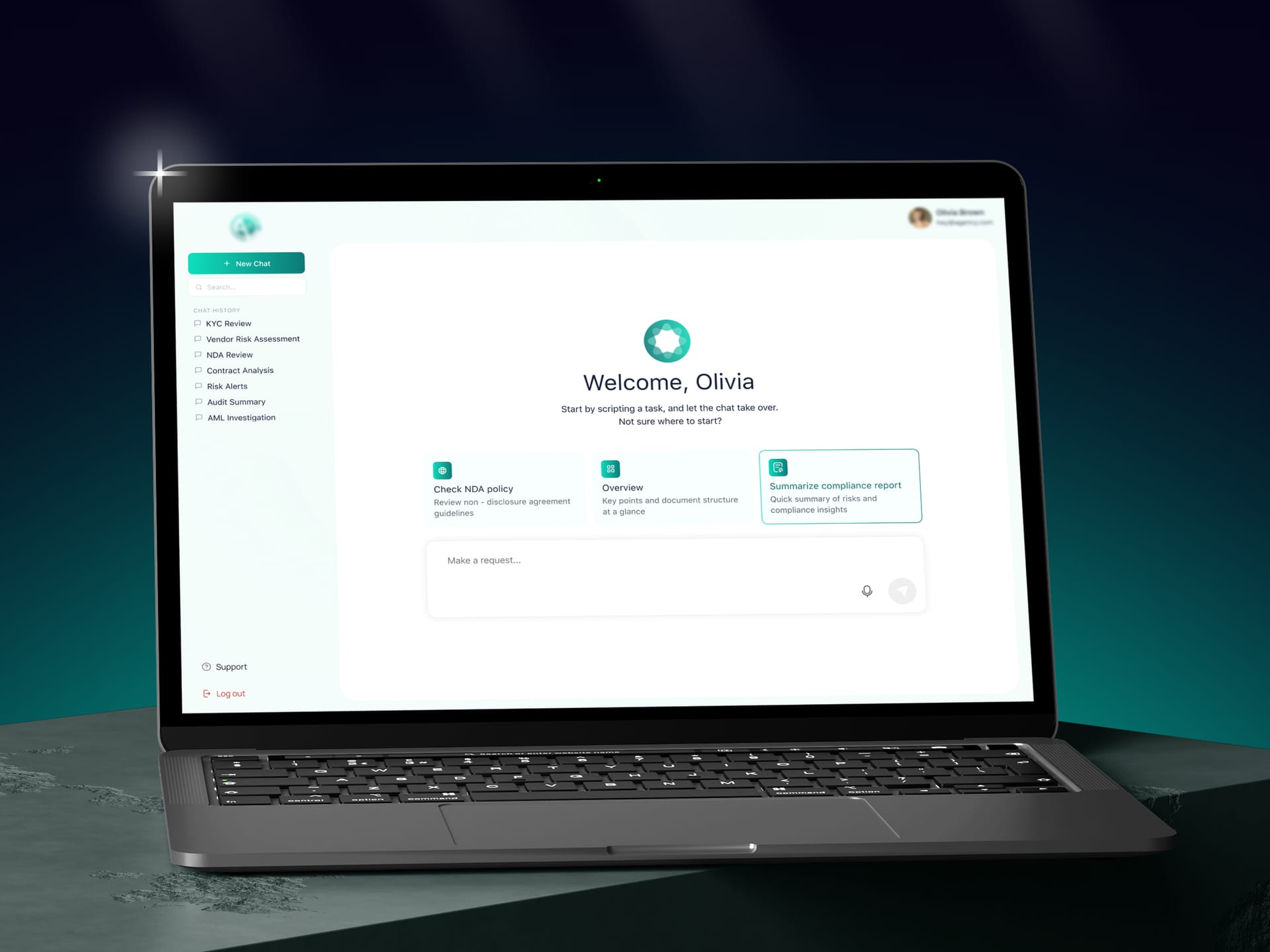
Legal AI Assistant for a Regional Fintech Institution
Discover how Lumitech designed an AI‑powered legal knowledge assistant that makes internal policies safe to use for a highly-regulated fintech organization.

Dubai
May '25 — Dec '25
Health & Wellness
Redesign & Modernization of a Clinical Diagnostics Platform
Redesigning a clinical neurotechnology platform by improving data visualization, decision-support workflows, and patient-facing reporting across a complex hardware-software diagnostic ecosystem.
Client Location
Toronto
Duration
Sept '25 - Feb '26
Platform
Mobile and Desktop
Mental Health App Built for Wellness and Real-Time Support
Learn more about our mental health app development process, the technology behind this powerful application, and how we helped a first responder from the Second City create it.
Chicago
Jun ’24 – Oct ’24
An AI‑Powered Cognitive Training and Brain Health Platform
Turning generic “brain games” into a personalized, data‑driven cognitive training experience – combining adaptive daily workouts, real health data insights, and a conversational AI assistant in one product.
Houston
Oct '25 — Mar '26
Legal AI Assistant for a Regional Fintech Institution
Discover how Lumitech designed an AI‑powered legal knowledge assistant that makes internal policies safe to use for a highly-regulated fintech organization.
Dubai
May '25 — Dec '25
Start With One Note Type
The two hours of desk work behind every hour of care will not shrink because a vendor demonstration went well. One note type is enough to find out whether anything changes: a single type fixes the workflow, the clinical context, and the document expected at the end, so any difference in effort belongs to the tool and not to the variation between cases.
That comparison needs a recorded baseline. Measure what drafting, correction, and closure cost today, along with the same-day closure rate, average note length, and the age of the unsigned queue. Those numbers also set the bar a native EHR feature would have to clear, which is the next thing to check, because a built-in option that clears it removes the need to scope anything custom.
Then agree on the release criteria before anyone starts recording patients: which error types the hospital will not accept, and who owns the decision to release. An AI PoC that demonstrates note generation answers neither question, which is why a demonstration is not a pilot.
Run the pilot with one clinician group against that baseline and measure severity-weighted errors, active use, patient refusals, and coder queries. A product that meets the criteria leaves little for custom work to add. One that misses them fails in a specific place, and that place names the remedy: configuration, integration, or a new layer around the existing system.
Either outcome gives the committee a decision it can defend: adopt the available product, fund the missing integration, or stop before clinical documentation automation reaches the rest of the organization.