
AI PoC: Minimizing Risks Before Full-Scale AI Implementation
AI rarely fails because the model is broken. It fails because someone skipped the one step that would’ve shown, upfront, whether this even made sense for their data and their business.
- AI Development
- PoC
August 04, 2026
 AI Overview
The RAND Corporation looked at what happens to AI projects in practice. More than 80% never reach production — twice the failure rate of comparable IT projects. The reasons are rarely technical. Bad data assumptions, undefined success criteria, integration complexity nobody anticipated. All things a well-run proof of concept would have caught in weeks. This article breaks down how to run one that actually works.

The Numbers Are Hard to Argue With
Despite massive investment and near-universal adoption, most organizations are still struggling to translate AI into real business value. According to McKinsey’s 2025 global survey, nearly two-thirds of companies remain stuck in experimentation or pilot phases, and only about one-third have begun scaling AI across the enterprise, with just 39% reporting any measurable EBIT impact — and even then, typically below 5%.
The Stanford AI Index 2026 confirms this gap, showing that truly scaled AI deployment remains rare, with usage in most business functions still in the single digits. At the same time, Gartner finds that only 28% of AI use cases fully meet ROI expectations, while a significant share fail outright, and at least 50% of generative AI projects are abandoned after the proof-of-concept stage.
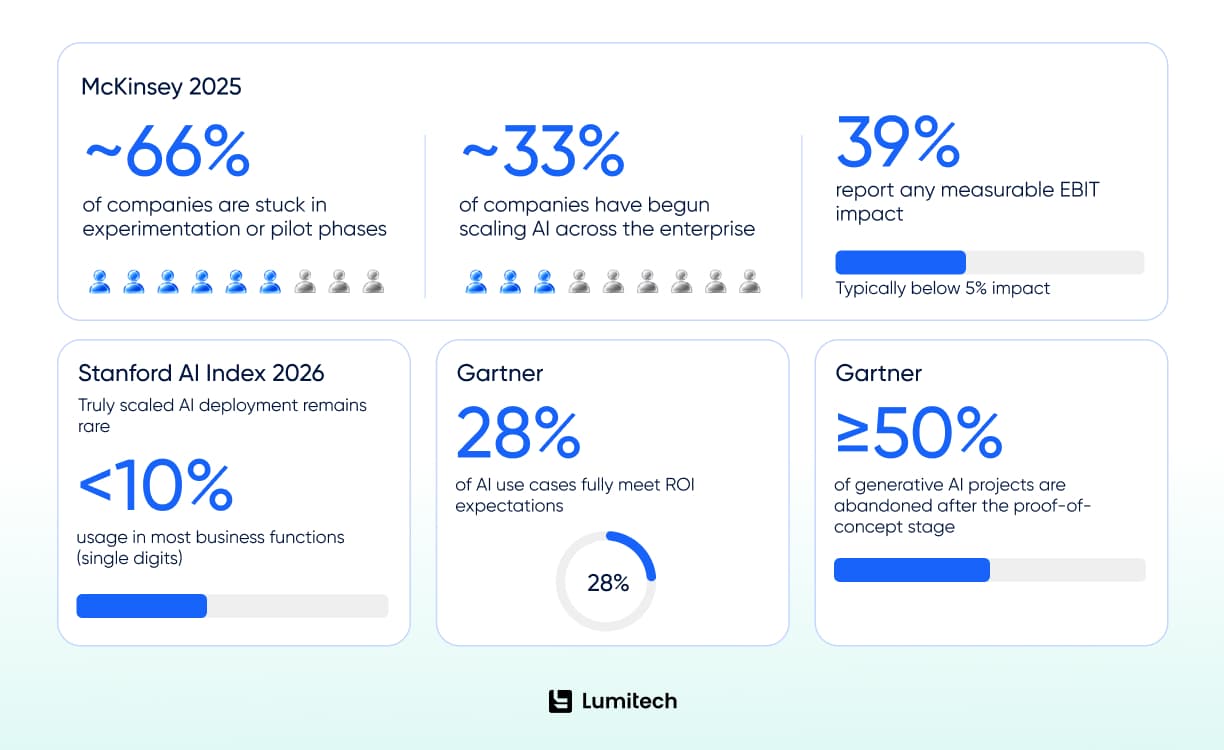
Across the board, the evidence suggests that the real problem in AI is no longer adoption but execution: while most organizations can start pilots, only a small fraction manage to scale them into meaningful enterprise-level financial results.
The gap between AI adoption and AI value is wide, well-documented, and largely preventable — if you validate before you build. That’s what a structured feasibility test is for.
An AI proof of concept (PoC) is a limited-scope project used to test whether a specific AI use case is technically feasible, supported by available data, valuable for the business, and suitable for further development. Call it an AI PoC, a PoC, or the more formal artificial intelligence proof of concept — it’s a structured test designed to answer one question before you commit significant budget: is this specific AI approach worth building? This is exactly the kind of work Lumitech’s PoC development services are built around.
What Is an AI PoC, in Plain Terms?
A PoC doesn’t prove that AI works in general — it tests whether a specific AI approach can solve a specific business problem under realistic constraints. That distinction matters more than it sounds.
The constraints are what make it real. It operates on your actual data, within your existing infrastructure, and under your real compliance requirements. If the model can’t perform in that environment, you discover it in a six-week test — not after a twelve-month build.
The output isn’t a product. It’s a decision — which is exactly the problem AI chat interfaces in enterprise decision platform work is built to solve: getting the right answer in front of the person who has to decide.
A PoC is not about proving AI is possible. It’s about proving whether this AI solution is valuable and feasible enough to justify the next investment. Done right, it’s the most important thing you build before you build anything.



AI PoC vs. Prototype vs. MVP vs. Pilot
These terms — AI proof of concept PoC, prototype, MVP, pilot — get used interchangeably, and that’s a problem. They answer different questions, operate at different scopes, and carry different levels of risk. If what you actually need is a demo to show stakeholders rather than a feasibility answer, that’s AI prototyping, not a validation test.
Stage | Main Question | Scope | Typical Output | Production Readiness |
|---|---|---|---|---|
PoC | Is this technically feasible and valuable enough to pursue? | Narrow, time-boxed | Feasibility report, go/no-go recommendation | None — not intended for production |
Prototype | What could this look like and how might it work? | Broader, exploratory | Interactive demo or mockup | None — for internal evaluation only |
MVP | What is the minimum version that delivers real value to real users? | Scoped for production | Working product with limited features | Partial — production-ready but feature-limited |
Pilot | Does this work at limited scale in a real operational context? | Production-limited deployment | Validated operational results | High — running in production |
The test comes first and costs the least. Skipping it means you’re running a pilot — or worse, a full deployment — without knowing whether the foundation holds.
Why Validate Before AI Proof of Concept Implementation
The case for starting with an AI proof of concept isn’t philosophical. It’s economic.
McKinsey’s State of AI research shows that while most organizations experiment with AI, only a minority successfully scale initiatives beyond pilot stages into production. Gartner similarly reports that at least 50% of generative AI projects are abandoned after the proof-of-concept phase, most often due to poor data quality, unclear business value, and insufficient risk controls.
Most AI never scales — and data is the reason. IBM finds only a minority of initiatives reach enterprise level, while Gartner reports that roughly two-thirds of organizations don’t have AI-ready data (or don’t know if they do).
Taken together, the evidence suggests that data readiness — not algorithms — is the dominant constraint on successful AI deployment. A test that starts without a data audit almost always discovers, three weeks in, that the data is incomplete, inaccessible, or inconsistently formatted — the kind of poor data readiness that sinks a build long before launch.
For decision-makers, this exercise is not about proving that AI is possible. It is about proving that the proposed solution is valuable and sufficiently feasible to justify further investment. If the cost of being wrong is high, it is safer to begin with a focused feasibility test.
AI Implementation Risks an AI Proof of Concept Helps Reduce
Business and ROI Risks
The most common mistake is building the right model for the wrong problem. An AI solution that technically works but doesn’t map to a real business process, or whose ROI depends on assumptions that don’t hold, is an expensive demonstration.
A structured test forces the business question to be answered before the technical build begins: what decision or outcome changes, by how much, and how do we measure it? Left unaddressed, these become the AI project risks that surface in a budget review six months too late.
Data Readiness Risks
Data remains one of the most underestimated risks in AI initiatives. IBM’s Institute for Business Value, based on a global survey of senior data leaders, finds that while a large majority of organizations report aligning their data strategy with business and technology priorities, only about a quarter express confidence that their data can support new AI-driven revenue streams.
Barriers such as limited accessibility, fragmented data environments, and challenges with data quality and consistency continue to constrain AI outcomes, positioning data readiness as the primary limiting factor. Focused testing helps surface these issues early, when remediation costs are low. This aligns with 2024 survey findings showing that more than half of organizations identify data privacy, security, and management concerns as key obstacles to AI adoption.
Model Performance Risks
A model that performs well on test data may underperform significantly on real-world inputs. Edge cases, distributional shift, and input variability can all degrade accuracy in production — model accuracy risks that rarely show up until the system meets messy, real inputs. A well-run test runs the model against realistic inputs, not curated examples, so you know what performance actually looks like before you’ve built the surrounding infrastructure.
Integration and Infrastructure Risks
The value of an AI solution depends on how well it fits into the business’s existing tech environment. Complex integrations, security requirements, and infrastructure limitations can significantly affect delivery time and cost. This is often where a stalled build turns into a legacy systems modernization services conversation, once the gap between old systems and new AI components becomes obvious. Identifying these challenges early helps avoid expensive surprises in the future.
Security, Privacy, and Compliance Risks
For regulated industries — financial services, healthcare, legal, government — compliance requirements can make an otherwise viable AI use case impractical. GDPR, HIPAA, SOC 2, and sector-specific regulations all impose constraints on data handling, model outputs, and audit trails. In financial services specifically, this is where projects like AI chatbots in banking either earn trust or lose it fast, depending on how seriously compliance was treated from day one. These aren’t details to address after build — they’re constraints that should shape the architecture from day one. A focused test identifies them early.
User Adoption and Workflow Risks
AI projects rarely fail in production because the model itself doesn’t work. More often, the real problem is one of the classic AI adoption risks: users don’t trust the solution, avoid using it, or use it in ways that reduce its impact. A structured test lets you check workflow fit and real user behavior early, before investing in a full-scale deployment that may never gain traction.
Not sure which AI risks apply to your project?
Lumitech can help assess your use case, data readiness, and technical feasibility before you commit to full implementation.

When Does a Company Need This Kind of Test?
It’s the right starting point when any of the following is true:
You have an AI idea but no clear roadmap or success criteria.
Leadership needs evidence before approving budget.
You’re not sure whether your existing data is sufficient or usable.
The project involves security, privacy, or compliance constraints that could affect the approach.
You’re choosing among ML, GenAI, RAG, AI agents, and traditional automation and aren’t sure which one fits the problem.
The cost of a failed full implementation would be high — financially, reputationally, or operationally.
It’s probably unnecessary when the use case is well-established (the same solution has been deployed successfully in comparable environments), the data is confirmed to be ready, and the integration path is well understood. In that case, you may be able to move directly to an MVP or pilot.
This isn’t only an enterprise concern, either — see our take on AI for small business for how the same logic applies at a smaller scale, and why several common AI PoC use cases show up just as often in a ten-person company as in a Fortune 500 one.
The key question: if the cost of being wrong is high, is it safer to begin with a focused test? In most enterprise AI contexts, the answer is yes.
Customer Stories
Explore What We've Built
A Race-Day Operating System for Safety and Compliance
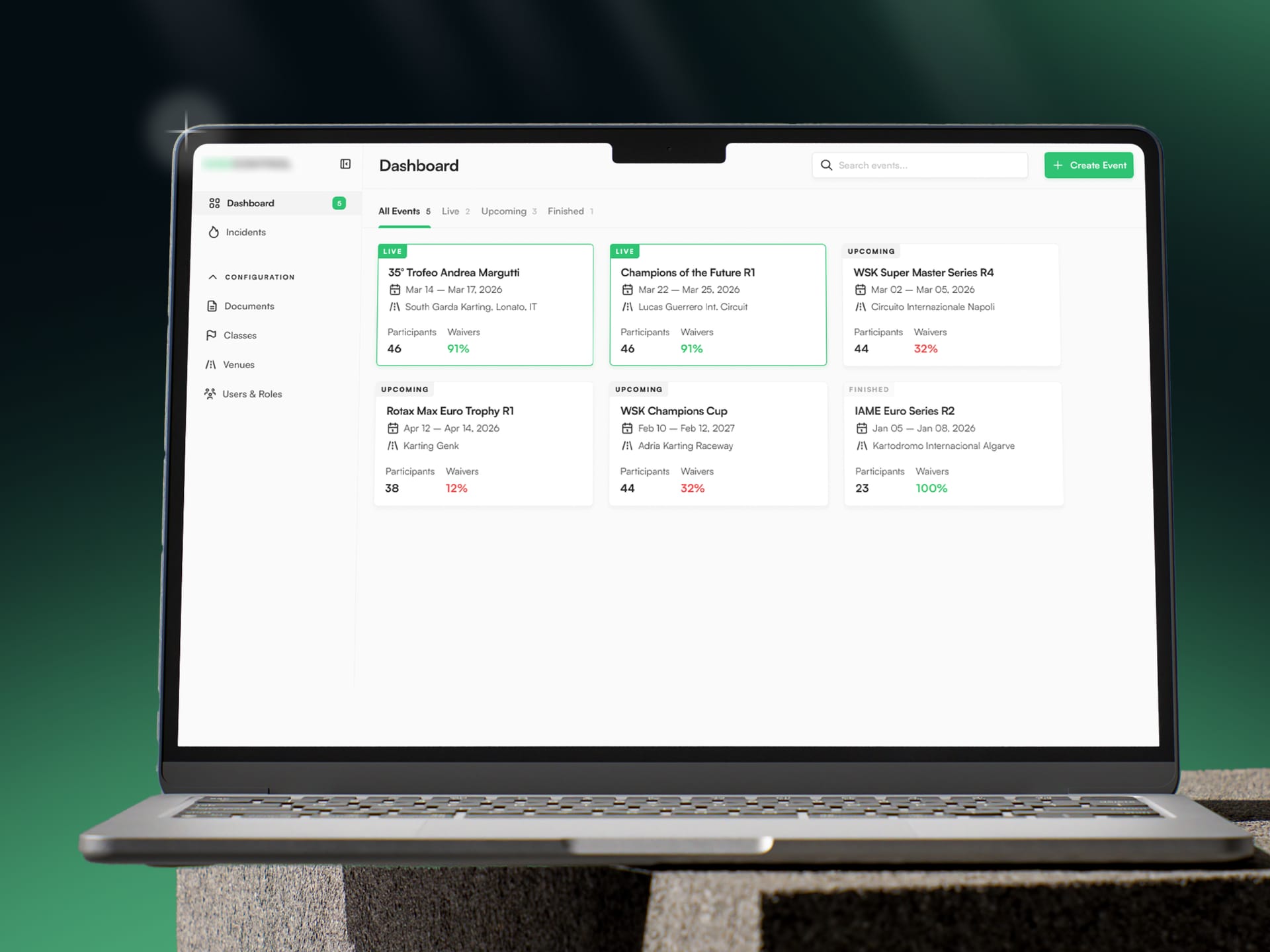
On race day, safety depends on more than sending alerts. Organizers need proof of who received each message, who acknowledged it, and what record remains. Lumitech built a platform around that responsibility, helping protect trust, compliance, and control.

Amsterdam
Oct '25 - Mar '26
An AI‑Powered Cognitive Training and Brain Health Platform
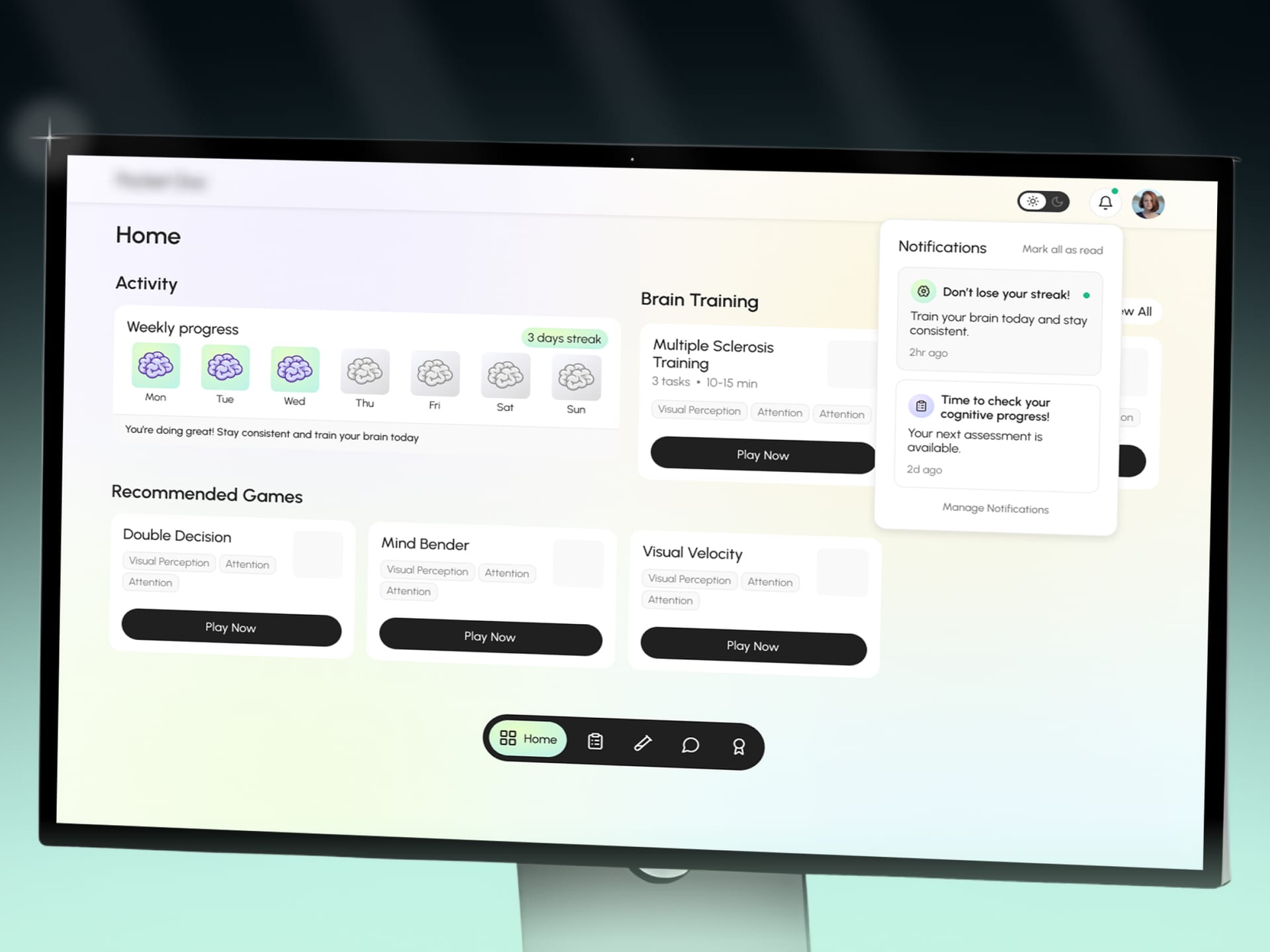
Turning generic “brain games” into a personalized, data‑driven cognitive training experience – combining adaptive daily workouts, real health data insights, and a conversational AI assistant in one product.

Houston
Oct '25 — Mar '26
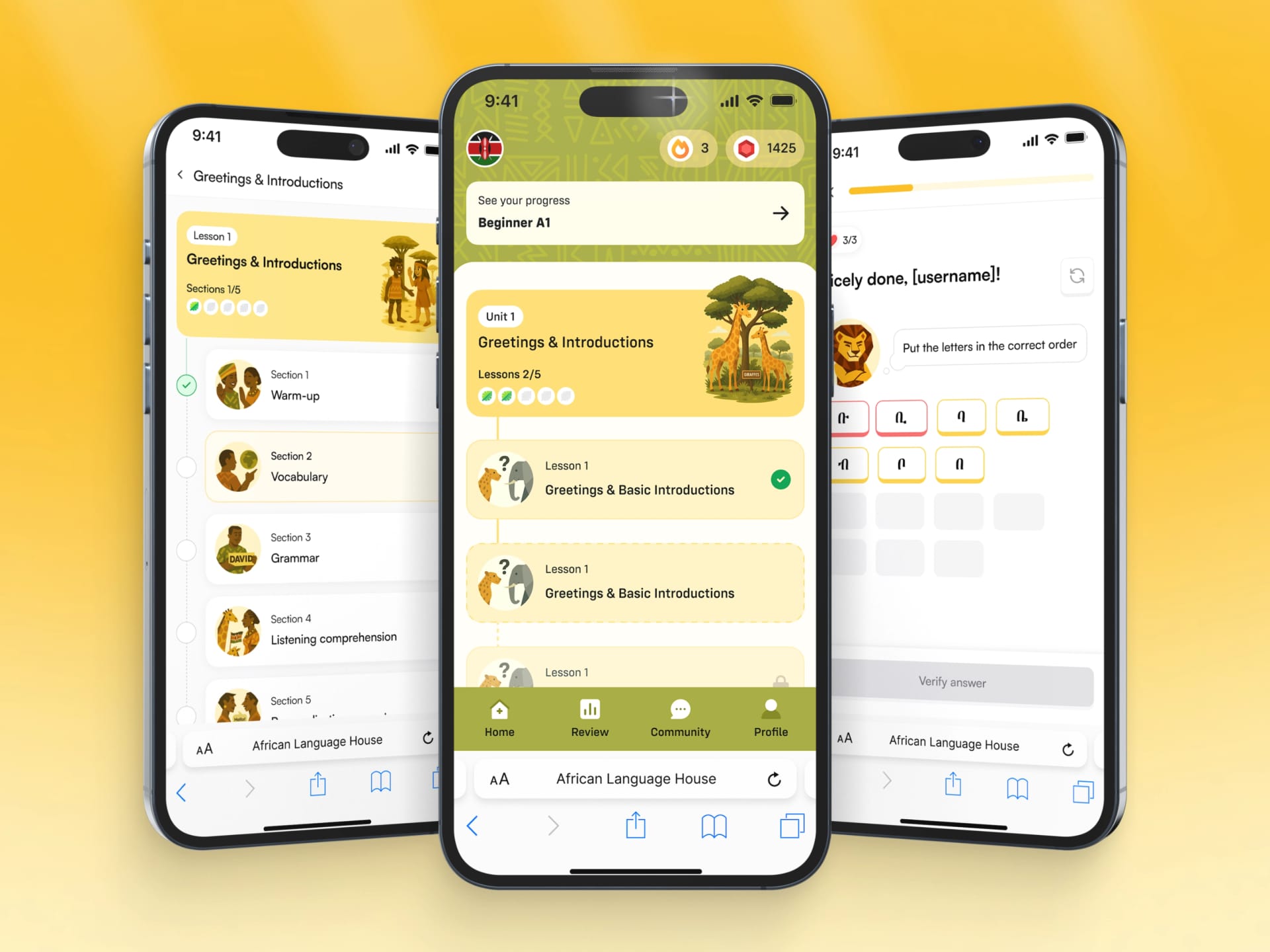
Reviving Roots: How We Built an AI-Powered African Language Learning Platform
Lumitech built an AI-powered language learning platform with speech feedback, adaptive lessons, gamification, and analytics for users in the African diaspora.
New Jersey
Aug '25 — Now
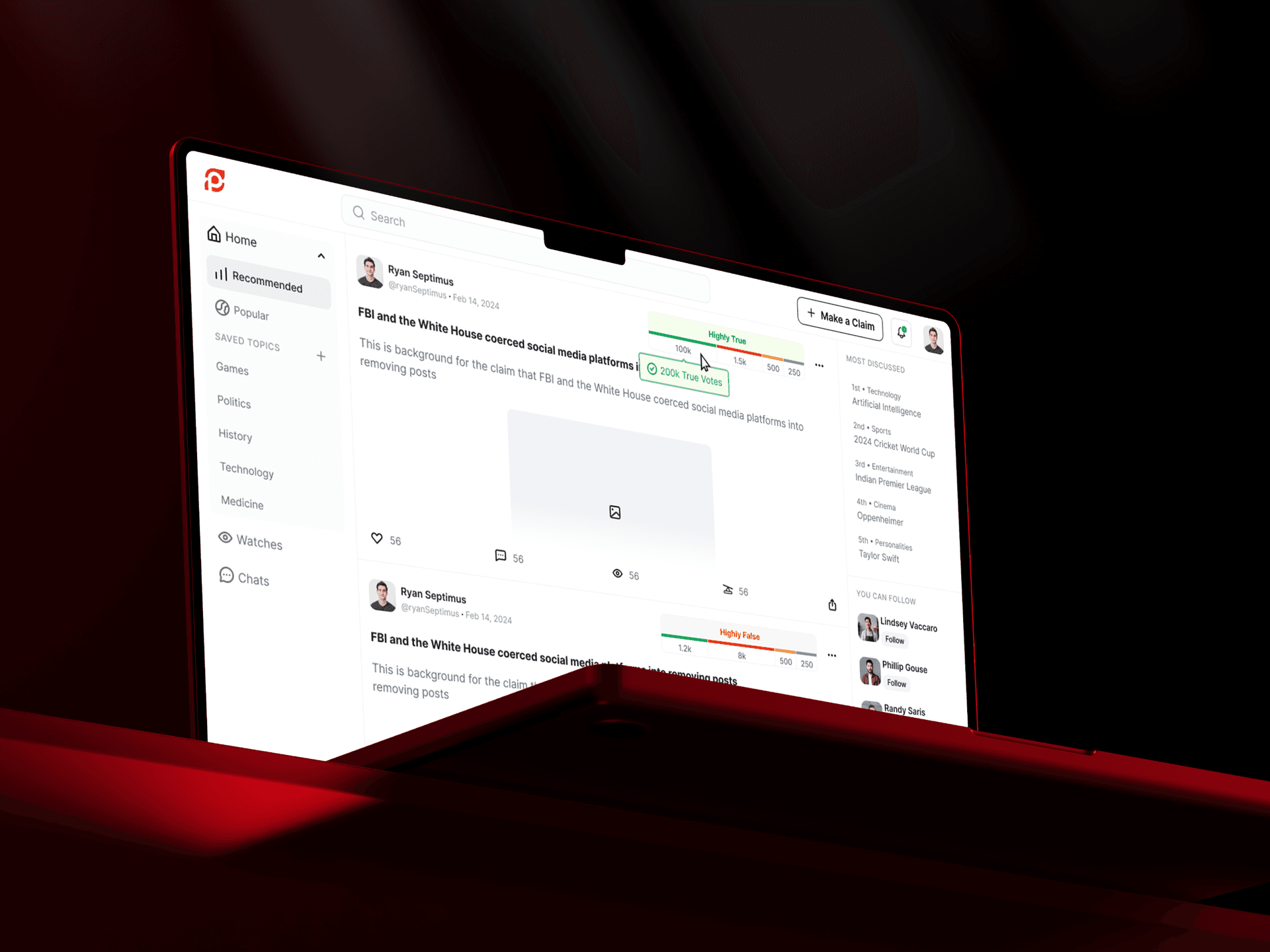
Fighting Misinformation with an AI-Driven Social Platform
Together with our client, we launched a social app designed to prevent the spread of fake news by empowering users to verify sources and flag misinformation.
Nashville
Jul ’24 – Apr ’25
EdTech & Training
A Race-Day Operating System for Safety and Compliance
On race day, safety depends on more than sending alerts. Organizers need proof of who received each message, who acknowledged it, and what record remains. Lumitech built a platform around that responsibility, helping protect trust, compliance, and control.
Client Location
Amsterdam
Duration
Oct '25 - Mar '26
Platform
Web + PWA
An AI‑Powered Cognitive Training and Brain Health Platform
Turning generic “brain games” into a personalized, data‑driven cognitive training experience – combining adaptive daily workouts, real health data insights, and a conversational AI assistant in one product.
Houston
Oct '25 — Mar '26
Reviving Roots: How We Built an AI-Powered African Language Learning Platform
Lumitech built an AI-powered language learning platform with speech feedback, adaptive lessons, gamification, and analytics for users in the African diaspora.
New Jersey
Aug '25 — Now
Fighting Misinformation with an AI-Driven Social Platform
Together with our client, we launched a social app designed to prevent the spread of fake news by empowering users to verify sources and flag misinformation.
Nashville
Jul ’24 – Apr ’25
What AI Proof of Concept Development Looks Like
Building one is less like launching a product and more like running a structured experiment. The goal isn’t to build something impressive — it’s to get a clear answer to one question before you’ve committed to the full build. Here’s what the AI PoC process actually looks like in practice.
Define the business problem — not the AI solution
The most common starting point is wrong: “we want to implement AI for X.” The right starting point is: “we lose Y hours per week to manual invoice review, and we need that number cut by half.”
The difference is simple: the first framing gives you a direction, the second gives you something to measure against. And if you can’t measure it, you can’t call it done.
Take a logistics company that comes in and says it wants to use AI for operations. That’s not a problem you can test — that’s a wish. The conversation that actually moves things forward sounds more like: “Our dispatchers spend half their day reacting to delays they could have seen coming — can AI flag those 48 hours out, reliably enough that we cut those manual interventions by 30%?” That’s a real test. The first version gets you a demo. The second gets you an answer.
Pick one use case and protect it from scope creep
The instinct to test multiple things at once is understandable — you have stakeholders, you have a list of ideas, and this feels like the moment to answer all of them. Resist it.
A test that tries to validate five use cases simultaneously fails to validate any of them cleanly. One use case, one data set, one success metric. Everything else goes on the backlog.
Think of it like a clinical trial: you test one drug, one dose, one patient group. You don’t add variables mid-study because it would be interesting to know.
Audit the data before you touch the model
Most projects don’t stumble on model selection or infrastructure — they stumble three weeks in, when the clean CRM data turns out to be five years of inconsistent labeling across three merged systems.
Before the build starts, answer these questions:
Is the data accessible — or does getting to it require approvals, migrations, or vendor negotiations?
Is it complete enough to train or test a model on?
Is it representative of real-world inputs, or is it the curated “happy path” version?
Can it legally be used for this purpose?
Example: a healthcare company wanted to develop a document-processing test for patient intake forms. The data existed — but half of it was scanned PDFs with handwritten fields, and using it required compliance sign-off that took four weeks to obtain. Discovering this in week one is fine. Discovering it in month three of the full build is not.
Write down AI PoC success criteria before the model runs
This is the discipline that separates a real feasibility test from a demo. A demo is designed to look good. A structured test is designed to produce a decision.
The thresholds — minimum accuracy, maximum latency, a tolerable error rate — get written down before the model ever runs, not after. Then you test and compare. Pass, and you’ve got evidence to move forward. Fail, and you know what to fix before the full build starts, instead of finding out the expensive way.
Choose the AI PoC process and approach based on the problem
GenAI, RAG, fine-tuned models, traditional ML, rule-based automation — each one answers a different kind of question. This stage is where you find out which approach actually fits.
A RAG-based knowledge assistant is the right tool if users need to query a defined corpus of internal documents — the same principle behind AI chat interfaces in enterprise decision platform work, where the interface matters less than whether the answer can be trusted. It’s the wrong tool for predicting equipment failure from sensor data. Getting this wrong here costs weeks. Getting it wrong in a full build costs months.
Build for signal, not for polish
It isn’t the product. It doesn’t need a beautiful UI, scalable infrastructure, or production-grade error handling. It needs to be functional enough to generate real signal from real inputs.
Build the minimum version that answers the feasibility question. Test it against realistic — not curated — data. Deliberately probe for failure: what happens on edge cases, unusual inputs, and the scenarios your users will definitely encounter but your test set probably doesn’t include.
Document what breaks. That’s the most valuable output of the whole exercise.
End with a decision, not a presentation
It closes with a go/no-go recommendation — a specific, evidence-backed call on whether to proceed, and if so, under what conditions. Not a list of findings. Not a slide deck with “next steps TBD.”
If it can’t produce that, it was either scoped too broadly, or the success criteria were never defined. Both are fixable — but the earlier you catch it, the better.
If your top five reports lack named owners and replayable lineage, that is where we start. Tell us which reports matter, and we will map the gaps.

How to Measure AI PoC Success
A successful test does not necessarily mean the model performed perfectly. It means the company obtained enough evidence to make an informed next-step decision, judged against the AI PoC metrics that actually matter for the business. Here is how to measure AI PoC success.
Category | Metrics |
|---|---|
Business metrics | ROI estimate; projected time or cost saved; error or exception rate reduction; revenue impact estimate |
Technical metrics | Model accuracy, precision, recall, F1 score; latency; throughput; accuracy on edge cases |
Operational metrics | Integration feasibility; infrastructure requirements; estimated development effort for full build |
Risk metrics | Data compliance status; security exposure; known failure modes; bias or fairness concerns |
User metrics | Usability assessment; workflow fit; adoption likelihood; feedback from test users |
AI PoC Checklist
Use this AI PoC checklist to keep the AI PoC steps honest, before and during any engagement.
Before you start, make sure there’s a clear business challenge with measurable goals, one focused use case, and written criteria for what success actually looks like. Add a completed data review — access, quality, compliance — a tech approach that matches the use case and the data you actually have, and stakeholder agreement on what outcome everyone’s expecting.
During the build, test against document edge cases and failure modes as they appear. Integration constraints and security or compliance requirements should be captured along the way.
At evaluation, measure results against the success criteria you wrote down at the start, finish the risk assessment, and prepare a go/no-go recommendation backed by evidence — plus a next-step roadmap, whichever way the decision goes.
Time, Money, and Output: What to Plan For
AI Proof of Concept Timeline
The AI PoC timeline depends on data readiness, how complex the integrations and model are, security requirements, and how many test scenarios you’re running.
Simple test: 2–4 weeks (well-defined problem, clean data, no complex integrations)
Medium-complexity test: 4–8 weeks (some data preparation needed, one or two integrations)
Complex enterprise test: 8–12 weeks or more (multiple data sources, compliance requirements, complex integrations)
The most common source of delays is data — either its quality, accessibility, or the time required to obtain necessary approvals for its use.
AI PoC Cost Factors
The AI PoC cost swings on scope and complexity, driven mainly by:
How much discovery and problem definition the project needs
Data preparation and cleaning — often the biggest unknown
Model selection and configuration
Infrastructure setup
Third-party API costs
Integrations with existing systems
UI development, if the test needs one
Security and compliance assessment
Testing and validation
Documentation and reporting
We don’t publish fixed pricing because the range is genuinely wide. The right starting point is a scoping conversation — and if you want a broader view of what drives pricing beyond this stage, see our breakdown of AI development cost.
AI PoC Deliverables
A test that’s done right leaves you with more than a result — it leaves you with these AI PoC deliverables:
A working, limited-scope build (the actual test artifact)
A feasibility assessment
A data readiness assessment
A model performance report
A risk and limitation report
An architecture recommendation
An implementation roadmap, if the decision is to move forward
A go/no-go recommendation backed by evidence
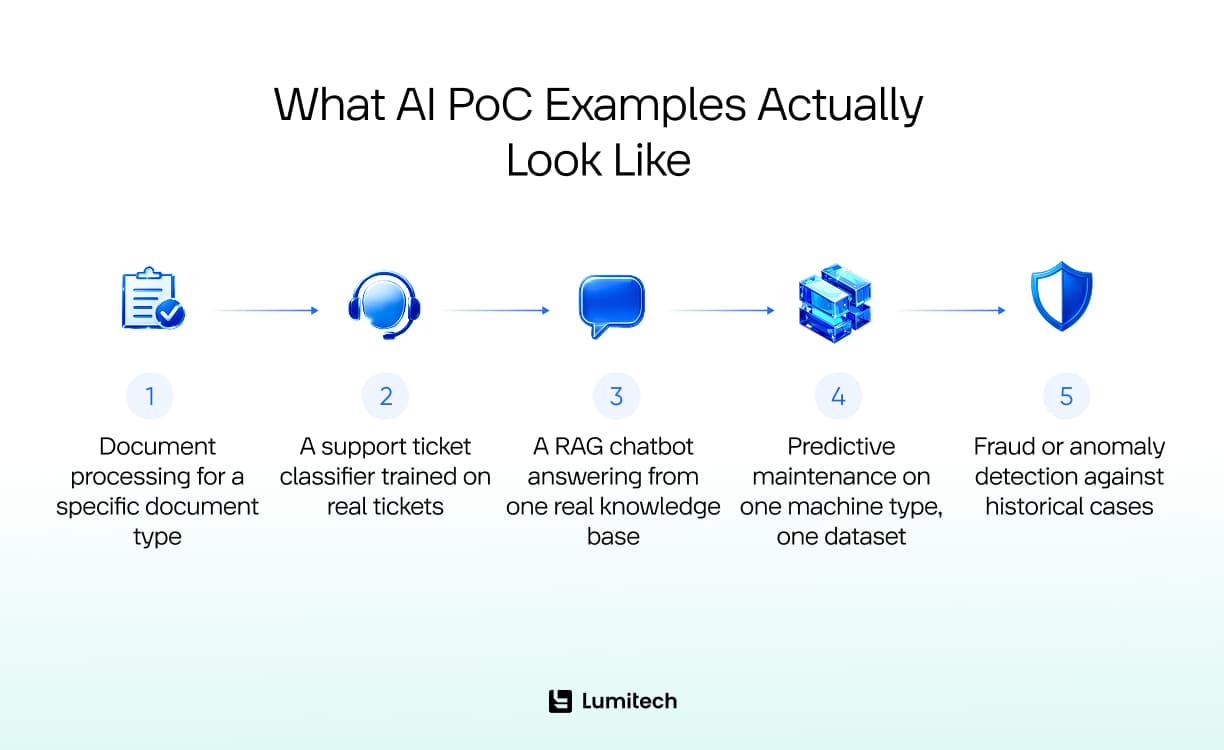
What AI PoC Examples Actually Look Like
This isn’t a smaller version of the final product — it’s a fast, narrow test built to answer one question: does this actually work, here, with our data? These are the kinds of tests that answer that question in weeks, not months.
Document processing for a specific document type
Instead of building a general-purpose OCR pipeline, this test targets one document type — invoices, medical intake forms, insurance claims — and tests extraction accuracy against real, messy samples the company actually receives. If it can’t hit a usable accuracy rate on real documents, that’s worth knowing before scaling to twenty document types.
A support ticket classifier trained on real tickets
Not a demo dataset — the company’s actual last six months of tickets. This test checks whether the model can route or tag tickets accurately enough to save time, and just as importantly, where it consistently gets confused. Those failure patterns often matter more than the accuracy number.
A RAG chatbot answering from one real knowledge base
Rather than a flashy general assistant, this test connects a model to a specific set of internal documents — a policy handbook, a product catalog — and checks whether answers remain grounded in that content. This is the kind of scoped test that later becomes full AI chatbot development work, once the approach proves it holds up.
Predictive maintenance on one machine type, one dataset
This test doesn’t try to predict failures across an entire factory. It picks one machine type with a decent maintenance history and tests whether the available sensor data actually contains a usable signal — before anyone commits to instrumenting the whole floor.
Fraud or anomaly detection against historical cases
This test runs the model against transactions the company already knows were fraudulent, checking not just detection rate but false-positive rate — because a model that flags everything isn’t actually useful, even if it catches the fraud.
What connects all of these: each one is scoped to a real, specific slice of the business — one document type, one ticket history, one knowledge base, one machine, one dataset — not a broad promise. That’s what makes this step worth running instead of just another pilot that quietly stalls.
AI PoC Best Practices, and the Mistakes That Undo Them
Getting this right comes down to a handful of habits — and just as many ways to get it wrong.
Treating it as a sales demo
The biggest mistake. A demo is designed to impress; this is designed to test. If the test is structured to confirm the outcome rather than probe for failure, the evidence it produces is worthless. It should be designed to find problems, not avoid them.
Defining success criteria after the results are in
If you decide what “good” looks like after you see the numbers, you’re rationalizing. Success criteria must be written down before the model runs.
Skipping the data audit
McDonald’s pulled its drive-through AI in July 2024. This is a classic case of lab conditions meeting real life. Background noise and regional accents broke it in ways clean test data never showed. Testing against messy, real-world input before deployment would have detected this early, at a fraction of the cost.
Scoping too broadly
Try to validate five things at once, and you end up validating none of them properly. Narrow scope is what gives you a clean signal.
Ignoring compliance requirements
In regulated industries, compliance can’t wait until after the build. A technically solid model that never checked whether the approach is even legally permissible has answered the wrong question entirely.
Treating a negative result as a failure
A test that concludes “don’t proceed” has done exactly what it was designed to do. The failure would have been to skip it and build anyway — which is really just a lack of AI risk mitigation dressed up as confidence.
From Feasibility Test to Full-Scale Implementation
The jump from a validated idea to AI proof of concept implementation is where most of the real risk still lives.
This exercise produces one of several possible AI PoC outcomes, each of which points to a different next step:
Result | Recommended Next Step |
|---|---|
Strong value and technical feasibility | Move to MVP or pilot |
Promising model but weak data | Improve the data foundation first |
Good model but poor workflow fit | Redesign the process or UX |
High risk and limited value | Stop or reconsider the use case |
Unresolved important questions | Run a second, more focused test |
The point of this table is that “move to MVP” is only one of five reasonable outcomes. A well-designed process makes all five possible. A poorly designed one — or a skipped one — leaves the organization flying blind into a full-scale build. When results are strong, that build often takes shape as SaaS development, turning a validated idea into a real product rather than a rebuild from scratch.
How Lumitech Can Help with AI PoC Development
We help companies validate AI ideas before committing to full-scale build through structured AI proof of concept development covering the full scope of what a useful test requires: problem definition, data readiness assessment, technical approach selection, build, evaluation, and a clear go/no-go recommendation backed by evidence.
We work across ML, generative AI, RAG, AI agents, and hybrid approaches — and we help organizations choose the right approach for their specific problem rather than defaulting to the most prominent technology.
What a Lumitech engagement produces:
A working limited-scope build, tested against your actual data and infrastructure
A feasibility and data readiness assessment
A model performance report with realistic accuracy metrics
A risk and limitation report covering technical, compliance, and operational risks
An architecture recommendation for the full build
A go/no-go recommendation with the evidence to support it
The goal is to give your decision-makers what they need to make an informed next-step decision — not to validate a predetermined conclusion. Beyond this stage, Lumitech also works as a long-term IT development partner for enterprises, carrying validated ideas through to production as part of our broader enterprise software development services.
Conclusion
The case for starting with a structured feasibility test isn’t complicated. More than 80% of AI projects fail to deliver intended business value. The root causes — thin data preparation, unclear success criteria, unaddressed integration complexity, and workflow misfit — are exactly what a well-designed test is built to surface. They are also exactly the problems that become expensive once the full build has started.
It doesn’t eliminate risk. It concentrates it into a short, low-cost test in which the evidence remains actionable. That’s what makes an AI proof of concept valuable — not as a formality, but as the decision-making tool it was designed to be.


