




About the Client
Our client is an entrepreneur originally from West Africa who, after years living in the United States, noticed something unsettling: his children talked to him in English even when he spoke in his mother tongue. He wasn’t alone. Millions of African families in the US face the same thing: the language of their grandparents slowly fading into a background accent, then into complete silence.
His insight was sharp and personal. Existing language learning solutions weren’t built for people like him. They were built for tourists learning Spanish or professionals brushing up on French. Nobody had seriously tackled the hundreds of living African languages, with their tonal structures, oral traditions, and deep cultural weight.
So he came to us with an idea that was part tech startup, part act of cultural preservation.
Interesting Facts
To better understand the value of such a product, it is enough to look at the market and the context:
According to UNESCO, at least 40% of the world’s approximately 7,000 languages are threatened with extinction, and on average, one language disappears every two weeks.
UNESCO also notes that about 2,000 languages are spoken in sub-Saharan Africa, almost a third of the world’s languages, and that up to 10% of African languages could disappear within a century.
In the United States, about 2.5 million immigrants from sub-Saharan Africa were recorded in 2024, a 90% increase from 2010 to 2024. This means that the demand for digital tools to save linguistic and cultural identity is becoming critical.
The global online language learning market was estimated at nearly $22.1 billion in 2024 and is forecast to grow to $54.8 billion by 2030 at a CAGR of 16.6%. This means demand for digital language learning platforms is already high, but the African-language niche remains underrepresented.
For our case, this meant one simple thing: there was very strong product potential at the intersection of cultural identity, diaspora demand, and AI-driven personalisation.
Client Request
The client’s request was initially straightforward: to create a mobile-first platform for learning African languages. But even in the first discussions, it became clear that a much more complex task lay ahead.
There were already language apps on the market, but most either did not work with African languages at all or offered a superficial experience: a few words, a few exercises, very little cultural context, zero adaptability, and poor user retention. For people who really wanted to reclaim the language or pass it on to their children, this was not enough.
The client needed a product that:
supports structured learning;
adapts to the user, rather than forcing everyone to follow the same script;
supports voice interaction and pronunciation practice;
creates a sense of progress;
maintains interest for a long time.
Our Approach
We started with a discovery sprint where our team and the client spent two days mapping the learning journey of a realistic user: say, a 28-year-old Nigerian-American who grew up hearing Yoruba at home but never learned to speak it fluently.
One moment from that session was remembered by everyone.
Our product lead asked:
— What’s the emotional peak of successfully remembering a word your grandmother used to say?
The client thought for a while, then said:
— It's not just remembering, it’s feeling like you haven’t lost her.
That framing guided every design decision that followed.
We took an MVP-first approach, focusing on three things: the AI interaction layer (the core intelligence), structured learning flows, and gamification mechanics. Data analytics was built in from day one because we knew the product would need behavioural signals to improve. Advanced personalisation models were scoped for future iterations once we had real learning data to train them on.
Our engineering team organised their work around these modules: the AI layer, the content layer, and the analytics pipeline, which were designed to evolve independently without requiring full-system rebuilds.
Core Features
AI Interaction Layer
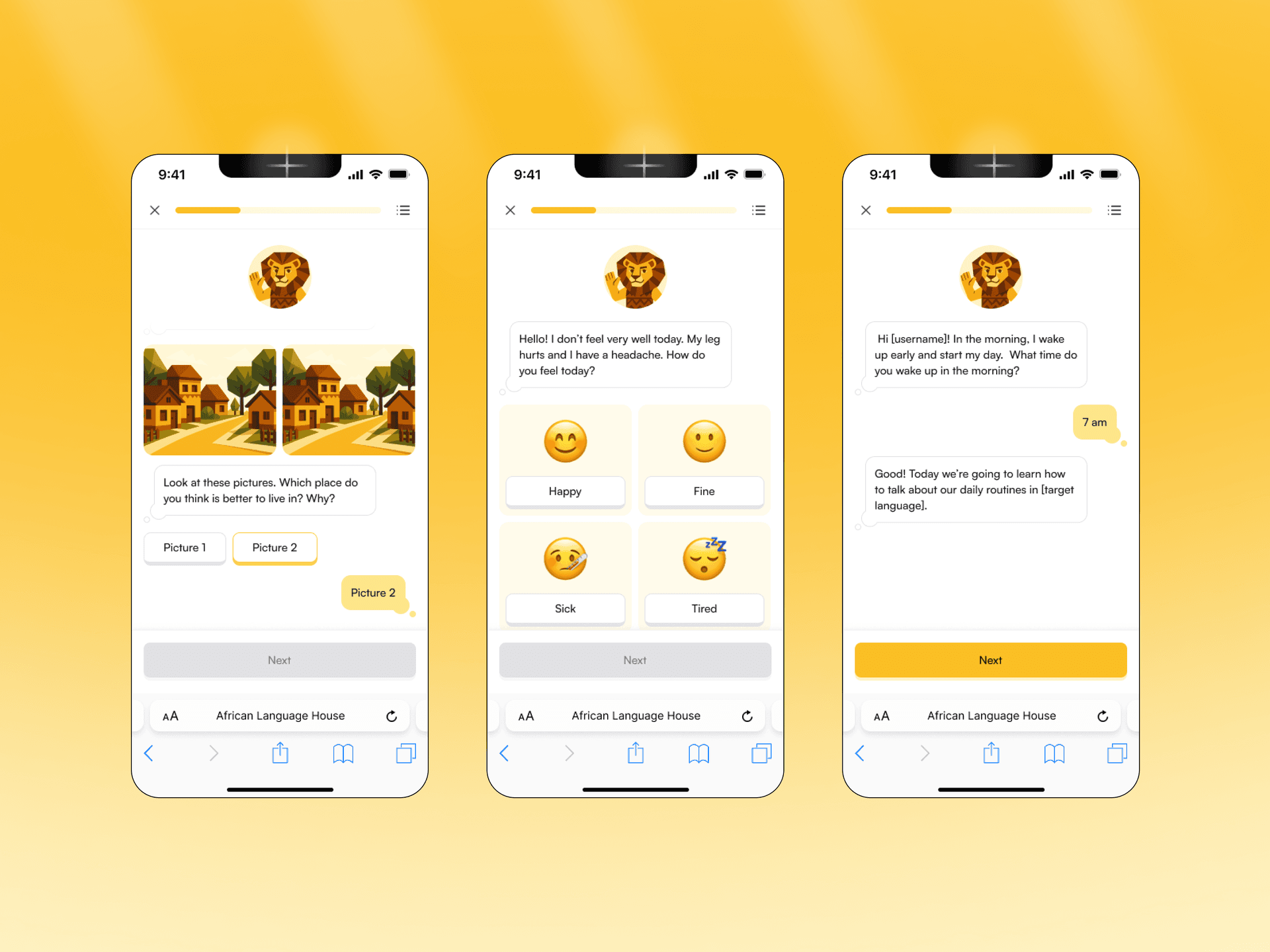
Our team developed the layer backed by artificial intelligence, which was responsible for user interaction logic. Its key function was to interpret user input, manage progression, and generate feedback within a live learning scenario. This allowed us to go beyond rigid lesson paths and adopt a more dynamic learning engine.
Speech & Pronunciation Intelligence
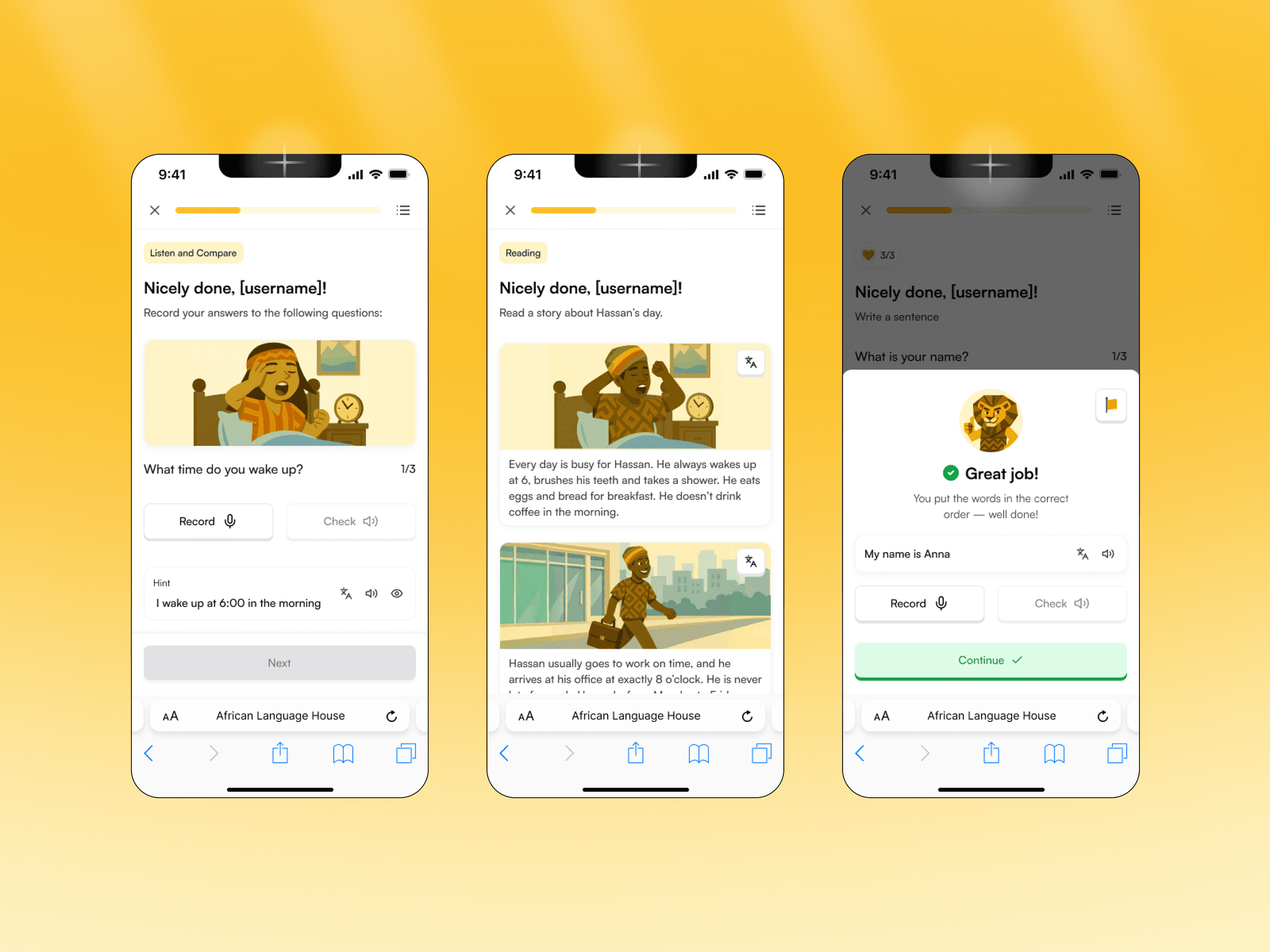
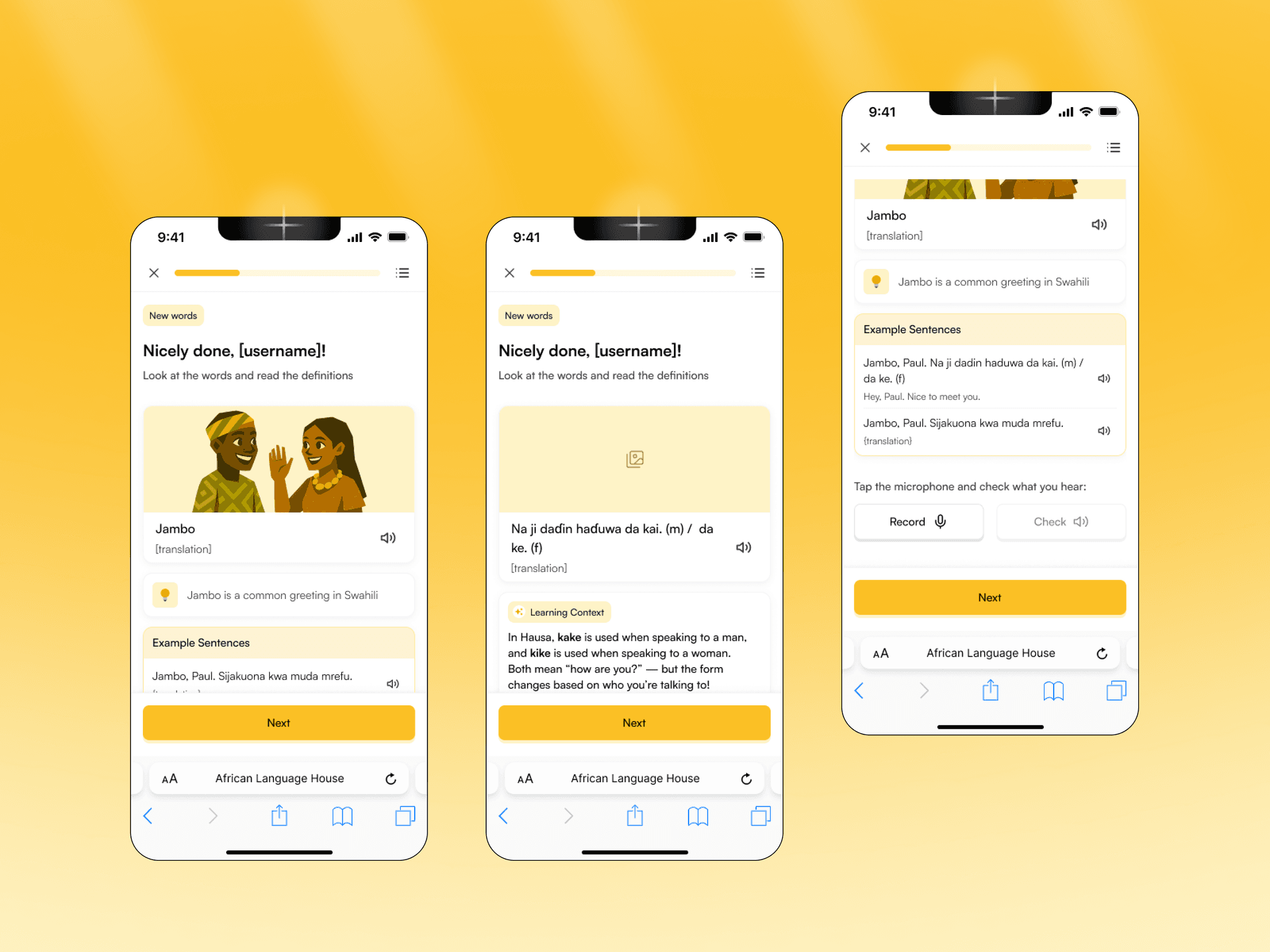
Separately, we implemented voice-based interaction. Users could record their answers, and the system analysed pronunciation, identified phonetic deviations and provided feedback.
In other words, users could actively practice their speaking skills. For language learning products, this is critical because pronunciation often distinguishes between passive familiarity with a language and the feeling that you master it.
Adaptive Learning System
The next feature was adjusting the sequencing of lessons, repetition intervals, and difficulty levels for a specific user. If a person completed one block successfully but had problems with another, the application could adjust the flow based on this information.
This helped make learning less mechanical and much closer to true personalisation.
Gamification & Engagement Engine
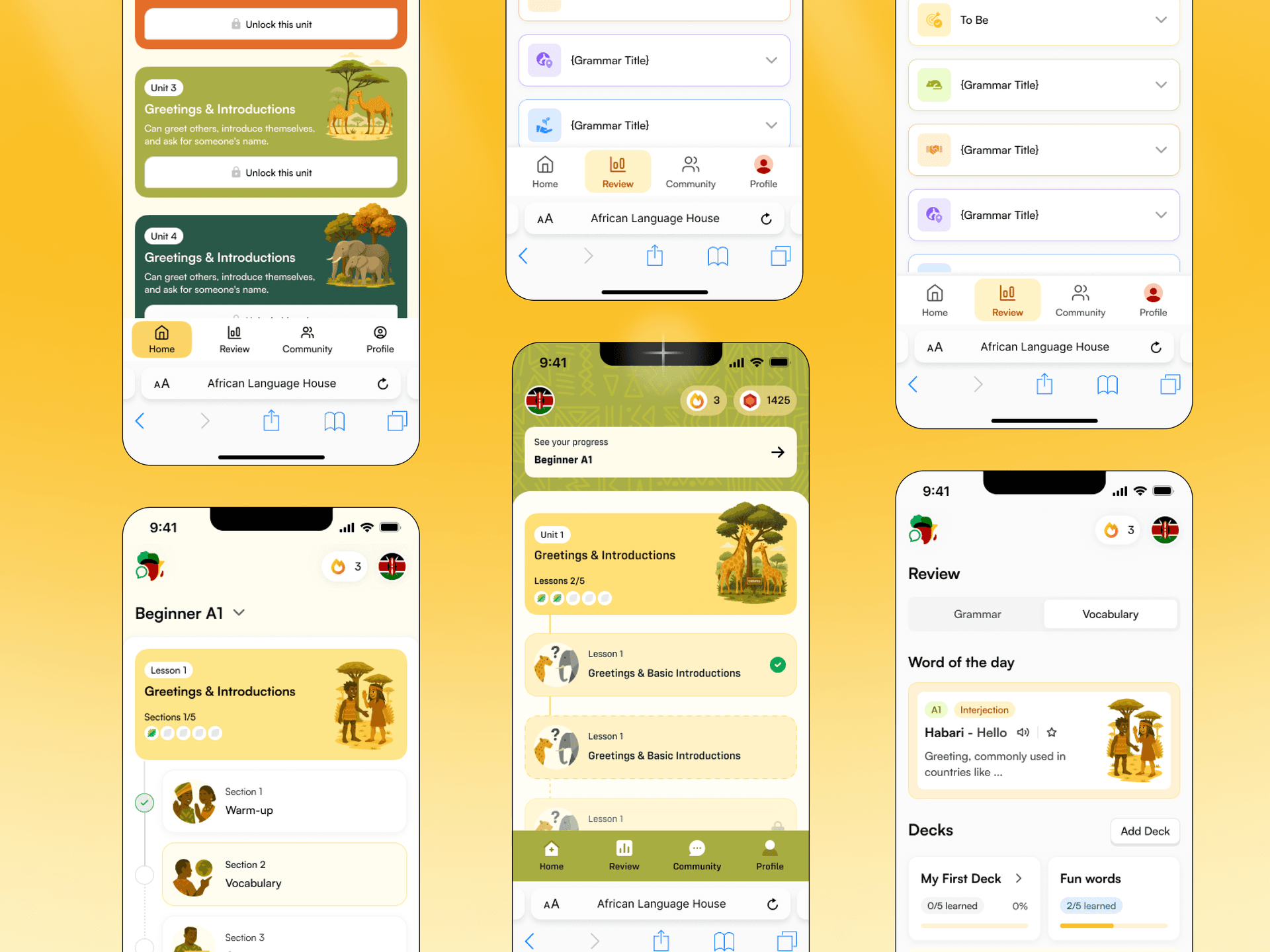
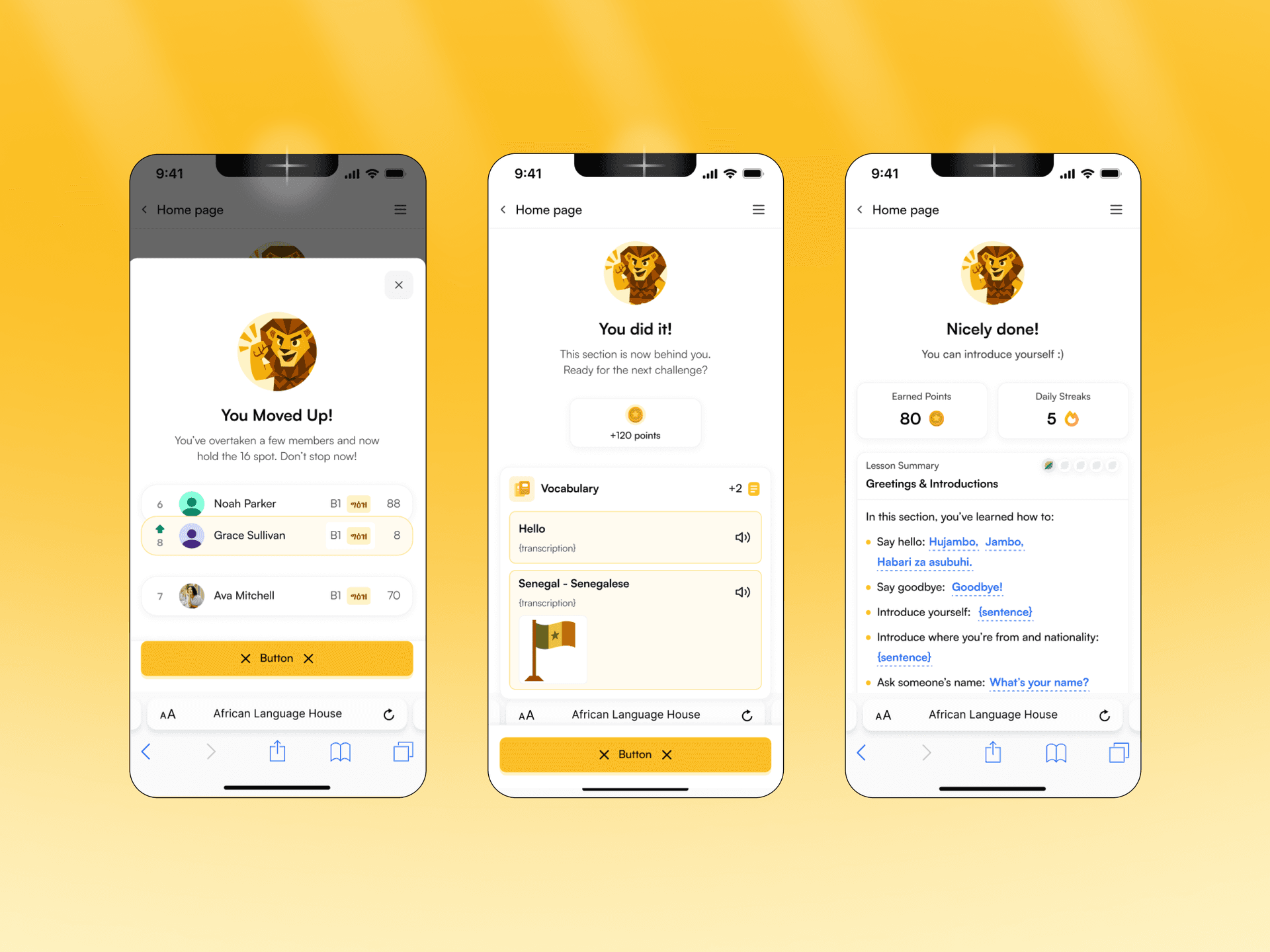
We built a gamification engine with streaks, XP, level progression, weekly challenges, and leaderboards. It wasn’t just an “add-on badge.” Gamification was tied to the AI layer and behavioural logic. The system reinforced precisely those patterns that were beneficial for retention and habit building.
Community Layer
For this product, social dynamics were of great importance. Within the African diaspora, community and cultural context strongly influence engagement. Therefore, we laid out community-driven mechanics: challenges, rankings, and participation loops, which helped create a network effect and increased motivation.
Structured Content Architecture
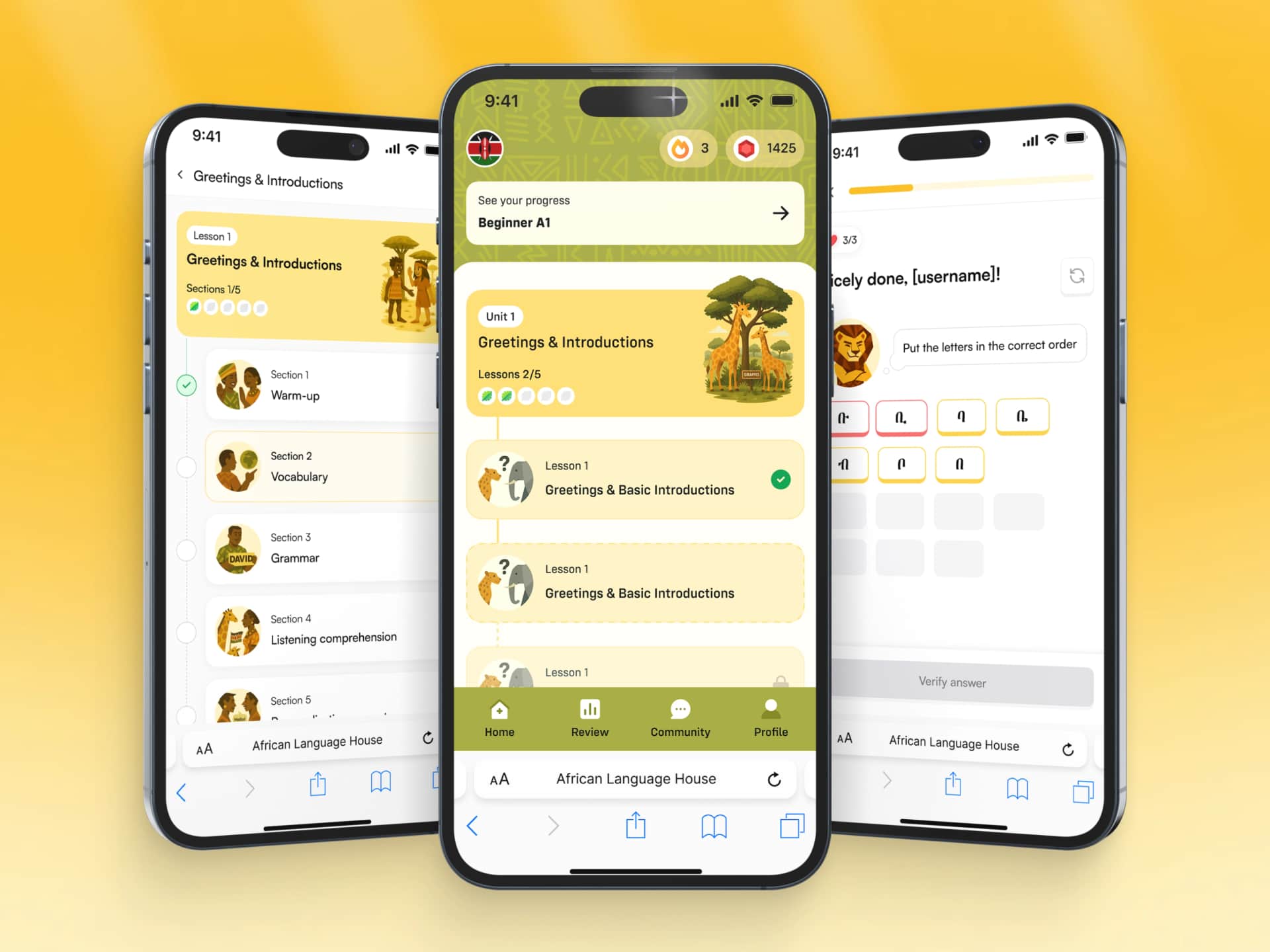
We created a modular content system that divided the learning program into convenient units, lessons, and sections.
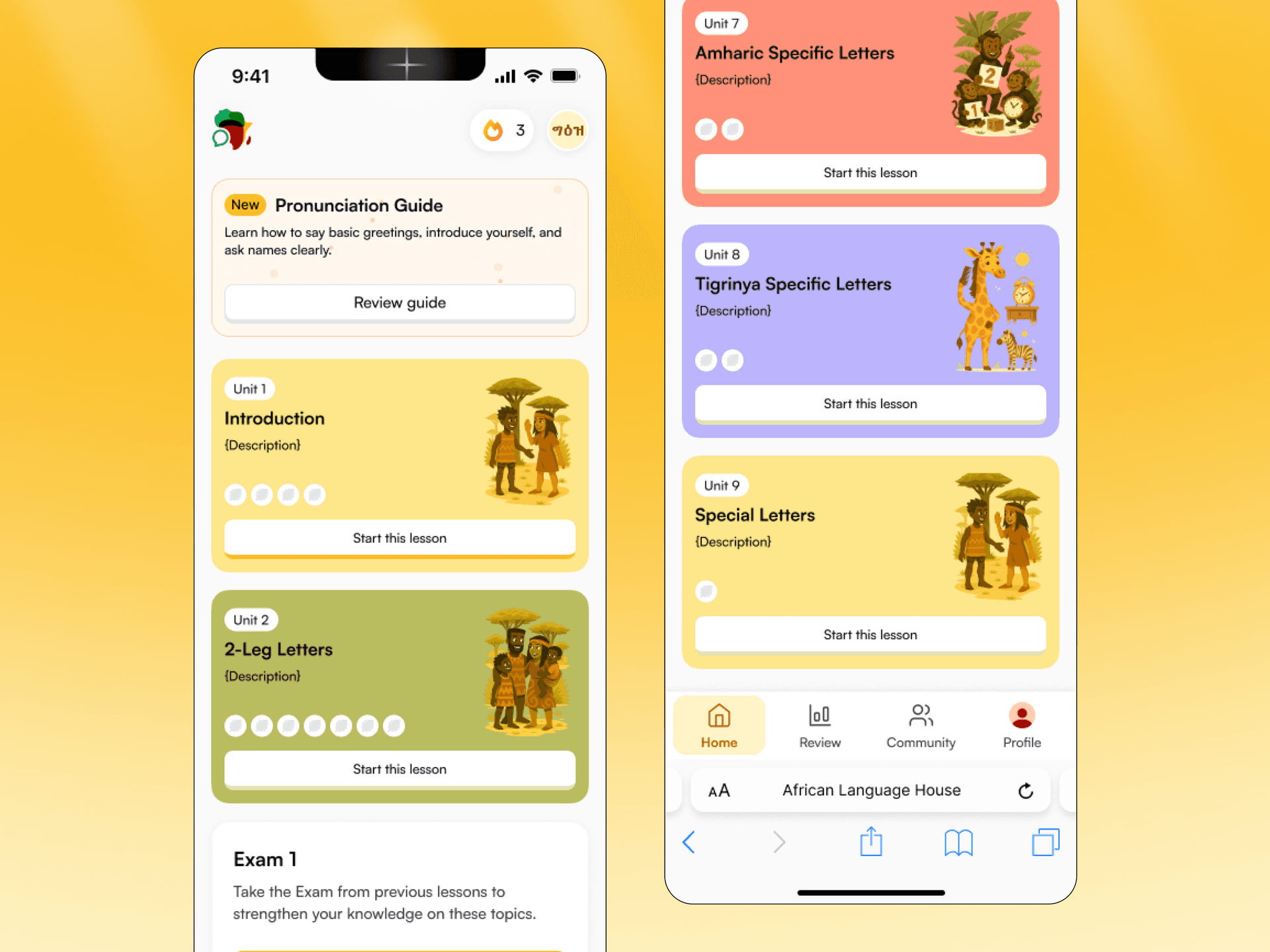
We also added vocabulary, grammar, pronunciation, and contextual language usage. This allowed us to create an understandable framework, still leaving room for AI orchestration.
Data Analytics Pipeline
We also focused on tracking the following things:
lesson completion rates;
engagement by exercise type;
progress patterns;
drop-off points;
repetitions that work best;
signals for future personalisation logic.
Thanks to analysing these metrics, the product could be systematically improved.
Technologies Used
We built the platform as a scalable, modular system with a clear separation between frontend, backend, AI services, and analytics.
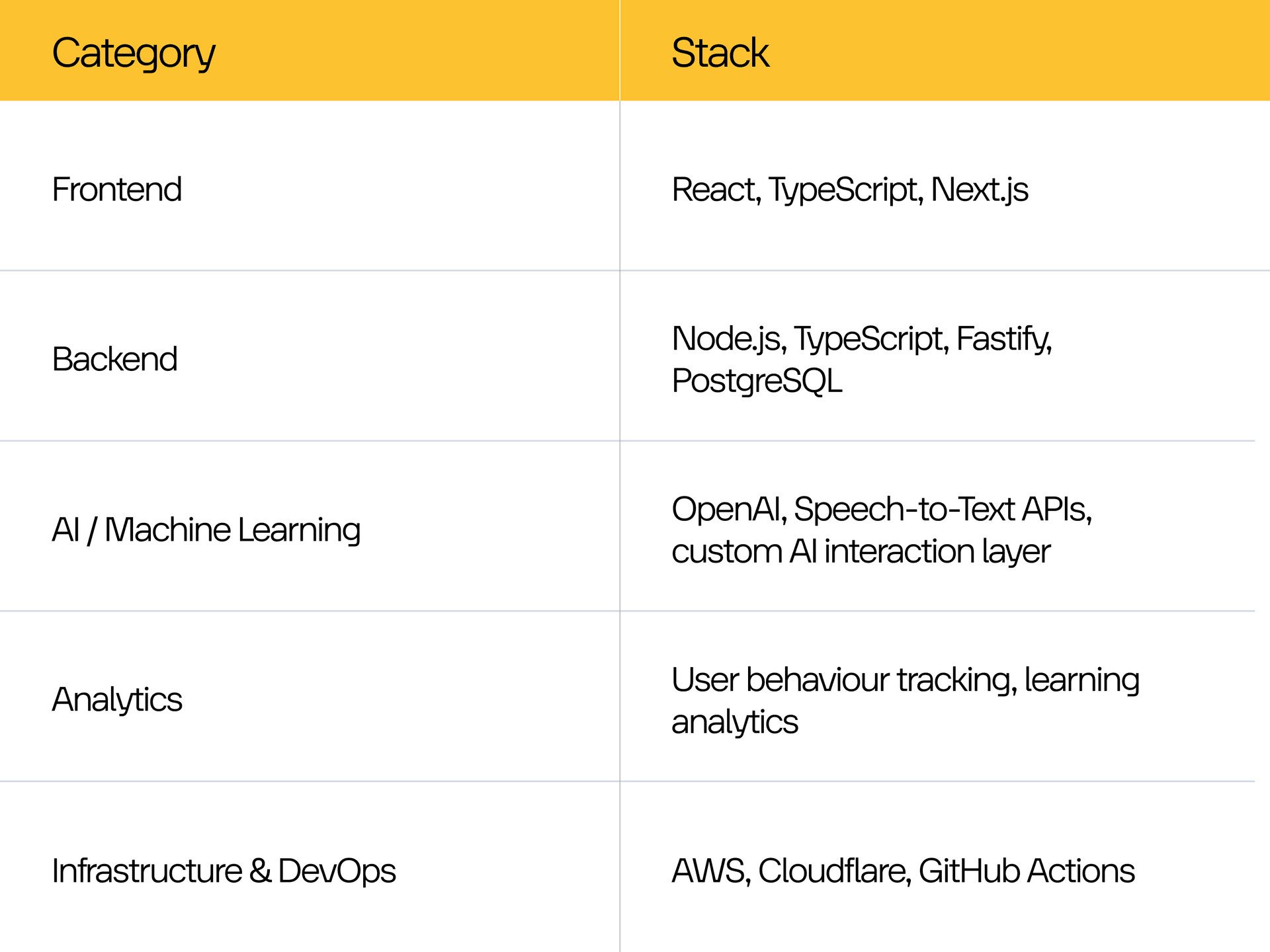
From an architectural perspective, it was important to us that the content layer, interaction logic, analytics pipelines, and AI services could evolve independently. This is especially important for products where AI and personalisation evolve over time.
Challenges
Challenge 1: Designing AI Behaviour for Non-Standard Language Data
First of all, most commercial AI models for language learning are trained on English and many European languages. African languages need delicate prompt engineering, custom interaction scripts, and phonetic models tuned to tonal structures.
There was no off-the-shelf solution we could just configure. Our AI layer had to be opinionated about how it handled ambiguous inputs and incomplete responses, which meant building fallback logic and confidence scoring that didn't exist in vanilla API wrappers.
Once, during testing, a colleague who speaks Twi (a language of Ghana) sat down at the speech analysis system and, after a few rounds of feedback, came back into the room saying, “It’s finding mistakes in my pronunciation”
We all smiled. It was a good day.
Challenge 2: Building Engagement Systems That Support Users
Gamification in language learning is complex. Poorly built, it reduces the emotional weight of the content to something superficial, turning what for many users is a meaningful cultural reunion into a shallow reward loop. We spent a lot of time calibrating the mechanics so that streaks and experience points felt earned and culturally resonant, rather than arbitrary.
Challenge 3: Collecting Meaningful Analytics at MVP Scale
Building an analytics layer without having data on real user behaviour is a challenge: you’re instrumenting signals that haven’t yet been validated.
We had to make architectural bets about which signals would matter (pronunciation attempt frequency, lesson abandonment timing, social feature engagement) and build the tracking infrastructure accordingly, keeping in mind we’d likely refine the schema once real users arrived.
Challenge 4: Balancing Depth and Speed
African languages are complex. Yoruba has a complex tonal system. Twi has noun class agreements. Amharic has a unique alphabet. Building content that is linguistically honest and yet accessible to “rusty” diaspora users required close collaboration with the client and cultural consultants throughout the development process.
Results
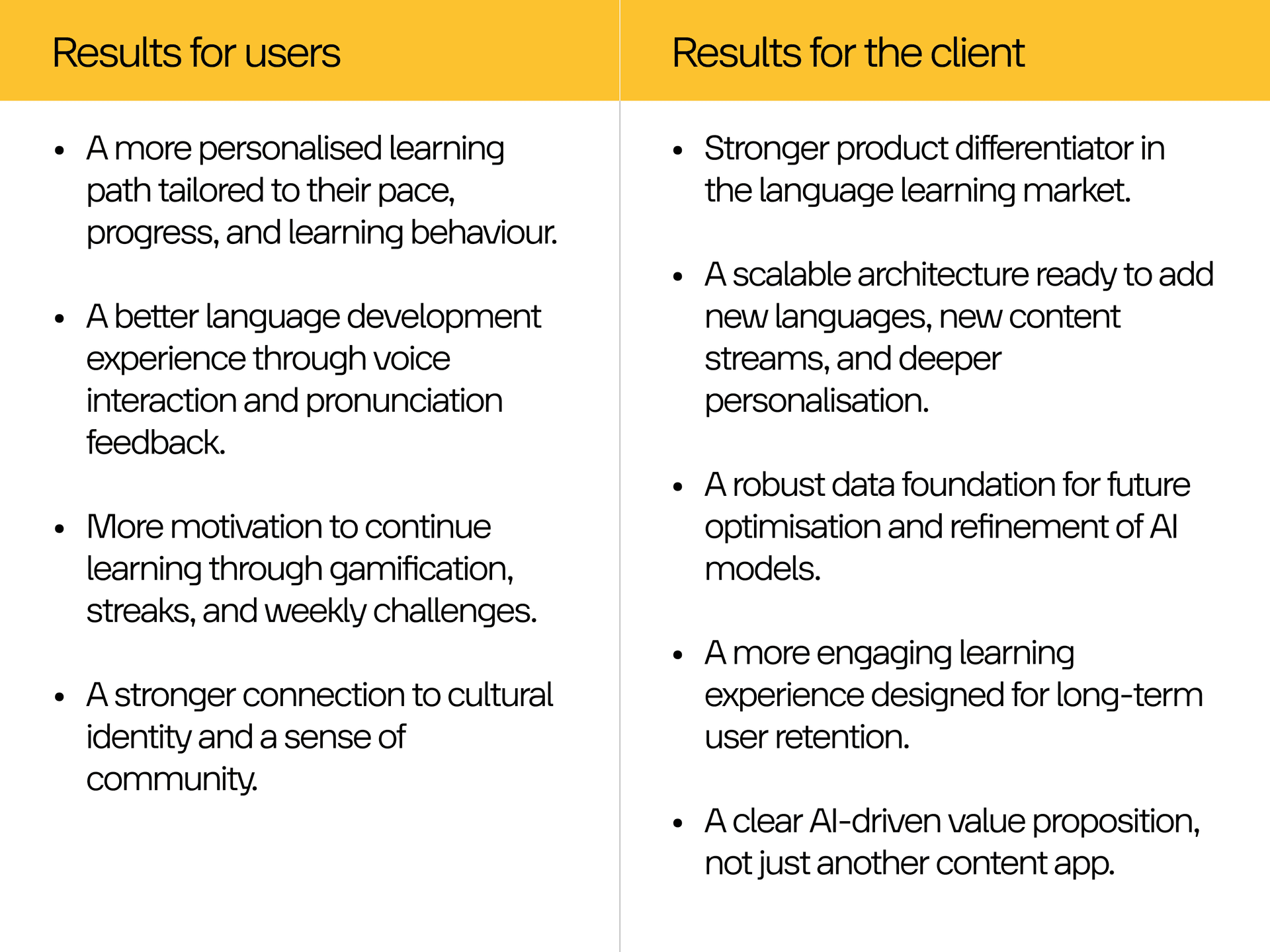
As a result, we created an AI-powered learning platform that combines adaptive learning flows, speech-based practice, intelligent feedback, gamified engagement loops, community mechanics, and analytics-driven optimisation. The product turned out to be ready for further growth, both in terms of content and AI personalisation.
Summary
This case study clearly shows how we, at Lumitech, approach AI development. We understand that the best results can be achieved when artificial intelligence becomes a core system layer and works together with product design, data analytics, engagement mechanics, and scalable architecture.
In this project, we helped a client turn a strong cultural idea into a technically mature digital product: a platform that supports language preservation, works with real user behaviours, and creates long-term value for both the business and the user community.
And to put it in a very human way: we didn’t just make an app for learning a language. We helped build a system in which language is no longer something we once knew as a child, and becomes part of everyday life again.


