A Sober Look at AI Solutions in Healthcare: Adoption, Evidence, and ROI in 2026
Hospital leaders have no shortage of AI products to choose from. The hard part is deciding which use case deserves funding, what evidence to trust, and what to test before a system reaches a patient. This guide answers all three with published numbers.
- AI Development
- Healthcare
August 07, 2026
 AI Overview
Healthcare AI produces its clearest near-term value in documentation, prior authorization, scheduling, and imaging triage. Administrative tools can be assessed in terms of time and cost; clinical tools also require local performance testing, subgroup analysis, human oversight, and monitoring after launch.

The tipping point is behind us: artificial intelligence in healthcare is now part of everyday hospital work. AI assistants write draft notes during visits, imaging models spot strokes faster, and back-office automation saves real hours. And yet hospitals want more of it: healthcare software development services, AI/ML development services, and AI prototype development services are now among the fastest-growing requests we see from medical organizations.
Few still argue about the need. The real questions are simpler and harder: how much AI does your hospital need, where exactly, and who keeps an eye on it? This article walks you through the answers. It shows which AI solutions in healthcare have solid studies to back them, why the back office usually pays off first, and how to roll out a model safely, step by step.
Why Hospital Boards Now Fund AI in Healthcare
Boards fund what clinicians already use, and that use is now mainstream: in the AMA’s 2026 survey of 1,692 US doctors, 72% reported at least one AI use case in their practice, with research and standards-of-care summaries the most common, at 39%. The survey is self-reported, and most published numbers come from the US, the best-documented market.
Adoption alone, though, does not sign a budget. Four board-level arguments do, and none of them is enthusiasm for algorithms.
A maturing regulatory market. The first board question is risk, and on the device side the answer has changed: what was recently experimental now arrives with a regulatory file attached. The FDA lists more than 1,500 AI-enabled medical devices, most of them in radiology, and the agency itself calls the list incomplete. For most hospitals, AI in healthcare is now a purchasing decision more than a research question.
Workforce economics. The second question is capacity, and no roadmap offsets the demographics behind it. The staffing shortage is global; the WHO now expects a shortfall of 11.1 million health workers by 2030, and burnout pushes experienced clinicians out even earlier. Hiring alone cannot close that gap; software removes the work that never needed a clinician’s judgment, and boards increasingly describe those returned hours as a retention lever when they fund it.
Cost pressure. The third argument requires no forecast; it lies in the current operating ledger. Administrative work accounts for roughly a quarter of US healthcare spending, according to the American Hospital Association. Automation aimed at this quarter competes on a visible line item, making it an easy case to argue for in any budget.
Generative models. The fourth argument is integration readiness, and it arrived last. Language models have matured, and EHR vendors have embedded them where clinicians already work. Turning them on can be as simple as a settings change, which is exactly why governance has replaced procurement as the hard part.
The four arguments share one hidden assumption: everyone at the table means the same thing by “AI.” So what is AI in healthcare in operational terms? It is software that extracts, classifies, predicts, or generates from clinical and administrative data. That single definition, dry as it sounds, spans everything: claim-denial prediction, scan classification, note drafting. What separates these uses of AI in healthcare is the cost of a mistake, so each needs its own level of proof.
One thing they all share is a dependence on usable data: inconsistent codes, duplicate records, and missing context resurface in the output. Experienced teams include data processing in healthcare in the project scope instead of treating it as preliminary cleanup; the projects worth funding begin with a workflow and a trustworthy data path. A model demo can wait.
The safest place to start, and the place most health systems did start, is the back office.
Administrative Automation: Where AI Pays for Itself First
Administrative work has two properties clinical care lacks: every step leaves a measurable trace, and most outputs can be checked before they take effect. A miscoded claim can be caught in review and fixed before it delays payment or care. That checkability made the back office the natural starting point for AI automation in healthcare.
Ambient AI Scribes and Clinical Documentation
Documentation takes up more of a clinician’s day than patients do: a pre-ambient time-and-motion study found two hours of EHR work for every hour of direct patient care. Ambient scribes, such as Microsoft’s DAX Copilot, record the visit and draft a structured note for the physician to edit and sign.
A 2025 multicenter JAMA Network Open study found burnout 13.1 points lower after adoption (38.8% against 51.9%) and after-hours documentation down from 4.95 to 4.05 hours per week, in a pre/post design without a control group; a 2026 study of 1,547 DAX users with objective EHR logs saw more moderate effects. The drop in burnout, more than the minutes, is what health systems actually pay for.
Revenue Cycle, Prior Authorization, and Patient Access
Ask any US physician what they would automate first, and prior authorization usually tops the list. In December 2025, the AMA counted about 40 requests and 13 staff hours per practice each week, with 95% of doctors saying the process delays care. Software now assembles the request end-to-end and flags likely denials before anything goes out. What no algorithm can fix is a payer that never joined the electronic standard: the 2024 CAQH Index put the potential savings at $515 million a year, and AI and automation in healthcare revenue cycles work as well as the pipes they run through.
At the front desk, scheduling assistants, symptom intake, and follow-up messages run around the clock. Two judgment calls remain human: the fairness of a no-show score and the point of handoff, both detailed in our guide to AI chatbots in healthcare.
The same automation reaches contract checking, staffing forecasts, and supply reordering, and all of these healthcare AI solutions follow one design principle: automate the paperwork around a decision and keep the decision itself human. In McKinsey’s survey, leaders ranked administrative efficiency as the top AI opportunity; in our client work, administrative AI healthcare solutions are where first-year positive ROI shows up most often, once the math counts FHIR integration, API bills, and clinician review hours.
If your top five reports lack named owners and replayable lineage, that is where we start. Tell us which reports matter, and we will map the gaps.

Whichever workflow you pick, the administrative win usually comes first; clinical AI enters next, and there the rules change: a mistake can reach a patient before anyone checks it, and the burden of proof rises with that risk.
Clinical AI: Where the Proof Must Be Local
Clinical tools live by a different standard. A drafted note must pass through a physician’s hands before it counts; a stroke alert speeds a treatment decision by minutes, with far less room for review. How AI is used in healthcare changes character at this point: the output directly touches a patient, regulators watch every step, and the bar for proof rises accordingly.
Ahead are the strongest results in the field, and one failure that taught the industry more than most successes did.
How Can AI Be Used in Healthcare Diagnostics
Diagnostics starts with imaging for a simple reason: a scan provides a verifiable answer; a chest CT either contains a pulmonary embolism, or it does not, so models can be tested against real data rather than opinion. Five AI applications in healthcare imaging illustrate the range.
Mammography (screen triaging). The strongest randomized evidence in screening so far comes from Sweden. The MASAI randomized trial analyzed 105,915 women and used AI to sort screens between single and double reading:
Sensitivity rose to 80.5% (vs. 73.8% under standard double reading)
Specificity held firm at 98.5%
Workload dropped, with radiologists reading 44% fewer screens
Context: every screen still got a human reading, from one product in one Swedish program.
Stroke triage. Tools such as Viz.ai scan incoming CT angiograms and alert the interventional team to a large vessel occlusion. A cluster-randomized trial cut door-to-groin time by 11 minutes; observational studies report gains of more than 30 minutes, and in stroke care, minutes mean preserved brain tissue.
Autonomous retinopathy screening. In 2018, the FDA authorized the first fully autonomous diagnostic system through its De Novo pathway. It issues screening results without a specialist reading the image, moving diabetic eye screening into clinics with no ophthalmologist on staff.
Digital pathology. The first FDA-authorized AI for prostate cancer detection, Paige Prostate, works as a second read; in a reader study, pathologists’ sensitivity rose from 74% to 90% with the AI’s help.
Non-invasive hemodynamic modeling. HeartFlow models coronary blood flow from a standard CT scan; in the PLATFORM study, its results led clinicians to cancel 61% of planned invasive angiographies. The value is distinct because it removes a procedure instead of speeding one up.
Today, these are the AI in healthcare tools with the strongest published trial results in imaging; all five do one narrow job, which is a large part of why the results hold up.
Predictive AI in Healthcare: The Example of the Epic Sepsis Model
Prediction is harder than perception, and the Epic Sepsis Model shows why in two versions; one of them may already be running inside your EHR.
Version one shipped inside the most widely used US EHR and ran at hundreds of hospitals. A 2021 external validation study from the University of Michigan, published in JAMA Internal Medicine, reported an AUROC of 0.63: at the assessed threshold, about two-thirds of sepsis cases were missed, with alerts on 18% of all hospitalizations.
Epic rebuilt the model, and version two achieved an AUROC of 0.82-0.92 across sites in a 2026 JAMA Network Open study. The fine print still matters: positive predictive value ranged from 0.13 to 0.26, and the score required for equal sensitivity ranged from 14 to 37 between hospitals. The arc became a canonical AI in healthcare case study, and its conclusion holds for every model: local validation, a locally chosen alert threshold, and monitoring after launch.
How is AI being used in healthcare prediction responsibly today? In silent mode first, for months, with performance watched like any other quality metric, because patient mix, coding, and devices differ across sites and vendor metrics reflect the vendor’s population. If a vendor resists that step, this story is the reason to insist. The pattern in both stories is fit between tool and task, easier to judge once the families sit side by side.
Matching AI Technologies to Hospital Workflows
On a product page, the word “AI” can cover five different technology families, from simple rule checks to large language models, plus agentic setups that organize the others into multi-step workflows. The types of AI in healthcare are often confused with one another, and a mismatch between technology and task is a common reason projects fail. Each family fits different tasks, delivers a different kind of return, and fails in its own way.
AI technology family | Core healthcare use cases | Where the return shows up | Main risk and mitigation |
|---|---|---|---|
Rule-based systems | Drug-drug interaction alerts, standard clinical care pathways | Compliance incidents prevented at near-zero compute cost | Alert fatigue. Mitigation: regular logic pruning. |
Classical machine learning | No-show prediction, readmission risk, claim denial forecasting | Fewer no-shows, denials, and readmissions on structured data | Model drift. Mitigation: continuous monitoring and local retraining. |
Deep learning (computer vision) | Radiology triage (CT/X-ray), mammography screening, digital pathology | Faster reads and earlier findings against a checkable ground truth | Scanner and hardware variance. Mitigation: site-specific historical validation. |
Generative and foundation models | Ambient documentation, patient portal replies, chart summaries | Hours returned from documentation and patient messaging | Hallucinations. Mitigation: mandatory human-in-the-loop review. |
Agentic AI (emerging) | Multi-step administrative coordination, complex scheduling workflows | Whole workflows completed without human handoffs | Unpredictable agent loops. Mitigation: strict execution boundaries and audits. |
What separates these families most in practice is how directly their output can affect patient care.
Two points matter when reading this matrix. Agentic AI is best read as an architecture built on the other technology families: McKinsey reports that 19% of surveyed healthcare organizations have implemented AI agents, another 51% are testing them, and these systems need narrow responsibilities and firm execution limits, because one agent can pass an error to the next.
Model quality alone does not determine the outcome. The technology must fit the task: structured prediction may need classical machine learning, while documentation usually calls for a language model. A separate guide to AI in healthcare applications maps these tasks to model families.
Which Healthcare AI Use Case Should You Fund First?
Choosing the right technology does not settle the funding decision. Use cases still differ in how quickly they show value, how much integration they demand, whether reliable data for them already exists, and how far an error can travel before someone catches it. Weighed together, those factors give hospital leaders a practical starting order.
Use case | Evidence strength | Relative time to value | Implementation burden | Patient risk | Metric to baseline first |
|---|---|---|---|---|---|
Ambient documentation | Medium | Months | Medium | Low to medium | Editing time per note |
Prior authorization | Medium | Months | Medium to high | Low to medium | Staff hours per request |
Scheduling | Medium | Months | Low to medium | Low to medium | No-show and booking rates |
Imaging triage | High for selected tasks | Longer | High | High | Door-to-treatment time |
Predictive alerts | Variable | Longer | High | High | Sensitivity and alert burden |
A first AI project belongs in a workflow where the baseline is visible, and every output can be reviewed before it acts: documentation, prior authorization, scheduling. Imaging triage becomes a strong candidate once the clinical workflow, local data, and validation capacity are in place; predictive alerts come last because their performance depends heavily on the population and the alert threshold.
The remaining question is practical: how do you verify the selected use case in your own hospital before signing?
AI Solutions in Healthcare: Five Use Cases to Verify Before Buying
The strongest AI use cases in healthcare are covered above; how is AI used in healthcare once the budget committee asks for proof? The answer is local verification, and the five AI in healthcare examples below form that checklist: each names the local baseline, what to verify, and the signal to stop.
AI-supported mammography. Baseline: current cancer detection and recall rates. Verify population and scanner fit, recall workflow integration, and radiologists’ responses to AI-sorted reading queues. Stop if false positives or reading delays offset the detection gain.
Stroke triage. Baseline: today’s door-to-treatment time. Verify scanner integration, transfer routes, and who answers the alert at 3 a.m. Stop if alerts arrive after the team has already acted.
Ambient documentation. Baseline: editing time per note and after-hours load. Verify draft quality by specialty, error rates, and the patient consent workflow. Stop if clinicians spend longer repairing drafts than they used to spend writing.
Prior authorization and denials. Baseline: staff hours per request and first-pass approval rate. Verify payer coverage, appeal quality, and overturned dollars net of labor. Stop if too few of your payers support the electronic rails.
Hospital operations and capacity. Baseline: emergency department boarding time; the Johns Hopkins command center is a widely published example. Verify whether downstream units can staff and act on a forecast. Stop if predictions arrive faster than anyone can respond to them.
Application | What it does | Headline result |
|---|---|---|
Mammography (screen triaging) | AI sorts screens between single and double reading (MASAI trial) | 44% less reading, sensitivity 80.5% vs 73.8% |
Stroke triage | Viz.ai flags large vessel occlusion on incoming CT angiograms | Treatment faster by tens of minutes |
Retinopathy (autonomous screening) | Issues a screening result without a specialist reading the image | First autonomous dx, FDA De Novo 2018 |
Digital pathology | Paige Prostate works as a second read on prostate biopsies | Fewer missed cancers with AI plus pathologist |
Hemodynamic (modeling) | HeartFlow models coronary flow from a standard CT scan | Replaces invasive catheterization |
The Infrastructure Layer Under AI Solutions in Healthcare
Many AI solutions for healthcare succeed or fail at the data layer beneath the model: none of these healthcare AI use cases work on siloed records, and each draws on its own mix of EHRs, devices, and payer systems, placing data interoperability in healthcare on the critical path.
Two patterns run through the successful applications of AI in healthcare covered here: each paired a narrow model with a redesigned workflow, and each team measured a rigorous baseline before deployment.
Healthcare AI solutions that skip either step tend to produce impressive demos and empty dashboards. Two questions should survive every budget review: did the workflow metric improve, and did the control burden stay proportionate to the gain?
Both patterns are easier to show than to describe, so two of our builds below walk through them.
Customer Stories
Explore What We've Built
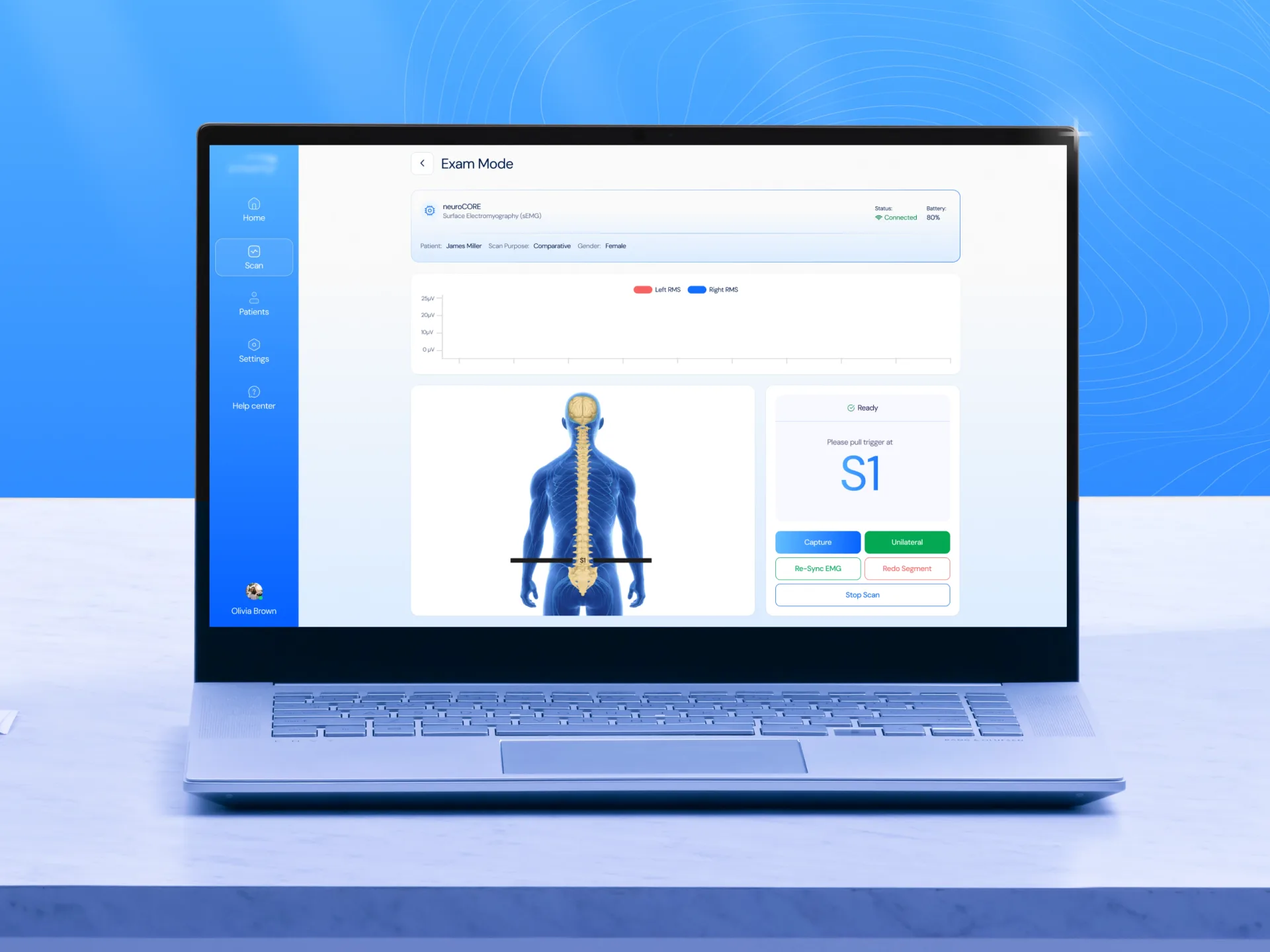
Redesign & Modernization of a Clinical Diagnostics Platform
Redesigning a clinical neurotechnology platform by improving data visualization, decision-support workflows, and patient-facing reporting across a complex hardware-software diagnostic ecosystem.

Toronto
Sept '25 - Feb '26
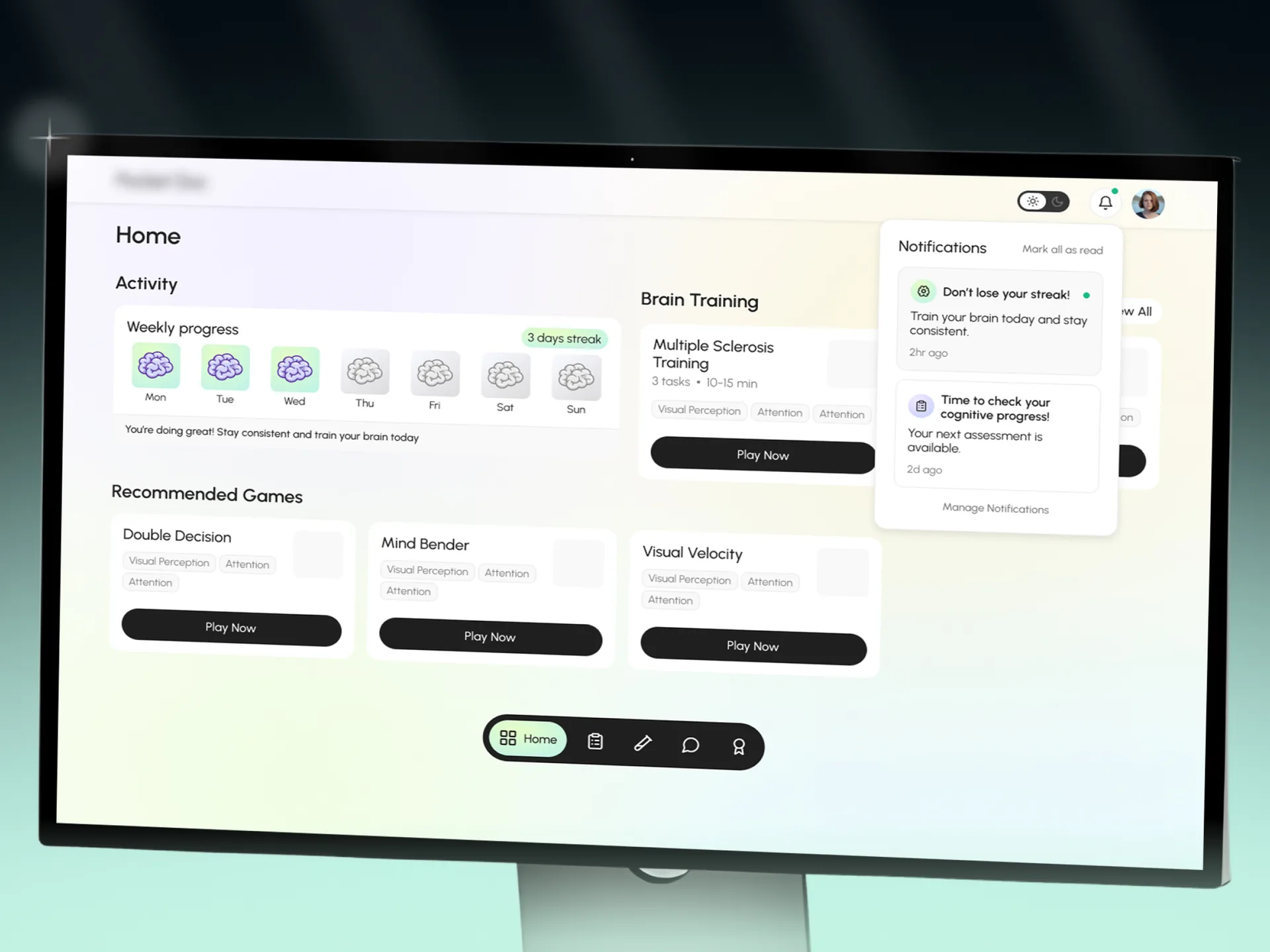
An AI‑Powered Cognitive Training and Brain Health Platform
Turning generic “brain games” into a personalized, data‑driven cognitive training experience – combining adaptive daily workouts, real health data insights, and a conversational AI assistant in one product.

Houston
Oct '25 — Mar '26
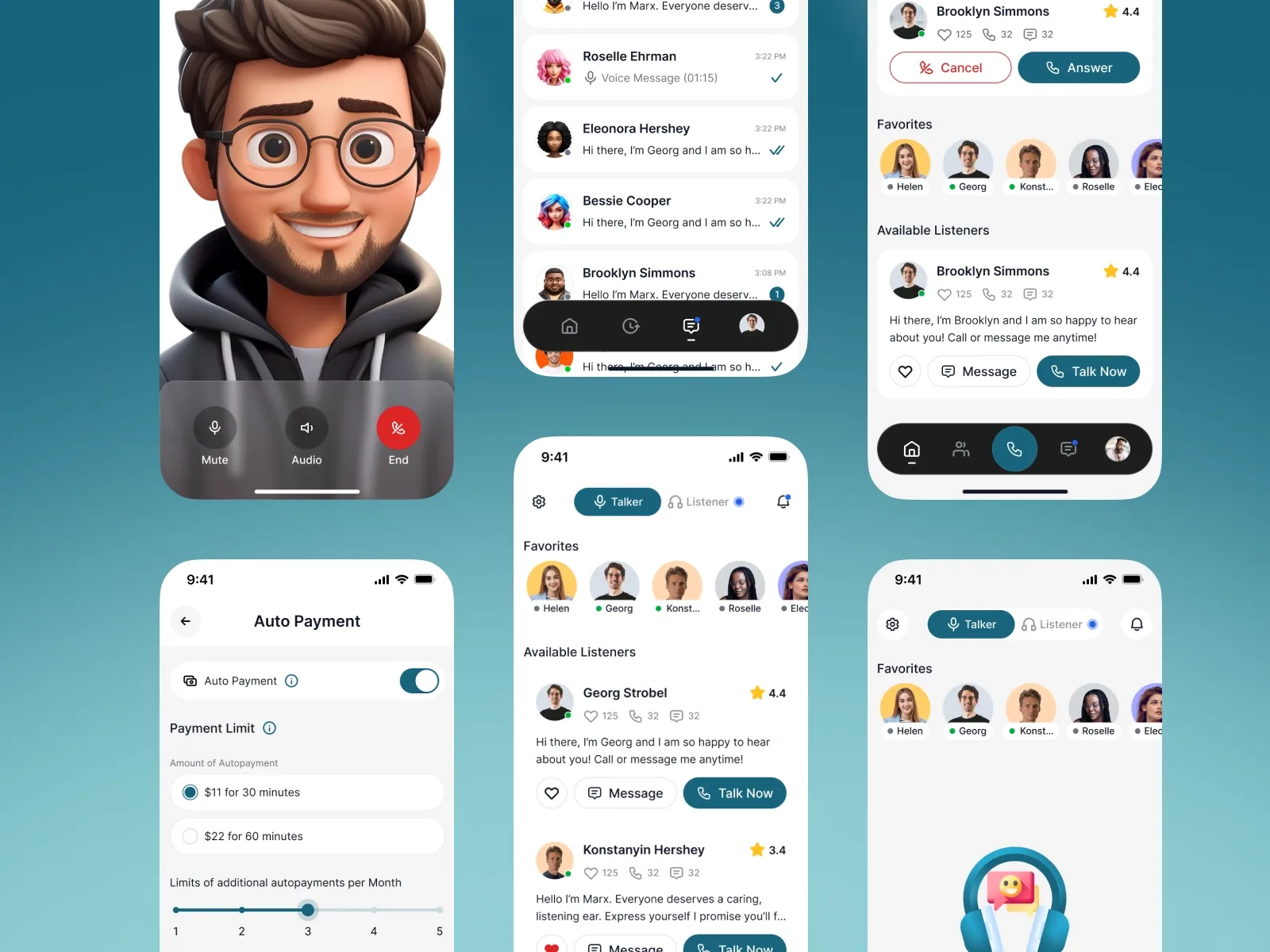
Mental Health App Built for Wellness and Real-Time Support
Learn more about our mental health app development process, the technology behind this powerful application, and how we helped a first responder from the Second City create it.
Chicago
Jun ’24 – Oct ’24
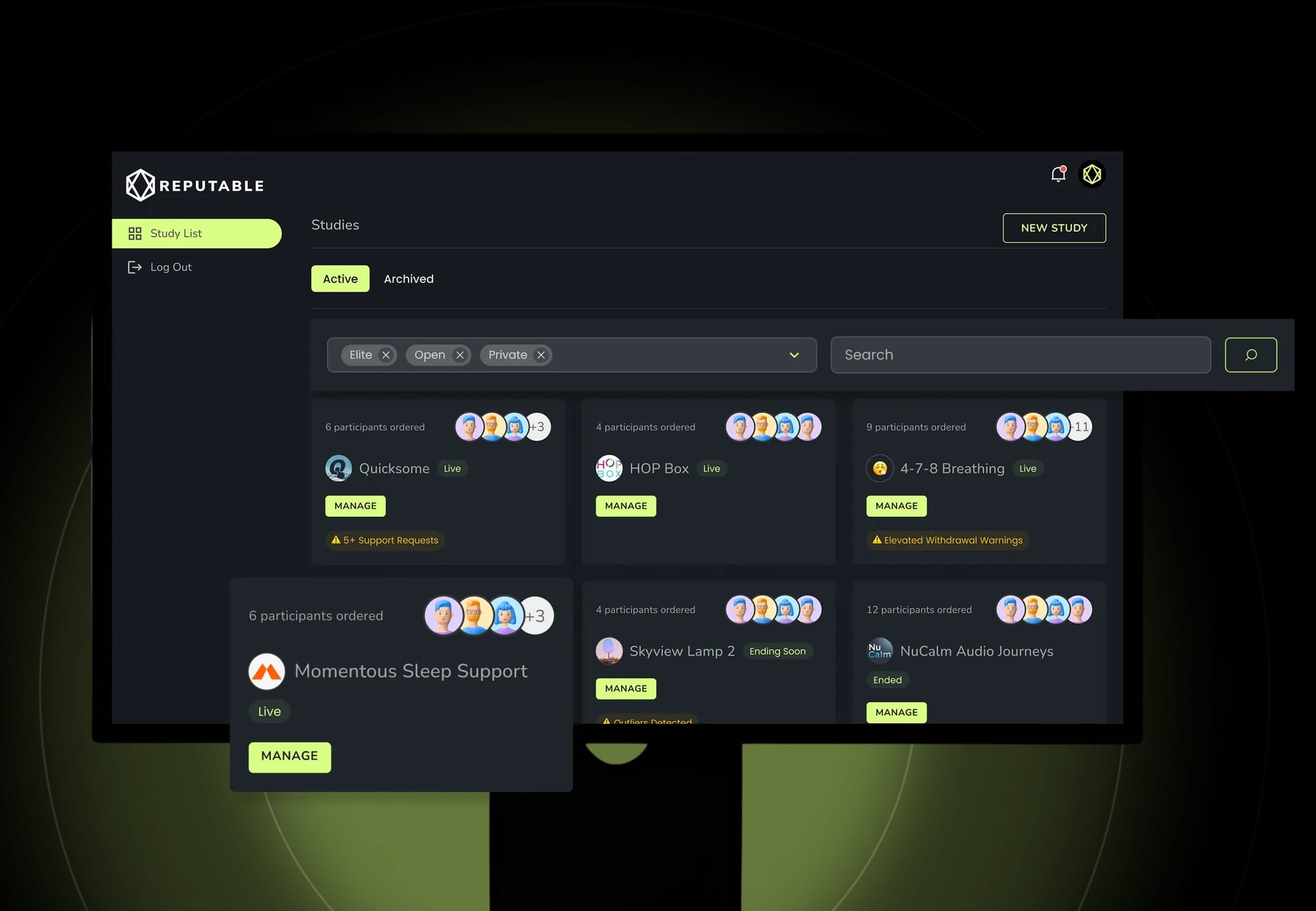
Reputable Health X Lumitech
A powerful, rebuilt AI engine delivering fast evidence generation, automated insights, and seamless analytics fueled by reliable wearable integrations.
Toronto
Feb 25 — Now
Health & Wellness
Redesign & Modernization of a Clinical Diagnostics Platform
Redesigning a clinical neurotechnology platform by improving data visualization, decision-support workflows, and patient-facing reporting across a complex hardware-software diagnostic ecosystem.
Client Location
Toronto
Duration
Sept '25 - Feb '26
Platform
Mobile and Desktop
An AI‑Powered Cognitive Training and Brain Health Platform
Turning generic “brain games” into a personalized, data‑driven cognitive training experience – combining adaptive daily workouts, real health data insights, and a conversational AI assistant in one product.
Houston
Oct '25 — Mar '26
Mental Health App Built for Wellness and Real-Time Support
Learn more about our mental health app development process, the technology behind this powerful application, and how we helped a first responder from the Second City create it.
Chicago
Jun ’24 – Oct ’24
Reputable Health X Lumitech
A powerful, rebuilt AI engine delivering fast evidence generation, automated insights, and seamless analytics fueled by reliable wearable integrations.
Toronto
Feb 25 — Now
Risks and Controls: How to Run Healthcare AI Securely
How much control does an AI system need? Exactly as much as it can change: a note assistant that only drafts text sits at one end of that scale, a diagnostic model that can alter treatment at the other. Regulators reason the same way: the EU AI Act can classify a medical system as high-risk depending on its intended use, and the FDA’s draft lifecycle guidance follows adaptive device algorithms beyond approval, so start by classifying the product.
Governance, meanwhile, lags adoption: WHO/Europe reported in July 2026 that two-thirds of surveyed countries already use AI in diagnostics while only 8% have a dedicated strategy, so internal discipline carries the load. It comes down to three habits: know the failure modes, keep a list of your models, and launch in stages. For AI healthcare solutions, the failure modes cluster into four groups.
Four Failure Modes and Where They Hide
Bias hides in proxies. A widely used US risk algorithm, analyzed in Science in 2019, assigned lower risk scores to Black patients than to equally sick white patients because it used past healthcare costs as a stand-in for need. The control: compare performance across patient groups before rollout.
Drift sets in as populations, coding practices, or devices change over time, and performance that once tested well degrades. The control: a recalibration schedule and retirement criteria set in advance.
Fabrication belongs to language models, which can omit critical details or add statements absent from the source record, in fluent, confident prose. The control: source-linked outputs and mandatory review.
Privacy and security exposure follows PHI wherever healthcare artificial intelligence solutions touch it: training data, prompts, and logs. The control: map every point where PHI enters and leaves the system, and treat the model itself as an attack surface.
Two faces of that fourth group are new enough to call out separately. The first is shadow AI: a clinician pastes patient details into a public chatbot to rephrase a note, and PHI leaves every control the organization built. The workable counter is a sanctioned alternative backed by a policy people can follow. The second is adversarial attack: prompt injection, poisoned training data, and stolen model weights, threat vectors a classic security review never covered.
Those are the risks, the first habit. The second is knowing exactly what you run.
Know Which AI Runs in Your Hospital
You cannot monitor a system that nobody owns, so leading systems keep an inventory of the artificial intelligence healthcare solutions they run, much the way a pharmacy keeps a formulary: intended use, version, validation results, owner, monitoring thresholds, retirement criteria, reviewed quarterly. It also supports legal traceability: if an AI-assisted decision is challenged, logs of prompt, context, output, and approval are the first records lawyers ask for, though retention and discovery terms belong with your counsel. The inventory sounds bureaucratic until an auditor or a plaintiff’s attorney asks which models were involved in a patient’s care; at that moment it saves far more than it costs.
How to Roll Out a Model Safely, Step by Step
So how can AI be used in healthcare without exposing patients to untested decisions? Mature AI in healthcare projects follow a staged release:
Define one use case. Name the decision, the user, the current baseline, and the cost of an error.
Confirm the legal and data requirements. Determine the regulatory classification and sign the required agreements: BAAs in the US, GDPR processor terms in Europe, zero-data-retention clauses wherever third-party APIs are involved.
Validate locally. Test performance on your own data, devices, and patient groups before trusting any published number.
Run in silent mode. Generate outputs without changing care, measure missed cases, false alerts, latency, and workload, and recruit clinical champions for the rollout.
Limit the first release. Set review rules with a human in the loop who stays critical of the output, because automation bias, over-trusting a confident suggestion, is a failure mode of its own; add alert thresholds tuned against fatigue, audit logging, and a tested way to stop the system.
Monitor after launch. Track drift, overrides, incidents, and subgroup performance under a named owner, as with infection rates.
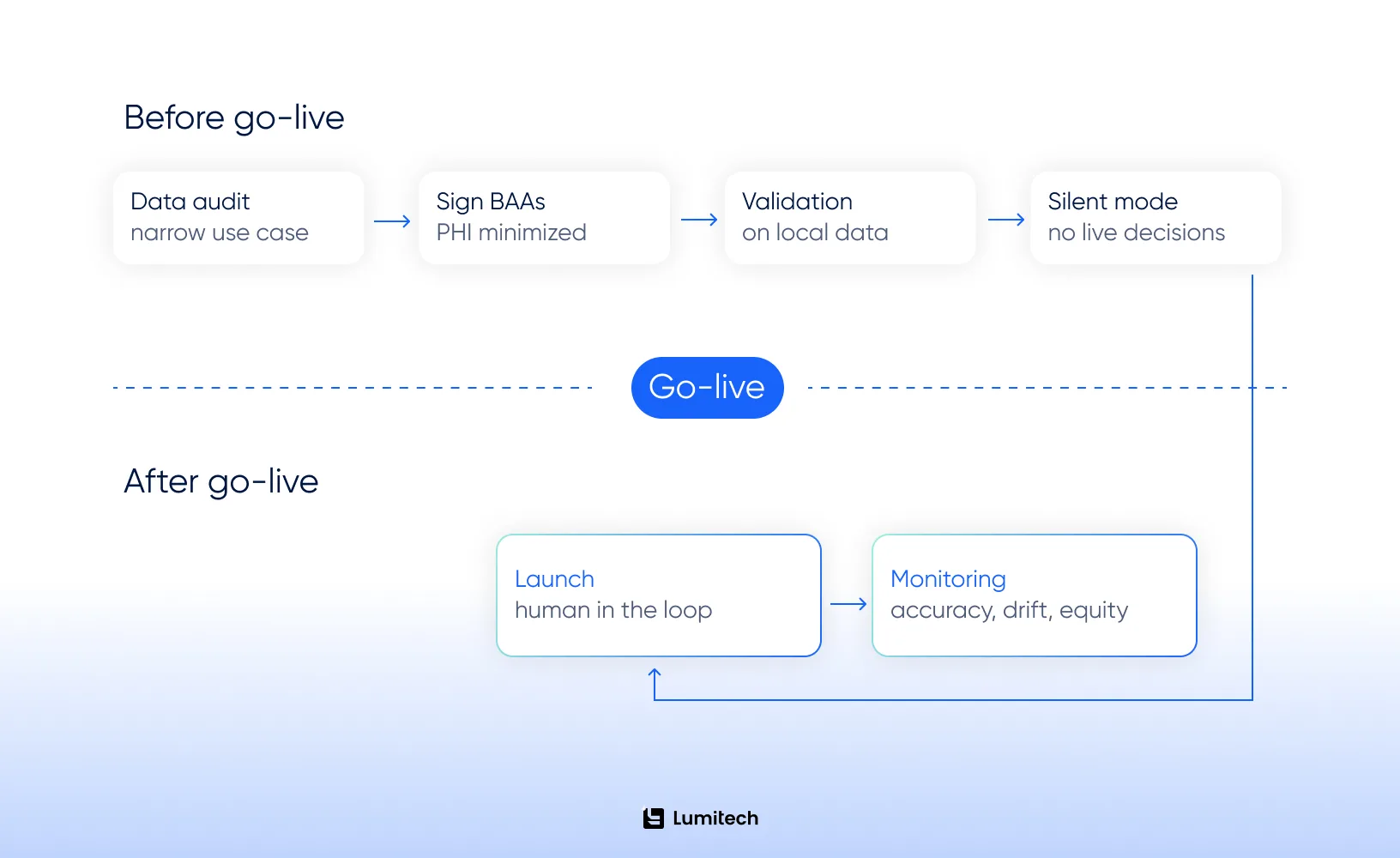
Each of these steps closes a specific risk, and together they follow one pattern reversibility: deploy where mistakes can be caught, expand as results accumulate.
How to Choose a Healthcare AI Development Partner
The path through this article is also a filter for choosing who builds with you: administrative automation first, clinical tools after local validation, monitoring for as long as anything runs. AI in healthcare rewards that order more than any single tool choice, so ask every candidate one question first: how will you prove the solution works safely in our workflow, beyond a test dataset?
A mature partner answers with documents before code: a data readiness assessment, a risk classification, a validation plan built with clinical experts, an integration map, a monitoring plan with named metrics, and clear ownership terms for code, data, and models. This is exactly how Lumitech builds AI-powered healthcare solutions: a working prototype in a few weeks, validation on the client’s real data, and only then production.