
Conversational AI for Wellness Coaching: From Chatbot to Responsible System
Wellness coaching is having a moment. Not the “buy a green juice and become a new person” moment — more like the “I need help staying consistent, sleeping better, managing stress, and I’d prefer not to wait three weeks for an appointment” moment.
- Health & Wellness
- AI Development
January 19, 2026
 AI Overview
Conversational AI for wellness coaching combines large language models, motivational-interviewing conversation design, and safety classifiers to support habit change without diagnosing medical conditions. Core components include a retrieval-based knowledge layer, crisis-detection guardrails, and human-in-the-loop handoff. Because unsafe responses risk real harm, platforms like Lumitech's Loqui Listening route distressed users to live human support rather than relying solely on AI.

That’s where conversational AI shows up: always available, never “booked,” and surprisingly good at holding a supportive dialogue. It’s also where things get tricky. In wellness and mental well-being, the line between “coaching” and “care” can blur quickly, especially when an AI speaks in a calm, confident voice at 2:17 a.m.
This article breaks down how conversational AI for wellness coaching works, how it’s used in digital platforms, how user data should be protected, what guardrails matter most (and why), and what outcomes you can realistically measure. We’ll anchor the discussion in a real-world build: Lumitech’s case study for Loqui Listening, a mental wellness app that connects users to active, compassionate listeners on demand — 24/7, anonymously, and without judgment.
Loqui Listening is not positioned as “AI therapy.” It’s human-to-human support at the moment you need to talk. That’s exactly why it’s a useful case study for conversational AI: it shows what “good support” looks like, what safety expectations users bring, and what platform realities (real-time communication, anonymity, payments, and reliability) feel like when you’re building something people may use on their hardest days.
How Does Conversational AI in Wellness and Health Coaching Work?
Conversational AI for wellness coaching is a system designed to hold a dialogue that nudges behavior change, supports reflection, and helps users build habits, without claiming to diagnose or treat medical conditions.
At a high level, it combines:
Language understanding and generation (often using large language models) to interpret what a user says and respond naturally.
Conversation design grounded in coaching methods (motivational interviewing, CBT-inspired reframes, habit loops, goal setting).
A safety layer that constrains responses when users are vulnerable, distressed, or seeking medical advice.
A personalization layer that remembers user preferences and context (with strict privacy controls).
An outcomes layer that measures whether the coaching is helping—or at least not harming.
If that sounds like “a chatbot,” it’s because it does. But not the 2016 kind that replies, “I didn’t understand that.” Modern AI-driven wellness coaching agents are usually orchestrated systems, not a single model answering everything.
The “under the hood” architecture (practical, not sci-fi)
Many wellness agents are really behavior change technology wrapped in a friendly conversation — using prompts, goals, reinforcement, and reflection to make habits stick. A typical wellness coaching architecture looks like this:
User interface (mobile/web/voice) Users chat, speak, or journal. (Loqui uses real-time voice calls; AI coaching platforms increasingly adopt voice too, because typing feelings is not everyone’s hobby.)
Conversation orchestrator A service that decides what happens next: which model to call, what context to include, which tools to use (e.g., check-in prompts, habit trackers), and whether to trigger safety flows.
Knowledge and policy layer (RAG + guardrails) A retrieval layer pulls from vetted content (your coaching scripts, clinically reviewed safety text, product FAQs) rather than relying on model memory. This reduces hallucinations and helps keep guidance consistent.
Safety and risk detection Classifiers or rule-based detection look for crisis language, self-harm cues, eating-disorder cues, abuse indicators, mania/psychosis markers, or medical red flags. When risk is detected, the system switches mode: it may provide crisis resources, encourage seeking professional help, or route to a human.
Human-in-the-loop handoff Critical for mental wellness products: the “I need a person” path should be fast. This is where Loqui’s model is instructive — its whole value is immediate human listening when it matters most. In an AI-assisted platform, handoff isn’t a failure; it’s a safety feature.
Observability and quality monitoring Logging, evaluation, and incident response. NIST’s AI Risk Management Framework and its Generative AI profile emphasize managing AI risk across the lifecycle — govern, map, measure, and manage — rather than treating “safety” as a one-time checklist.
In other words, conversational AI for wellness coaching should behave less like a “smart friend” and more like a well-designed product with rules. Warm tone is great. Unbounded improvisation is not.
A Case Study Lens: What Loqui Listening Teaches Us About “Support at the Moment of Need”
Loqui Listening is a Chicago-based on-demand platform offering users immediate access to anonymous, compassionate listeners whenever they need someone to talk to. That “whenever” matters: the promise of 24/7 availability is the same promise conversational AI makes, so the product expectations overlap, even if the “listener” is human rather than a model.
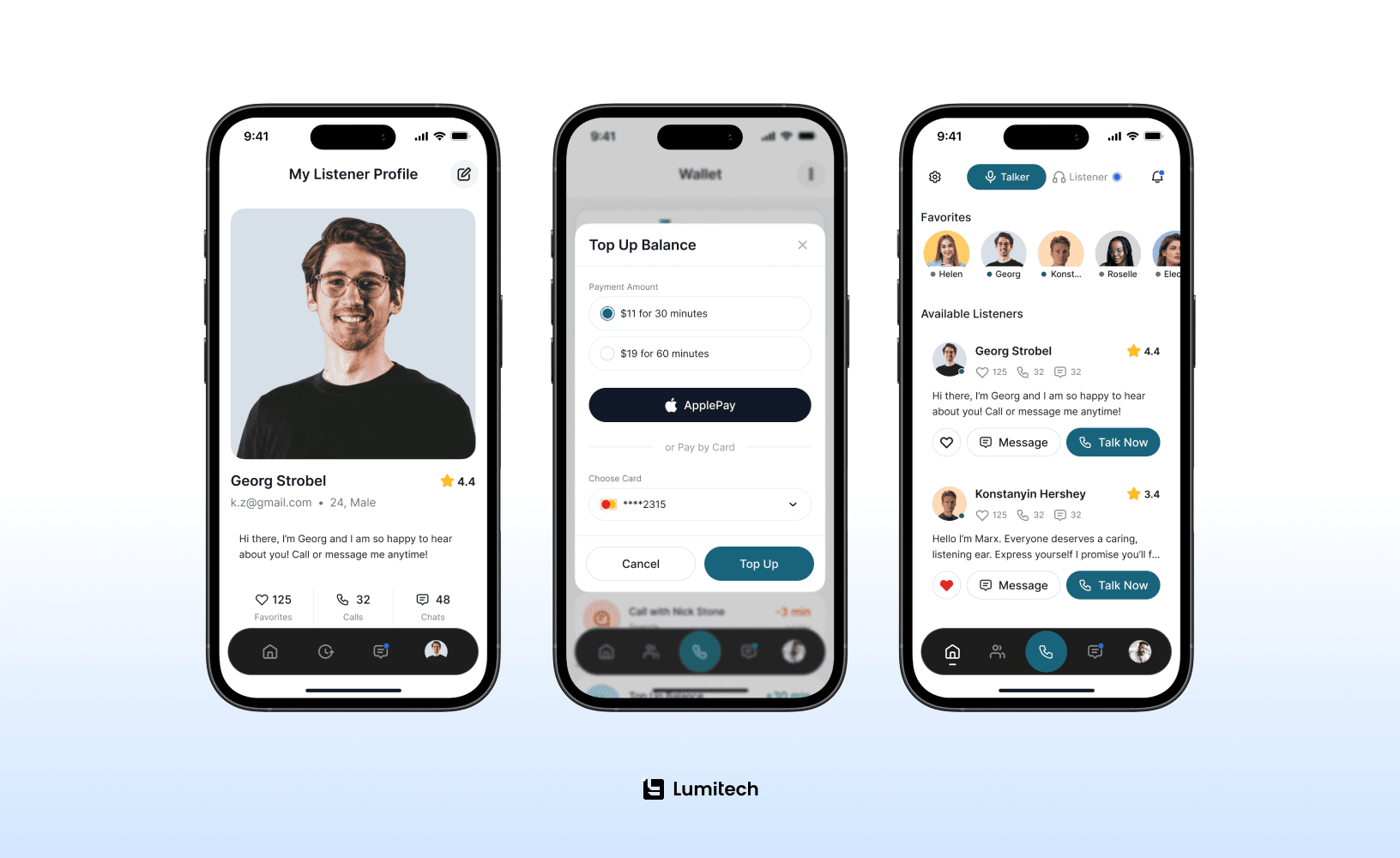
The Lumitech team delivered the project as a mobile product from June 2024 to October 2024, using React Native for cross-platform iOS/Android development and integrating Twilio for real-time voice communication. The build surfaced practical realities that translate directly to AI-powered wellness coaching:
Real-time conversations are hard. The team ran into instability with the official Twilio Voice SDK and solved it with custom native bridges, plus platform-specific optimizations — especially for lower-end Android devices.
Monetization can become a system's problem. Loqui’s billing model was usage-based (minutes in conversation), tied to in-app purchases and accurate call tracking, which required careful engineering to synchronize call durations, balances, and deductions.
The product doesn’t end at launch. The project moved into a support phase, with approximately 40–60 hours per month under a retainer model — an important reminder that wellness products require ongoing iteration, quality improvements, and operational attention.
Now imagine adding conversational AI into this ecosystem. You don’t remove complexity, you shift it. Voice becomes voice plus AI prompts and context handling. Anonymous conversations become anonymity plus sensitive data policies. And “support anytime” becomes “support anytime, safely.”
The lesson from Loqui is simple: in wellness, the experience must feel emotionally comfortable and operationally reliable, not merely clever. The case study even calls out the app’s intentionally clean, minimalistic design focused on ease and comfort. Maintaining emotional comfort at scale often requires predictive UX research, especially when users arrive distressed, and you have seconds, not minutes, to earn their trust. That’s the bar conversational AI has to meet before anyone should trust it with coaching.

How is Conversational AI Used in Digital Wellness Platforms?
Most platforms don’t use an AI health coach as a “replacement human.” They use it as a front door, a coach between sessions, and a support layer that makes the app feel alive.
Here are common (and actually useful) patterns.
1) Onboarding that feels like a conversation, not paperwork
Instead of “Select your goals (check all 19),” the AI asks a few gentle questions and builds a plan. The trick is not making users feel interrogated. People don’t want to fill out a wellness tax return.
A safe version of this flow includes:
transparent disclaimers (“I’m an AI coach, not a clinician”)
consent for what’s saved
the ability to skip sensitive questions
guardrails if a user reveals crisis or medical conditions
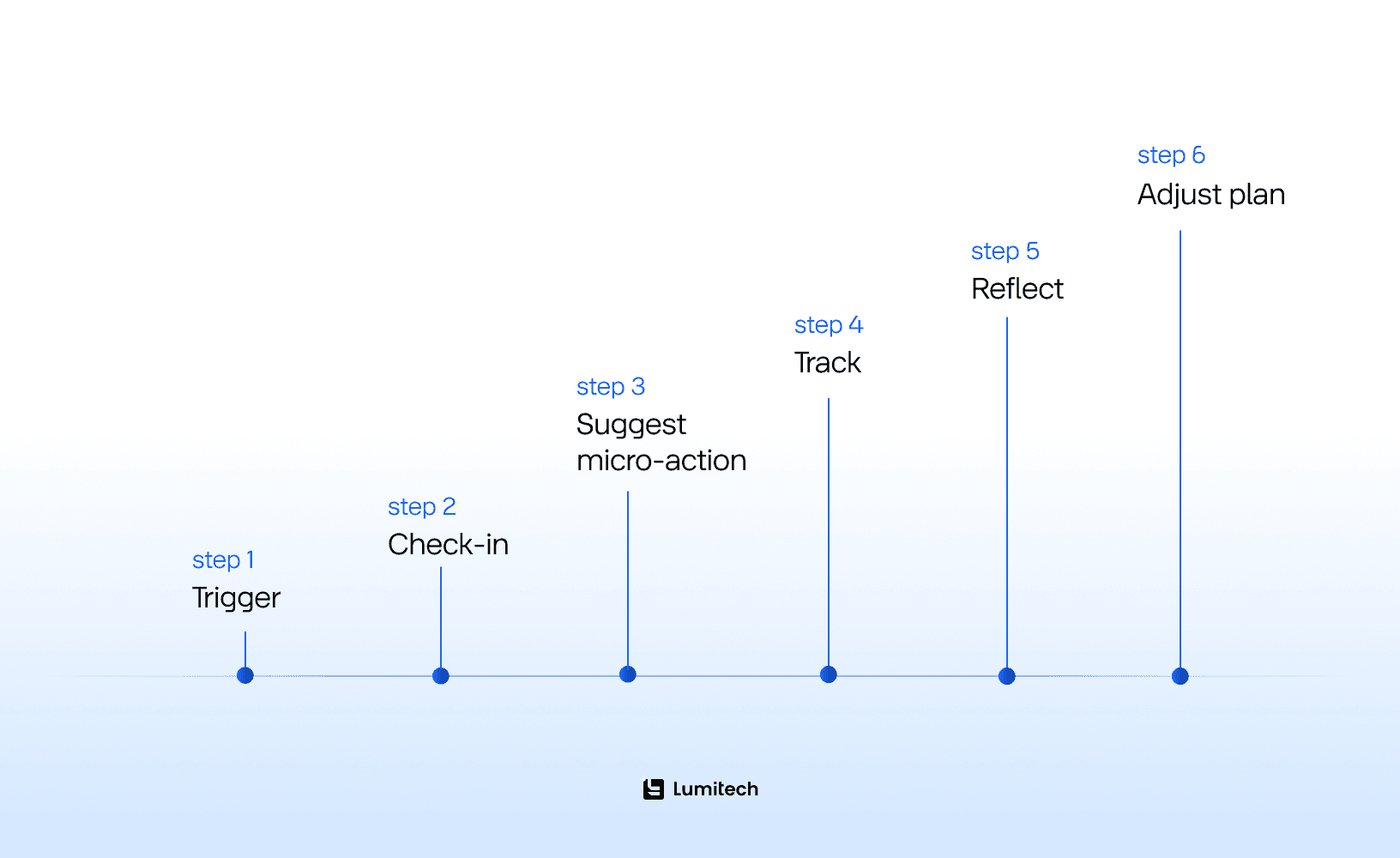
2) Daily check-ins and “micro-coaching”
This is where AI shines: quick, frequent interactions that would be too expensive for human coaches to deliver at scale.
Examples:
“How did sleep go last night?”
“What’s one thing stressing you today?”
“Want a 2-minute breathing reset or a quick plan?”
The best micro-coaching is specific and lightweight. The worst micro-coaching is a motivational poster wearing a trench coat.
3) Habit building and accountability
AI wellness assistant can:
remind users at the right time
help break goals into smaller steps
reflect on progress
adjust plans when users fall off track (which is… always)
This is also where personalization matters and where privacy policies must be strong (more on that soon).
4) Emotional support and structured reflection
Loqui Listening is built around real-time emotional support from compassionate listeners. AI can complement that kind of model by handling:
journaling prompts
emotion labeling (“What are you feeling: anxiety, frustration, grief?”)
grounding exercises
preparing a user for a human conversation (“Want to summarize what’s happening in 2–3 sentences?”)
If you build this, do it with humility. The AI should not act like a therapist. Recent public scrutiny and lawsuits around emotionally intense chatbot interactions (especially involving minors) are a reminder that “supportive tone” without guardrails can go very wrong.
5) Routing and matching (the “concierge” role of conversational AI in wellness)
In hybrid platforms, AI often acts like a router:
triages the request (“need to vent” vs “need practical steps” vs “in crisis”)
suggests the best pathway (self-guided exercise vs human listener vs professional resources)
captures context, so users don’t repeat themselves
This is an ideal place to integrate AI into Loqui-style systems: keep the core promise (human listening) while using AI to reduce friction and improve safety.
Safety First: The Guardrails that Make Conversational AI in Wellness Coaching Responsible
If you take one idea from this article, take this: guardrails aren’t restrictions. They’re product quality.
Without guardrails, conversational AI can:
hallucinate facts
offer unsafe “advice”
overstep into diagnosis
reinforce harmful beliefs
create emotional dependence
mishandle self-harm language
fail to escalate when it must
Professional organizations have become increasingly vocal about the need for evidence and safeguards for AI wellness coaching tools; for example, the American Psychological Association has warned of insufficient evidence and regulation, emphasizing that AI should support human professionals, not replace them.
So what guardrails actually matter?
1) Scope boundaries: what the AI wellness coaching will and won’t do
Your AI health coach should be explicitly limited to wellness coaching and self-care support. It should avoid:
diagnosing conditions
recommending medications
interpreting medical tests
providing treatment plans
This is not only ethical, but it’s also practical. Regulators often distinguish low-risk wellness tools from higher-risk medical claims. Recent reporting on FDA direction around wellness tools and wearables underscores that “general wellness” is treated differently than medical devices, especially when you avoid disease claims.
2) Crisis detection and escalation (non-negotiable)
If a user expresses self-harm ideation, abuse, or immediate danger, the system needs a different playbook:
shift to supportive, safety-focused language
encourage contacting emergency services or local crisis resources
provide region-appropriate hotlines/resources
trigger a human handoff (when available)
log the incident for safety review (with careful privacy rules)
Research and reviews emphasize the importance of escalation protocols and safety monitoring in mental health conversational agents.
Design note: In a Loqui-style platform, this is where “connect to a listener now” is a safety feature, not just a product feature.
3) “Grounded responses” instead of free improvisation
In conversational AI in healthcare, you often want the AI to draw from:
vetted content libraries
clinician-reviewed scripts
behavior change frameworks
internal policies
That’s how you reduce hallucinations and keep tone consistent. If you do allow open-ended generation, you still constrain it with:
policy prompts
refusal patterns
a “safe completion” layer
citations to trusted content where relevant
4) Human oversight that isn’t performative
Human oversight isn’t “someone might look at logs someday.” It’s:
regular review of conversations (consented and de-identified where possible)
red-team testing
incident response processes
ongoing tuning of risk detection
measuring safety metrics (false negatives are the scary ones)
NIST’s AI RMF and the Generative AI profile are useful reference points for building this kind of lifecycle governance.
5) Age-appropriate design
If minors might access the product, the bar rises sharply. There’s an active policy debate in the EU around minimum ages for access to social platforms and AI chatbots, reflecting broader concern about youth safety online.
Even if your app isn’t “for kids,” you should design assuming kids will try it, because they will.
6) Avoiding dependence: “Don’t become the user’s whole world”
AI wellness coaching should encourage real-world supports and healthy coping strategies, not create a relationship where the AI becomes the only safe place.
Practical design choices:
nudge users toward offline actions
promote social supports (friends, family, communities)
include reminders that the AI is a tool, not a person
cap certain interaction patterns if they indicate unhealthy reliance (with caution and empathy)
This is sensitive territory; get it right with expert input.
How is User Data Protected in AI Wellness Coaching Platforms?
Wellness data is personal. Mental wellness data is intimate. And conversational data is the most revealing kind, because people don’t just log steps — they confess fears.
So your data protection strategy needs to be more than “we use HTTPS.” Good mobile app development services also show up in the privacy layer: secure storage, safer logging defaults, and careful on-device permission design.
1) Data minimization and purpose limitation
Collect only what you need to provide the service, and say exactly why. Many teams get this wrong by saving everything “just in case we want analytics later.” That’s not a strategy; that’s a future breach headline.
Practical patterns:
store conversation summaries instead of full transcripts (when possible)
allow users to delete history
separate identity data from conversation data
default to short retention for raw logs
2) Encryption, access control, and audit trails
Basics, but non-negotiable measures for AI-powered wellness coaching:
encryption in transit and at rest
strict role-based access control
least privilege
audit logs for internal access
Loqui’s case study highlights real-time voice communication via Twilio. If you use third-party communications infrastructure, privacy is partly about how you configure vendors, what metadata is stored, and how access is governed — not just what you build in-house.
For teams that don’t want to build a full security operations function from scratch, managed IT companies can handle monitoring, patching, and access governance as the platform scales.
3) Training data policy: Be explicit
If your platform uses user data to improve its models, you must clearly disclose this and offer meaningful controls. Many teams now adopt a default stance: do not use identifiable wellness conversations to model training unless users opt in.
Alternatives that reduce risk:
fine-tune on synthetic or curated data
use retrieval-based systems (RAG) so the model doesn’t “learn” private conversations
aggregate metrics rather than raw text
explore privacy-preserving techniques where appropriate
4) Vendor risk management
Most AI coaching platforms rely on vendors for:
LLM APIs
analytics
messaging/notifications
voice/video infrastructure
crash reporting
Each vendor is a potential data leak path. Treat vendor selection like you’re choosing a bank vault, not a snack subscription.
If you’re deploying in-region or supporting regulated clients, IT infrastructure companies in Dubai can help set up compliant environments, monitoring, and data-handling practices
5) Regulatory awareness (EU AI Act + broader momentum)
Even if you’re not in the EU, the EU AI Act has become a reference point for transparency obligations around chatbots and risk-based requirements for certain systems. A high-level summary notes that limited-risk chatbots have transparency obligations (users should know they’re interacting with AI).
And the implementation timeline for high-risk rules has been politically dynamic, with reporting on proposed delays to some high-risk provisions.
Translation: the compliance ground is moving. Build your platform so it can adapt.
Outcomes: What Can Be Measured on AI Coaching Platforms?
“Outcomes” is where a conversational AI wellness platform either becomes credible or becomes marketing.
The good news: coaching outcomes are measurable. The hard news: you must choose metrics carefully, because “engagement” is not the same as “improvement” and “users chatted a lot” can even be a warning sign.
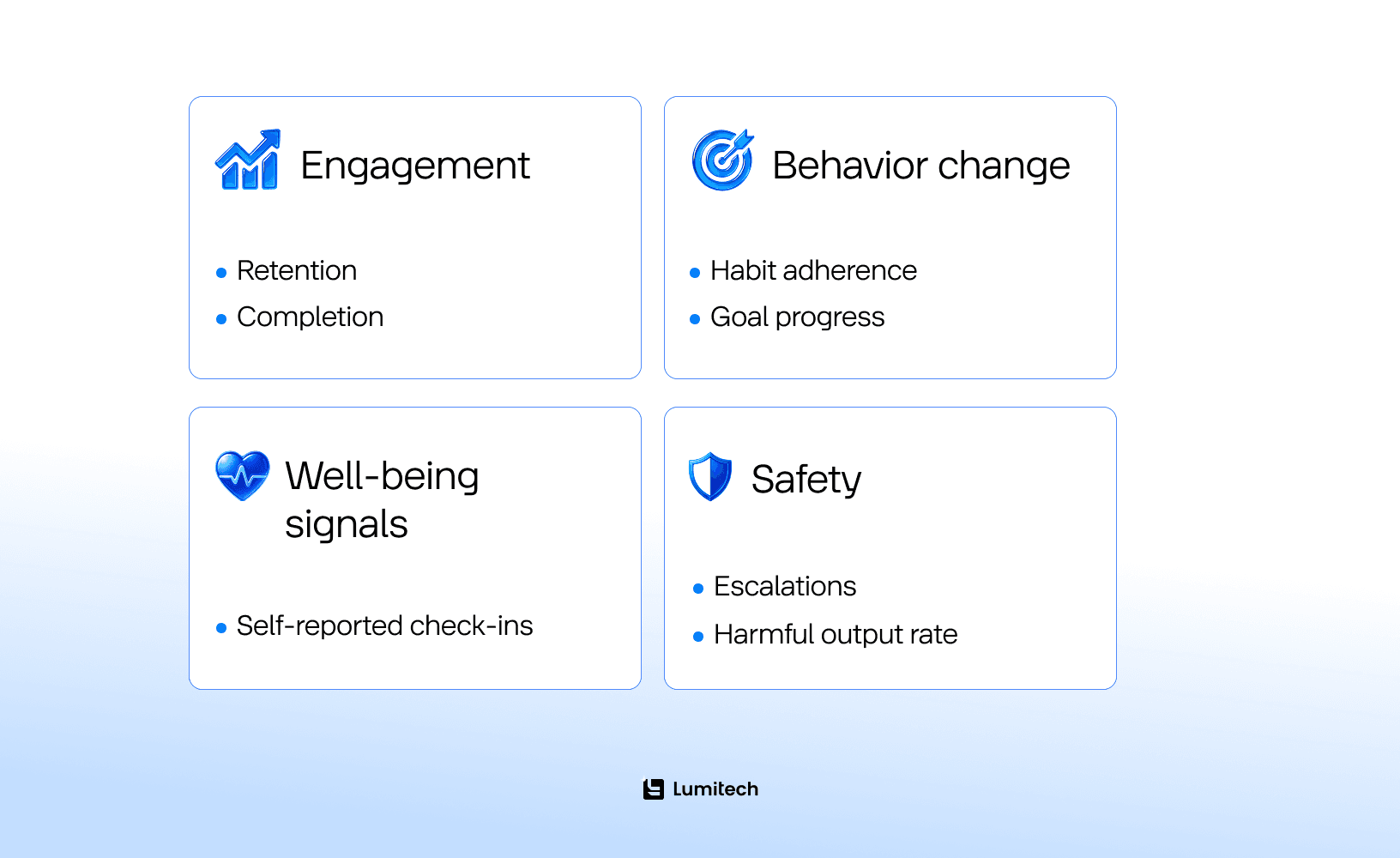
The outcomes stack (what to measure, realistically)
Engagement and retention (necessary, not sufficient)
activation rate (first meaningful session)
day-7/day-30 retention
session completion
return-to-coach rate after setbacks
Behavioral outcomes (best for intelligent wellness coaching)
habit adherence (sleep routine consistency, hydration, steps, meditation minutes — depending on your product)
goal attainment rates (self-set goals, incremental progress)
reduced friction in doing healthy actions (measured via check-ins and streak stability)
Well-being outcomes (self-reported, with validated tools when possible) Depending on scope and risk posture, AI-driven wellness coaching platforms may use validated questionnaires (carefully, with appropriate disclaimers) or lighter self-reports. The key is consistency and ethical use.
Safety outcomes (the ones you should report internally, even if you never market them)
crisis detection sensitivity (how often the system catches high-risk messages)
false reassurance rate (how often the system incorrectly downplays serious issues)
escalation appropriateness (did the system route correctly?)
harmful content incidence (and time-to-mitigation)
Operational outcomes (the “can we run this?” layer) Loqui’s project moving into a support phase with ongoing monthly hours is a reminder that outcomes also include system stability and continuous improvement capacity.
For AI systems, operational outcomes include model drift monitoring, latency, incident resolution times, and the cost of safe human oversight.
Operational outcomes improve when teams add a real-time forecasting system to anticipate spikes in usage, moderation load, and infrastructure demand.
Measuring outcomes without lying to yourself
A practical path many teams follow:
Start with engagement + behavioral metrics
Add well-being self-reports with careful UX and consent
Build safety metrics early
Run controlled experiments (A/B tests) where ethical
Validate with expert review and (if you’re making stronger claims) formal studies
If you want long-term trust, don’t oversell. The APA’s warning about evidence and safeguards is a useful reality check for the whole category.
Even your outcomes layer may need product work: admin dashboards, analytics views, and content tooling, which is where web development services come in.
The Biggest Trends in Conversational AI for Wellness in 2026
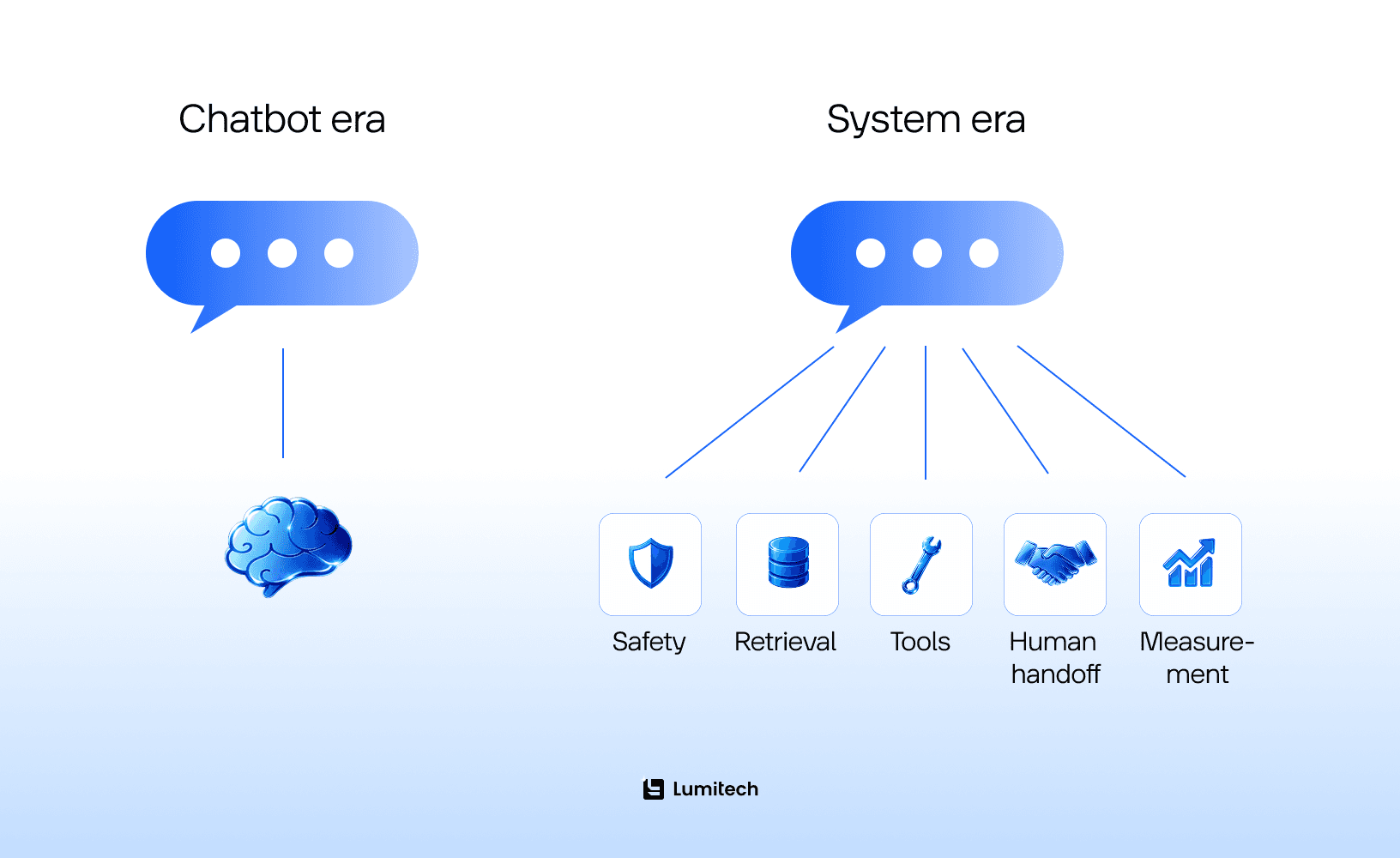
2026 is shaping up to be less about “wow, chatbots” and more about: can we deploy this responsibly, integrate it into real workflows, and avoid harm? The trends below reflect that shift.
If you want a regional view of what’s changing fastest, see how UAE HealthTech companies use artificial intelligence — many of the same safety and governance patterns apply.
1) From single chatbots to integrated digital wellness coaching AI platforms
Healthcare tech commentary and industry outlook pieces are increasingly pointing to consolidation — moving away from isolated point solutions toward integrated platforms. That means conversational AI in wellness becomes the interface layer across multiple modules: coaching, content, community, human support, and care navigation.
2) Hybrid human + AI support becomes the default
Loqui’s model is a strong example of why: when users need a real person, the platform should provide one fast.
AI is increasingly used to support human coaches/listeners: summarizing context, suggesting exercises, detecting risk, and handling lightweight check-ins.
We’re also seeing more partnerships with AI companies in the Middle East for safety classifiers, voice analytics, and personalization — often as modular add-ons rather than full platform swaps.
3) Safety regulation and liability pressure for AI health coaching rise
Legal and public scrutiny around harmful chatbot interactions — especially for vulnerable users — has intensified.
Expect more pressure for age-appropriate design and stronger guardrails, especially as policymakers discuss access rules for minors.
4) Clearer lines between “general wellness” and “medical claims”
Regulators are drawing sharper distinctions between low-risk virtual wellness coaching tools and products making medical-grade claims.
The smart product move in 2026: be precise about scope, avoid accidental medical claims in your UX, and design guardrails that keep the AI health coach from drifting into diagnosis.
5) Standardized evaluation and “safety scorecards”
Research is pushing toward more standardized ways to evaluate mental health chatbots and safety monitoring, including frameworks for measuring risk detection and intervention delivery. Meanwhile, governance frameworks like NIST AI RMF are increasingly adopted as a common language for risk management across organizations.
A Practical Build Playbook: How to Ship an AI Health Coach Without Reckless Optimism
You don’t need 47 guardrail documents to start. But you do need a few concrete decisions early:
1) Define the scope like a lawyer would read it. What is the AI allowed to do? What is it forbidden to do? What happens when users ask it to cross the line? If you need to pressure-test the concept quickly, AI prototype development services can deliver a controlled pilot that proves feasibility without shipping risky behavior to the public.
2) Design the crisis path before you design the cute onboarding. Because users won’t wait for your roadmap to have feelings.
3) Choose a “grounded” content approach. Use retrieval from vetted content. Treat open-ended generation as something you constrain, not something you celebrate.
4) Build the handoff. If your product includes humans (like Loqui’s compassionate listeners), make the transition seamless and fast. If you don’t include humans, build a safe escalation to external resources.
5) Instrument outcomes and safety from day one. You can’t improve what you don’t measure. And in wellness, “we didn’t know” is not a comforting post-mortem.
Conclusion
Conversational AI in wellness can make coaching feel less like a program you “sign up for” and more like a support system that’s actually there when life gets messy. But in wellness, especially anything adjacent to mental well-being, availability is not the same as safety. A helpful tone doesn’t guarantee helpful outcomes, and “it sounded empathetic” is not a substitute for guardrails, escalation paths, and evidence that the product is doing more good than harm.
The healthiest way to think about generative AI wellness coaching in 2026 is as an augmentation layer: it can deliver consistent micro-coaching, habit support, and structured reflection at scale, while humans remain the backstop for nuance, crisis, and complex life situations. The Loqui Listening case study is a good reminder of what users ultimately want: a reliable, emotionally comfortable experience that works in real time, not a clever demo that collapses under real-world conditions. That same “reliability + comfort” bar is exactly what AI health coaching must meet — technically, ethically, and operationally.
If you’re building in this space, treat safety and outcomes as first-class product features. Define scope boundaries clearly, ground responses in vetted content, protect user data with discipline, and measure what matters—especially safety metrics, not just engagement. Do that, and conversational AI becomes a trustworthy companion to wellness platforms. Skip it, and you’ll still have a chatbot… just one you’ll eventually be forced to apologize for.


