
AI Credit Scoring: How It Works, Models, Benefits, and Risks
Every lender is being sold a model that cuts default risk. Some of those numbers hold up; others are portfolio results dressed as algorithm results. Here is how AI credit scoring actually works, which models matter, and what the independent evidence shows.
- AI Integration
- Credit Scoring
September 14, 2026
 AI Overview
AI credit scoring uses machine learning to estimate a borrower’s probability of default from bureau records, cash flow signals, and permissioned alternative data, then returns a risk score with reason codes. Sharper risk separation raises approvals without raising losses: FinRegLab research reports approval rates up to 4% higher than logistic regression models.


Lending has always been a bet on repayment. What changed is how much evidence is available before the bet is placed, and how fast the answer is expected. A borrower now leaves behind transaction histories, rent and utility records, device signals, and open banking feeds, and still wants a decision before the browser tab closes.
AI for credit scoring uses machine learning models to estimate a borrower’s probability of default from far more variables than a traditional scorecard can process, including cash flow and other permissioned alternative data. The model learns repayment patterns from historical outcomes, returns a risk score with reason codes, and feeds a decision the lender can approve, price, decline, or route to a human.
That definition is the easy part. The harder question for a CEO or product owner: does this move your loss rate, approval rate, and cost per decision enough to justify the governance burden that arrives with it? What follows covers the mechanics, the model types, the evidence that exists (and the evidence that does not), the regulatory position as of September 2026, and the failure modes that appear after go-live. Lumitech builds this class of system as part of its fintech software development services, so it emphasizes what survives production.
What Is AI Credit Scoring?
Open it up, and you find a decisioning pipeline rather than a single algorithm. Data arrives from bureaus, application forms, bank aggregators, and internal systems; feature engineering converts it into thousands of candidate signals; a trained model assigns a probability of default; policy rules translate that probability into an action.
Three details matter for anyone funding the project.
The model does not decide anything on its own. It ranks risk. Cut-offs, pricing tiers, and manual-review triggers remain policy choices, which is why two lenders using the same vendor model can build very different portfolios.
Artificial intelligence credit scoring is only as good as the outcome data behind it. You need enough loans, enough elapsed time, and enough defaults to learn from. A lender with eighteen months of history and a benign cycle is training a model on a world that may not return.
And the score is a means to an end. An AI credit score earns its keep through three effects: sharper risk separation, higher automation, and faster time-to-decision. Everything else in the business case derives from those three.
How Is AI Credit Scoring Different From Traditional Credit Scoring?
Traditional scorecards are deliberately simple. A statistician picks a few dozen bureau variables, bins them, assigns weights, and produces a model a regulator can read in an afternoon. AI-driven credit scoring removes the ceiling on variable count and lets the model discover interactions instead of having them specified by hand.
Dimension | Traditional scorecard | AI-based credit scoring |
|---|---|---|
Typical inputs | 20–30 bureau variables | hundreds to 1,500+ features |
Model form | logistic regression, hand-built weights | gradient boosting, ensembles, neural networks |
Interactions | specified manually | learned from data |
Alternative data | rarely used | cash flow, rent, telecom, device, open banking |
Rebuild cadence | multi-year projects | continuous monitoring, scheduled retraining |
Explainability | native to the model | engineered separately |
Thin-file coverage | weak | materially better with alternative data |
Governance cost | modest | substantial and ongoing |
The last row is the one business cases underestimate. Adopting AI in credit scoring multiplies model governance work rather than replacing it: you gain predictive power and inherit monitoring, documentation, fairness testing, and vendor oversight as permanent operating costs.
There is a quieter difference too. A scorecard is a photograph; an AI-driven credit scoring stack is closer to a live feed, where features refresh, behavior shifts, and performance decays unless someone is watching. That is an organizational change as much as a technical one.
How Is AI Used in Credit Scoring and How Does It Work?
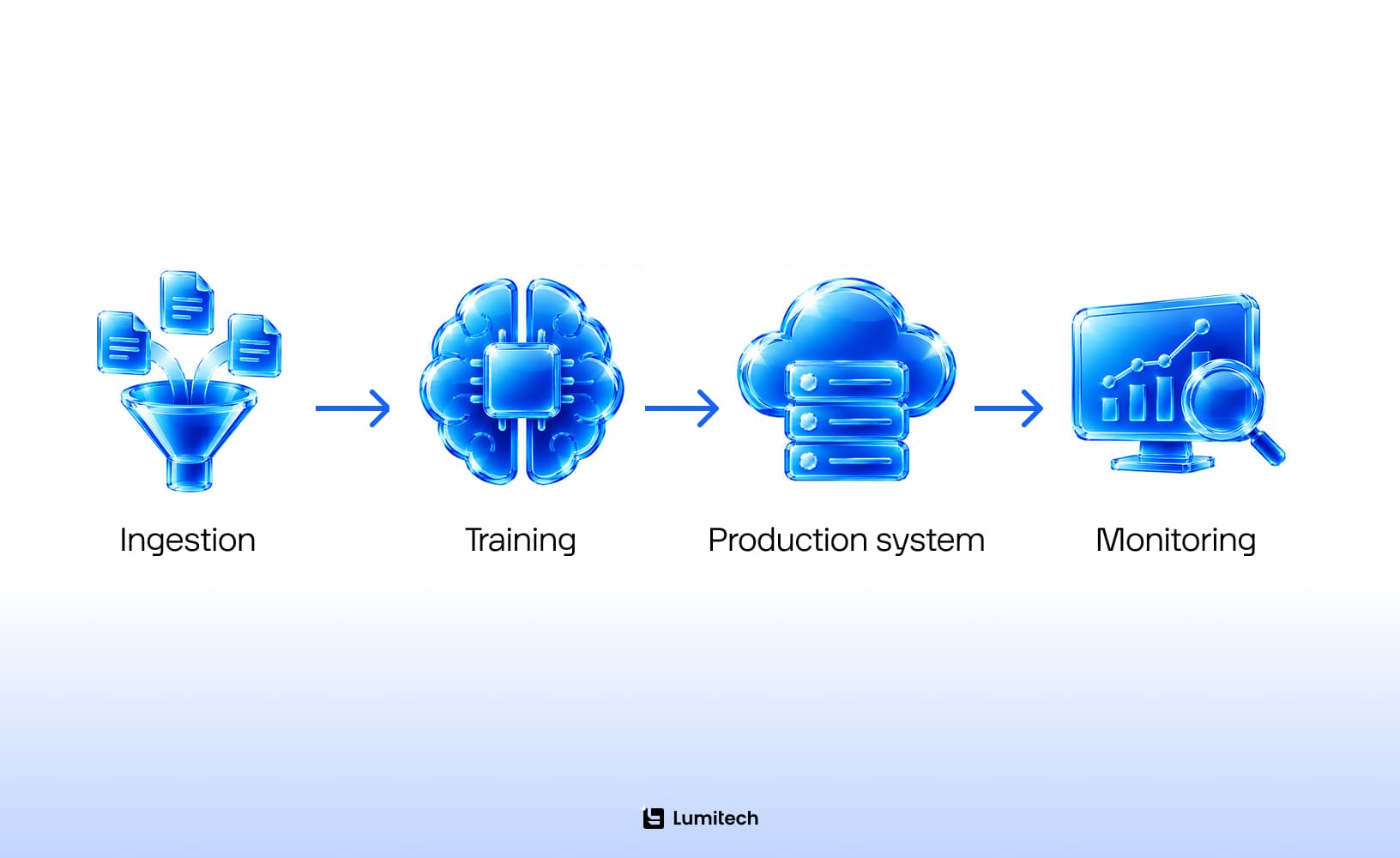
The pipeline has four stages, and most programs fail in the first and the last.
Step 1: Data ingestion and feature engineering
In regulated consumer lending: bureau data, application data, internal account and payment history, and consumer-permissioned bank account data. Cash flow signals such as income regularity, balance volatility, and overdraft frequency are the most valuable addition, because they describe capacity to repay rather than past access to credit.
The market has converged on this view. In May 2026, FICO made the next-generation UltraFICO Score generally available, combining the standard FICO Score with real-time permissioned cash flow data from Plaid’s network of more than 12,000 financial institutions. Mapping new data onto an existing scale is a concession to reality: lenders adopt better inputs faster than they rebuild credit policy.
Feature engineering is where quiet damage happens. A feature computed after the loan decision, or a field populated only for approved applicants, inflates validation metrics and then collapses in production. Point-in-time feature reconstruction is unglamorous, and it is the difference between a model that works and a model that flattered you during testing.
Step 2: Model training and validation
Training splits history into development and out-of-time validation windows, then measures ranking power (Gini or AUC), calibration, and stability across segments. Independent validation is mandatory in a bank and advisable everywhere else: someone who did not build the model has to try to break it.
Step 3: Inside production
A production AI credit scoring system is mostly plumbing: a feature store serving identical logic in training and inference, a decision engine holding thresholds and policy rules, a reason-code service, an audit log capturing every input and output, a champion/challenger harness, and a fallback for when a data provider goes dark at 2 a.m. Automated AI credit scoring only delivers cost savings when this layer is boringly reliable.
Step 4: Monitoring, drift, and retraining
Population drift, concept drift, and fairness drift each need thresholds and owners. Retraining should be triggered by evidence rather than calendar habit, and every retrain needs the same approval path as the original model. Credit scoring using AI without a monitoring plan is a compliance liability wearing a growth costume.
What Are AI Credit Scoring Models?
Almost always supervised classifiers trained on historical repayment outcomes. AI credit decisioning rarely involves anything exotic; the interesting choice is the model family.
Model family | Where it fits | Main trade-off |
|---|---|---|
Logistic regression/scorecard | Regulatory benchmark, small portfolios | Lowest lift, easiest to defend |
Gradient boosting (XGBoost, LightGBM) | The workhorse for tabular credit data | Strong performance, needs engineered explanations |
Random forest | Robust baseline with limited tuning | Weaker probability calibration |
Neural networks and sequence models | Raw transaction sequences, cash flow patterns | Data hungry, hardest to explain |
Graph models | Fraud rings, SME networks, first-party fraud | Heavy infrastructure, specialist skills |
Large language models | Document extraction and verification, not scoring | Extraction errors propagate into decisions |
Gradient boosting dominates for a reason: credit data is tabular, and boosted trees handle it better than deep networks in most portfolios. And an AI credit scoring model built on hundreds of features is not automatically better than one built on sixty. Feature governance, the discipline of excluding variables you cannot justify to a regulator, usually costs less accuracy than teams expect.
AI Credit Scoring Strengths: What the Evidence Supports
How does AI improve credit scoring?
Through better risk separation at a given approval rate, which a lender can spend in one of two directions: hold approvals flat and take fewer losses, or hold losses flat and approve more people. That is the whole mechanism, and worth stating plainly, because vendor marketing implies you get both at full strength at once.
The independent evidence is encouraging and more modest than the headlines. FinRegLab, a non-profit research organization, built parallel logistic regression and XGBoost models on a combined bureau and bank-account dataset, then compared predictions against actual performance on accounts opened in 2018–2019. Its 2025 empirical white paper found machine learning improved predictive accuracy by up to 2% versus logistic regression on the same data, translating into approval rates up to 4% higher at thresholds mainstream lenders would plausibly use. Against roughly 55 million new US credit card accounts in 2023, that 4% works out to about two million additional accounts. Reductions in approvals of consumers who later defaulted were largest and most consistent for low-to-moderate income populations.
Automation, not accuracy, carries most of the return.
Lumitech maps which decisions in a lending flow can be automated safely, and what the cost per decision looks like afterward.

Vendor and client-reported figures sit an order of magnitude higher. Zest AI states that institutions deploying its models can expect to automate 60–80% of lending decisions while reducing charge-offs by around 20%. Commonwealth Credit Union, a Zest AI client, reports 30–40% lower delinquency rates than traditional scoring would have produced on the same portfolios, with 70–83% of consumer decisions automated. Upstart’s annual report describes an internal study in which its model approved 43% more borrowers at 33% lower average APR than replicated bank models, and states 91% of platform loans were fully automated in 2025.
The gap between “up to 2% accuracy” and “30–40% lower delinquency” is not a contradiction, and understanding why matters more than picking a number. Independent studies compare model families on identical data. Client outcomes compare a modern model, plus new data, plus revised policy, plus better automation, against a legacy scorecard that may not have been rebuilt in a decade. Most of the reported improvement is a portfolio result rather than an algorithm result, and it is published by the party selling the algorithm.
The honest framing for a board paper: named institutions have reported double-digit delinquency reductions, and they’re plausible when the incumbent model is old, and its replacement arrives with fresh data. They are outcomes, not entitlements. The AI credit scoring accuracy gains independent research measures are real but incremental, and they compound mainly through automation and speed.
The rest is easier to underwrite: cost per decision falls when 70–90% of applications never reach a human, conversion improves when decisions are instant, and monitoring shifts from quarterly reporting to early warning.
AI In Credit Scoring: Use Cases and Examples
The strongest deployments of automated credit scoring using AI share two traits: dense outcome data and repeated decisions.
Unsecured consumer lending and cards. High volume, clean labels, fast feedback. The natural first deployment.
Auto lending. Indirect channels create speed pressure manual underwriting cannot meet.
SME and embedded lending. Bank transaction data often outperforms thin commercial bureau files.
Limit and pricing management. Existing customers, where behavioral data is richest.
Portfolio monitoring. Re-scoring live exposures to catch deterioration before collections.
Collections prioritization. Ranking accounts by recovery likelihood rather than days past due.
For AI credit scoring examples you can actually inspect, three are useful. Upstart runs the most transparent public model: in Q2 2026, it reported record originations, a 77% acceptance rate for offers approved without human review, and 91% of funded loans automated end to end; it also received conditional OCC approval for a national bank charter in July 2026. Zest AI’s case studies cover mid-sized institutions including First Hawaiian Bank and Suncoast Credit Union, which reported moving from 30% to 60% automated decisions and saving roughly 27,000 underwriting hours a year. FICO’s UltraFICO release shows the incumbent scoring franchise routing cash flow data into a scale lenders already trust.
Emerging markets are where AI for credit scoring changes access, not margins. The IFC’s 2026 report Cracking the Credit Code documents alternative-data and AI models extending formal credit to people and small businesses outside bureau coverage, and notes that women borrowers frequently perform as well as or better than men when assessed this way. A second wave of alternative credit scoring AI vendors targets that gap, and regional adoption differs sharply, as our overview of AI in financial services across the Middle East shows. For where credit models sit among fraud, AML, and servicing AI credit scoring use cases, see our analysis of machine learning in banking.
Customer Stories
Explore What We've Built
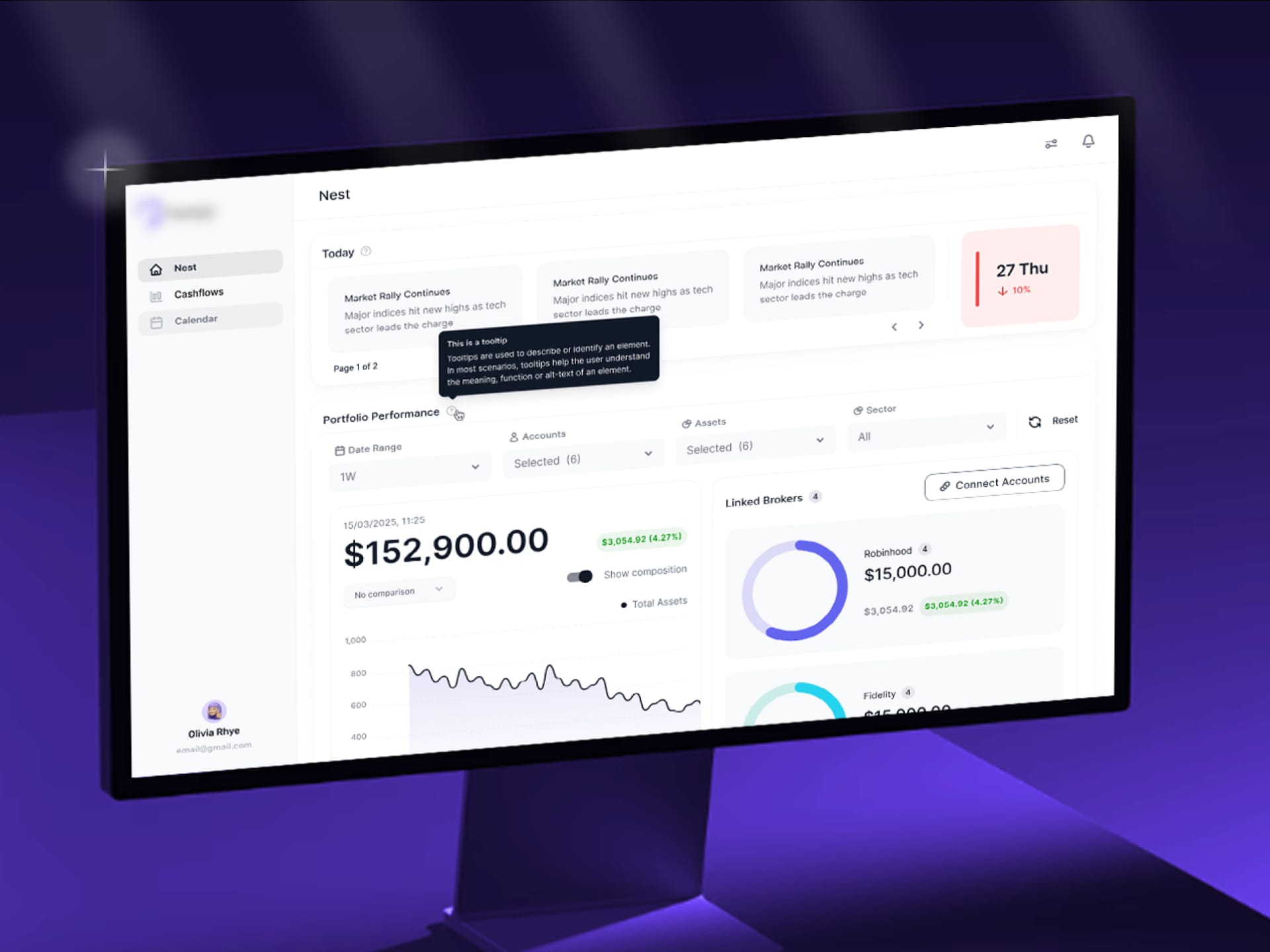
AI-Powered Investment Intelligence Platform
Building a RAG-based investment intelligence platform for a Panama fintech startup — from multi-broker data aggregation to AI-driven portfolio analytics that explain market events in real time.

Panama
Aug '25 – Feb '26

Legal AI Assistant for a Regional Fintech Institution
Discover how Lumitech designed an AI‑powered legal knowledge assistant that makes internal policies safe to use for a highly-regulated fintech organization.

Dubai
May '25 — Dec '25
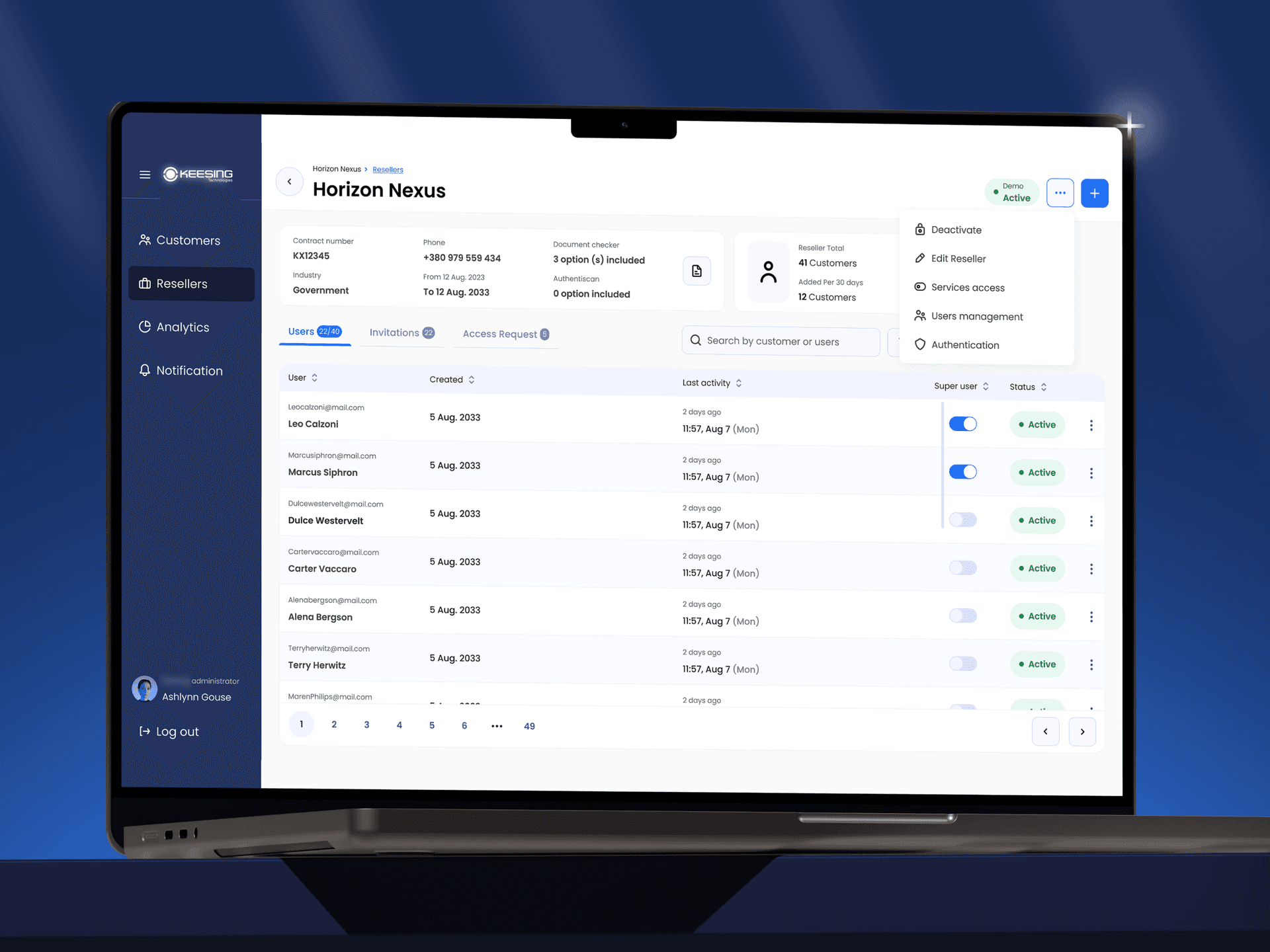
How We Rebuilt an Identity Verification Platform
Explore how we helped a compliance-focused company replace its slow, manual ID verification process with a scalable, automated solution.

Amsterdam
Jul '23 — Feb '24
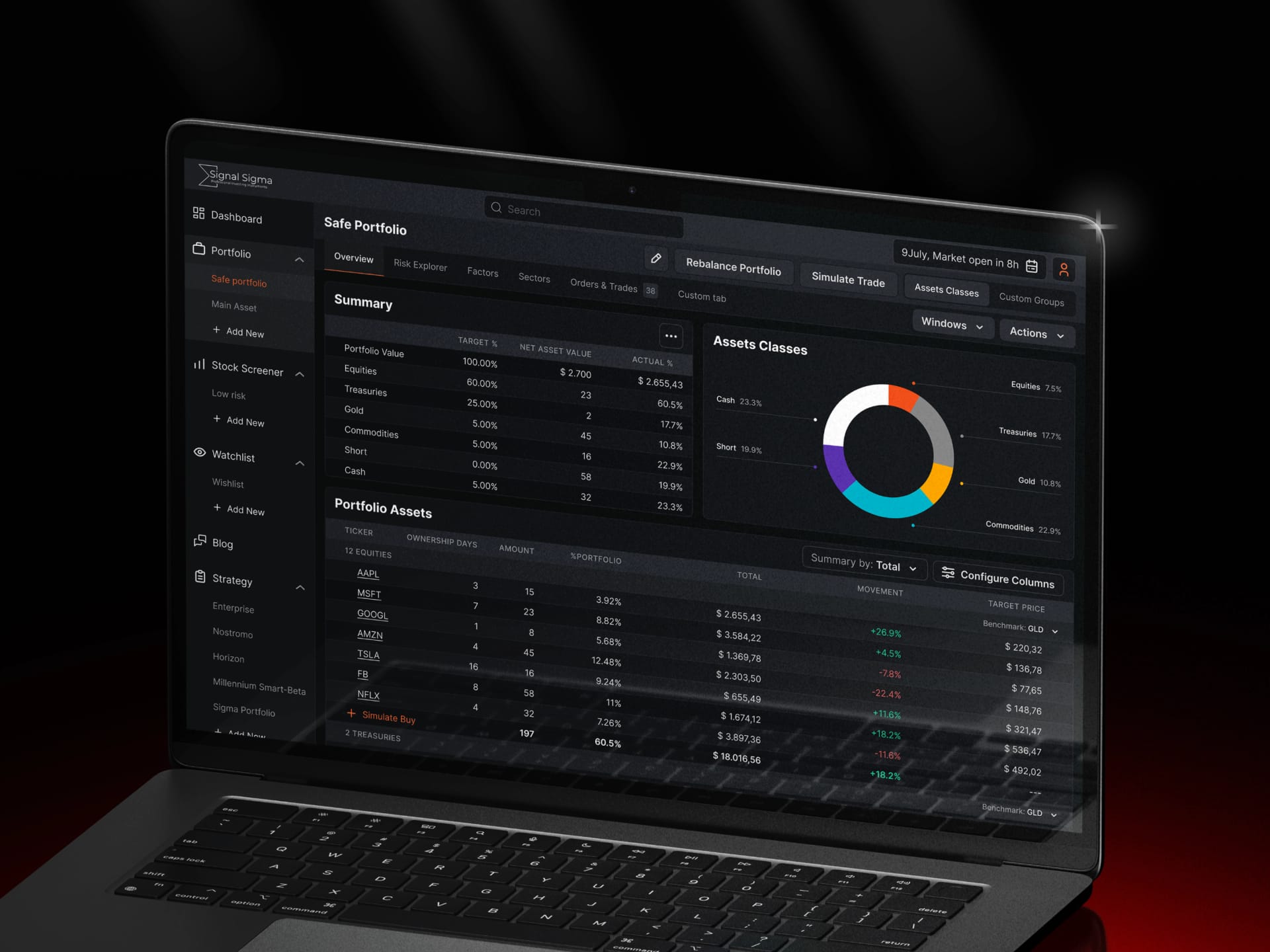
Analytics-Driven Investment Platform for Finance Professionals
Learn more on how to make smarter investment decisions with SignalSigma, use real-time analytics, optimized portfolio insights, and improved asset allocation.

Bucharest
Aug '24 — Now
FinTech & Finance
AI-Powered Investment Intelligence Platform
Building a RAG-based investment intelligence platform for a Panama fintech startup — from multi-broker data aggregation to AI-driven portfolio analytics that explain market events in real time.
Client Location
Panama
Duration
Aug '25 – Feb '26
Platform
Web & AI
Legal AI Assistant for a Regional Fintech Institution
Discover how Lumitech designed an AI‑powered legal knowledge assistant that makes internal policies safe to use for a highly-regulated fintech organization.
Dubai
May '25 — Dec '25
How We Rebuilt an Identity Verification Platform
Explore how we helped a compliance-focused company replace its slow, manual ID verification process with a scalable, automated solution.
Amsterdam
Jul '23 — Feb '24
Analytics-Driven Investment Platform for Finance Professionals
Learn more on how to make smarter investment decisions with SignalSigma, use real-time analytics, optimized portfolio insights, and improved asset allocation.
Bucharest
Aug '24 — Now
Explainability Is a Design Constraint, Not a Feature
If a model declines an applicant, someone has to say why in language that the applicant can act on. In the US, ECOA and Regulation B require creditors to disclose the specific principal reasons for adverse action, and the rule makes no exception for model complexity. That obligation shapes architecture more than any accuracy target.
Explainable AI credit scoring in production means four things working together: features restricted to those the lender can justify, a post-hoc attribution method such as SHAP producing per-decision drivers, a mapping from those drivers to a finite set of compliance-reviewed reason codes, and monitoring to confirm the stated reasons still reflect model behavior after retraining. FinRegLab’s work on machine learning explainability and fairness assessed how far available diagnostic tools genuinely satisfy adverse action, fair lending, and model risk requirements. The answer is: partially, with meaningful gaps.
One point is widely misread. The CFPB withdrew Circulars 2022-03 and 2023-03, its guidance on adverse action notices for complex algorithms, in a mass withdrawal of 67 guidance documents effective 12 May 2025. Withdrawing guidance does not repeal the statute behind it. The Regulation B duty stands, state regulators and private ECOA litigation remain live channels, and AI credit scoring explainability is a legal requirement rather than a supervisory preference. Reading the withdrawal as permission would be expensive. Our piece on ethical AI in finance covers the wider governance case.
The Regulatory Position as of September 2026
European Union
The EU AI Act classifies AI systems used to evaluate creditworthiness or establish credit scores as high-risk under Annex III, requiring risk management, data governance, technical documentation, human oversight, robustness, and post-market monitoring. The timeline changed this summer, and it changed late. Regulation (EU) 2026/1744, the Digital Omnibus on AI, was published in the Official Journal on 24 July 2026 and entered into force on 27 July 2026, six days before the original deadline. It defers high-risk obligations for standalone Annex III systems from 2 August 2026 to 2 December 2027, and for AI embedded in regulated products under Annex I to 2 August 2028. Article 50 transparency obligations were not deferred.
Separately, the EBA’s Guidelines on loan origination and monitoring (EBA/GL/2020/06) already require institutions to specify the use of automated models in creditworthiness assessment and to govern their design, use, and model risk. EU lenders have obligations today, regardless of the December 2027 date.
United States
No federal AI-specific credit statute exists. The binding framework is ECOA and Regulation B on adverse action and discrimination, the FCRA where consumer report data is used, and prudential model risk management expectations. State-level AI and consumer protection rules are currently moving faster than federal ones.
United Kingdom
The FCA’s position is technology-agnostic: existing rules on consumer outcomes, conduct, and operational resilience already cover AI, with no separate exemption. The Bank of England and FCA’s joint survey of AI in UK financial services found 75% of firms already using AI and, more usefully for a risk committee, 46% reporting only partial understanding of the AI they use, largely because it came from third parties.
Risks and Failure Modes That Appear After Go-Live
Proxy discrimination. Removing protected attributes does not remove their signal. ZIP code, device type, employer, and education correlate with protected characteristics, and a model optimizing for accuracy will find those correlations. Disparate impact testing runs before launch and continuously afterward.
Reject inference and feedback loops. You only observe outcomes for applicants you approved, so retraining on approved-only data narrows the model’s view of the world with every cycle. Holdout approvals and challenger strategies keep that window open, and skipping them is a slow, self-inflicted wound.
Drift into a different economy. Models trained through a benign cycle underestimate stress, which is the strongest argument for keeping a simple challenger alongside the primary model. Data leakage belongs in the same category: the most common cause of a model that validated beautifully and underperformed in month two.
Third-party concentration. That 46% partial-understanding figure is a governance finding, not a technical one. If model, features, and monitoring all come from one vendor, your ability to answer a supervisor is contractual rather than actual. Any serious review of AI in credit scoring risk needs an exit test: what happens to decisioning if the contract ends in ninety days?
Fraud contaminating the risk signal. Synthetic identities and first-party fraud look like credit risk in the data but aren’t. Separating them needs dedicated capability, which is why Lumitech's fraud prevention solutions sit alongside credit models.
Build, Buy, or Blend
Most lenders overestimate how much of an AI-based credit scoring stack they should build, and underestimate how much they must own.
Path | Fits when | Watch for |
|---|---|---|
Buy a vendor model | Limited data science capacity, need for speed, standard products | Explainability depth, retraining control, exit terms |
Build in-house | Proprietary data advantage, unusual segment, existing ML team | Time to first production model, validation independence |
Blend | Most mid-sized lenders | Clear ownership boundaries for features, monitoring, reason codes |
AI credit scoring for lenders without an internal data science function is usually a blend: a vendor model for scoring, in-house ownership of features, thresholds, monitoring, and reason-code mapping. Whatever the split, the lender owns decision logic and audit trails. Those are the artifacts a supervisor asks for, and “our vendor has that” is not an answer.
For banks, sequencing dominates. AI-powered credit scoring for banks rarely starts with the mortgage book. It starts where volume is high, feedback is fast, and loss exposure is tolerable, usually unsecured consumer or cards, then extends once governance has been exercised on something real. That pattern is common enough in AI credit scoring in banking to treat as the default plan rather than the cautious one. Vendors sell AI credit scoring for banks as an enterprise-wide program; the successful versions begin as one portfolio.
A blend works only when ownership is explicit. Lumitech builds the in-house side: features, thresholds, monitoring, audit logs.

How to Deploy Without Breaking Compliance
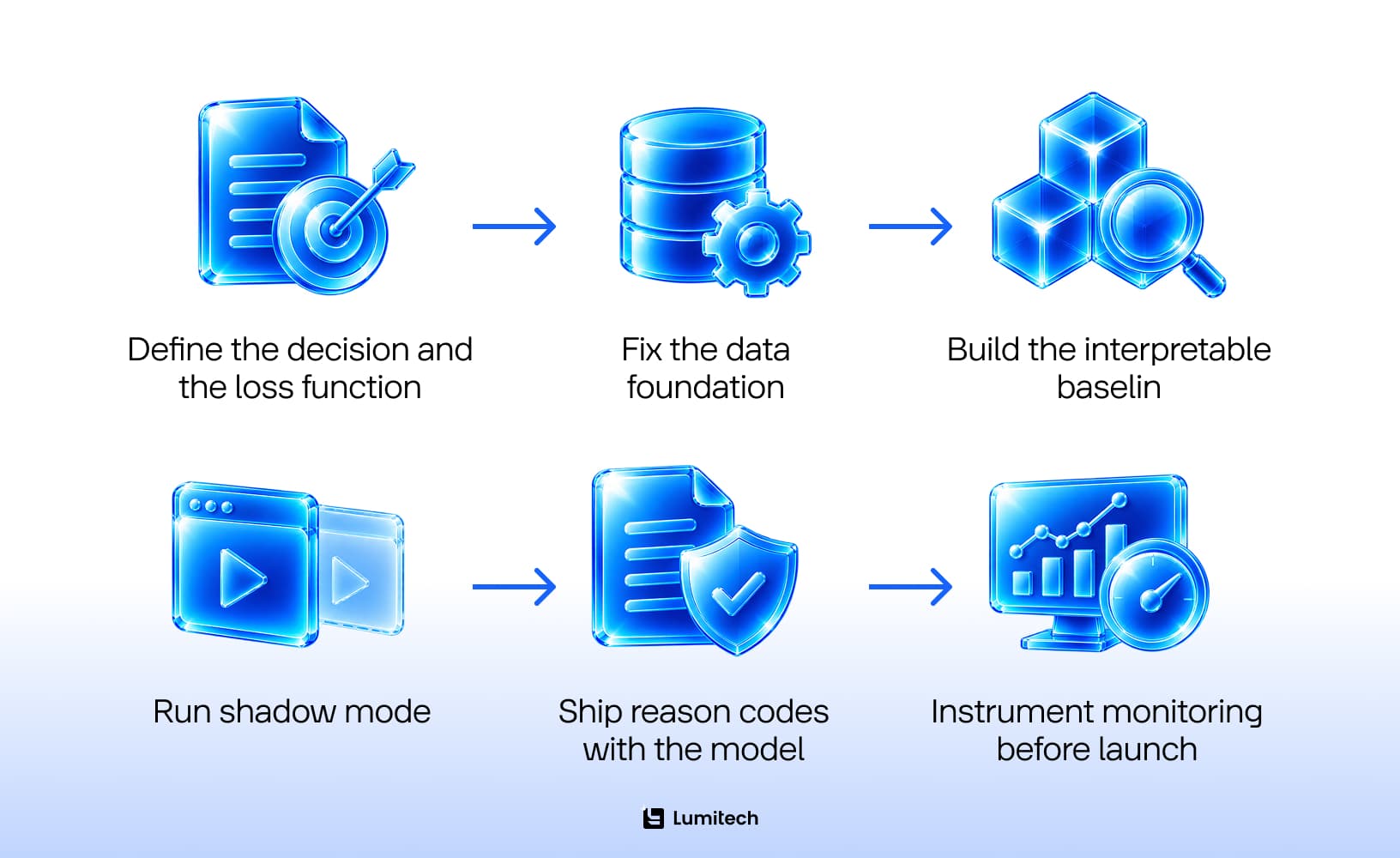
A sequence that works, drawn from how these programs actually succeed:
Define the decision and the loss function. What a false approval costs, what a false decline costs, and who owns the threshold.
Fix the data foundation. Point-in-time features, lineage, permissioned data agreements, and a feature store before any modeling.
Build the interpretable baseline. A logistic benchmark gives you an honest measure of incremental lift and a permanent challenger.
Run shadow mode. Score live applications without acting on the score, then let the disagreements with current decisions teach you.
Ship reason codes with the model. If compliance cannot sign off on the explanation layer, the model is not ready, no matter what the Gini says.
Instrument monitoring before launch. Performance, drift, fairness, and operational metrics, each with a threshold and a named owner.
Modeling is roughly a quarter of the work. Data infrastructure, decisioning, explainability, and monitoring are the rest, which is why AI-powered credit scoring programs stall in engineering rather than data science. Delivering credit scoring with AI is a systems project with a model inside it, and that is what Lumitech is usually brought in for: pipelines, feature stores, decision services, audit logging, and monitoring. Our AI and ML development work in regulated environments focuses on that layer, and on making sure version two ships without rebuilding version one.
If you are scoping a credit decisioning program and want a candid read on sequencing, data readiness, and where compliance friction will land, talk to our team.
Credit Scoring Using AI: The Practical Conclusion
ML-based credit scoring is now a mainstream capability rather than an experiment, and the interesting question has shifted from whether the models work to whether an institution can operate them. The models are commoditizing. Feature pipelines, explainability, monitoring, and the discipline to keep a challenger running are not.
Two things are worth holding onto. Headline improvement figures are portfolio outcomes reported by interested parties, while independent research supports smaller but real gains that compound through automation. And the EU’s December 2027 date is a reprieve on paperwork, not on the obligation to explain, monitor, and justify every decline. Lenders that build the governance layer while the clock is generous will ship faster than those waiting for it to run out.


