AI Personal Finance Assistant: Features, Architecture, and Monetization Models
An AI personal finance assistant reads bank data and answers spending questions in plain language. Here’s the architecture, monetization models, and 2026 regulations that separate trustworthy AI budgeting apps from ones that just sound confident.
- FinTech & Finance
September 18, 2026
 AI Overview
An AI-powered personal finance assistant connects to bank, card, and investment accounts, then calculates totals in code rather than in the language model to prevent errors. Core components include permissioned data ingress, transaction normalization, and deterministic computation. Without periodic re-consent, account connections decay, causing active UK open banking connections to fall 4.2% in one month in 2026.


An AI-powered personal finance assistant is software that, upon receiving permission from the user, links to their bank, card, and investment accounts, converts the raw transaction data into a structured financial record, and then allows the user to ask questions about it using plain language. The assistant consists of three operational components: permissioned data ingress, a deterministic calculation layer, and a language interface.
It is the middle layer that determines if the product can be trusted, and that ordering is where teams building fintech software development services-grade products get into trouble. The conversational surface is the cheapest part to build and the least consequential. The expensive part sits underneath: a clean, deduplicated ledger built from a dozen inconsistent bank feeds, and a guarantee that every number was computed by code, not generated by a model. That expense shows up directly in MVP development cost estimates, since ledger reconciliation and enrichment consume far more of the budget than the chat interface on top.
AI-Based Financial Tools: What Changed in 2026
The category stopped being a chatbot bolted onto a budgeting app. Starling Bank shipped Spending Intelligence to UK customers on 10 June 2025, letting them query spending in natural language on Google Gemini models, and has since folded it into a broader Starling Assistant. Revolut followed on 9 April 2026 with AIR. Then OpenAI put personal finance features into ChatGPT: Plaid-based account linking across more than 12,000 institutions, a spending dashboard and persistent financial context, reaching US Pro users on 15 May 2026 and Plus and Pro users on 25 June, in the United States only.
For anyone planning an AI finance app and approaching AI MVP development in this category, that last launch is the one to sit with. An all-purpose assistant which now has hundreds of millions of users is able to read bank data directly, and this gives three reliable options: depth within a particular segment, ownership of the data relationship, or distribution via a bank.
The speed at which consumers are adopting new technologies is outpacing the trust they have in them, even though figures from different questions vary considerably. A Harris Poll survey for NerdWallet of 2,003 US adults, fielded 23–24 June 2026, found 26% had used an AI chatbot for personal finance questions while 55% would not trust AI for financial advice.
The infrastructure numbers carry their own warning. The UK’s open banking scheme passed 100 billion cumulative API calls across the CMA9 banks by its 30 July 2026 update, yet active user connections fell 4.2% month-on-month in June, to 18.81 million. Consented connections decay, so any product built on a live account link is in the re-consent business.
What the AI Financial Assistant Actually Does
Feature lists converge. What separates one AI budgeting assistant from another is how each feature degrades when the data is imperfect, as it always is.
Categorization and merchant enrichment. Raw descriptors arrive truncated; Plaid’s documentation uses PURCHASE WM SUPERCENTER #1700 POWAY CAUS as an example. Resolving that into a merchant and a category is a separate paid product, and a geographically constrained one: Plaid Enrich covers the US and Canada only, so serving US and European users means two enrichment paths. Vendor accuracy figures rest on undisclosed test sets: Ntropy advertises 95%+ against a baseline it puts near 60%, Plaid publishes relative uplift rather than an absolute rate. Neither substitutes for measuring accuracy on your own users. For an AI-powered personal finance app, that means benchmarking any vendor’s categorization against your own transaction data before trusting its advertised accuracy.
Subscription and recurring-charge detection. The idea is that a smart financial assistant will identify subscriptions that a user has forgotten about, but there is a fundamental limitation with the mechanism: Plaid’s Recurring Transactions product requires at least three occurrences before a stream matures and excludes habitual-but-variable spending such as groceries and fuel. A subscription started last month is invisible to it.
Forecasting, goals, and conversational Q&A. Forecasting earns retention rather than novelty, and because it is arithmetic, it belongs in code. Conversational answering is the visible part, and demand is real: Bank of America reported 3.2 billion cumulative Erica interactions since that assistant’s 2018 launch; Wells Fargo reported one billion Fargo interactions in under three years. Both measure engagement rather than outcome. How these interfaces are built and governed is covered in our analysis of AI chatbots in banking.
Reference Architecture
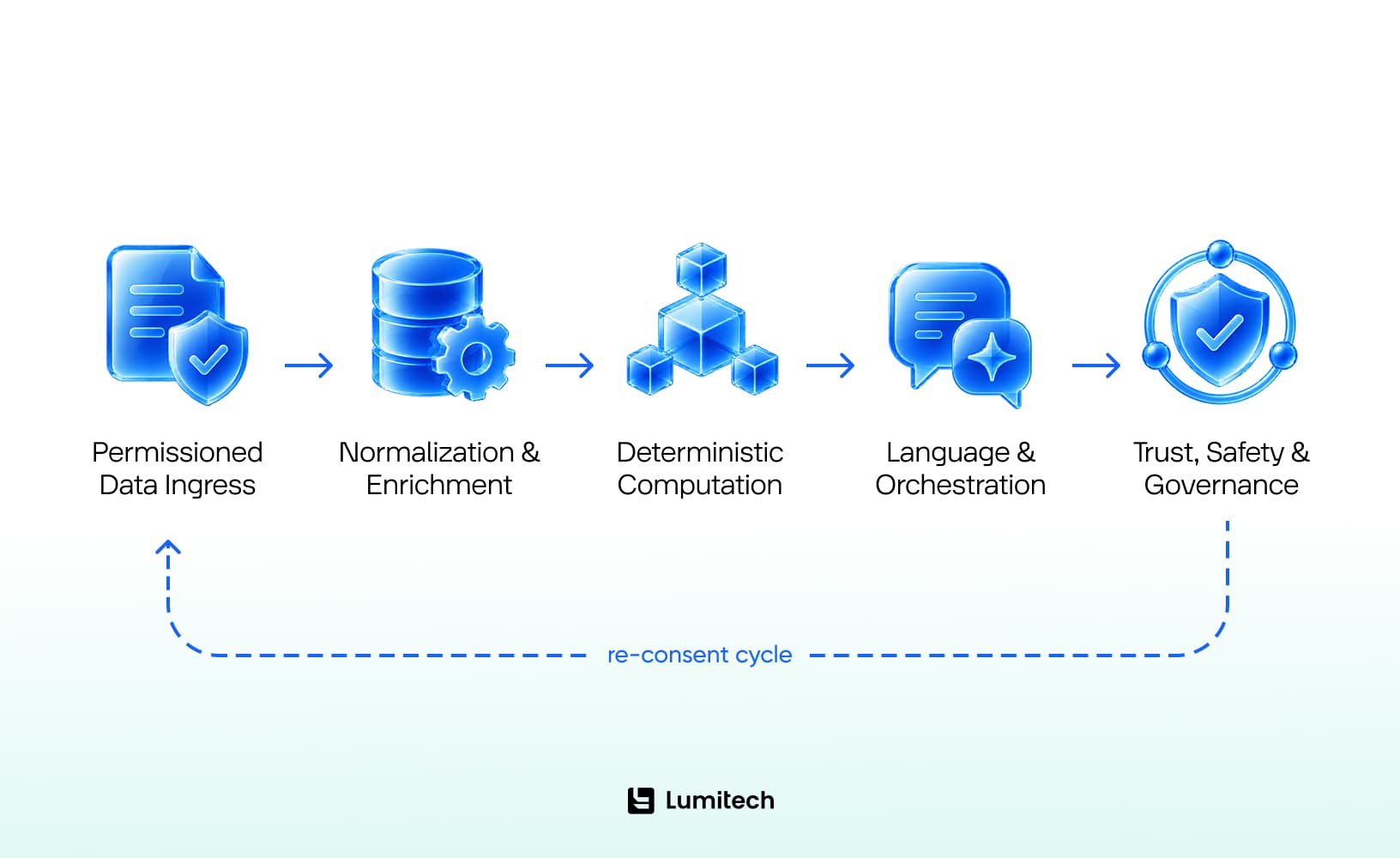
A workable AI-powered financial assistant has five layers, and the boundaries between them are the decisions that matter, whether it ships as a standalone AI money management app or inside a bank’s app.
Layer | Responsibility | Primary failure mode |
|---|---|---|
Data ingress | OAuth linking, consent lifecycle, sync | Stale data presented as live |
Normalization | Merchant cleaning, categorization, transfer matching, dedup | Wrong totals from correct data |
Deterministic computation | Every sum and projection, as typed tools | Arithmetic delegated to the model |
Language and orchestration | Intent routing, tool calling, retrieval | Confident answers with no grounding |
Trust and governance | Input isolation, PII minimization, refusals, evaluation | Untrusted content treated as user data |
Permissioned Data Ingress
In the United States, an example would be a company such as Plaid, MX, Mastercard Open Banking, or Akoya; in the European Union and in the United Kingdom, it is a PSD2 account information service provider. The first thing to check is whether a candidate is authorized in its own right or acting as another firm’s agent, which changes both the contract and the liability picture, and the FCA register settles that rather than the vendor’s marketing page. This is the same infrastructure that supports machine learning in banking. Two constraints shape what a personal financial assistant can promise.
Freshness: Plaid states background transaction checks run “typically between one and four times per day, depending on the institution”, with on-demand refresh billed as an add-on. An interface implying instant posting makes a claim the data layer cannot support.
Re-authentication and consent: the widely repeated “90-day rule” is out of date, and getting it wrong produces the wrong roadmap. In the EU, Commission Delegated Regulation (EU) 2022/2360 has applied since July 2023, extending the account-information exemption from 90 to 180 days and adding a dedicated exemption for provider access, so periodic strong customer authentication no longer applies. In the UK, FCA PS21/19 replaced 90-day re-authentication with a duty on the provider to reconfirm consent every 90 days. Either way, consent expiry is a scheduled product event, and reconnection deserves the attention onboarding gets.
Normalization and Enrichment
It is in this area that the majority of engineering effort is spent, and it is here that a product generates completely incorrect figures from entirely accurate source data. An AI money management app that goes straight to a chat interface without addressing this stage is exchanging short-term speed for figures that no one can trust. Transfers between a user’s own accounts and card payments inflate both income and spending unless matched into pairs and netted out, and that matching breaks on joint accounts and cross-institution transfers settling on different days. Pending transactions that later post are counted twice unless the pipeline reconciles identity across a transaction’s lifecycle. None of it is glamorous, and all of it decides whether a user trusts the first screen of an intelligent financial assistant.
Most teams underestimate this category because the demo is easy and the ledger is hard. Categorization, deduplication, and reconciling pending transactions against posted ones is where months of the build actually go.


Deterministic Computation
The most important rule in this category is that the language model should not carry out the numerical calculations.
This is not a stylistic preference. Research in Findings of ACL 2025 shows low-precision transformers require super-polynomial model size relative to input length to handle iterated addition and integer multiplication, while standard-precision models manage both at modest scale. The quantized models teams reach for to control latency and cost are the ones least able to add up a column of transactions.
The correct pattern is a typed tool interface. Functions such as sum_by_category(range) or project_balance(date) execute in application code against the ledger; the model chooses which to call, supplies parameters, and narrates the result. Every figure should trace back to specific transactions, which is the difference between an auditable AI financial planning assistant and one that only sounds confident.
Language and Orchestration
A lightweight router examines each turn by carrying out a ledger lookup involving the tool layer, posing a policy question during the document retrieval process, and raising an advice-adjacent question in order to trigger a refusal or escalation route. Document retrieval is assigned to documents and not to the transaction totals.
Cost follows routing discipline rather than model choice. As of August 2026, the cheapest published production tiers start near $0.10 per million input tokens and $0.40 per million output (OpenAI, Google), with batch processing discounted 50%. Routine traffic in a conversational AI for personal finance product is therefore cheap; the cost risk is architectural, such as sending a frontier model the entire transaction history every turn. Any AI-powered personal finance assistant that sends the full transaction history to a frontier model every turn is paying for context it doesn’t need.
On-device deployment is narrower than usually presented: Apple’s Foundation Models framework centers on a roughly 3-billion-parameter, 2-bit-quantized model Apple states is not designed for advanced reasoning. Teams weighing that split within mobile app development services should treat on-device as a latency and privacy optimization, not a capability decision.
Where the assistant acts rather than answers, moving money or canceling a subscription, the design moves into agentic AI development territory, and permission-aware execution with human confirmation on anything irreversible becomes the governing constraint.
Trust, Safety, and Governance
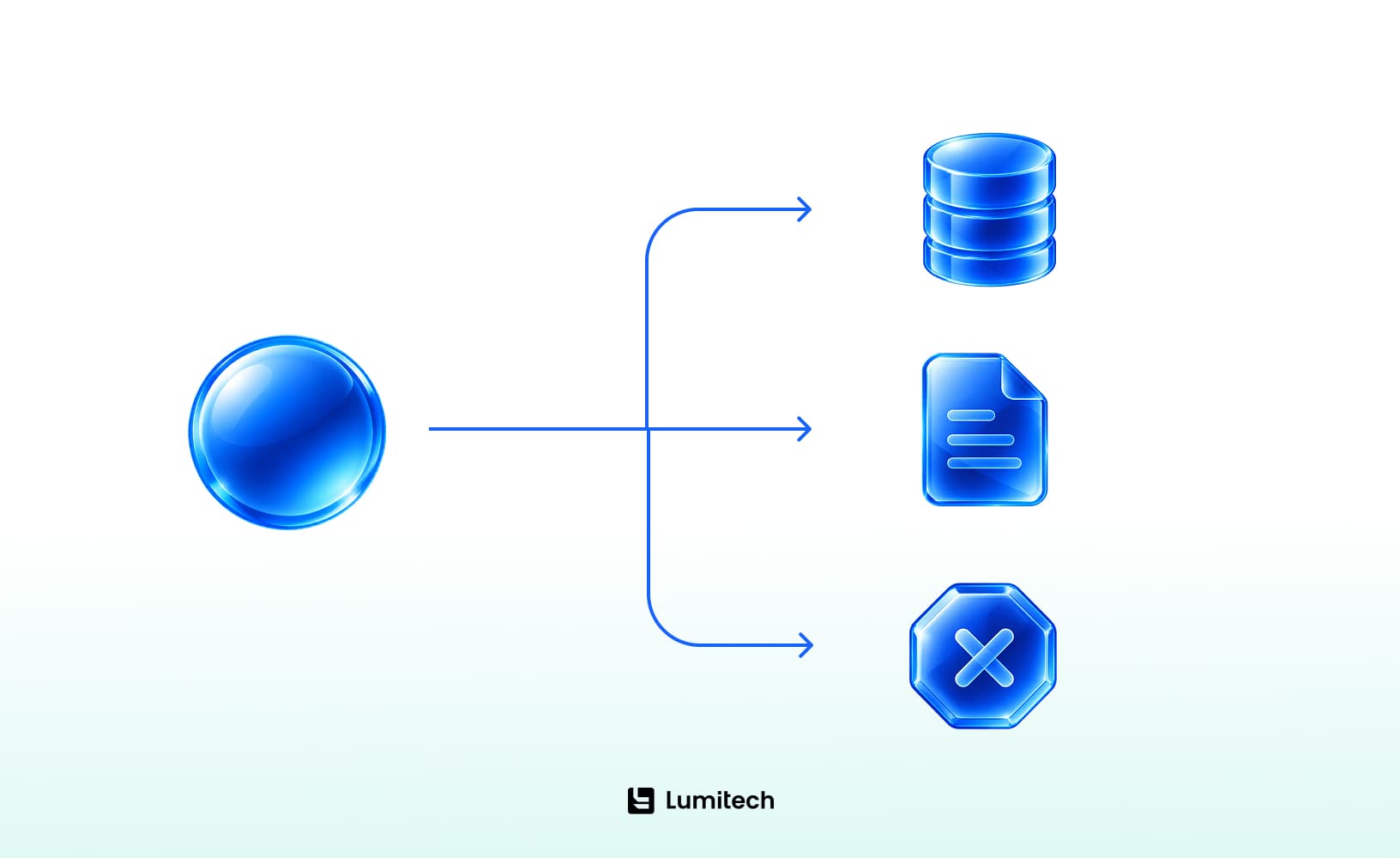
One risk here is specific to this category and badly under-discussed. Transaction memo and description fields are the only input surface a third party can write to, so anyone who can send a user money can put arbitrary text into a field the assistant later reads as the user’s own data. Security firm Blue41 published a case study on 29 April 2026 describing exactly this against an unnamed European bank’s assistant: a transfer of a few cents carrying instructions in its description field made the assistant generate what read as a legitimate reauthentication request inside the bank’s own app. The general class, indirect prompt injection, sits inside LLM01, the first-ranked risk in the OWASP Top 10 for LLM Applications 2025.
The mitigation is architectural, not prompt-based. Each field that comes from outside the user's own input should be treated as untrusted; it must be structurally isolated from the instructions, and the retrieved transaction text must never reach a model with tool-execution authority without first being sanitized. An AI money assistant that both moves money and reads attacker-writable text needs that boundary enforced in code.
For an AI personal finance tool moving personal data through a third-party model, residency and retention are configuration decisions made once, before launch, not adjusted after. The rest is familiar but load-bearing. Minimize personally identifiable information before any model call, and configure data residency early: OpenAI’s European residency can only be set on a new Project and cannot be retrofitted. Check retention terms rather than assuming them. OpenAI states API data is not used for training by default but retains it for up to 30 days, while Anthropic documents no default retention of conversation content. Fairness and accountability once a model influences a financial outcome are treated further in our discussion of ethical AI in finance.
Regulation and the Advice Boundary for AI Personal Financial Advisors
In 2026, three regulatory facts will affect the products chosen by a personal finance AI assistant in 2026.
United States data access is unsettled. The CFPB’s Section 1033 personal financial data rights rule was finalized in October 2024, but a federal court in the Eastern District of Kentucky enjoined its enforcement on 29 October 2025 while the Bureau reconsiders it. The court suspended enforcement rather than vacating the rule, so it formally stands but does no work; the statutory right in Dodd-Frank Section 1033(a) remains unimplemented, and a revised proposal reached White House review in August 2026 and remains unpublished. No federal open banking rule is currently enforced, and aggregation access is being renegotiated commercially rather than in law. The FTC’s GLBA Safeguards Rule does apply to non-bank financial institutions in FTC jurisdiction, including a duty to notify the FTC of breaches affecting 500 or more consumers within 30 days.
In the EU, classification depends on what the product does. Under the EU AI Act, Annex III designates systems that evaluate creditworthiness or establish credit scores as high-risk, except for financial-fraud detection. A budgeting and coaching assistant is not automatically in that category; instead, it falls under the Article 50 duty to disclose that the user is interacting with an AI system, which has applied since 2 August 2026. Extend the product into loan eligibility or credit scoring, and the function becomes high-risk, on a timeline that Regulation (EU) 2026/1744, the Digital Omnibus on AI in force since 27 July 2026, moved to 2 December 2027 for Annex III systems and 2 August 2028 under Annex I. The Omnibus did not defer Article 50. GDPR Article 22 applies separately to decisions with legal or similarly significant effects made solely by automated processing.
The advice boundary now has a middle tier, in the UK only. The FCA’s targeted support regime, set out in PS25/22, took effect on 6 April 2026. It sits between generic guidance and fully regulated advice, letting firms make suggestions based on the characteristics of consumers “like” the user; because it is a new regulated activity, only firms holding the permission can offer it. That is the clearest answer available to a question every team building an AI financial coach faces. In the United States, an AI-powered financial advisor making personalized investment recommendations risks registration, fiduciary, and disclosure obligations under the Investment Advisers Act, per the SEC’s robo-adviser guidance.
For anyone marketing an AI personal financial advisor, the naming of the service and their refusal boundaries must be developed simultaneously. The question “Should I put my savings into this fund?” falls into a different regulatory category than “How much did I spend on restaurants last month?”, and it is the routing layer, not the marketing page, that enforces this. Calling something a personal AI financial advisor in app-store copy while refusing advice in the interface gets the worst of both.
Monetization Models
Five models are in use for AI-powered financial assistants, each with a different failure mode.
Model | How it works | Verified evidence | Main risk |
|---|---|---|---|
Subscription | Direct consumer fee | Aug 2026: YNAB $14.99/mo or $109/yr; Monarch $14.99/mo or $99.99/yr; Copilot Money $13/mo; PocketGuard $12.99/mo | App-store commission, churn |
Marketplace referral | Commission on credit, loan, and deposit products | Credit Karma $2.3bn, Intuit FY2025 (to 31 July 2025), up 32%; NerdWallet $197.3m, quarter to 30 June 2026 | Incentive conflict with the user |
Interchange | Revenue share on debit spend via a sponsor bank | Fed 2023 data: exempt issuers averaged $0.52 per transaction, covered issuers $0.23 | Dependence on the Reg II exemption |
Advance and expedite fees | Fees on advances and instant transfers | Dave Inc. $144.9m of $170.8m Q2 2026 revenue from processing and overdraft fees, vs $15.1m from subscriptions | Documented enforcement exposure |
B2B white label | Licensing to banks and credit unions | Active market (Personetics, Bud, Strands by CRIF); no public economics | Long sales cycles, no benchmarks |
Subscription pricing for an AI budgeting app is tight, at roughly $8 to $15 per month or $75 to $110 per year for the core tier: a price band rather than a positioning choice. App-store commission takes a further slice, and that slice is in motion. Apple’s headline rate remains 30%, or 15% under its Small Business Program below $1m in net proceeds, but its unified EU terms take effect on 1 October 2026 at a 26% in-app rate, and in the US, after the Epic v. Apple contempt ruling, external-link purchases currently carry no commission while a court sets rates.
The largest revenue pool is referral, not subscription, and the gap between Credit Karma’s $2.3bn year and NerdWallet’s $197.3m quarter explains this category’s most instructive event. Intuit announced Mint’s shutdown on 1 November 2023 and closed the app on 23 March 2024, migrating users to Credit Karma. A well-funded AI money app with mass adoption was retired not because the technology failed but because free aggregation plus advertising monetized worse than the same data feeding a credit marketplace, and that arithmetic still governs which AI finance apps survive. The same arithmetic is pushing more roadmaps toward a high-yield savings platform tie-in, where deposit referrals monetize better than advertising ever did.
The fee layer carries the clearest regulatory exposure. Cleo AI agreed to pay $17 million to settle an FTC lawsuit announced on 27 March 2025 over deceptive advance amounts and obstructed cancellation; MoneyLion agreed to $1.75m in redress in November 2025, and the FTC and DOJ case against Dave Inc. and its CEO remains pending as of August 2026. When an AI financial management app monetizes through fees charged to people short of money, the compliance surface grows faster than the revenue.
Thinking about an AI budgeting app or a full AI money management platform?
Our team can walk you through realistic MVP costs, timelines, and the regulatory tier your product actually falls into.

Customer Stories
Explore What We've Built
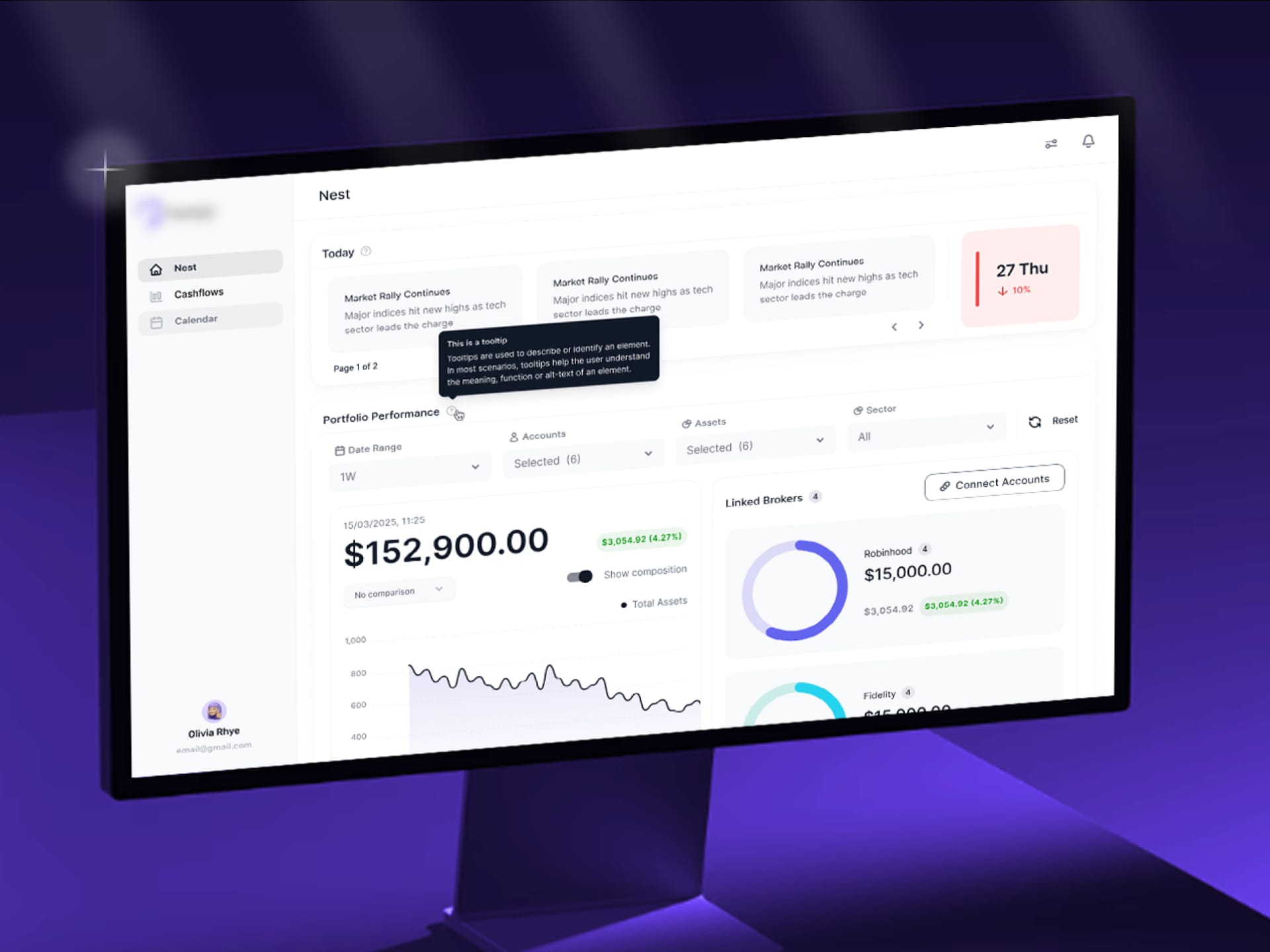
AI-Powered Investment Intelligence Platform
Building a RAG-based investment intelligence platform for a Panama fintech startup — from multi-broker data aggregation to AI-driven portfolio analytics that explain market events in real time.

Panama
Aug '25 – Feb '26
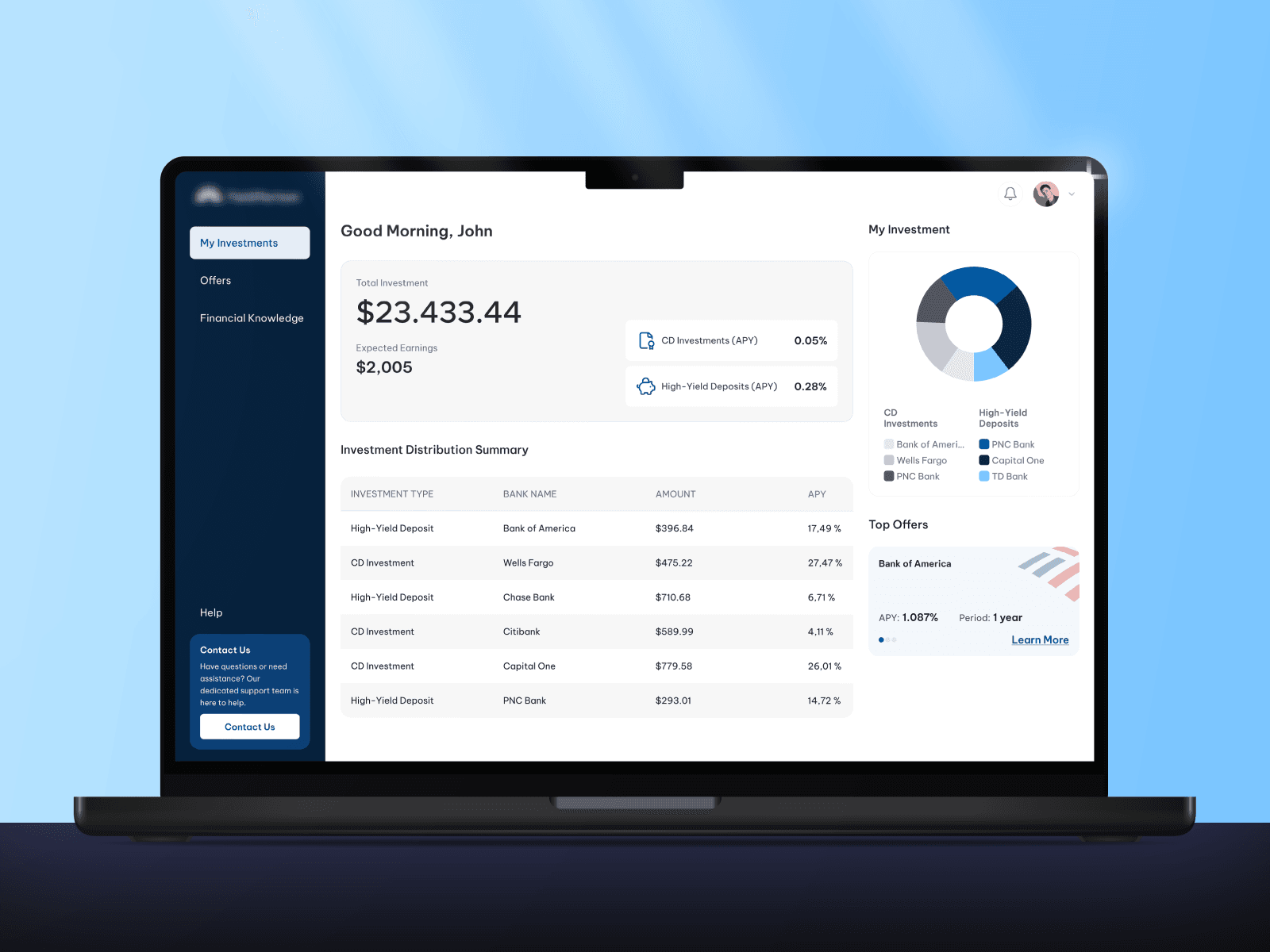
Transforming Savings Access with a Personalized Financial Platform
How Lumitech partnered with a fintech innovator to launch a US-focused platform that simplifies access to high-yield savings options and enables users to make better financial choices.

Hamburg
Jul '24 — Now
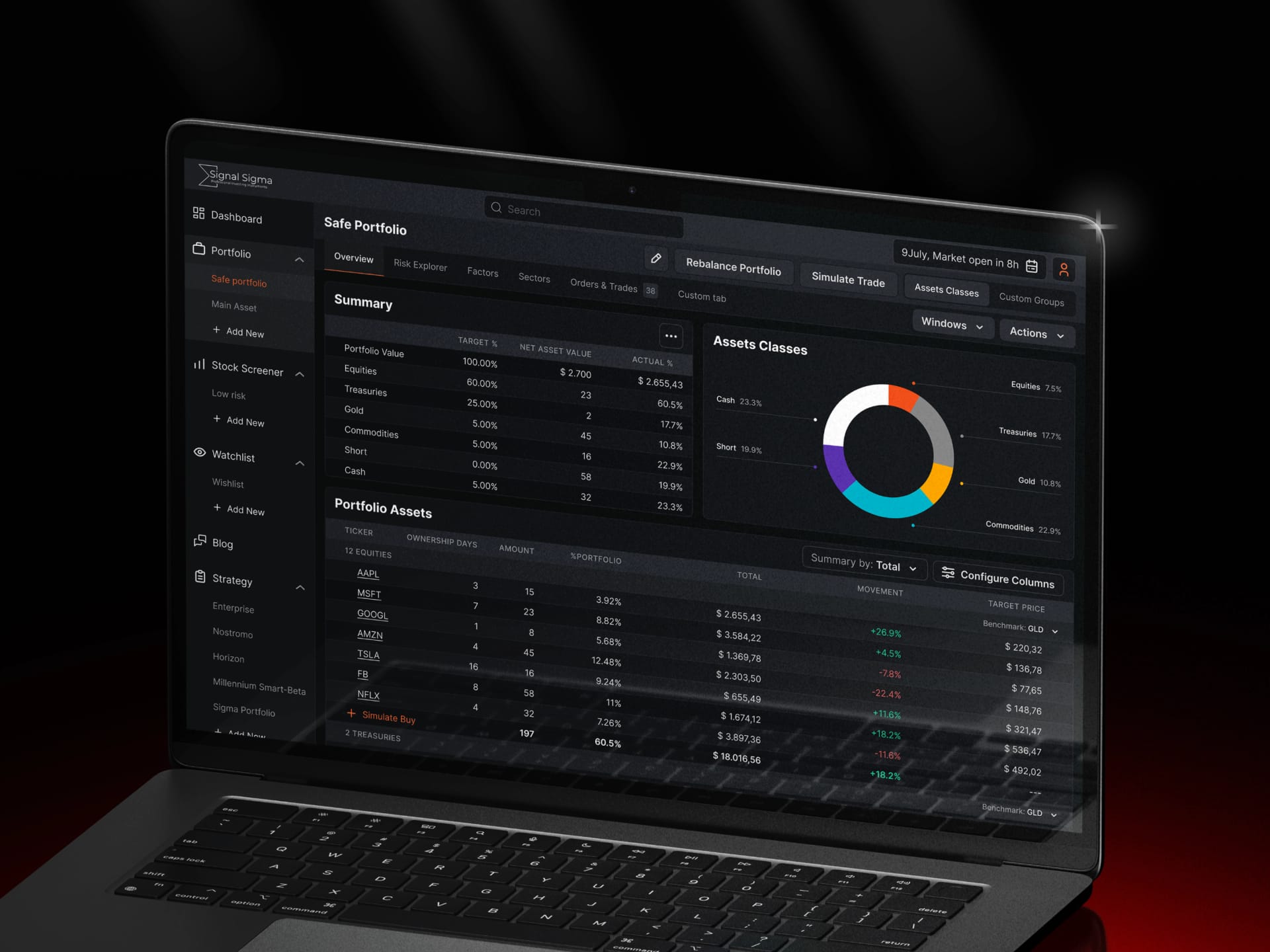
Analytics-Driven Investment Platform for Finance Professionals
Learn more on how to make smarter investment decisions with SignalSigma, use real-time analytics, optimized portfolio insights, and improved asset allocation.

Bucharest
Aug '24 — Now
FinTech & Finance
AI-Powered Investment Intelligence Platform
Building a RAG-based investment intelligence platform for a Panama fintech startup — from multi-broker data aggregation to AI-driven portfolio analytics that explain market events in real time.
Client Location
Panama
Duration
Aug '25 – Feb '26
Platform
Web & AI
Transforming Savings Access with a Personalized Financial Platform
How Lumitech partnered with a fintech innovator to launch a US-focused platform that simplifies access to high-yield savings options and enables users to make better financial choices.
Hamburg
Jul '24 — Now
Analytics-Driven Investment Platform for Finance Professionals
Learn more on how to make smarter investment decisions with SignalSigma, use real-time analytics, optimized portfolio insights, and improved asset allocation.
Bucharest
Aug '24 — Now
What the Evidence Does Not Show
This area has plenty of engagement data, but very little outcome data. That gap holds whether you’re evaluating a single AI budgeting app or a bank-scale rollout.
As of August 2026, we found no published study measuring whether AI-powered financial advisors improve users’ savings rates or reduce their debt. The closest serious work, a May 2026 MIT Sloan and Stanford paper, AI Financial Advice: Supply, Demand, and Life Cycle Implications, collected real prompts from a representative US sample and simulated lifetime outcomes from following the advice. The study models hypothetical adherence rather than assessing actual changes in behavior, and it found that the quality of the advice varied systematically according to gender and financial literacy. Although banks report interaction figures in the billions and apps publish testimonials, neither of these measures actual outcomes.
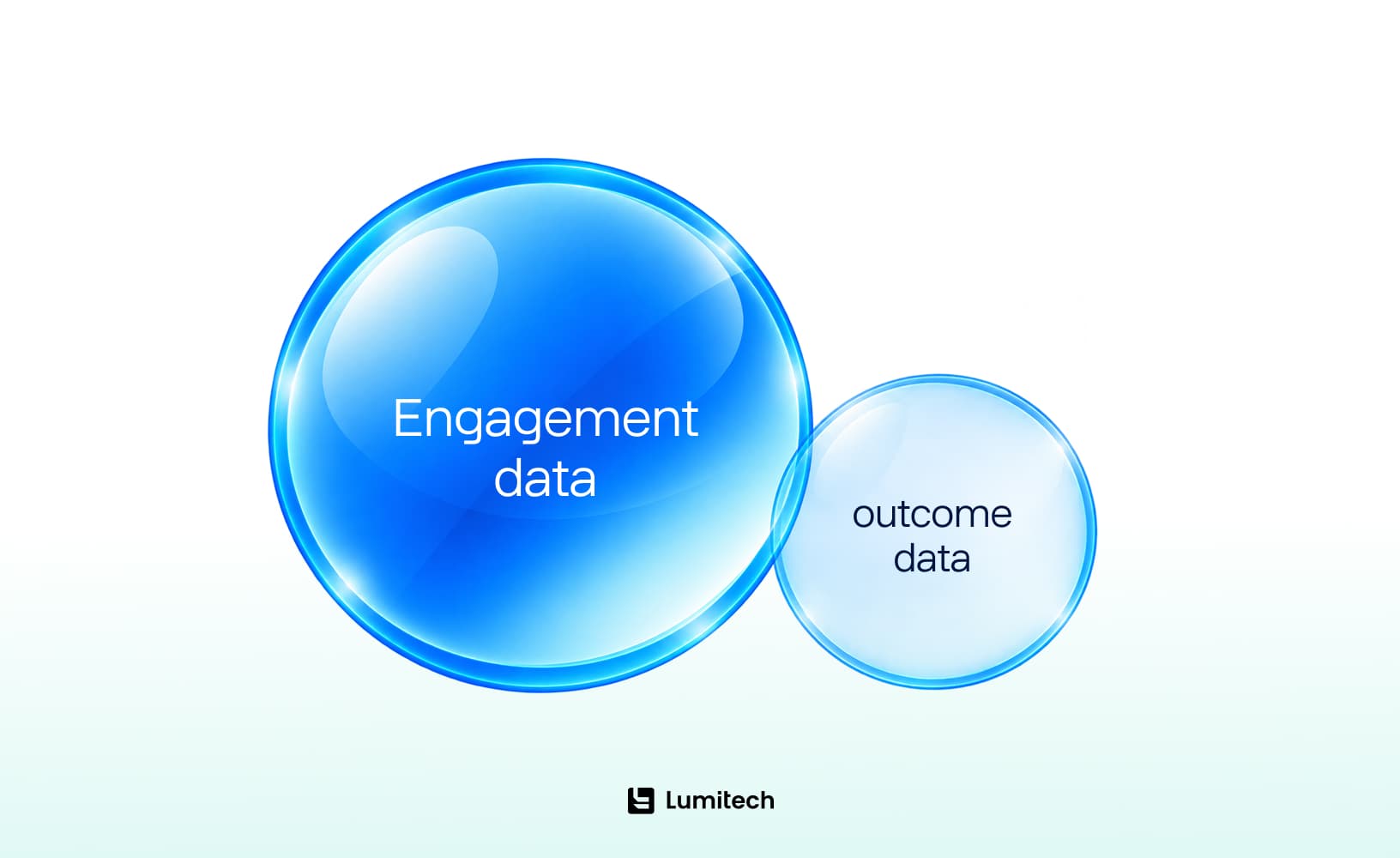
The gap is acknowledged institutionally. The Financial Stability Board’s October 2025 monitoring report and the Cambridge Center for Alternative Finance’s 2026 Global AI in Financial Services Report both document measurement gaps, the latter finding 55% of firms and 63% of regulators struggle to measure the value of AI deployments. There is a matching geographic gap: US survey data exists on generative AI for personal finance, but no equivalent European consumer survey covers finance, which makes European demand claims for generative AI personal finance products weaker than they sound.
For a product team, that absence is an opportunity. Instrument the outcome from launch: savings rate before and after activation, cancellations actually completed, forecast accuracy against realized balances. An AI financial planning assistant that can demonstrate an outcome will have something almost no competitor does.