
AI-Driven Software Market Trends Delivered by Web Summit Qatar 2026
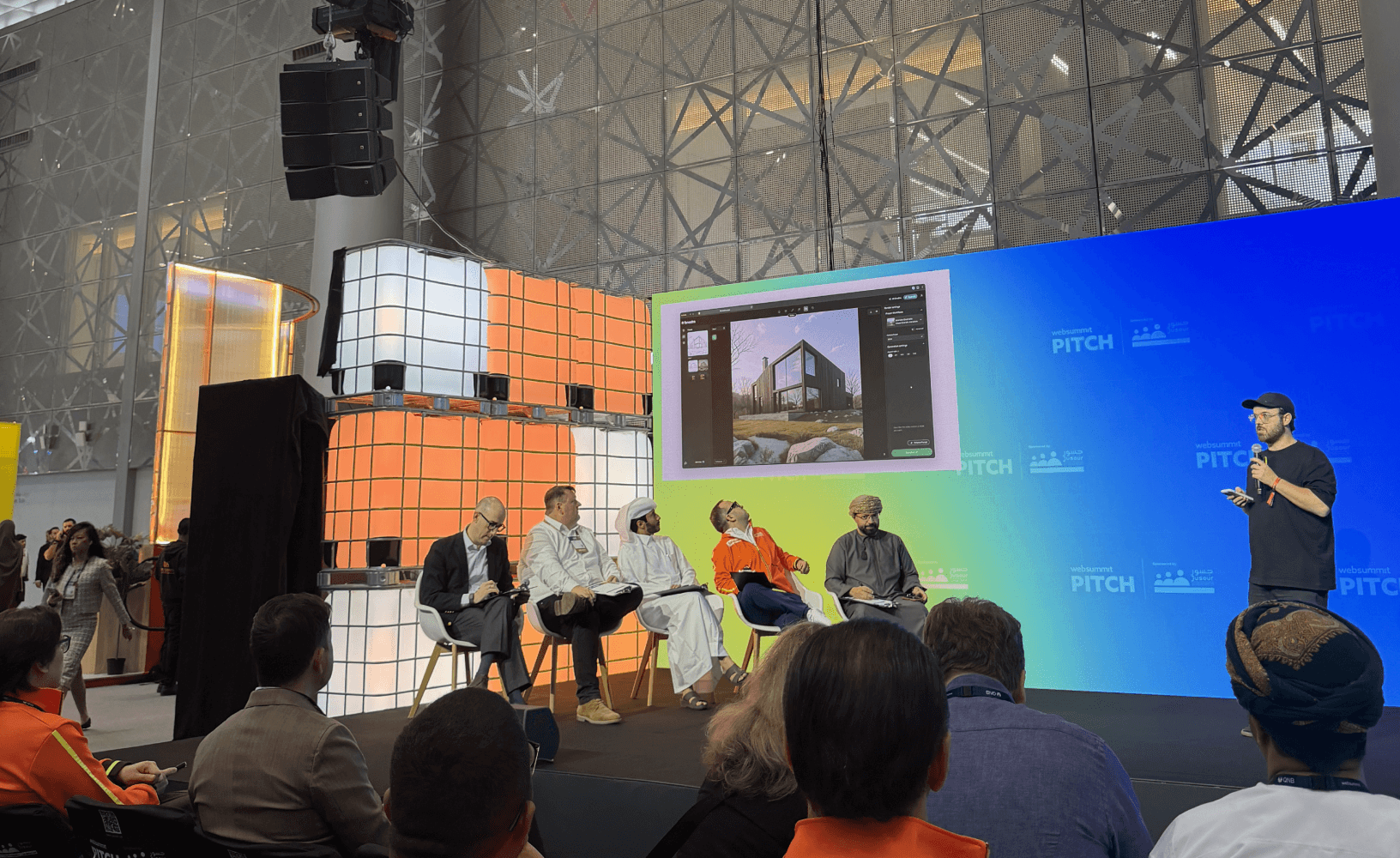
Web Summit took place on February 1-4, 2026, in Qatar, bringing together the best minds in AI-driven software development, retail, SaaS, construction, and legacy industries. This is an amazing opportunity for tech gigs to discuss hot topics around AI.
- Events
- Web Summit
March 09, 2026
 AI Overview
Web Summit Qatar has quickly become one of the region’s most influential technology events, bringing together founders, investors, enterprise leaders, and innovators shaping the future of digital business. The conversations focus on AI-driven transformation, operational efficiency, startup growth, and the evolving role of technology teams in delivering measurable business outcomes. These insights offer a practical view of where software development, product strategy, and innovation are heading across Qatar, the GCC, and the broader global technology market.


The list of speakers included experts from IT companies in UAE and global partners such as Canva, Runway, OpenAI, ElevenLabs, and Genspark AI, alongside representatives from major corporations like Microsoft, Amazon, Meta, TikTok, and IBM.
The summit covered topics such as the evolution of AI into a fundamental operating layer for software, the transformation of engineers into strategic AI pilots, and the shift from traditional software development to rapid business acceleration partnerships.
Although Lumitech has considerable experience in AI development and provides software development services in Qatar, it strives to stay up to date with the latest software development trends 2026 to better meet its clients’ needs and deliver the best solutions.
This is why Lumitech’s Founder and CEO, Denis Salatin, and Head of Marketing, Anastasiia Savchuk, did not miss the opportunity to attend such an event. Their mission was to discover new AI trends and approaches and to share Lumitech’s expertise.
Thus, they outlined the key software engineering trends 2026, as well as marketing trends at the Web Summit, focused on AI-driven software development and business acceleration, and on the strategic shift in engineering roles. Let’s discuss all Web Summit Qatar insights in detail.
AI as the Engine Behind Modern Enterprise Operations
For Lumitech, Web Summit Qatar confirmed that artificial intelligence is the operational layer of the business, the basis for its processes, solutions, and the speed of growth for IT outsourcing companies in UAE.
This is felt in large organizations in the GCC region, particularly in the UAE, in retail and construction. Instead of investing money in 12 month development of another SaaS product, companies focus on the following:
Improve processes now by integrating AI on top of existing systems to identify inefficiencies, prioritize tasks, and make decisions based on real-time data.
Reduce time-to-market by applying predictive analytics, automated resource planning, and AI-assisted development, which allows you to launch new initiatives much faster.
Automate internal workflows by outsourcing document processing, reporting, cost control, contract review, and routine operational tasks to algorithms.
Reduce operational friction between departments by combining data from different systems into a single model that provides a transparent view of indicators and reduces decision-making conflicts.
We discovered that AI in this context is an intelligent layer that permeates the existing infrastructure: ERP, CRM, project management systems, and financial modules. It analyzes, predicts, optimizes, and suggests software development solutions in Dubai before the problem becomes apparent.
“We’ve seen that companies are moving from just building products to redesigning the processes. They want to extend what they already have, adding intelligence as a driver of change and growth"



This also means a different role for technology partners. Businesses are looking for operational transformation architects, those who can integrate AI into real-world processes and create measurable impact: faster decisions, fewer errors, lower costs, better predictability. AI is becoming part of the infrastructure, as natural as the cloud or APIs.
What this means for Lumitech:
Considering software development industry trends 2026, we are already ahead of the game: our internal decision stack and AI accelerators allow us to spend less time on coding and focus on strategically accelerating our clients’ business metrics. We build an architecture that delivers results in weeks, not months.
Smaller Teams, Bigger Impact: The New Strategic Engineering Standard
The next strong signal we brought back from Doha is that the structure for providing web development services is changing, and we are seeing a new kind of team being shaped: smaller and, at the same time, much more efficient and focused on the end result. Accordingly, here are the key software development future trends 2026:
Fewer engineers per product
With AI tools, one person can now do the amount of work that previously required an entire department. This eliminates unnecessary bureaucracy within large teams, making communication instantaneous and architectural solutions holistic and fast.
Deep automation of delivery processes
Routine deployment and testing stages are fully automated by algorithms and AI code review trends. AI assistants independently check the code for errors and vulnerabilities, freeing engineers to solve complex architectural challenges that automation cannot handle.
Faster iteration cycles
The time between an idea and a working feature is reduced to days. AI tools allow you to instantly create prototypes and test hypotheses on real data, turning software development predictions 2026 into a continuous flow of innovation rather than a lengthy wait.
Higher expectations for each release
Every update should deliver measurable business value. While coding speed is no longer an issue, the focus is shifting to how well new functionality solves specific user pain points and accelerates company growth.
Key software development trends 2026 state that writing clean code is already the hygienic minimum; the real skill now lies in understanding the impact of that code on revenue and cost optimization.
What this means for Lumitech:
Our work model has long been based on small yet powerful teams of experts who use AI as a multiplier of their own power. For our clients, this means less bureaucracy, direct access to developers’ strategic thinking, and solutions that drive business from day one of release.
Engineers Are Becoming AI Pilots
The next thing we saw at the summit, among software engineering trends 2026: the role of the engineer is undergoing a serious transformation. The best analogy for this process is the transformation of the designer into a pilot. Whereas previously the developer personally crafted every detail of the mechanism, they now control a powerful, intelligent system that can build, test, and scale solutions under their strategic supervision.
This transition requires a complete change of mindset.
Old Mindset: Manual labor and technical perfectionism | New Mindset: Orchestration and strategic management |
|---|---|
The old approach was based on building everything by hand, endlessly optimizing code quality, and focusing on architectural purity. This often led to delays in the pursuit of perfection that did not always correlate with business needs. | The new mentality requires designing systems that AI can easily extend and support. The engineer becomes the “pilot,” orchestrating the work of AI agents, validating their work, and most importantly, aligning technical execution with the client’s overall business goals. |
What this means for Lumitech:
At Lumitech, we’ve long since transitioned to a “pilot” model focusing on the latest market trends in software development. Our engineers manage a high-tech stack in which AI handles 80% of routine work, focusing their intelligence on architectural innovation and creating real business value. This allows us to multiply the impact of each developer and deliver quality that is unattainable with a purely manual approach.

Moving Beyond GPT Wrappers: The Shift to Applied Vertical AI
The status of “AI-driven” has become an entry ticket to the market. At Web Summit Qatar, we saw that 90% of startups start their pitches with the trendy prefixes “AI-first” or “AI-native”. This creates a huge amount of information noise, making it increasingly difficult to distinguish real value from marketing wrappers.
The market is already oversaturated with similar solutions:
GPT-wrappers: simple interfaces on top of existing language models.
Thin integrations: surface integrations that do not solve deep problems.
Generic copilots: universal assistants that offer general advice instead of precise actions.
Competition in this direction is becoming fierce; however, this is where a real “blue ocean” window of opportunity opens. The summit clearly articulated that the future belongs to applied expertise. The real differentiation lies in three software development future trends 2026:
Vertical AI: Deep knowledge in a specific domain niche where general models fit.
Legacy-heavy industries: Introducing automation into “heavy” traditional industries (construction, logistics, manufacturing) that have ignored digitalization for years.
Operational Workflows: Integrating AI directly into workflows and operational chains, rather than just creating another chatbot.
What this means for Lumitech:
We realize that AI on its own is not a moat that will protect the business. Our strategy includes applied intelligence, so we aim to create deeply integrated automation systems for real business processes. Our advantage is that we understand how to make it work within complex industrial environments.
Stop building SaaS features and start driving business impact. Partner with Lumitech to transform your engineering into a high-speed AI-driven engine.

From SaaS Builders to Business Acceleration Partners
The market is full of software products, which is why modern businesses are more focused on acceleration. Customers are looking for software market trends to completely transform their operations, which requires a different level of involvement from engineering teams.
The current work model involves:
Deep immersion in the domain: Developers study the client's business processes in detail at the level of industry experts.
Finding growth points: The team identifies bottlenecks where automation will bring the greatest benefit with the help of enterprise software market trends 2026.
Automation-first architectures: Speed and efficiency are laid at the core of every technical solution.
Delivering measurable impact: The result of integrating software engineering predictions for 2026 is reflected in real numbers and in the company’s acceleration from the outset.
The competitive advantage lies in the combination of engineering, artificial intelligence, and strategic business thinking.
What this means for Lumitech:
We work as partners, providing radical acceleration of our clients’ business processes. Our approach is based on a thorough analysis of needs and building an AI architecture that brings real value here and now.
The Speed of Execution Is Now Strategic
The Doha Summit delivered a sobering thought: while AI writes code, the speed of development becomes a key competitive strategy. If your development cycles aren’t being compressed by intelligent tools, you’re losing out to those who have already done this.
Here’s how Lumitech implements this strategic insight:
Automating engineering routines
We use AI to instantly generate basic infrastructure, tests, and template code. This allows our engineers to spend 60-70% of their time “digging the foundation” and immediately move on to creating the client’s unique business logic.
Thanks to our decision stack, we create working prototypes (PoCs) in days. This allows the client to validate a business idea on real data almost instantly, without waiting months for the first release.
Compact iterations and continuous value
We have moved from large quarterly plans to small, yet “smart” iterations. Each system update is now based on AI software development trends 2026 and analytics and real-world feedback, which allows the product to adapt to the market faster than competitors have time to prepare documentation.
Inference at the speed of thought
As another speaker at the summit, Jonathan Ross (CEO of Groq), noted, the speed of a system’s response today determines the level of user trust. We build architectures so that the AI components inside our clients’ products work instantly, providing a seamless experience that becomes their main advantage in the market.
What this means to our clients:
For Lumitech, speed of execution within AI development services is a way to make your business “dangerous” to competitors. We deliver working solutions while others are still holding architecture meetings.
The Next 2-3 Years Will Redefine Engineering Roles
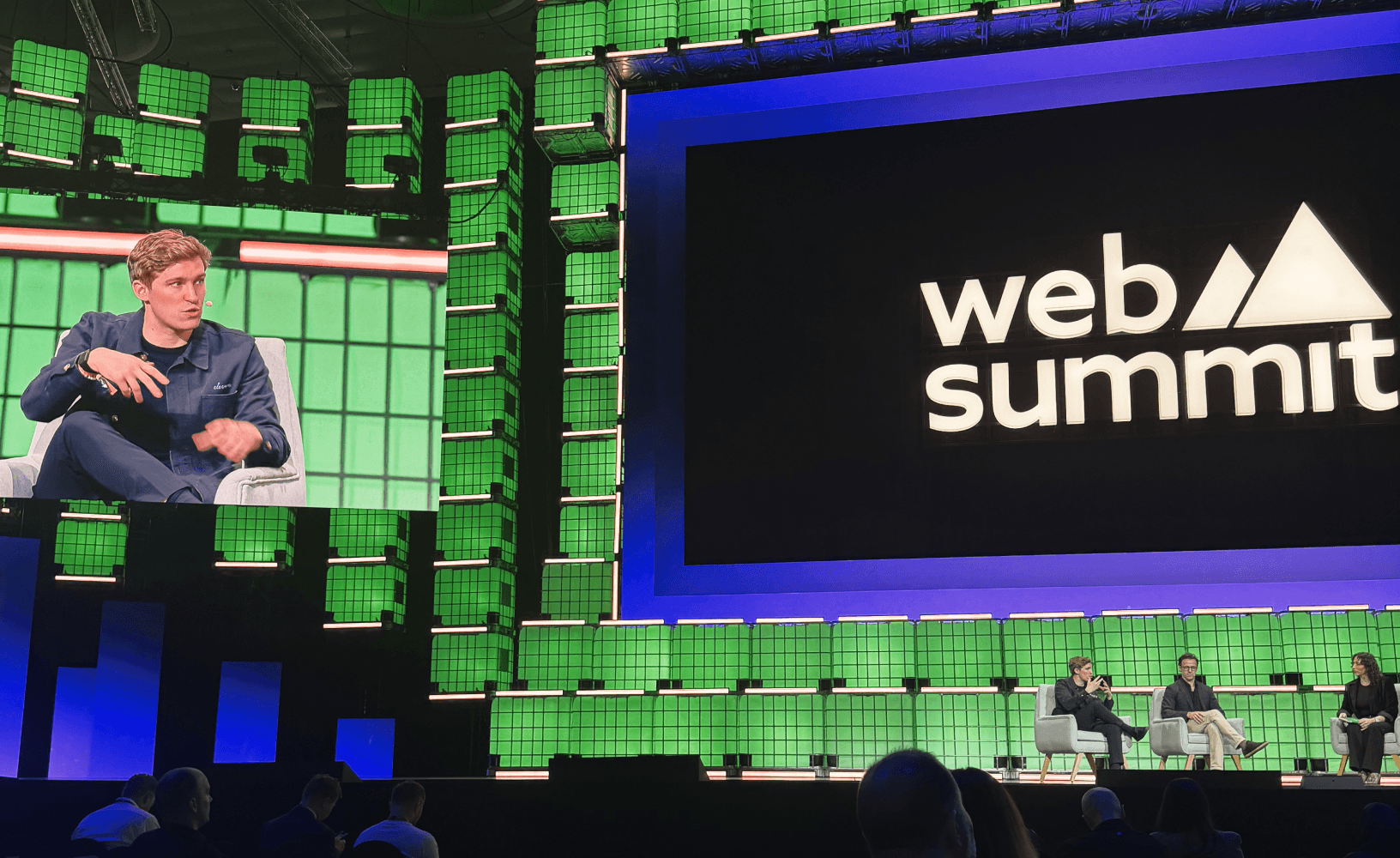
We are sure that in the next two or three years, developers will completely “reflash” the very essence of the profession. Now, the time of “engineer-strategists” has come. Those who adapt to the new rules and enterprise software market trends will gain a huge advantage, while supporters of an exclusively manual approach risk becoming irrelevant to the market.
Based on the discussions at Web Summit Qatar 2026, we have outlined a portrait of an engineer who will be the industry leader in the coming years:
Thinking like a product strategist
The engineer of the future understands why and for what purpose the product is being created. They see the market's logic and help the client make decisions that maximize value for the end user.
Using AI as a force multiplier
Artificial intelligence for a professional is an exoskeleton. Successful professionals use AI as a multiplier of their own power, delegating 80% of their routine to it to focus their intelligence on architectural innovation.
Focusing on measurable business impact
The main metric is the impact on the business. Engineers who thrive focus on measurable results, such as transaction speed, conversion, or reductions in operating costs.
Embracing orchestration over manual execution
We are moving from manually writing each function to orchestrating complex intelligent systems. The future belongs to those who know how to design systems where agentic AI for software development 2026 works harmoniously under strategic human supervision.
What this means for Lumitech:
The role of the developer is evolving into something much more powerful. At Lumitech, we are already forming a team of such pilots who combine deep engineering expertise with business thinking.
AI is the new operating layer – don’t let your business run on legacy logic. Let’s build the architecture that puts you ahead of the market today.
Summing Up What Lumitech Brought from Web Summit Qatar 2026
So, we have presented the key Web Summit Qatar takeaways, including AI insights, and can now conclude.
Future achievements belong to professionals who transform ideas into business results by combining intelligent systems and strategic vision. Autonomous design is already here, opening up the space for high-level orchestration of technologies.
The Lumitech team integrates these Web Summit Qatar highlights into every project, enhancing engineering expertise with AI. We create an architecture of speed that allows our clients to dominate the market today.


