
Lumitech Insights from Web Summit Qatar 2026: AI Strategy vs. AI Hype
The Lumitech team has just returned from Web Summit Doha 2026 — one of the world’s largest technology conferences, where founders, enterprise leaders, investors, and product teams gather to compare notes on what’s next.
- Events
February 06, 2026
 AI Overview
Web Summit Doha 2026 signals that AI is shifting from a marketing add-on to core infrastructure, since teams that automate research, content, and testing iterate faster than manual competitors. Key shifts include real-time SEO clustering, automated funnel experimentation, AI-generated content, and convergence of narrow specialist roles into strategic, cross-disciplinary skill sets. This transition rewards speed and broad expertise over static, siloed technical skills.

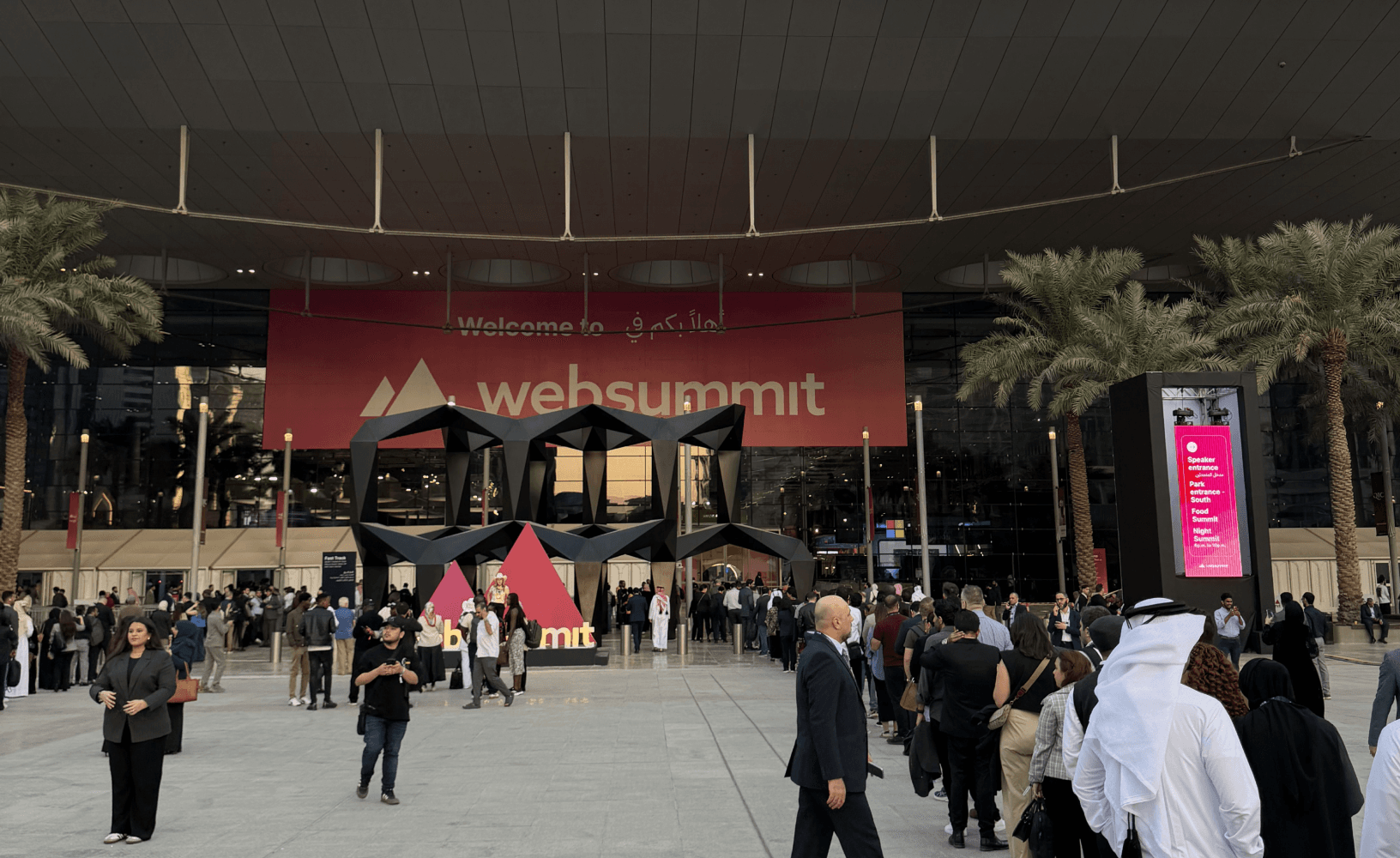
Web Summit is held annually, but this time, Doha had a particularly clear signal cutting through the noise. The idea that kept recurring across stages, booths, and side conversations was that AI is no longer an optional feature. It’s becoming an crucila infrastructure element, something companies build on top of, like cloud services or payments.
Below are the most important things we saw, heard, and debated, and what they mean for teams trying to build, scale, and stay competitive.
The Velocity Trap: Marketing’s Pivot to Total Automation
One of the most frequent conversations we had in the hallways of the Doha Exhibition Center was about making marketing faster, not just better. The consensus among the growth leads and CMOs was unanimous: marketing is moving toward total automation for the sake of survival.
Yes, you can still do everything manually: collect keyword lists in spreadsheets, brainstorm content briefs one by one, run campaigns, pull reports, write conclusions, repeat. That approach can still work, especially for smaller teams or companies with long sales cycles. But at Web Summit Doha 2026, it was hard to ignore the pattern: the teams that automate faster do more than save time: they learn faster, iterate faster, and ship improvements faster.
What’s changing is the scope. For years, “marketing automation” mostly meant email sequences, CRM triggers, and scheduled posts. Now the conversation is broader: AI is being used across the entire workflow, from research to production to analysis, and it’s becoming a standard.
Here are the areas where we saw the biggest acceleration:
SEO research and clustering
Instead of weeks of manual keyword mapping, AI systems now perform real-time intent analysis, clustering thousands of topics in seconds to identify market gaps before they become saturated.
Content production and optimization
Automation is being used to create “living” content: assets that don't just sit on a page but are automatically updated based on changing search trends and user behavior data. Drafts, variations, meta descriptions, structured outlines, repurposed snippets for social, A/B-tested hooks — all of it is being produced faster, and then refined based on performance rather than opinion.
Funnel analysis and experimentation
AI is helping teams identify where prospects drop off and why, then propose experiments: changes to landing page structure, messaging, offer positioning, and onboarding steps. There are systems that run thousands of A/B tests simultaneously, automatically diverting traffic to the highest-converting paths without a human ever having to look at a spreadsheet.
Performance reporting and iteration
Reporting used to be the part everyone postponed. Now it’s increasingly automated: dashboards that summarize movement, explain anomalies, highlight what changed, and suggest the next action. Traditional weekly reports are steadily being replaced by autonomous dashboards that not only flag when a campaign is underperforming but also suggest (and sometimes implement) fixes in real-time.
A common anxiety in the industry is the fear of displacement. However, the leaders we listened to in Doha viewed this shift through a different lens. Replacing the creative soul of a brand is not on the table; the shift is about multiplying output without multiplying cost.
In the old model, if you wanted to double your content output, you had to double your headcount. In the new model, your existing team becomes the system's “architects”. They spend less time on the menial labour of data entry and formatting, and more time on the high-level strategy and creative storytelling that machines still can't replicate.
The takeaway for any business watching from the sidelines is simple: companies that automate faster will move faster. In a globalized market where attention is the scarcest resource, being “fast enough” is no longer an option.
The Great Convergence: Why the “Narrow Specialist” Is Fading
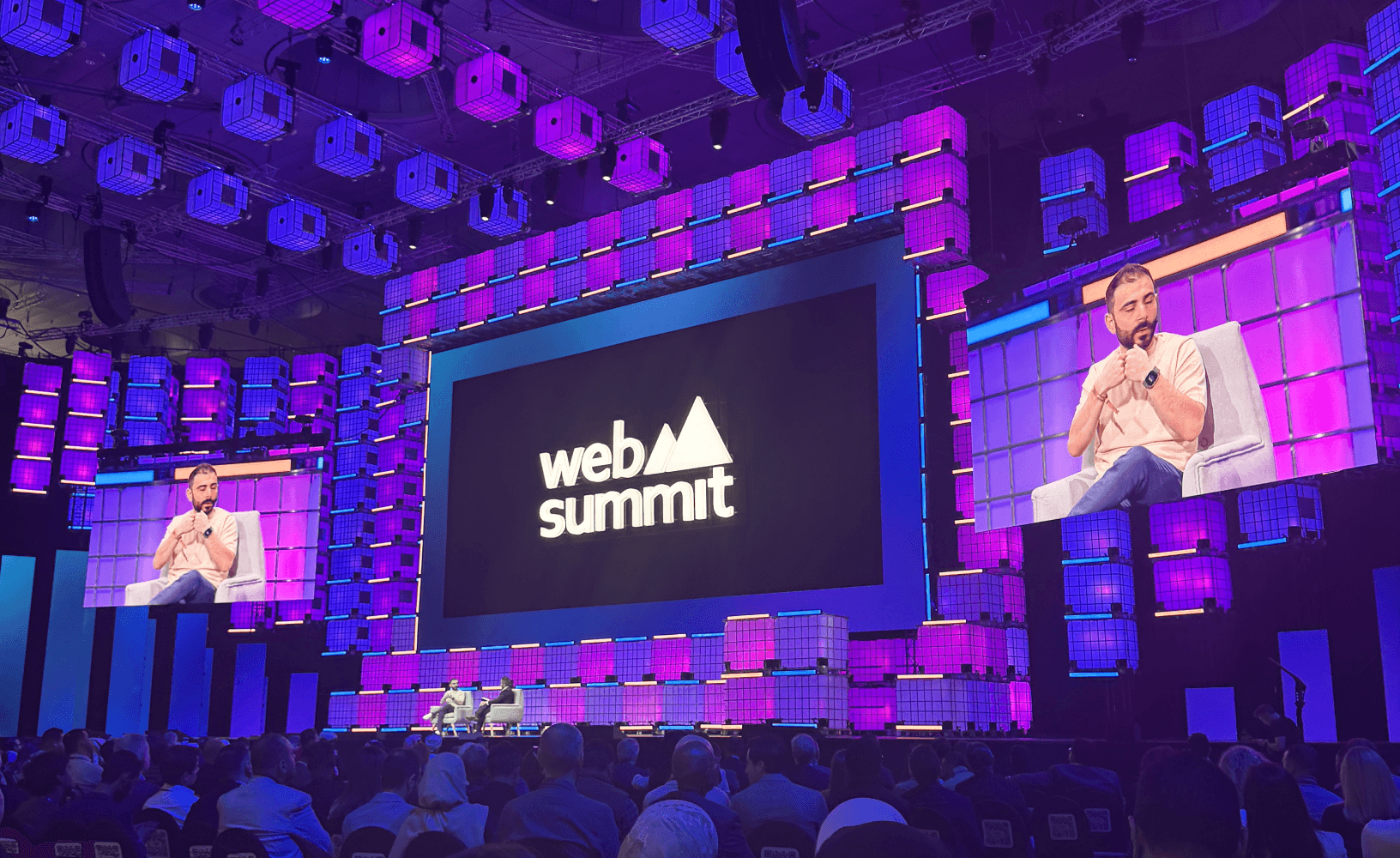
One of the most provocative takeaways from the Web Summit 2026 stages was the shifting definition of expertise. For years, the tech industry incentivized deep, narrow silos: professionals who lived and breathed a single discipline, like technical SEO or backlink building. In Doha, the message was clear: that model is collapsing.
As AI begins to handle the repetitive, technical grunt work of digital marketing, the traditional specialist is finding themselves at a crossroads. The market is evolving at a startling pace, and static skill sets are becoming a liability.
Beyond the Technical Audit
Take SEO as the primary example. Not long ago, you could win by mastering technical audits and perfecting your meta tags, and today that’s barely enough to get into the game. In an era where AI-powered search engines (like Perplexity or Google’s SGE) are synthesizing information rather than just listing links, visibility now depends on a much more complex web of factors:
Digital Authority and Trust. Today, you need credibility rather than just keywords. Who is linking to you, referencing you, quoting you, inviting you into the conversation? Establishing digital trust is now a cross-functional effort between PR, content, and tech.
Mentions and Brand Positioning. AI models train on vast datasets. If your brand isn't being mentioned in the right contexts across the web, you don't exist to the algorithms. In practice, that means SEO and brand are no longer separate disciplines.
Structured Data and AI-Readability. Information needs to be easy to interpret, not only by humans, but by machines. Clean site architecture, schema, structured sections, clear claims and proof points: this is how content becomes easier to index, easier to summarize, and easier to surface in AI-driven results.
Multi-Channel Presence. A single-channel strategy is leading you nowhere these days. People discover brands through LinkedIn posts, podcasts, newsletters, community spaces, short-form video, and recommendations. The modern specialist must understand how a YouTube transcript feeds a blog post, which in turn fuels a LinkedIn campaign.
The outcome is simple: narrow specialists are being replaced by hybrid thinkers. For businesses, this means hiring differently. You need a person who can look at the horizon, see where the tech is moving, and pivot your strategy before the old one becomes obsolete.
The Content Paradox: AI-First, but Never AI-Only
Brands need more content than ever: not just more blog posts, but more useful explanations, more landing pages, more product narratives, more comparisons, more updates, more answers to very specific questions. The bar for “being present” has risen, and audiences expect clarity instantly. For brands, this creates a catch-22. You need more high-quality content than ever to stay relevant, but as the web becomes flooded with synthetic noise, the value of mediocre content has plummeted to zero.
The content is becoming AI-first because the workload has outgrown purely manual production. But one thing was clear in Doha: AI-first doesn’t mean AI-only. The teams getting the strongest results are the ones that treat AI as an accelerator and build a process around it.
The ingredients that still make the difference are very human:
Clear thinking. If the idea is fuzzy, AI will only make the fuzziness louder. Strong content still starts with a point of view and a clear structure.
Smart prompting. Good prompts are, first of all, good briefs. Context, audience, constraints, examples, and goals turn text generation into useful output.
Editing and fact-checking. AI can be confident and wrong at the same time. The final quality depends on review, verification, and polishing.
Real experience and context. The content people trust most reflects lived reality: what worked, what didn’t, what surprised you, what you learned the hard way.
At Lumitech, we don’t use AI as a simple “copy–paste.” It is a productivity engine that lets us speed up research, outlining, draft generation, and iteration, while expertise and strategy steer the process. In a world of automated noise, authenticity is the only thing that scales.
The Death of the “Slow Build”: Why Enterprises Are Trading Code for Outcomes
Another clear signal from Doha: the way software gets built is changing at the same pace as marketing, and enterprise expectations are changing with it.
More and more clients simply don’t want year-long SaaS builds anymore, because the market doesn’t reward slow delivery. Major UAE institutions in the retail and construction sectors have a massive scale and traditionally long procurement cycles, but their appetite for “traditional” software development has vanished. In a market moving this fast, a twelve-month roadmap is essentially a suicide note.
Beyond the CRUD Panel
The expectation today has shifted from outputs to outcomes. We heard time and again that stakeholders are tired of paying for the “plumbing.” They don’t want to spend three months of a budget watching a team build basic authorization systems, CRUD (Create, Read, Update, Delete) panels, or standard API integrations from scratch.
Today’s market leaders in the Gulf and beyond are demanding:
Rapid Prototyping. Moving from concept to a functional, AI-powered MVP in weeks, not quarters.
AI-Accelerated Development. Leveraging LLM-driven coding assistants to handle the boilerplate so humans can focus on the “secret sauce.”
Outcome-Driven Engineering. A move away from ticket-taking toward solving actual business bottlenecks.
This shifts the definition of “good engineering.” Clean code still matters, but it’s no longer the whole story, as today, engineers have to think in business outcomes. What problem are we solving? What changes for the user? What moves the KPI? What’s the fastest path to a reliable improvement?
At Lumitech, we’ve already embraced this product-first mindset. We understand that our clients are buying not code, but improved business processes and faster delivery.
The takeaway for the broader industry is stark: engineers must start thinking like product owners. Those who cling to manual, slow-motion development practices will quickly find themselves priced out of a market that now values ROI over technical details. Those who adapt to lead these AI-augmented teams will define the next decade of tech.
Beyond the Buzzwords: The Gap Between AI-Driven and AI-Strategic
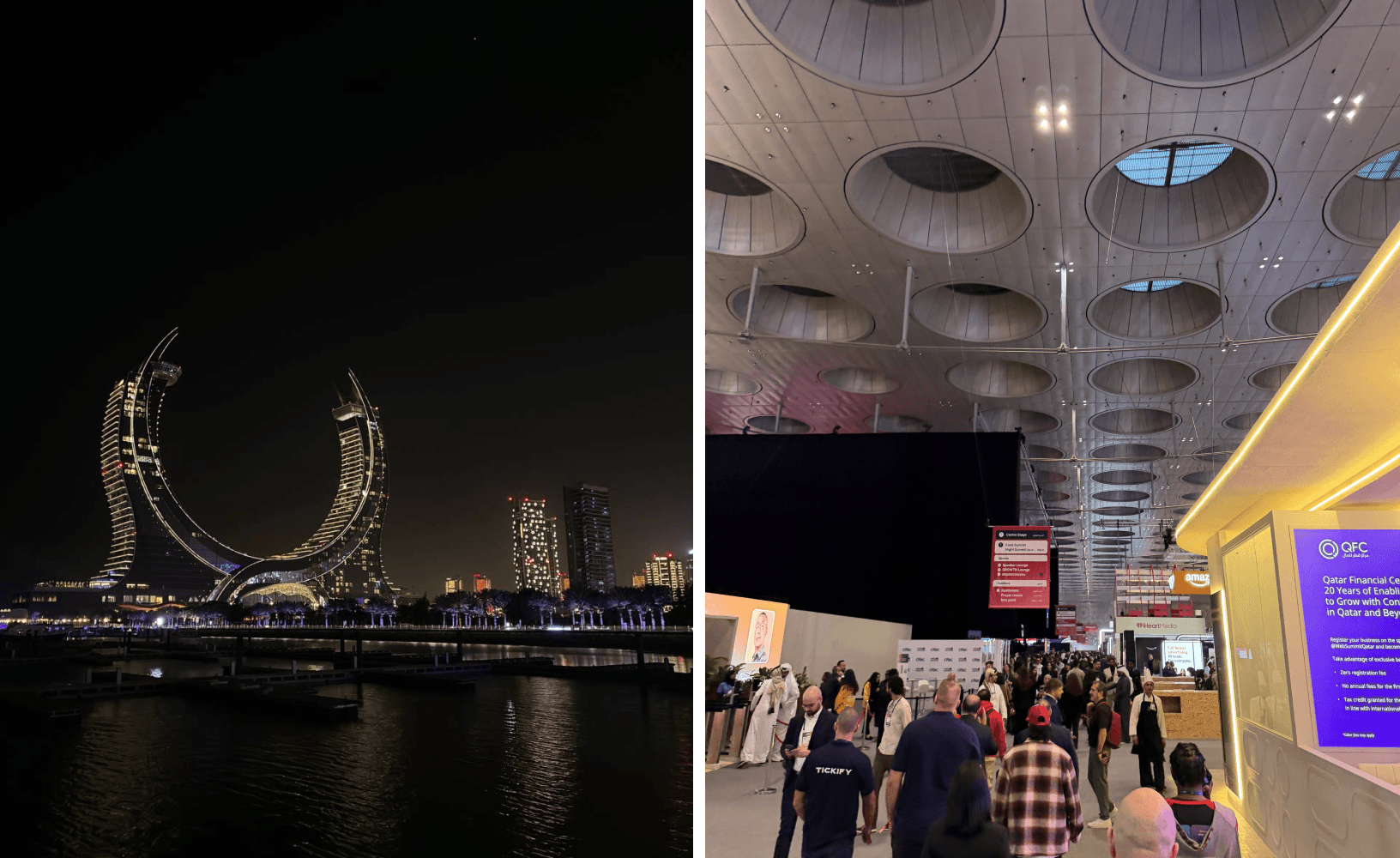
At Web Summit Doha 2026, “AI” was the default language rather than a topic. It was almost impossible to spend five minutes without hearing the same claims repeated:
AI-first. AI-native. AI-powered.
The competition is intense, and in a way, that’s a good sign: it means the market has moved past curiosity and into adoption. But it also creates noise. When everyone uses the same labels, the labels stop meaning much.
What stood out most was the gap between two very different approaches: building real AI-driven systems, and wrapping GPT around a basic SaaS product. And buyers are starting to recognize the difference. The companies most likely to win the next phase won’t be the ones shouting “AI” the loudest. They’ll be the ones doing three things consistently:
Solving real business problems rather than building demos that look impressive but don’t survive daily use.
Using AI as infrastructure, integrated into processes and systems, not bolted on as a gimmick.
Combining automation with domain expertise, so outputs are grounded in reality, not generic guesswork.
At Lumitech, our takeaway was clear: the “AI-powered” label is quickly becoming a commodity. To stand out, you have to move past the chat box and start building systems where AI is woven into the very fabric of the business logic. In the long run, the strategic players will swallow the “wrappers” whole.
The Efficiency Mandate: Scaling Results on a Flat Budget
A lot of marketing teams today are expected to do everything at once: build strategy, improve funnels, generate steady lead flow, support sales, maintain content, run campaigns, report results, and somehow do it all with a minimal budget. And while that’s been true for years, the difference now is that expectations keep rising while budgets often don’t.
This is where automation changes the equation. With the right AI tools and a clear process around them, small teams can:
Compress Timelines. What used to take a week of agency back-and-forth now happens in an afternoon.
Scale Without Burnout. Automation handles the repetitive distribution and optimization tasks, allowing the team to focus on the high-level “wow” factors.
Bridge the Budget Gap. By automating lead gen and content, teams can reallocate their limited funds toward high-impact creative or premium placements.
We’ll be honest: small budgets rarely create “wow” results on their own. However, smart automation acts as a force multiplier. It allows a mid-sized team to punch at a heavyweight class.
Final Takeaway
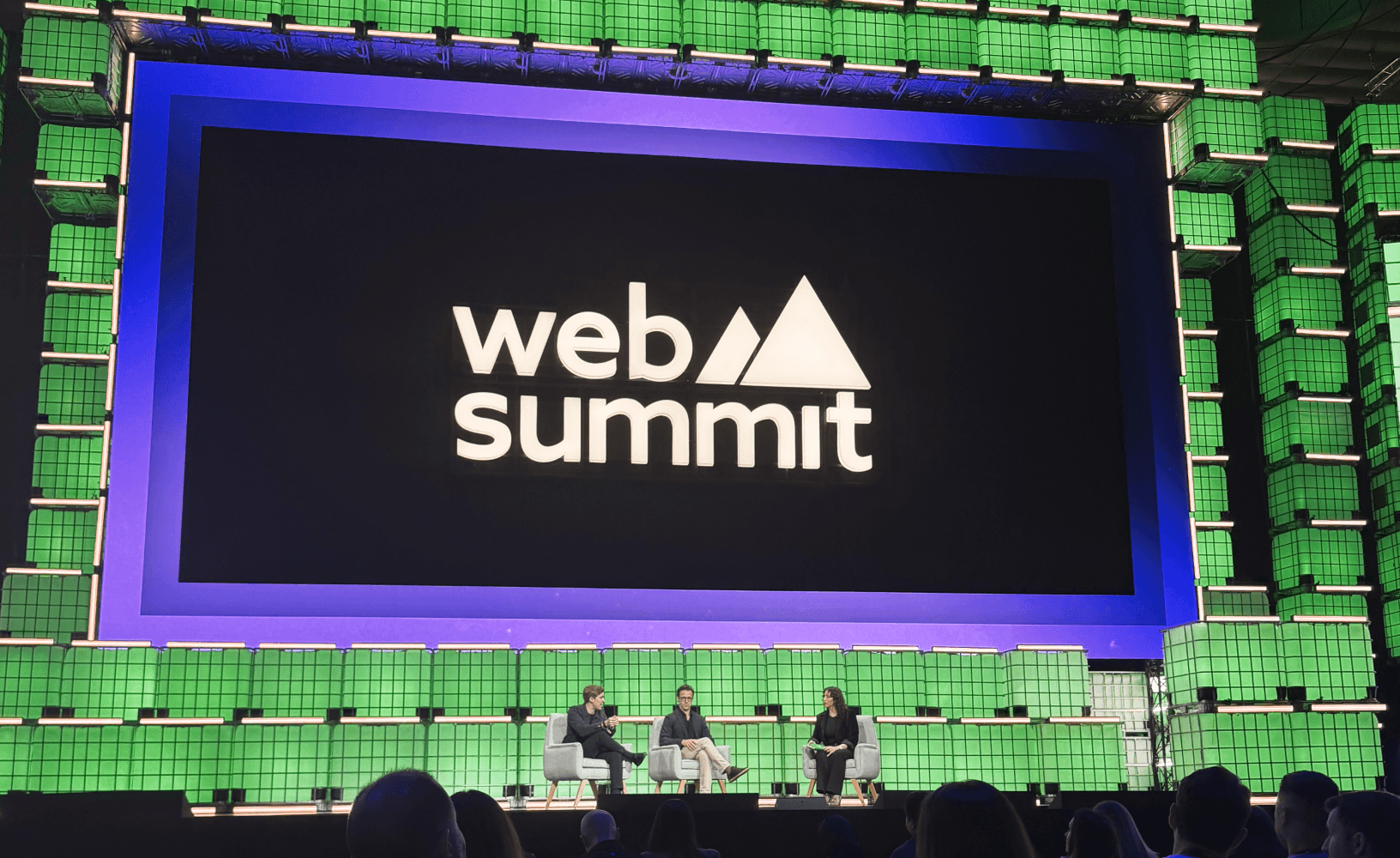
Our time at Web Summit Doha 2026 confirmed what many have suspected but few have fully integrated: the “new normal” is not a destination we are moving toward, but a pace we are already living in. The primary takeaway from the summit was the realization that speed is now the only constant.
We are entering a cycle where major updates to platforms, AI models, and digital ecosystems will reshape the landscape not every year, but every quarter. In this environment, a static five-year plan is a relic of the past.
The only sustainable strategy is simple:
Keep upgrading your skills
Automate intelligently
Focus on outcomes
Web Summit Doha 2026 served as a powerful validation of the path we’ve taken: it confirmed that AI is the inescapable present rather than “the future”. We aren't just watching the transformation happen; we are building within it every single day, turning these global insights into tangible results for our clients.


