
Web Summit Qatar Insights: Key Trends and Insights of B2B Marketing in MENA 2026
The atmosphere at Web Summit Qatar 2026 was defined by a single, inescapable reality: velocity. Returning from Doha, the Lumitech team realized that the traditional “annual marketing plan” has become a relic of a slower era.
- Events
February 06, 2026
 AI Overview
B2B marketing in MENA is shifting from annual planning toward real-time execution, since generative search results now integrate consumer trends within minutes rather than months. Key components include AI-driven research automation, proactive anomaly reporting, and hybrid marketers combining SEO, brand authority, and AI fluency. Web Summit Qatar 2026 highlighted automating the 20% of repetitive tasks consuming 80% of a team's time.

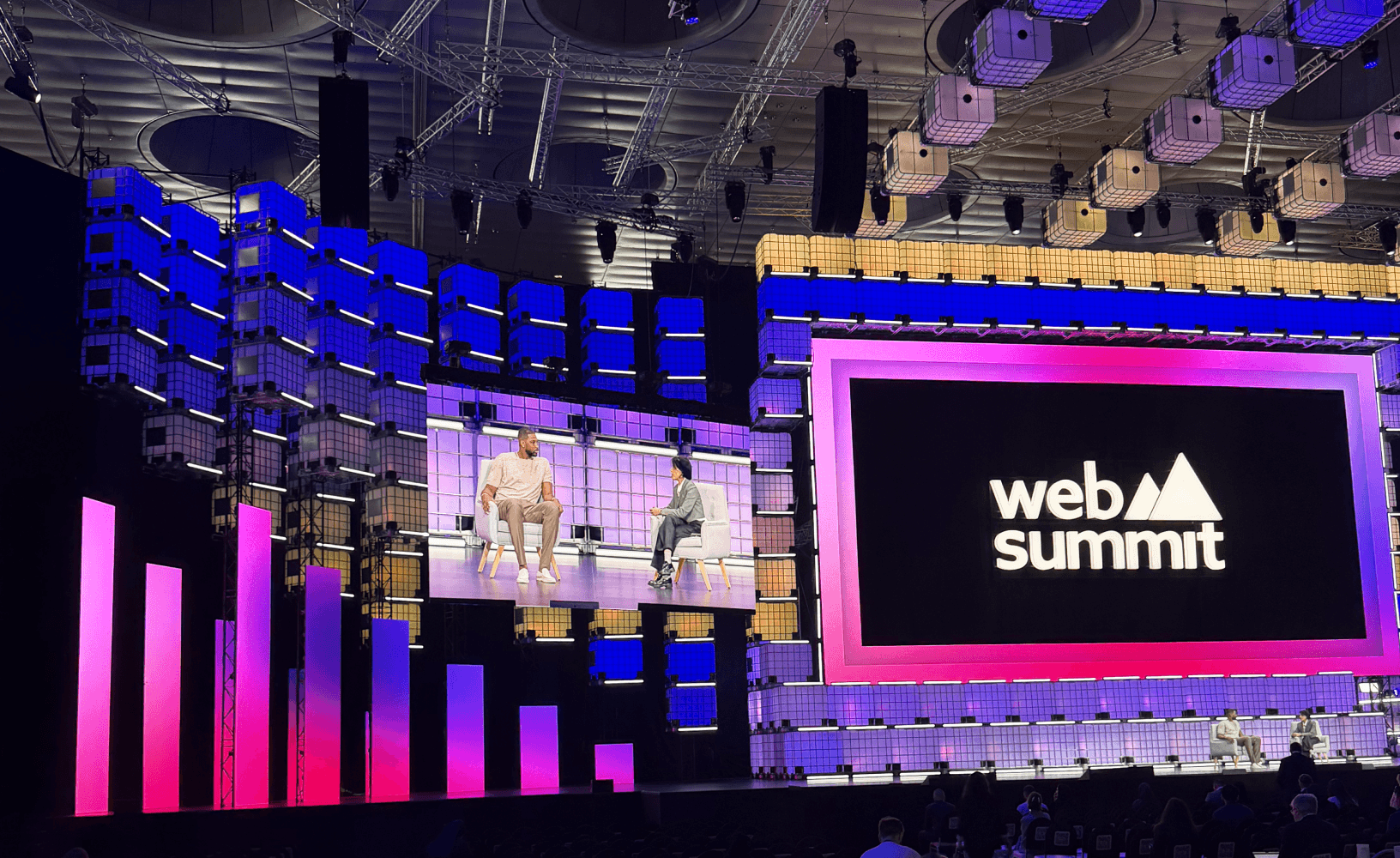
This shift marks the transition from “having the tech” to mastering the execution, a core pillar of b2b go-to-market trends MENA 2026. When high-level LLMs and automation tools are universal table stakes, the winners are determined by how quickly they can synthesize data into strategy and pivot in real-time as Search Generative Experiences evolve. This article serves as a tactical blueprint for b2b marketing in MENA 2026, derived from the high-stakes discussions at the Doha Exhibition and Convention Center. It breaks down the core pillars of the 2026 marketing landscape, focusing on the evolution of SEO into answer optimization and the rise of community-led growth as the ultimate hedge against algorithm volatility.
The Pivot to Total Automation
One of the most crucial Web Summit Qatar takeaways was that marketing teams are moving beyond experimenting with automation and toward building it into everyday operations. This is a shift that is already shaping AI marketing automation in MENA, and generally a market of AI development services that are already setting a faster pace for execution and experimentation. The reason is simple: manual execution can no longer keep up with the speed of platforms, channels, and market shifts.
The 2026 Automation Map
The shift begins with the high-frequency, low-variance tasks that traditionally drain a team’s creative energy. Research and competitive scanning have evolved into autonomous streams, with AI agents now capable of monitoring global market shifts and competitor price changes in real-time. Similarly, the era of manually building dashboards is ending. Reporting has become proactive rather than reactive, with automated alerts flagging anomalies or opportunities before a human ever opens a spreadsheet.
Campaign operations (the tedious world of launch checklists, UTM tracking, and performance alerts) are the next to be fully subsumed by automated workflows, much like AI prototyping development is helping teams test ideas faster before fully scaling them. By automating these "middle-office" marketing tasks, we ensure execution speed matches the platforms we inhabit.
The Irreplaceable Human Element
One of Web Summit Qatar highlights is a critical boundary: automation scales execution, but it cannot scale intent. Strategy, the setting of high-level priorities, and the nuances of creative direction remain firmly in human hands. Brand decisions require an empathetic understanding of the human condition that code cannot yet replicate.
The immediate mandate for marketing leaders is to audit their current workflows and identify the 20% of repetitive tasks consuming 80% of the team's time. Automating these areas is the only way to clear the deck for the high-level strategic thinking that will actually move the needle in 2026.

The Rise of the Hybrid Marketer
The “T-shaped” marketer is evolving into something more integrated, and this is already becoming one of the most important B2B marketing trends in MENA in 2026. We are seeing the fading of the model where SEO, PR, and Content sit in different rooms. In 2026, SEO has merged with brand authority and trust signals.
The New SEO Frontier
Several of the broader MENA b2b marketing trends are already pushing teams toward more cross-functional roles. SEO is no longer limited to classic ranking factors, on-page fixes, and keyword targeting. Search visibility is becoming more closely tied to broader signals: brand authority, trust, mentions across channels, and how consistently a company shows up in the wider digital conversation. That means SEO can no longer operate separately from PR, content, product marketing, and brand positioning. The work is becoming more integrated, and the people doing it need a broader view.
At the same time, AI is changing what strong execution looks like. The advantage is no longer just the ability to produce text faster. More valuable is the ability to use AI well: to discover patterns, validate assumptions, structure information, and turn scattered inputs into useful insights. In practice, this means that marketers who can combine analytical thinking, strategic judgment, and AI fluency will be far more effective than specialists who stay confined to one narrow function.
Building the Cross-Functional Stack
The immediate action step for marketing teams to catch up with GCC b2b marketing trends is to encourage a cross-functional skill set. This means training SEOs in the nuances of brand psychology and teaching content creators how to leverage AI for data-driven validation. In a world where execution is automated, the “hybrid” ability to synthesize SEO, brand strategy, and advanced analytics is the only way to ensure a marketing engine is running at full capacity.
Content: AI-First, but Not AI-Only
The discussions in Doha highlighted a paradox that will define the next year: while the volume of content is exploding, the value of “generic” information has plummeted to zero. As we move through 2026, the industry is settling into an AI-first, but not AI-only reality. The market demand for high-quality, high-velocity content has made manual-only production obsolete, pushing AI content marketing MENA strategies to the center of the regional growth engine. Yet the risks of “AI copy-paste” have never been higher. Brands that rely on raw generative output are finding themselves trapped in a sea of sameness, suffering from weak differentiation and a total loss of brand voice.
The New Content Formula
The winning formula for 2026 replaces the old “writer vs. machine” debate with a sophisticated hybrid pipeline, frequently supported by advanced web development services that integrate generative models directly into CMS platforms. It begins with strong writing fundamentals: understanding narrative arc, psychological triggers, and audience intent. However, the heavy lifting now happens in the refinement stage. In an era of rampant AI hallucinations and recycled ideas, the roles of rigorous editing and obsessive fact-checking have become the ultimate brand safeguards.
True differentiation now comes from what the AI cannot provide: lived experience, proprietary data, and unique brand context. This is the Expert Input phase, where a human specialist injects nuance and authority into an AI-generated foundation, ensuring the final piece resonates on a human level.
Scaling Quality Through Orchestration
To stay competitive, the immediate priority is implementing a structured, AI-assisted content pipeline that treats the technology as an accelerator. This workflow starts with AI-driven research and outlining, moves into high-speed drafting, and then passes through a mandatory “Expert-in-the-Loop” gate for validation and creative polishing. Once a piece is published, the cycle continues with automated repurposing across multiple formats and platforms.
Human Touch as a Differentiator
As automation becomes a bigger part of marketing, the value of human input only becomes more visible. AI can accelerate production, but it works by recognizing and repeating patterns. Humans are still the ones who decide which patterns matter, what a brand should sound like, and how communication should feel to real people.
That is why, in 2026, the strongest differentiation may come not from producing more content, but from making it feel more human. In practice, that means an authentic tone of voice, empathy and clarity in messaging rather than empty efficiency, and trust-building content that helps audiences feel they are hearing from a credible brand rather than a content machine. Community signals matter here too: the way a brand shows up in conversations, responds to its audience, and builds familiarity across channels increasingly shapes how it is perceived.
As more companies rely on similar tools, generic output becomes easier to spot. The brands that stand out will be the ones that protect their distinct voice rather than smooth it away.
The practical response is to make brand expression more systematic. Teams should codify tone of voice, define editorial principles, and create clear standards that any AI-assisted content must follow. The goal is to ensure that speed does not come at the cost of personality, trust, and recognizability.

Continuous Upskilling Becomes Non-Negotiable
The most sobering takeaway from Web Summit Qatar 2026 was the shrinking half-life of marketing expertise. In the current landscape, ignoring the evolution of AI and automation for even twelve months is a risk to professional and organizational relevance. We have entered a cycle where the tools we use change faster than the quarterly budgets we set. As a result, the value of a marketing team is no longer tied to what they already know. To stay ahead, many leaders are looking to the technical maturity of top IT companies in the UAE to supplement their internal teams with cutting-edge expertise.
The 2026 Talent Stack
The skills that define a high-performing team in 2026 have shifted from execution-heavy tasks to orchestration capabilities. AI literacy is the baseline, and this includes not just prompting but the critical ability to evaluate and validate machine output against brand standards. Strategic thinking and a culture of relentless experimentation have become the only ways to find “alpha” in a crowded market.
Beyond the creative and strategic, there is a growing demand for “process architects.” These are individuals who can look at a manual workflow and design an automated system to replace it. This requires a fundamental understanding of how data flows between platforms and how to measure the impact of these automated touchpoints on the bottom line.
Hardcoding Growth into the Workflow
To prevent skill stagnation, marketing leaders must treat upskilling as a core operational expense rather than a peripheral benefit. This involves building a weekly habit of structured learning and conducting quarterly capability reviews to identify where the team’s knowledge is lagging behind the industry’s pace. In an era of total automation, the only way to remain indispensable is to stay two steps ahead of the tools we use. Understanding AI in b2b marketing MENA 2026 is no longer optional; it has become a bare minimum.
Reality Check: Scaling Results on a Lean Budget
The most consistent challenge discussed in Doha was the widening gap between ambitious growth targets and stagnant marketing budgets. The modern mandate is nearly universal: build a comprehensive strategy, expand the funnel, and deliver high-quality leads, all while maintaining a minimal headcount and restricted spend.
The hard truth is that strong results rarely come from ambition alone. Any serious B2B growth strategy in the Middle East for 2026 depends on leverage, not just effort. Without the right systems, lean teams often end up stretched across too many priorities, reacting instead of building momentum — a challenge that is especially visible in competitive sectors such as software development solutions in Dubai. That usually leads to inconsistent execution, slower testing, and results that feel acceptable, but rarely impressive.
This is where AI and automation are changing the equation. They do not eliminate budget constraints, but they can help smaller teams operate with much more efficiency and follow MENA b2b marketing trends. Used well, they speed up execution, increase output without pushing people toward burnout, and save both time and part of the budget that would otherwise be spent on manual work. Just as importantly, they make it easier to spot opportunities earlier, respond faster, and stay one or two steps ahead of competitors — including fast-moving IT outsourcing companies in the UAE that are already adapting to a more automated market.
Building the Lean Marketing Stack
For companies working with lean budgets, the smartest move is not to try to do everything at once, but to build a lean system that supports a more resilient B2B marketing strategy in the GCC and across the wider region. Instead of investing in bloated, all-in-one platforms that under-deliver, the focus should be on a modular, lean stack where data flows seamlessly between specialized AI agents.
Navigating the Era of Permanent Beta
The final and perhaps most critical insight from Web Summit Qatar is that stability is no longer a viable operational goal. In 2026, GCC b2b marketing trends show that the marketing environment is in a state of “permanent beta,” where platforms, AI models, and consumer ecosystems reshape workflows every few months. Platforms will keep changing, AI tools will keep evolving, and search, content, and distribution ecosystems will continue to reshape how teams work, including for businesses in sectors such as software development services in Qatar. A strategy set in January is likely obsolete by June. To survive this volatility, marketing teams must move away from rigid annual planning and adopt a high-velocity operating rhythm centered on the Quarterly Reset.
The reset begins with a ruthless audit of what is actually driving revenue versus what is merely generating noise. From there, teams must update their automation logic and reporting structures to ensure they are still capturing the right data. It is also the time to refresh content distribution tactics and to revisit KPIs. If a channel’s priority hasn't been questioned in three months, it is likely being over-indexed. By institutionalizing this rhythm, organizations ensure their marketing stack remains as agile as the technology powering it.
Wrapping Up
Web Summit Qatar 2026 served as a definitive marker: the transition from “manual and static” to “automated and adaptive” is complete. For marketing leaders, the challenge is about re-engineering the entire operational DNA of their teams. Success in this era isn't reserved for those with the largest budgets, but for those who can build the fastest feedback loops and maintain a human-centric brand identity in a world of synthetic noise.
The roadmap for the b2b marketing in MENA 2026 is clear: automate the execution, hybridize the talent, and never stop upskilling. At Lumitech, we are embracing this velocity mandate not as a hurdle, but as the ultimate opportunity to outpace the competition. The ground is moving, but for those ready to build on it, the potential for growth has never been greater.


