
UX Design for Loyalty & Cashback Platforms: Lessons from CincyFoods
Loyalty programs are everywhere. Many look great on paper, but end up as forgotten cards or unused apps. Even with smart logic, strong incentives, and polished branding, confusing or tiring UX makes users quietly walk away.
- UX/UI Design
December 18, 2025
 AI Overview
Loyalty programs succeed when participation feels effortless and rewarding. Even strong incentives can lose their impact if users struggle to understand benefits, track progress, or redeem rewards. UX design plays a critical role in shaping these interactions, turning loyalty platforms into engaging experiences that encourage long-term participation. Clear journeys, intuitive interfaces, personalization, and well-designed reward mechanisms help businesses strengthen customer relationships.

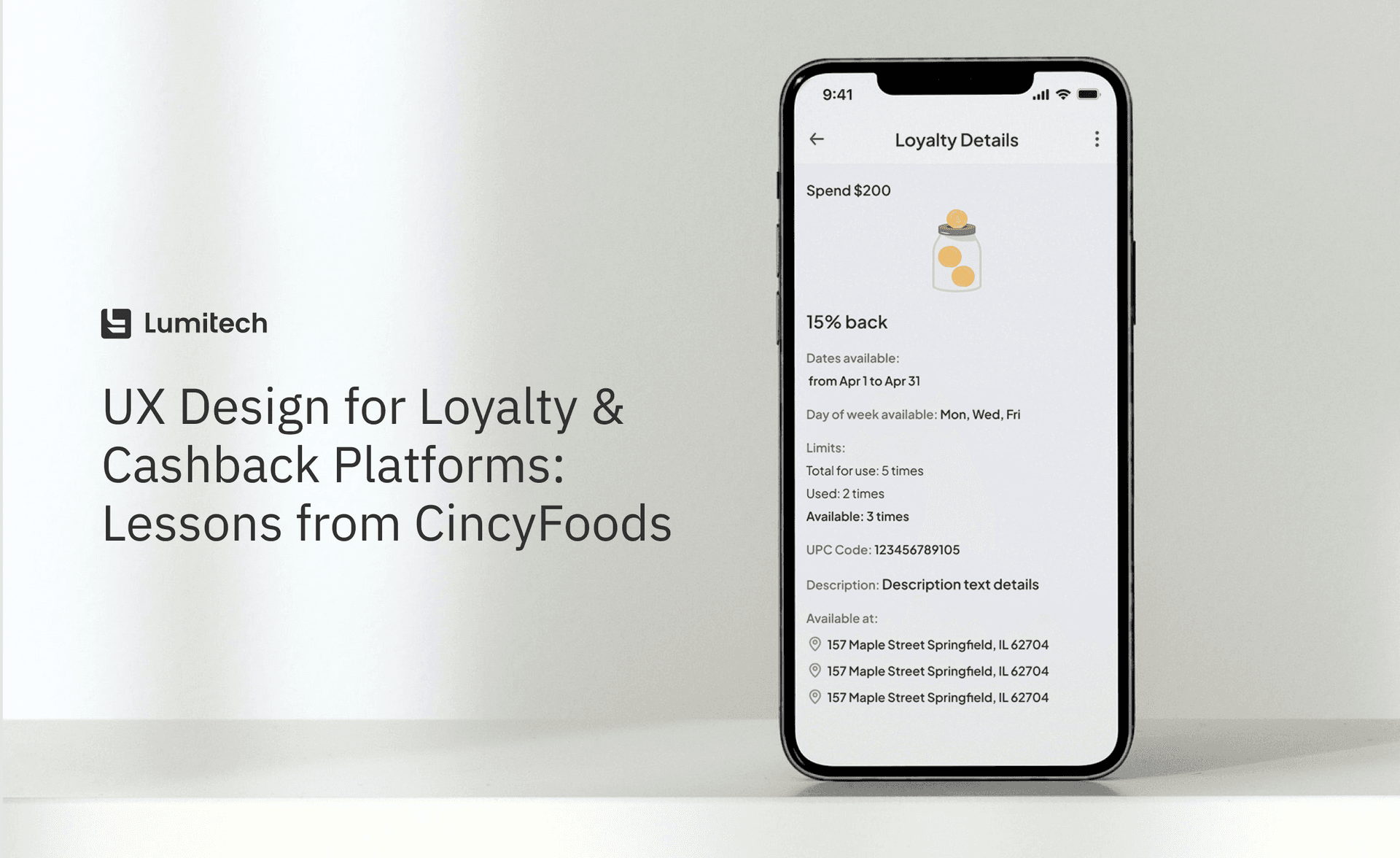
In reality, loyalty and cashback platforms work as long-term revenue engines, not short-term promotional tricks. They help you lift average checks, repeat visits, and increase LTV. Still, there is a gap that many teams underestimate. Users join, but they don’t come back. They sign up to “earn rewards later”, then never even make it to their first redemption.
UX sits right in the middle of this problem. It connects your clever rules, tiers, and cashback logic with real, everyday customer behavior. When this connection is weak, even the best loyalty program design struggles. When it is strong, rewards turn into habits almost naturally.
CincyFoods, built by Lumitech, is a good example of a complex, real-world loyalty ecosystem. It helps people earn instant cashback on everyday purchases by simply scanning receipts, while also supporting local schools and small family-owned businesses. It is not a theoretical model — it is a production platform that has to work for real users, under real constraints.
In this article, we’ll walk through what CincyFoods taught us about UX design for loyalty platforms. You’ll see:
Why UX determines adoption, retention, and LTV.
Which principles and features matter most in practice.
How to translate those lessons into your own product — whether you are building a cashback app, a points-based system, or designing loyalty systems for another vertical.
Loyalty Program UX Design: Why It Matters So Much
If you look at metrics across different industries, a pattern repeats. Getting people to register in a loyalty program is relatively easy. Getting them to use it regularly is hard. This is where customer loyalty platform design and UX become critical. Here is why.
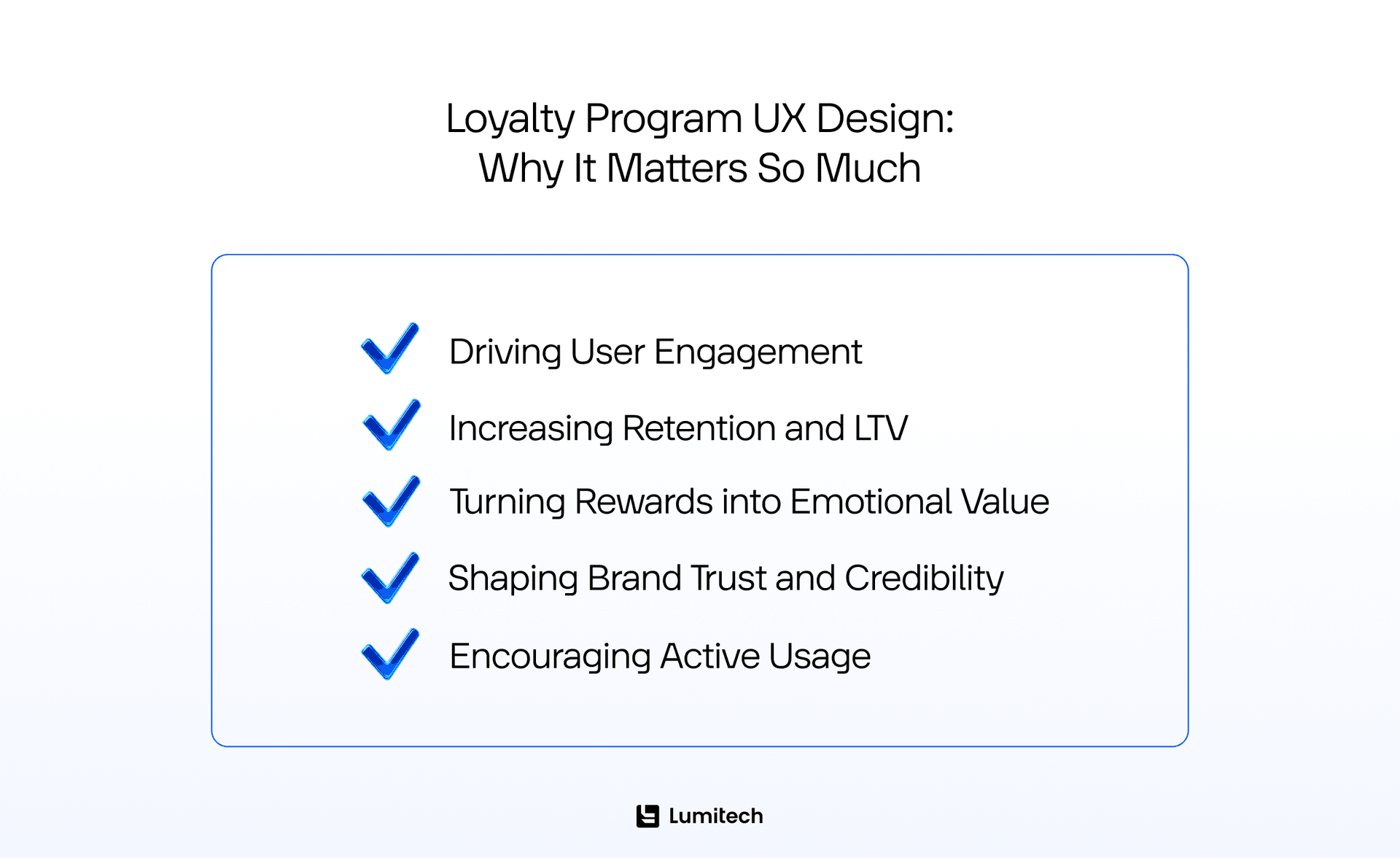
Driving User Engagement (Not Just Sign-Ups)
The first impression is important, but what happens after onboarding is what really decides whether the program lives or dies. The user experience for loyalty programs defines if people come back after the first login.
Confusing flows, hidden rules, or complex math lead to silent churn. Users might not even complain — they simply stop opening the app. On the other hand, clear flows, simple steps, and an obvious “next best action” transform rewards into small repeat habits. Over time, this is where user engagement in loyalty programs comes from.
Increasing Retention and Customer Lifetime Value (LTV)
Every interaction with your loyalty product is a chance either to reinforce the relationship or to weaken it. UX influences how often people check their wallet, how quickly they find something valuable, and how easy it is to redeem.
When users can track their progress quickly, they intuitively understand how close they are to the next reward. That feeling — “I’m almost there” — directly supports repeat purchases and higher LTV. In this sense, loyalty program UX design is not only about aesthetics. It is also a growth lever.
Turning Rewards into Emotional Value
On paper, two programs can give the same reward. In practice, one feels generous, the other feels annoying. The difference often comes from UX. If rewards are hard to find, buried in dense text, or presented in a cold, transactional way, even good incentives feel cheap.
Thoughtful UX — from microcopy to visual hierarchy — reinforces being recognized and appreciated, not just “being given a discount”. This is the heart of customer loyalty UX. For community-focused solutions like CincyFoods, that emotional layer also includes purpose: supporting schools, helping local businesses, and letting users donate their rewards.
Shaping Brand Trust and Credibility
Loyalty programs handle money, data, and expectations. If the interface looks inconsistent, rules seem vague, or balances change without explanation, trust suffers. Many UX issues in loyalty programs come from this lack of transparency.
Clear information about points, cashback, timelines, and conditions, in turn, builds credibility. Every confirmation screen, every “You earned X today”, every transaction record reinforces the idea that the brand is reliable and fair.
Bridging the Gap Between Enrollment and Active Usage
Most loyalty initiatives lose the battle between “I joined” and “I actually used it”. That first redemption is crucial. Intuitive UX lowers the barrier to this moment.
For CincyFoods, this meant: install the app, create an account, scan a receipt, see cashback appear instantly. No complex forms, no manual input of item lists. This kind of intuitive loyalty program design is what turns a one-time curiosity into a living relationship.
See how all these ideas work in real life, from AI-powered receipt scanning to multi-role dashboards — explore the product journey, challenges, and concrete results.

Core Design Principles Behind Effective Loyalty App UX Design
Once you accept that loyalty program UX design can make or break the product, the next step is to define the non-negotiables.
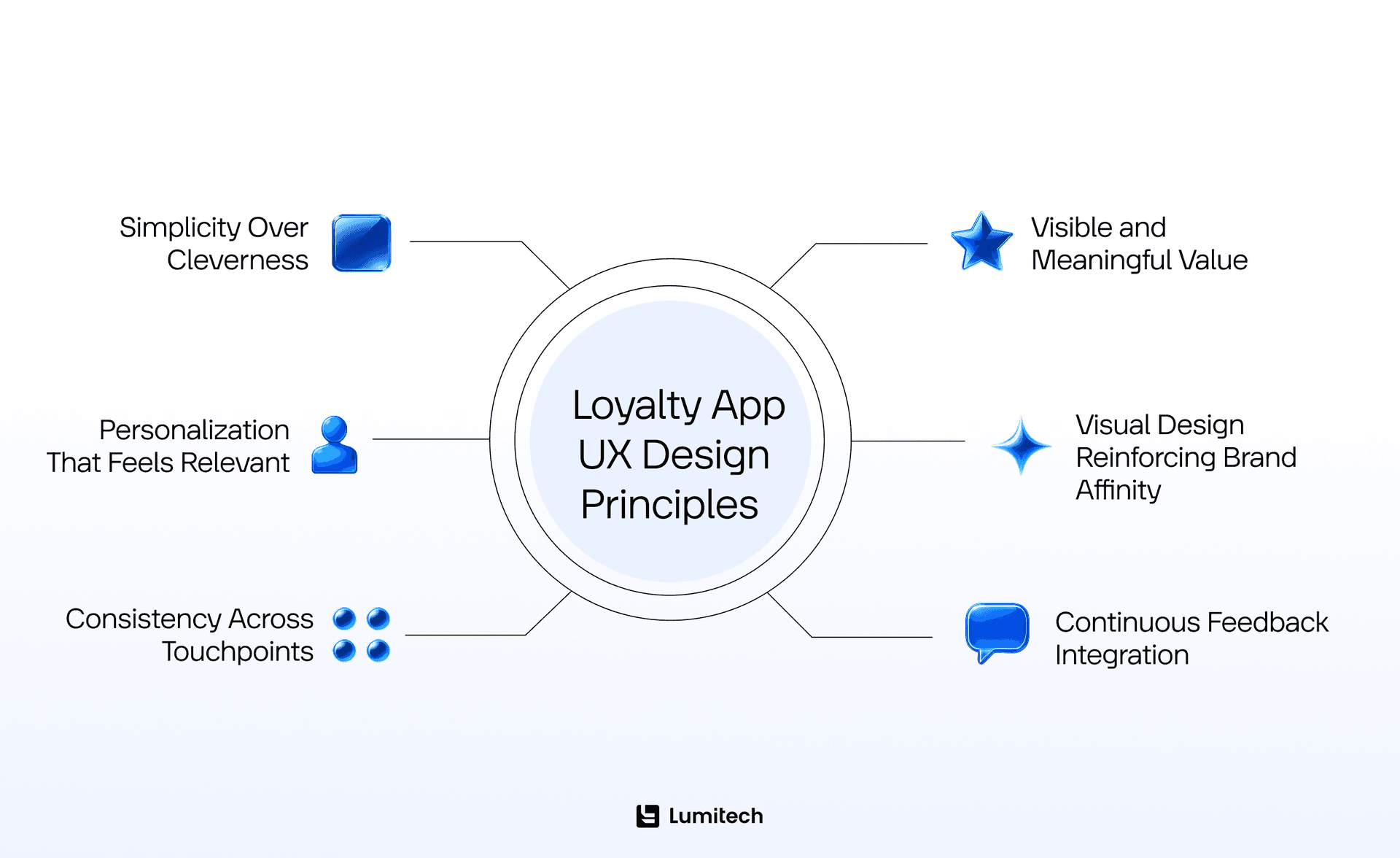
Simplicity Over Cleverness
It is tempting to build sophisticated tiers, boosters, cross-campaign logic, and “smart” conditions. From a business perspective, it looks exciting. From a user’s perspective, it often looks like work. That's why it is always wise to:
Reduce steps, screens, and cognitive load.
Aim for one clear action per screen.
Avoid point systems that require a calculator.
In practice, this principle guided CincyFoods from the start. Users upload a receipt, the system does the rest. That is usability in loyalty apps in its pure form.
Personalization That Feels Relevant, Not Invasive
Modern loyalty platforms have access to rich purchase histories and behavior data. This allows powerful user experience personalization. The tricky part is staying helpful without crossing the line into being creepy.
Use what people actually did — categories, locations, frequency — not random demographic assumptions. Tell them why a reward is shown: “Because you often shop at X” or “You supported Y initiative last month”. This is where UX patterns for reward systems meet ethical design.
Consistency Across Touchpoints
Users do not think in channels. They think in tasks. They might see a promotion on social media, check the balance in the app, then redeem in-store. If language, rules, or flows change radically between those places, trust erodes.
Consistency in loyalty platform user flow, terms, and visuals makes the program feel like one coherent system. For CincyFoods, the mobile app and the web-based admin panel each serve different roles, but they still share the same logic and vocabulary.
Visible and Meaningful Value
People are busy. They don’t have time to wonder “Is this worth it?” Your UX should answer that question constantly, and here is how:
Show benefits immediately after key actions.
Make progress toward rewards obvious.
Reinforce “what I get” at every step.
Good loyalty system UX design makes reward value visible in context — at checkout, on receipt, or inside a loyalty wallet — not only hidden in separate screens.
Visual Design That Reinforces Brand Affinity
Visual design is not only decoration. In loyalty and cashback platforms, it works as emotional reinforcement. It signals whether this brand feels local or global, playful or serious, premium or accessible.
CincyFoods put strong emphasis on supporting small, family-owned businesses and schools. The UI had to feel friendly, trustworthy, and local, not like a generic coupon aggregator. That same thinking applies whether you build loyalty app design for retail, hospitality, or custom software solutions for restaurants.
Continuous Feedback Integration
Finally, a loyalty program is not a static project. Behavior changes, campaigns change, partners change. UX must evolve with them.
In-app feedback prompts, usage analytics, and periodic UX audits help keep the product aligned with real behavior. You are not only designing flows once — you are designing a system that can be adjusted based on how people actually use it.
Recent and Upcoming UX Design for Loyalty App Trends Shaping User Expectations
User expectations do not stand still. They are shaped by the best apps in every category, not just your direct competitors. Below are the most important ones you have to keep in mind when designing a loyalty program platform UI/UX.
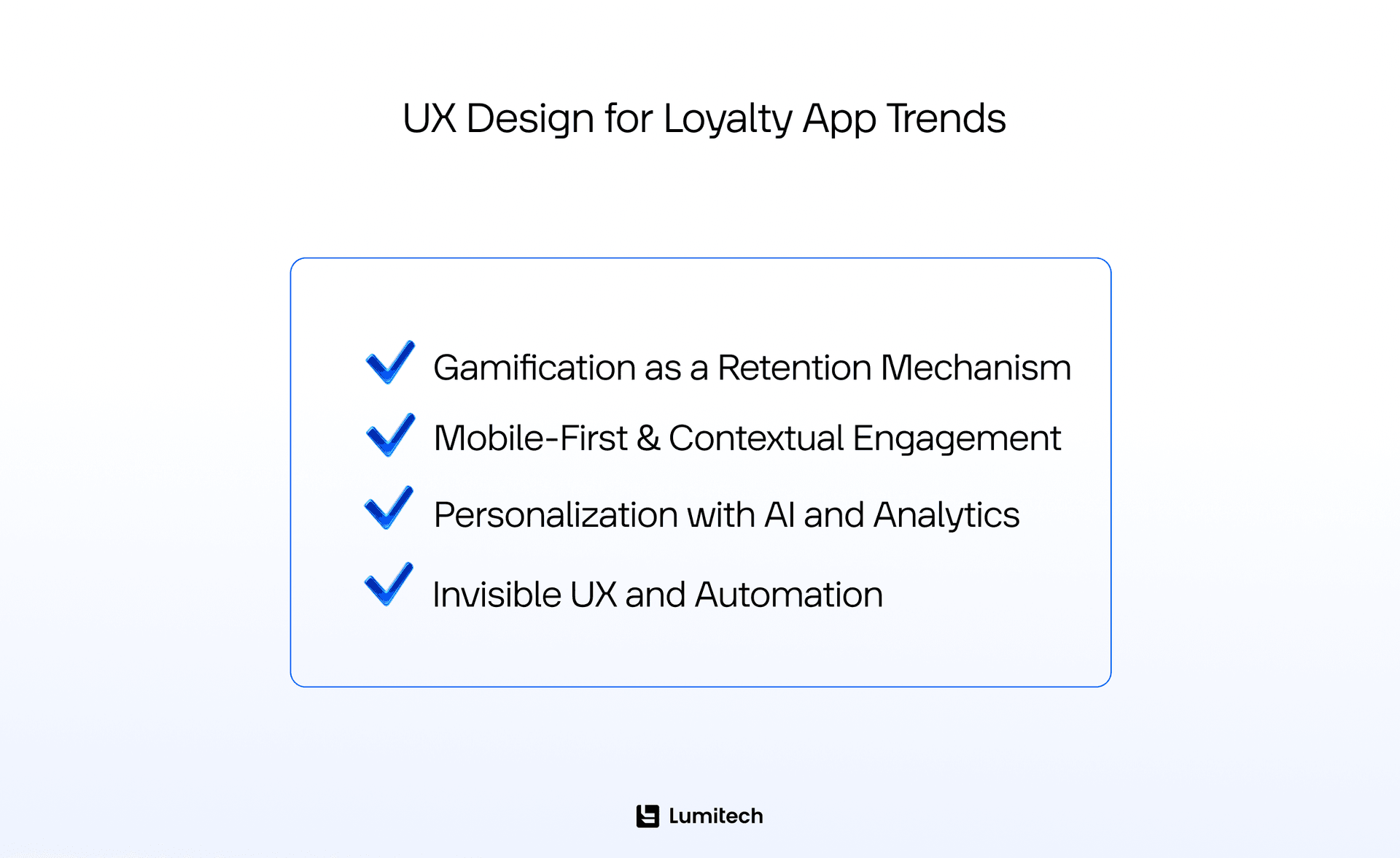
Gamification as a Retention Mechanism
Points and tiers are only one part of the story. Structured missions, streaks, badges, and milestones use progress psychology to keep people engaged even when discounts are small.
Rather than rewarding only purchases, more teams now reward actions: referrals, reviews, donations, participation in events. This shifts user experience for loyalty apps from pure transactions to long-term relationships.
Mobile-First and Context-Aware Engagement
Most loyalty interactions happen on mobile. Push notifications, geo-triggers, and reminders can be powerful — or incredibly annoying.
The best mobile loyalty app experience balances relevance and restraint. For example:
A notification when you are near a partner you visit often.
A subtle reminder before points expire.
Silence when there is nothing genuinely useful to say.
Here, you see how loyalty UX starts to converge with UX design for finance industry and even UX best practices in the transportation industry — mobile, context-aware, and focused on the next step.
Deep Personalization Through AI and Analytics
AI and data analytics support more than just segmentation. They can adapt offers in real time, surface rewards at the right moment, and tailor messaging tone.
For CincyFoods, AI started with receipt processing. But the same AI and ML development services mindset can be applied to make the experience smarter: cross-selling relevant local venues, adjusting campaigns to reward preferences in UAE or loyalty UX for GCC customers, or detecting dormant users early.
Invisible UX and Automation
Finally, the strongest trend is making UX disappear. Instead of adding more taps, more forms, more widgets, the goal is to remove effort.
Automatic receipt scanning, background point calculation, instant cashback to wallet — all these elements reduce friction. This kind of cashback platform UX design fits a simple idea: fewer actions, more value.
Essential UI/UX Features Every Loyalty System UX Design Must Include
Principles are helpful, but teams also need a checklist of concrete features. Over the CincyFoods journey, some elements proved non-negotiable.
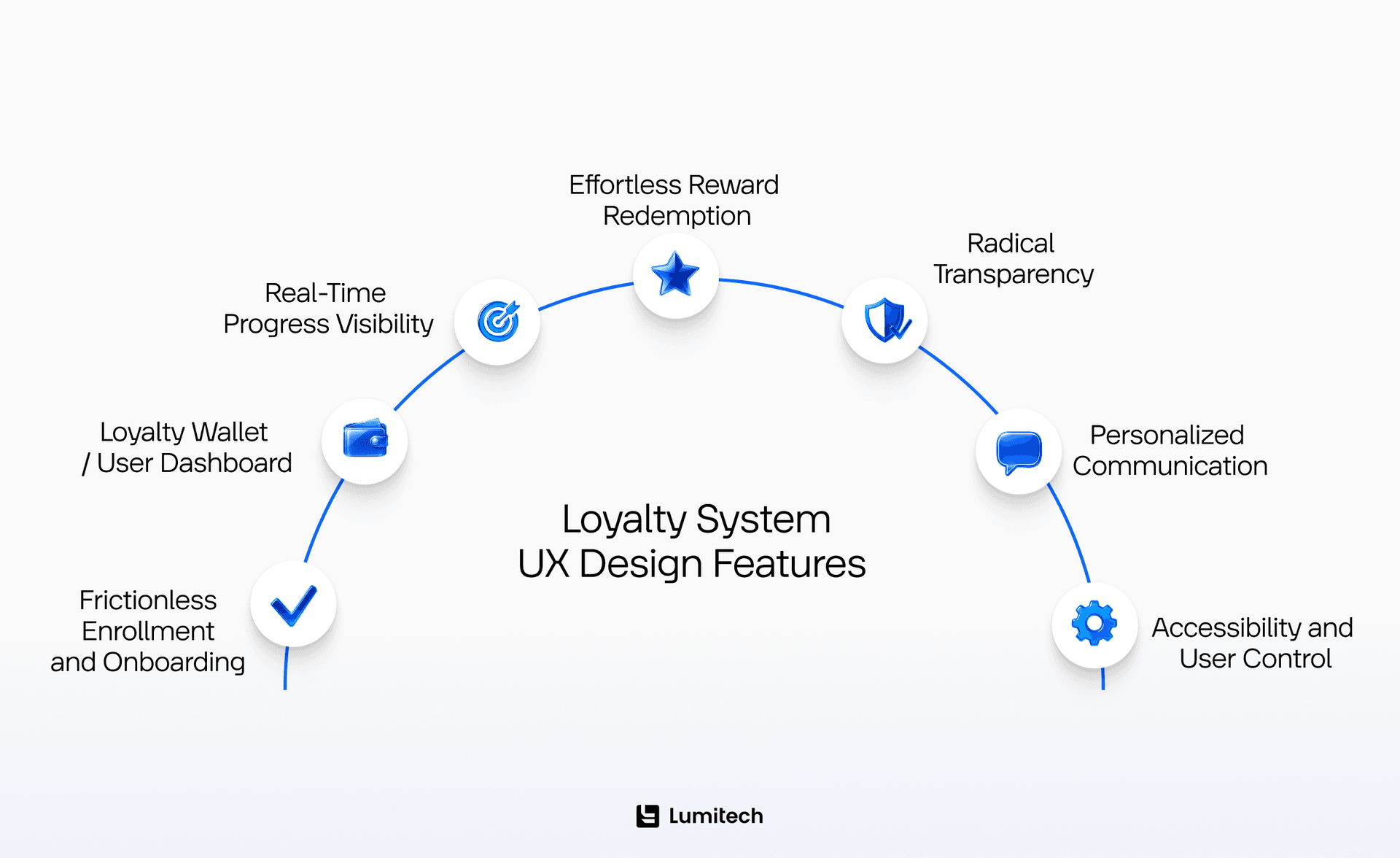
Frictionless Enrollment and Onboarding
If sign-up feels like a tax form, users won’t reach the rewards. A strong loyalty app UX design keeps onboarding:
Mobile-first, with minimal input.
Clear about the value before asking for data.
Progressive, collecting more details over time, not at once.
For CincyFoods, the promise was simple: “Scan a receipt, get instant cashback, support local schools.” The UI and copy followed that line closely.
Loyalty Wallet / User Dashboard
Users need one place where everything “lives”: points, cashback, active rewards, tier status. A well-crafted loyalty wallet is not just a nice add-on — it is the backbone of loyalty system UX design.
Think of it as designing a cockpit. This is where how to design an intuitive loyalty dashboard becomes a practical question. Data should be glanceable, not overwhelming. The main actions (earn, redeem, withdraw, donate) should be front and center.
Real-Time Progress Visibility
Progress bars, next thresholds, “Only X left to unlock Y” — all these patterns help people understand their trajectory. In CincyFoods, seeing cashback arrive right after scanning a receipt was a core part of the experience.
This kind of visibility strengthens loyalty program user experience and prevents a common problem: users forgetting that they even have something to redeem.
Effortless Reward Redemption
Redemption is where motivation either solidifies or breaks. Too many steps, confusing filters, or vague conditions turn rewards into a chore.
Effective reward program UX means:
Clear CTAs near checkout or wallet.
Minimal steps to apply rewards.
Smart filtering to hide irrelevant options.
In an ideal scenario, available rewards appear naturally in the same flow where users already are — not hidden in disconnected menus.
Radical Transparency
People will not invest attention into a system they don’t understand. Avoid hidden rules, surprise expirations, or vague wording.
Radical transparency includes:
Clear earning rules and timelines.
Immediate confirmation after earning.
Full history of rewards and transactions.
Applied well, transparency is a direct answer to UX issues in loyalty programs that frustrate users and increase support tickets.
Personalized Communication
Email, push notifications, in-app messages — communication should feel timely and personal, not spammy. This is where user experience for loyalty programs overlaps with customer relationship management.
Examples:
Welcome flows that show how to get first value.
Status updates on nearing a reward.
Reminders before points expire.
Remember that UX personalization vs. customization matters here. Personalization is the system adapting to the user; customization is the user configuring the system. Loyalty programs need both in balanced form.
Accessibility and User Control
True loyalty should be inclusive. Meeting WCAG standards, supporting screen readers, ensuring good contrast, and making tap targets large enough — these are basics. In addition, give users control over notification types, data usage, and even opting out. Respecting autonomy pays off in long-term trust.
How to Improve Loyalty Program UX and Maximize LTV: Actionable Strategies
With foundations in place, teams often ask: how to improve loyalty program UX in a structured way? Below are the practice-proven ways to do it.
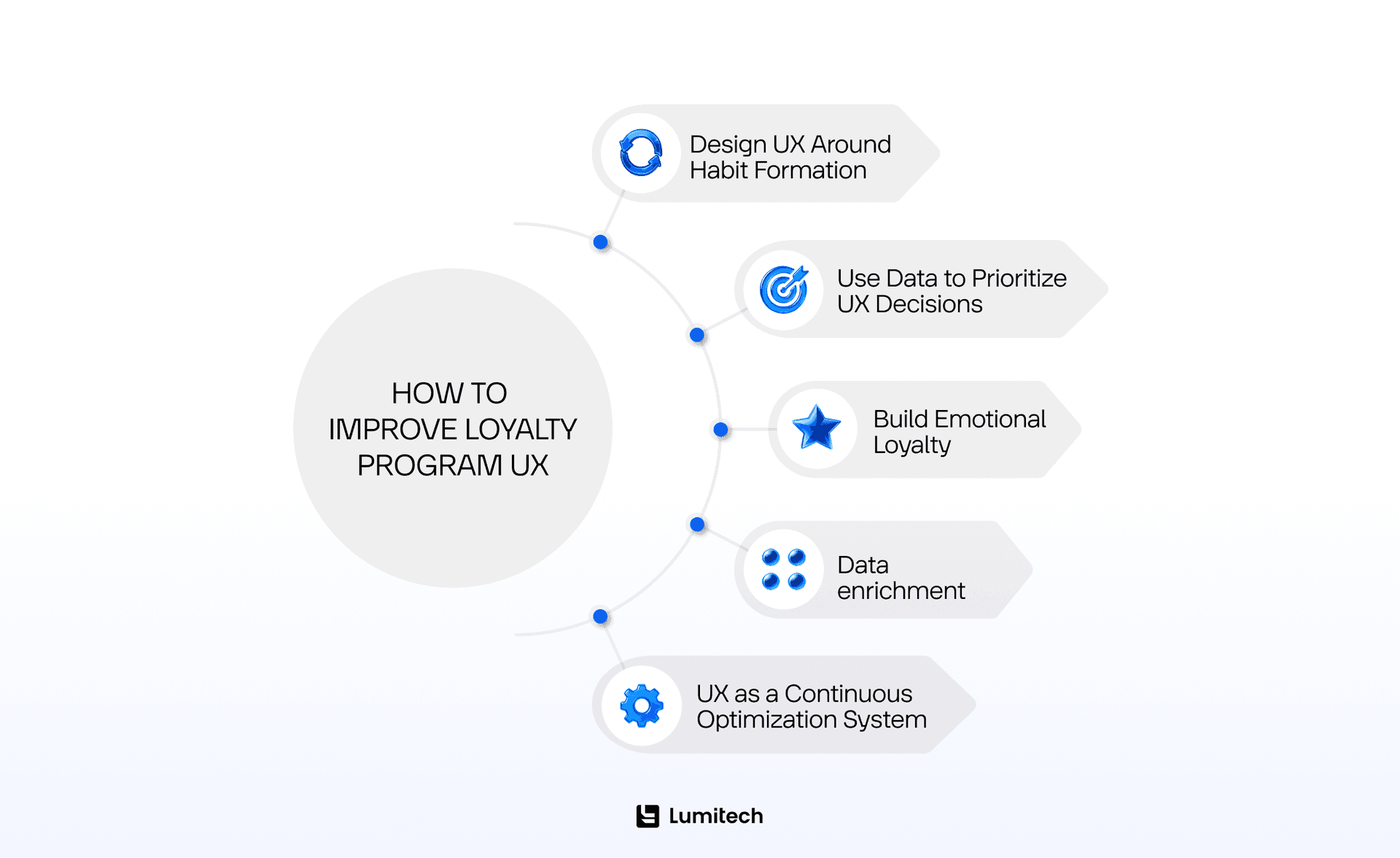
Design UX Around Habit Formation
Instead of chasing one-time “big” redemptions, focus on frequent, smaller moments:
Reward frequent check-ins, not only big spends.
Celebrate progress, even when rewards are small.
Make next steps always visible and simple.
This habit-centric approach aligns with how people naturally behave — small, repeated actions that stack up over time.
Use Data to Prioritize UX Decisions
Analytics and behavior tracking tell you where the real pain lives:
Identify drop-off points in onboarding and redemption.
Look at features people ignore.
Benchmark cohorts before and after UX changes.
This data-driven approach is also how you align loyalty design with mobile app development services, broader UI/UX design services, and ongoing product strategy.
Build Emotional Loyalty, Not Just Transactional Rewards
CincyFoods works not only because of cashback, but because it supports local businesses and schools. This emotional dimension matters.
Think about:
Personal acknowledgements (“You helped school X today”).
Community views (group rewards, family wallets).
Purpose-driven rewards (donations, social causes).
These layers deepen user engagement in loyalty programs far beyond discounts.
Maintain Omnichannel UX Consistency
Whether loyalty surfaces appear in an app, at POS, on the website, or even in call centers, the underlying logic should stay coherent. The same tiers, rules, and vocabulary should appear everywhere — not different “versions of reality” depending on channel.
Treat UX as a Continuous Optimization System
Finally, don’t treat launch as the finish line. Regular UX audits, A/B tests, and incremental improvements keep the experience aligned with evolving behavior. In this sense, a loyalty platform is never “done”. It is an ongoing conversation between your strategy and how users respond.
Critical UI/UX Mistakes to Avoid in Loyalty System UX Design
Sometimes the easiest way to move faster is simply to avoid known traps. Below are the most common ones.
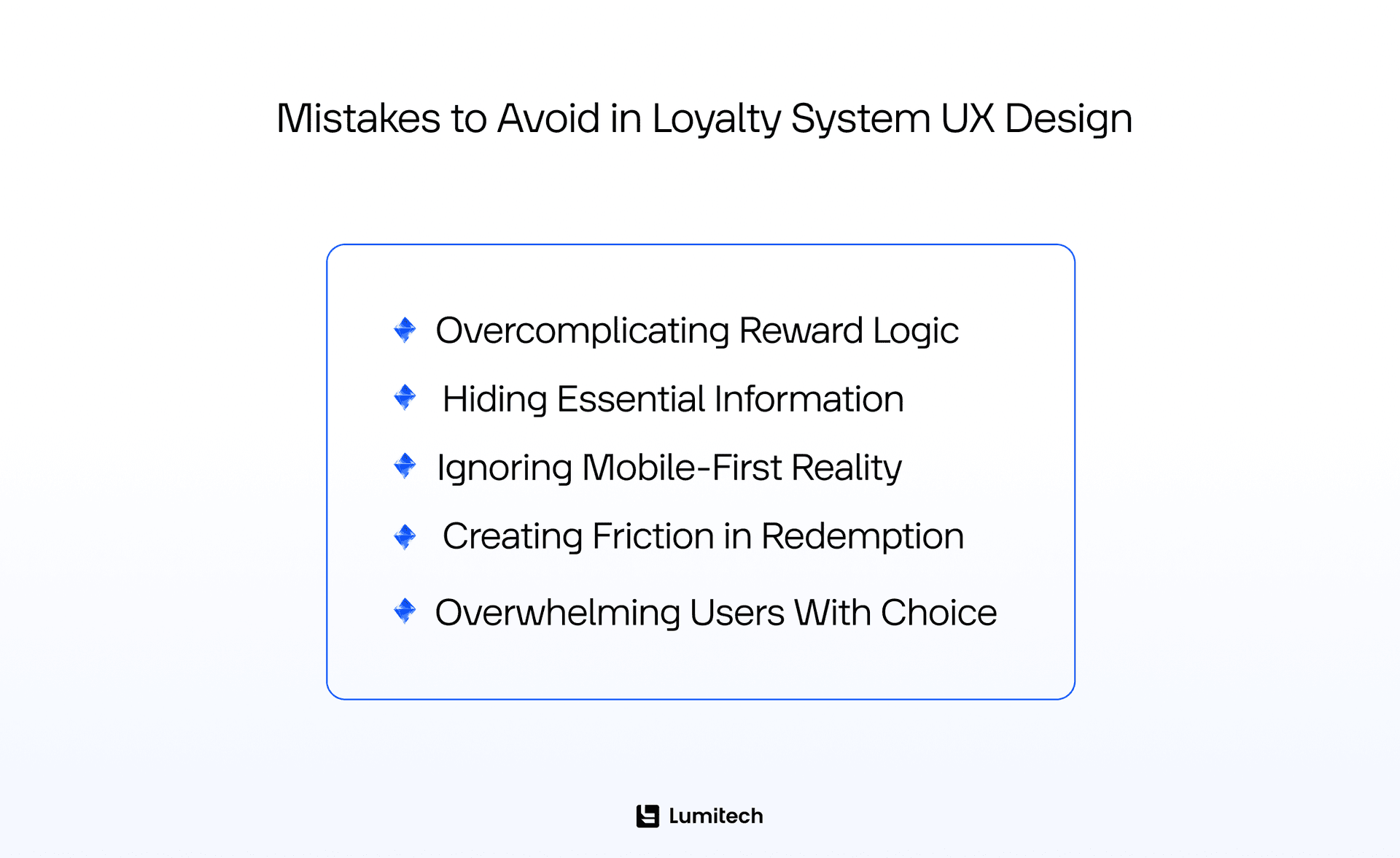
Overcomplicating Reward Logic. Too many tiers, edge conditions, or “special rules” quickly destroy clarity. If users need a FAQ and spreadsheet to understand the benefit, they will likely disengage. Remember: clarity beats cleverness in loyalty app UX design.
Hiding Essential Information. Users notice missing information much faster than we expect. Hidden expiration dates, unclear refund policies, or vague earning rules create suspicion. At the end of the day, transparent design is cheaper than handling angry support tickets later.
Ignoring Mobile-First Reality. Many teams still design loyalty flows desktop-first, then shrink them for mobile. This leads to crowded screens, tiny tap targets, and fragile performance. Instead, design mobile-first, then scale up. This is especially important in regions where mobile is the primary channel, such as GCC markets adapting loyalty UX for GCC customers.
Creating Friction in Redemption. If it is easier to pay full price than to redeem a reward, your UX has failed. Long catalogs, confusing CTAs, or forced extra steps are all friction. So, think about the moments when users are likely tired, in a hurry, or distracted. Redemption must work even then.
Overwhelming Users With Choice. Offering dozens of reward types can look impressive to stakeholders, but many users experience it as noise. Curate, group, and recommend. Help people pick, instead of just showcasing everything.
What CincyFoods Teaches About Designing Real-World Loyalty Platforms — Practical Lessons from Lumitech
The CincyFoods story puts all these ideas into real context. Below are some of the most insightful lessons from this real-life project.
User Experience for Loyalty Programs: Reduce Effort, Not Add “Smart” Features
CincyFoods could have asked users to manually enter receipt details, item by item. Technically, it would work. Practically, nobody would do it.
Instead, the Lumitech team used advanced Google tools to power AI receipt scanning. Users take a picture, the system extracts data, applies rules, and credits cashback. From a UX angle, this shows what user experience for loyalty programs should aim for — minimum effort, maximum perceived value.
UX Design for Loyalty App: Design Around Community, Not Just Discounts
CincyFoods is not only a cashback engine. It is also a local impact platform. Users can direct cashback to school fundraising campaigns, and local businesses can support their communities.
This changes UX design for loyalty app decisions in subtle ways. Copy, flows, and visuals all highlight community impact: “Buy Local”, “Support your school”, “Pool rewards with your family”. It is a reminder that loyalty systems can cultivate belonging, not only transactions.
Mobile Loyalty App Experience: Simplify Multi-Role UX Early
CincyFoods had to serve several roles:
Everyday shoppers scanning receipts.
Business owners configuring campaigns.
School admins tracking fundraising.
Platform staff managing everything in between.
Handling those roles late would have created chaos. So Lumitech mapped them early, designing role-based flows and permissions from the architecture stage. This is key for any complex mobile loyalty app experience that goes beyond single-user scenarios.
UX Design for Loyalty Platforms: Give Small Businesses Clear, Useful Analytics
For local vendors, seeing ROI is essential. CincyFoods offered dashboards that show:
Reward expenses.
Customer engagement.
Where and when rewards are used.
The focus was on clarity, not data overload. This is a concrete answer to how to design an intuitive loyalty dashboard. It also shows how UX design for loyalty platforms is not only about end users, but also about merchants, admins, and partners.
Prototype UX Early to De-Risk Complexity
Finally, the team did not wait for full development to test flows. They prototyped, iterated, and validated interactions before scaling. This de-risked complex pieces like receipt scanning, group rewards, and school support features. It’s a good reminder: whatever domain you work in — from loyalty to logistics — prototyping with strong UX is often cheaper than fixing production.
Conclusion — Why Loyalty UX Is a Long-Term Growth Investment
Loyalty and cashback platforms can be powerful engines for revenue, retention, and brand love. But the real force behind them is not just points, tiers, or catchy campaigns. It is the way users experience that value every day.
When UX removes friction, rewards feel natural, and data is transparent, loyalty programs turn into something users actually want to use — not just something marketing wants to promote. CincyFoods shows how thoughtful design, grounded in real communities and real behavior, can support both growth and positive local impact.
In the long run, UX is not a “layer” on top of loyalty mechanics. It is the way your loyalty promise is delivered, felt, and remembered.
If you’re exploring a new loyalty or cashback concept — or rethinking an existing one that feels underused — thoughtful UX is the fastest way to unlock its real potential. Lumitech blends strategy, UI/UX design best practices and modern technology to turn loyalty ideas into products people actually enjoy using.


