
Onshore vs. Offshore Software Development: How AI Impacts Cost, Quality, and Team Choice
AI has not closed the gap between onshore and offshore software development. It changed the criteria to include team productivity, the cost of controlling AI-generated code, decision speed, SDLC maturity, and the total cost of a delivered outcome.
- AI Development
- For New Clients
August 10, 2026
 AI Overview
Onshore vs. offshore software development compares delivery teams located in the client’s country with those from abroad. Artificial intelligence shifted the comparison to measured team productivity, the cost of reviewing AI-generated code, guaranteed overlap hours, and total delivery cost. Offshore programs still land roughly 54% cheaper; however, rate-only comparisons hide review overhead and overstate savings.


The onshore vs. offshore decision once fit a simple two-column spreadsheet: rate and location. AI assistants have become popular in software development, with 84% of developers using or planning to use them by 2025 — but trust has lagged, as 46% questioned the accuracy of the results. Routine coding effort dropped, but verification, security, and integration shifted to senior engineers — whose rates remain high. As a result, decisions now depend on five variables, with hourly rate the least important.
Comparing Onshore vs. Offshore Software Development: What Changed in the Comparison Model
Offshore delivery may still be cheaper per hour. However, AI has shifted the decision toward engineering effectiveness — which now varies more by vendor than by location. Five criteria now carry the weight:
Productivity you can measure — cycle time, deployments, and the rate at which defects and failures reach production
Cost of AI-assisted code control — review time, testing depth, and security checks
Decision turnaround time — a function of overlap time and escalation ownership, not geography
SDLC and AI governance maturity — formalized in documentation, auditable in practice, and enforced within the pipeline
Total cost of the delivered outcome — per unit of shipped scope, not per hour of activity
Onshore and Offshore Software Development: What Still Holds
So, what is onshore and offshore in software development? Two locations for the same engineering work, with different legal, financial, and communication consequences. The onshore and offshore software development models have been stable for two decades. Geography still decides jurisdiction, working hours, hiring depth, and rate. Artificial intelligence has touched none of the four.
Difference Between Onshore and Offshore Software Development
What Is Onshore Software Development?
Onshore software development places the delivery team in the client’s own country. One legal system governs the contract, employment terms, and data. The onshore software development model sits closest to in-house development services, with hiring risk carried by a vendor.
Senior rates in North America and Western Europe run $90 to $180 per hour. So onshore software development cost tracks local salary benchmarks almost exactly. Hiring a senior platform architect typically takes three to six months — and often longer in tight markets.
What Is Offshore Software Development?
Offshore software development places the team abroad — Eastern Europe, the UAE, India, Latin America — at $30 to $70 per hour. Global IT outsourcing spend past $590 billion a year reflects the arithmetic: deeper talent pools, staffing measured in weeks. The offshore software development model arrives in two main shapes, dedicated development teams and IT staff augmentation services, and the choice between them shifts governance more than price.
The trade-off in both cases: greater dependence on written process and on the vendor’s engineering leadership. Offshore software development cost varies widely inside the category:
Region | Senior engineer rate | Typical overlap with CET |
|---|---|---|
Eastern Europe | $45–$70 | 6–8 hours |
UAE and wider Gulf | $50–$75 | 7–8 hours |
Latin America | $40–$65 | 3–5 hours |
South and Southeast Asia | $25–$50 | 3–5 hours |
The offshore vs. onshore software development pros and cons that survived AI are the structural ones:
Dimension | Onshore | Offshore |
|---|---|---|
Senior hourly rate | $90–$180 | $30–$70 |
Time to staff a full team | 3–6 months | 2–6 weeks |
Working-hour overlap | Full | 2–8 hours by region |
Compliance posture | Single jurisdiction | DPAs, data residency clauses, scoped access |
Context transfer | Informal, real-time | Documented, asynchronous, process-dependent |
Quality variance across vendors | Narrow | Wide |
Scaling headroom | Limited | Multi-team capable |
What AI Actually Changed in Software Development Outsourcing
Assistants sit inside the daily workflow of most professional teams. The effect on outsourcing economics is real, measurable, and narrower than the average vendor deck suggests. The difference between onshore and offshore outsourcing survived intact; the terms of the comparison moved.
AI Compresses Coding Effort and Leaves Engineering Complexity Intact
GitHub’s controlled study on an isolated task — writing an HTTP server in JavaScript — found that developers finished 55% faster with Copilot. Production codebases behave nothing like an isolated task. Time-use research puts hands-on coding at 20 to 30 percent of an engineer’s week, so compressing part of one-quarter of the work has a ceiling, and the ceiling arrives fast. Every abstraction promising to remove engineering effort meets that wall, from no-code vs. low-code platforms to code assistants.
AI compresses effort | Senior engineers still own |
|---|---|
Boilerplate, CRUD endpoints, scaffolding | System design and service boundaries |
Unit and integration test drafts | Test strategy and test coverage decisions |
Migrations, config, glue code | Data modeling and consistency guarantees |
Documentation and comments | Architecture decisions and trade-off records |
Mechanical refactors | Performance tuning, failure analysis, incident response |
Why More Code Does Not Mean More Delivered Software
The measurement picture is unflattering.
A 2025 METR study found experienced open-source developers 19% slower on real tasks with AI assistance, while estimating they had been 24% faster.
DORA’s 2024 research found that a 25% rise in AI adoption was associated with a 1.5% drop in delivery throughput and a 7.2% decline in stability.
According to GitClear, copy-pasted code exceeded moved code for the first time, and duplicated blocks increased eightfold.
Stack Overflow’s 2025 survey found 66% of developers frustrated by AI output that is “almost right, but not quite” — the category that eats the most debugging time.
None of this argues against AI in delivery. It shows that the AI impact on developer productivity is conditional, and the conditions are engineering-related: architecture, tests, review discipline, and documentation.
The classic engineering joke holds that there are two hard problems in computer science: cache invalidation, naming things, and off-by-one errors. The miscount is the joke. AI now produces all three at scale, with immaculate formatting and a confident commit message.
Need engineering capacity you can measure?
Lumitech delivers software with metrics to back it up: cycle time, review coverage, deployment frequency. Start with a conversation about scope.

The Five Criteria That Replaced Hourly Rate Comparison in Offshore vs. Onshore Software Development
Every criterion below is measurable. Vendors operating this way produce numbers on request; the rest produce percentages.
1. Measured Team Productivity: Rely on Real Metrics
Four metrics define the level of productivity: deployment frequency, lead time, change failure rate, and recovery speed. Elite teams release on demand, ship in under a day, and keep failures below 5%.
A team’s location does not change these benchmarks; they apply equally in Munich and Lviv. DORA research shows that delivery performance depends on practices — not whether a team is onshore or offshore.
Comparing offshore vs. onshore developers by CV or headcount tells you nothing. Comparing onshore vs. offshore development teams on those four metrics predicts almost everything. A mature vendor brings three months of delivery metrics; an immature one brings a case study.
2. The Cost of Controlling AI-Generated Code
This cost line is often missing from proposals. More AI-generated code means more review effort — handled by senior engineers at senior rates. Uplevel’s 2024 analysis of Copilot users found no meaningful improvement in cycle time, alongside a 41% increase in the bug rate. Industry surveys through 2025 put the share of developers spending more time debugging AI-generated code near two-thirds.
The numbers tell the story. Fifteen extra minutes of senior review across 600 pull requests adds 150 hours of work — roughly $8,000 offshore and $19,500 onshore at the blended rates modeled below. Vendors claiming 40% productivity gains need to include this review overhead, or the savings don’t hold up.
Customer Stories
Explore What We've Built
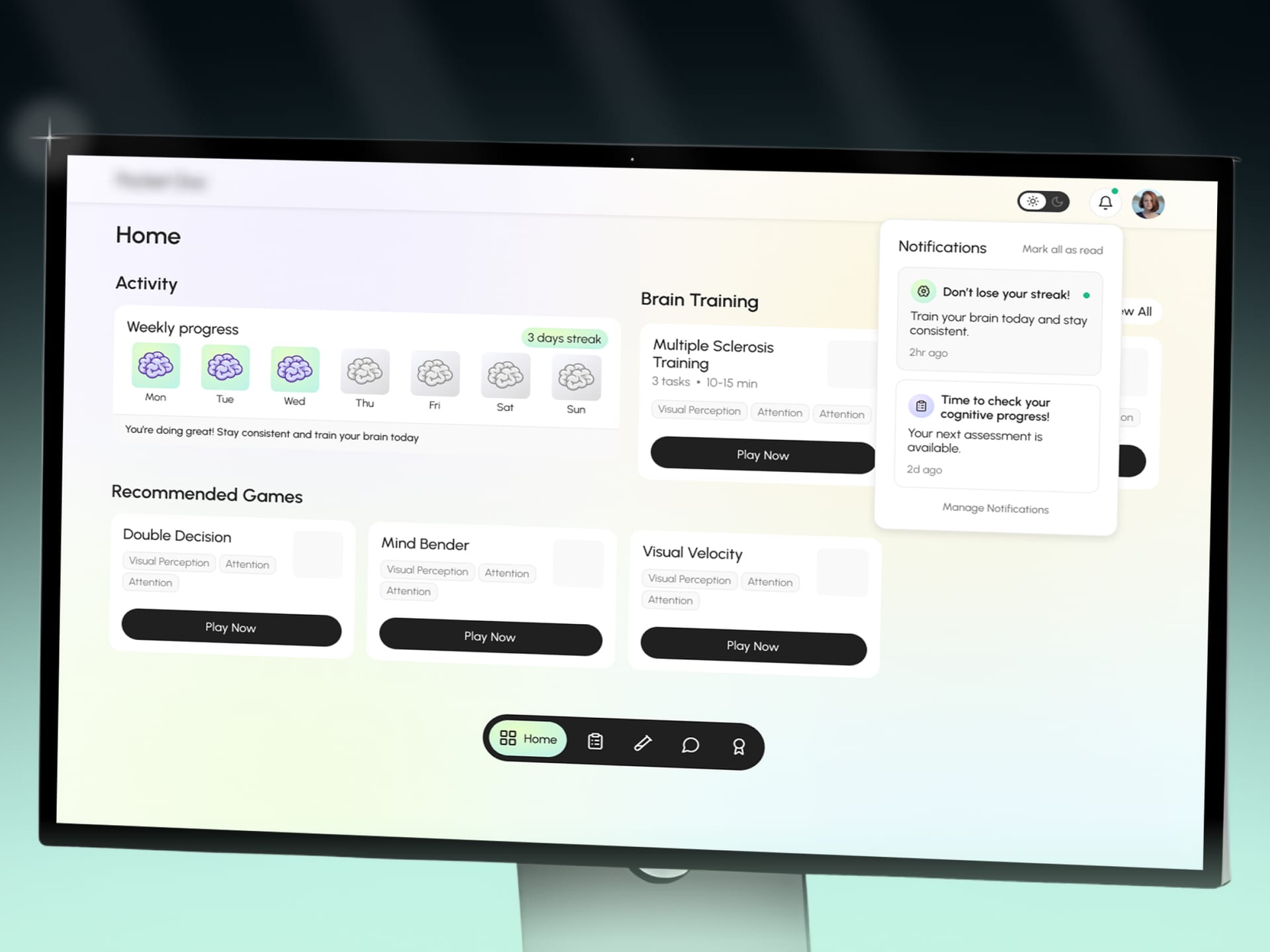
An AI‑Powered Cognitive Training and Brain Health Platform
Turning generic “brain games” into a personalized, data‑driven cognitive training experience – combining adaptive daily workouts, real health data insights, and a conversational AI assistant in one product.

Houston
Oct '25 — Mar '26
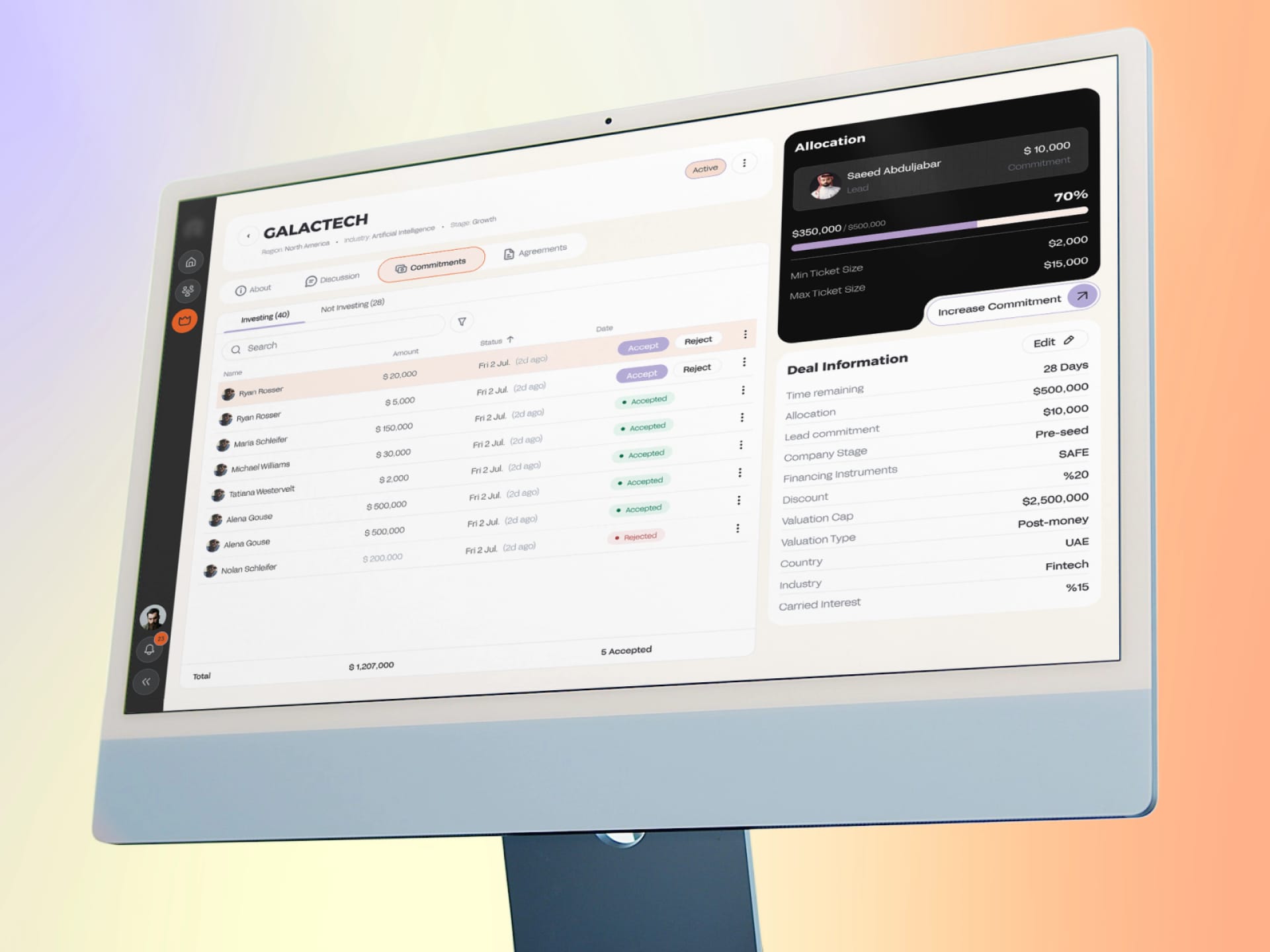
Angel Syndicate Investment Platform for a Saudi Family Office
Turning a fragmented angel investment workflow into a private, generative AI‑powered operating system for syndicates, family offices, and co‑investors.

Jeddah
May '25 - Nov '25

Fighting Misinformation with an AI-Driven Social Platform
Together with our client, we launched a social app designed to prevent the spread of fake news by empowering users to verify sources and flag misinformation.
Nashville
Jul ’24 – Apr ’25
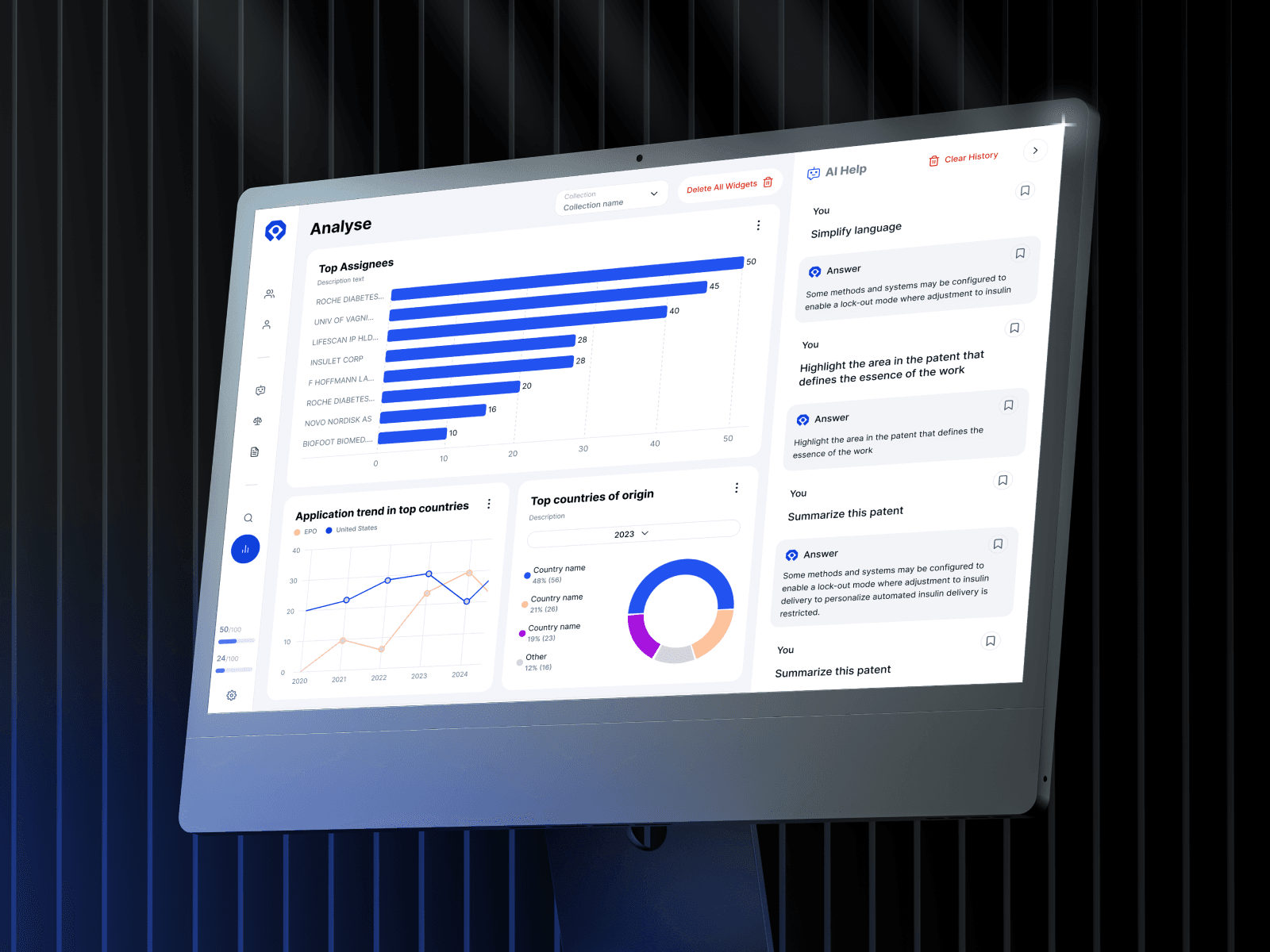
AI-Powered Patent Analysis in Minutes, Not Months
How we helped an ambitious patent intelligence team build a platform that replaces spreadsheet chaos and email chains with smart automation, fast results, and clean visual logic.
Orlando
Aug '23 — Now
Health & Wellness
An AI‑Powered Cognitive Training and Brain Health Platform
Turning generic “brain games” into a personalized, data‑driven cognitive training experience – combining adaptive daily workouts, real health data insights, and a conversational AI assistant in one product.
Client Location
Houston
Duration
Oct '25 — Mar '26
Platform
Web & Mobile
Angel Syndicate Investment Platform for a Saudi Family Office
Turning a fragmented angel investment workflow into a private, generative AI‑powered operating system for syndicates, family offices, and co‑investors.
Jeddah
May '25 - Nov '25
Fighting Misinformation with an AI-Driven Social Platform
Together with our client, we launched a social app designed to prevent the spread of fake news by empowering users to verify sources and flag misinformation.
Nashville
Jul ’24 – Apr ’25
AI-Powered Patent Analysis in Minutes, Not Months
How we helped an ambitious patent intelligence team build a platform that replaces spreadsheet chaos and email chains with smart automation, fast results, and clean visual logic.
Orlando
Aug '23 — Now
3. Decision Latency and Contracted Overlap Hours
Four shared hours enable standups, real-time debugging, and same-day decisions. Without overlap, every clarification turns into a 24-hour cycle. AI-assisted delivery boosts the impact: more code needs to be checked, creating more decision points per sprint.
Coordination overhead accumulates over time. Thirty monthly blockers with a 24-hour response cycle generate significant delivery delay compared with a defined 4-hour collaboration window. Rate cards measure effort, not delay. Coordination costs need to be managed through contractual overlap guarantees and clear ownership when decisions stall.
4. Operational Maturity of AI-Enabled Software Delivery
AI does not create missing context — it amplifies the context it is given. An AI-powered SDLC earns the name through its inputs: clear requirements, documented architecture, explicit standards, a tidy repository. AI does not fix unclear thinking. It speeds up delivery against whatever problem is defined — even the wrong one.
AI governance is no longer only an operational concern — it is part of compliance readiness. As the EU AI Act introduces obligations for high-risk systems through 2026 and 2027, regulated organizations are extending vendor assessments to include AI policies, controls, and evidence.
5. Total Cost of the Delivered Outcome: Onshore vs. Offshore Software Development
AI is cutting the cost of writing code — not the cost of building systems. When buyers compare vendors on hourly coding rates, they’re measuring the part of the equation AI is already shrinking.
AI took over the typing. It did not take over the decision about which system to build, and it has never once carried the consequences of getting that decision wrong.



Does AI Reduce the Onshore vs. Offshore Software Development Cost?
Partly, and only where the work is genuinely commodity. The cost compression from AI is concentrated in repetitive tasks, while complex problem-solving continues to depend on senior engineers whose judgment remains non-commoditized. A serious onshore vs. offshore software development cost comparison starts with the total, and the difference between onshore and offshore software development on that total stays material.
Why Hourly Rates No Longer Reflect Software Delivery Value
For $150, you can purchase one hour of a senior specialist’s work that delivers reviewed, tested, and deployed functionality. Or, for the same sum, you can go with three cheap hours after which you need lots of rework. Rate cards have nothing to do with velocity, defect rates, or the senior review time a program absorbs. Total delivery cost is the only comparable number.
Measuring the Real Cost of AI-Assisted Delivery: Offshore Software Development Cost vs. Onshore Software Development Cost
Here are six steps to a defensible onshore vs. offshore development cost comparison, no modeling software required:
Baseline the estimate in engineering hours per workstream
Divide those hours into AI-assistable work and specialist work
Apply a realistic productivity factor to the assistable portion: 10–25%, verified against the vendor’s own delivery data
Add the review and QA overhead that higher code volume generates
Account for coordination overhead, including collaboration windows, onboarding effort, and ramp-up periods
Multiply by the blended rate and include a contingency buffer for scope changes
For example, apply it to a 4,200-hour program, and the AI impact on software development costs becomes clear:
Line item | Onshore | Offshore |
|---|---|---|
Assistable hours after 20% AI factor | 1,760 | 1,760 |
Specialist hours | 2,000 | 2,000 |
Added review and QA overhead | 200 | 320 |
Coordination and onboarding | 80 | 260 |
Total hours | 4,040 | 4,340 |
Blended rate | $130 | $55 |
Delivery cost | ~$525,000 | ~$239,000 |
The offshore program absorbs 300 additional hours of overhead and still lands 54% cheaper. Under a rate-only comparison, the gap looks like 58%. That four-point difference is the honest cost of distributed delivery, and what an AI-assisted software development cost model exists to surface.
When AI Creates Real Savings — and When It Does Not
Work type | Realistic AI effect on effort |
|---|---|
Greenfield builds, internal tooling | High |
API and integration layers | High |
Test suites, documentation, data migrations | High |
Standard web and mobile features | Moderate |
Legacy modernization | Low |
Regulated systems with audit requirements | Low |
Latency-critical and high-concurrency platforms | Low |
Tangled domain logic with weak documentation | Low to negative |
Greenfield product engineering sits at the top of that table: SaaS development on modern stacks captures the largest gains, regulated modernization the least.
AI-Generated Code: Where the Hidden Cost Sits
Code volume grew faster than review capacity across the industry. AI-generated code quality became a procurement question in the process, and the AI-generated code risks below carry direct cost.
Functional Code Is Not Production-Ready Code
AI can generate code that works — but working code is not the same as production-ready software. The differences lie in architecture, maintainability, security, and system fit. Those decisions still belong to experienced engineers.
Security, Data Privacy, and IP Exposure
Veracode’s 2025 analysis put roughly 45% of AI-generated samples in breach of OWASP Top 10, with Java failing security checks in about 72% of cases in their test set.
Research on package hallucination showed that up to a fifth of AI-suggested dependencies may not exist, depending on the model, which generates a new supply chain risk known as slopsquatting.
Earlier Stanford research revealed a deeper challenge: AI assistants can increase developer confidence even when the resulting code is less secure.
AI risk extends beyond generated content to the data, code, and systems exposed throughout the development process. Source code, customer data, and system designs need the same level of protection in AI workflows as anywhere else. Governance starts with approved tools and a clear ownership structure.
What AI Governance Looks Like in Outsourcing
Control | Evidence to request from a vendor |
|---|---|
Approved AI tool list | Written policy naming tools and enterprise tiers |
Prompt data rules | Data classification matrix, zero-retention terms |
Mandatory review of generated code | Review checklist, branch protection settings |
Automated security scanning | Pipeline config for SAST, DAST, secret detection |
Provenance logging | Commit-level record of AI-assisted contributions |
IP and license clauses | Master agreement language, indemnification scope |
Audit cadence | Schedule, scope, sample past audit report |
Any serious enterprise vendor already has this documented. Human oversight in AI software development is the control others depend on: every merge carries a named human owner, and no framework moves that elsewhere.
Selecting the Right Delivery Model: Onshore, Offshore, or Hybrid
Working out how to choose between onshore and offshore software development takes four constraints and one honest look at the budget. The difference between onshore and offshore outsourcing bites hardest on compliance and overlap; the difference between onshore and offshore software development on cost shows up in the total calculated above.
Driving constraint | Onshore | Offshore | Hybrid |
|---|---|---|---|
Strict data residency or classified scope | Best fit | Conditional | Conditional |
Aggressive scaling on a fixed timeline | Weak | Best fit | Strong |
Regulatory exposure with high delivery volume | Conditional | Weak | Best fit |
Cost-sensitive program, scope defined | Weak | Best fit | Strong |
High-ambiguity discovery, heavy stakeholder time | Best fit | Weak | Conditional |
24/7 support and maintenance | Weak | Best fit | Strong |
Onshore development advantages and disadvantages cluster around control: full overlap, single jurisdiction, fast escalation, set against high rates and a slow hiring process. Offshore development advantages and disadvantages cluster around scale: deep talent pools, staffing in weeks, rates 40 to 70 percent lower, set against time-zone friction and wide quality variance.
Onshore software development stays the default where data cannot cross a border. Smaller budgets, including IT services for small businesses, tend to land offshore or hybrid on the same arithmetic.
Why Hybrid Models Now Dominate Enterprise Programs
Framed strictly as offshore vs. onshore software development, the question forces a choice nobody needs to make. Product ownership, architecture, and security oversight stay onshore. Build and run belong to offshore. Cost lands in the middle, control stays local, scaling stays fast.
The onshore vs. offshore outsourcing decision resolves as both, and the economics are easy to model. Three onshore architects at $130, alongside 19 offshore developers at $55, yield a blended rate near $65 across a 22-person program — closer to offshore pricing, with tech decisions and compliance ownership never leaving the client’s jurisdiction. Unglamorous, and it works.
If your top five reports lack named owners and replayable lineage, that is where we start. Tell us which reports matter, and we will map the gaps.

What to Look for in an AI-Ready Software Development Partner
Questions to Ask Before Choosing a Vendor
Who owns architecture and technical decisions — by name and role?
Which collaboration hours are contractually guaranteed?
How do AI code review and QA operate in reality, and what evidence supports them?
Which AI tools does the team use, and what policies govern their use?
How much engineering capacity is allocated to reviewing AI-assisted code?
Which delivery metrics are tracked, and how frequently are they reported?
What happens to your data, IP, and code when the engagement ends?
Measuring Real AI Impact
AI productivity is not measured by how much code gets generated. It is measured by how quickly reliable software reaches production. Ask for delivery metrics, review history, and real engineering artifacts — not percentages without context.
The New Standard for Comparing Software Delivery Partners
AI has changed the economics of software development, but not the fundamentals of delivery. Onshore and offshore software development approaches now compete on the same dimension: engineering effectiveness.
The most reliable partners can showcase delivery performance through metrics, disciplined AI governance, and clear ownership of architecture, security, and quality.
Hour-based pricing shows the cost of work. It does not show what gets delivered, how reliably it reaches production, or what value the business receives.


