AI Governance Consulting Services

AI Governance Consulting

Lumitech turns scattered policies and untracked AI use into a governance system that lives inside product delivery and daily operations. We map your AI portfolio, assign owners and risk tiers, and build lifecycle AI governance controls for generative AI, machine learning, agents, and third-party tools — at the speed your teams already ship.

Accelerate AI Adoption With Clear Ownership, Risk-Based Controls, and Better Decisions

AI governance consulting establishes how AI systems are managed across their lifecycle — from approval and deployment to monitoring and retirement. Lumitech turns responsible AI principles, regulatory requirements, and risk expectations into practical controls, ownership models, and evidence-based processes. Our AI governance services start with the AI systems you already have.

    Gain Visibility Across Your AI Portfolio

    Gain Visibility Across Your AI Portfolio

    Establish a traceable AI inventory covering all systems — internal and third-party — including functionality, data dependencies, ownership, and business impact.

    Strategic Outcomes: Greater visibility into AI systems and a dependable foundation for every governance action.

    Apply Controls According to Real Risk

    Apply Controls According to Real Risk

    Classify AI systems by risk and governance needs — from low-impact productivity tools to high-impact systems requiring formal evaluation, approval, and continuous oversight.

    Strategic Outcomes: Teams move fast while governance effort is concentrated on the AI systems with the greatest risk and potential impact.

    Create Clear Lines of Accountability

    Create Clear Lines of Accountability

    Design a governance map that aims to connect leadership and engineering teams, defining ownership for decisions, approvals, risk management, and monitoring.

    Strategic Outcomes: Quicker execution thanks to clear ownership, synchronized teams, and fewer decisions that repeat.

    Add Requirements to Daily Operations

    Add Requirements to Daily Operations

    Turn each AI governance policy into operational requirements that teams can use for procurement, development, validation, deployment, monitoring, and retirement.

    Strategic Outcomes: Governance becomes a step inside AI delivery that teams can complete on their own.

Your AI Program Is Probably Scaling Faster Than Its Controls

AI adoption often grows organically rather than through a centralized program. Different teams introduce AI tools, deploy external models, create internal solutions, and automate processes independently. Over time, organizations lose a complete view of their AI landscape — including which systems exist, what data they use, and who is responsible for them.

  • AI Use Is Not Fully Visible

    AI assets — from copilots and model APIs to generated code, embedded SaaS capabilities, and internal experiments — exist across teams without a single source of truth.

  • One Policy Covers Every Use Case

    A simple writing assistant and a system shaping employment, credit, or clinical outcomes should not be governed the same way — but many organizations treat them equally.

  • Accountability Is Fragmented

    Seven functions weigh in on each AI decision, ownership drifts between them, and final approval authority sits with nobody in particular.

  • Third-Party AI Adoption Outpaces Governance

    AI capabilities spread across teams while critical questions around data, vendors, oversight, and operational risk remain open.

  • Rules Exist, But Delivery Moves Differently

    Organizations publish responsible AI guidelines, but engineering teams still have to determine which tests, evidence, approvals, and controls are needed before deployment.

  • GenAI and Agents Open New Gaps

    AI systems produce variable outputs, access sensitive data, and rely on connected tools — with behavior shifting as models, prompts, and underlying data change.

  • Evidence Is Assembled After the Fact

    Risk decisions, evaluations, approvals, and model changes get reconstructed by hand the week a customer or auditor asks for them.

  • Every Use Case Is a Custom Negotiation

    With no risk tiers and no predefined controls, each new AI idea reopens the same debate between business, legal, security, and engineering.

Lumitech installs operational AI governance that makes lower-risk AI easy to approve, and higher-risk AI genuinely controlled.

Know Every AI System. Apply the Right Controls. Prove Every Critical Decision.

A working AI control framework answers six practical questions, and answers them the same way every time.

01

Discover

Which AI systems, models, agents, tools, vendors, and use cases are running right now?

02

Classify

What level of business, regulatory, security, ethical, and human impact can the system create?

03

Assign

Who owns the use case, accepts the risk, approves deployment, and watches the system in production?

04

Control

Which controls have to be in place before deployment, and which keep running after it?

05

Evidence

How does the organization show that the right decisions and controls were actually applied?

06

Improve

How does governance keep up as systems, vendors, regulations, and business uses keep moving?

Scalable AI governance turns repeatable rules into everyday workflows, giving each new AI initiative a structured path from idea to operation.

Ready to Govern AI at the Speed You Build It?

Tell us what is driving the initiative, which AI systems are in scope, and how far your current controls reach. Lumitech will recommend the right starting point — a focused governance assessment, a full operating model and control library, or a complete AI governance roadmap with implementation support.

Start with the challenge in front of you. We will help define the right scope.

What is driving the initiative?

What needs to be governed?

Current governance maturity?

NDA available. We recommend a diagnostic, framework design, implementation engagement, or ongoing advisory model based on your current maturity.

Governance for AI at Enterprise Scale

Our AI governance services fit organizations at the point where AI stops being a pilot and starts carrying real business weight.

decor

Enterprises Scaling AI Across Departments

You need one governance model that holds across business units while the depth of control varies with the risk of each individual use case.

decor

Regulated Organizations

Organizations in regulated sectors, such as finance, healthcare, insurance, government, and critical infrastructure, where AI decisions must be traceable and accountable.

decor

Product Companies Embedding AI

You ship AI-powered features and need repeatable requirements for design, evaluation, release, monitoring, and customer security reviews.

decor

Teams Deploying GenAI and Agents

You are scaling copilots, RAG applications, or tool-using agents and need defined controls for what data they can access, what outputs they can produce, and which actions they can take.

decor

Organizations Relying on Third-Party AI

Your teams integrate AI platforms, model APIs, and embedded AI capabilities while taking on new vendor dependencies, data exposure, and governance responsibilities.

decor

Organizations Preparing for Assurance

You get the same questions from enterprise customers, procurement teams, auditors, regulators, and certification bodies, and need an evidence-backed answer ready.

From Governance Strategy to Controls That Work in Practice

Lumitech builds AI governance around your real operating model — how your organization selects, develops, purchases, deploys, and manages AI systems. Our AI governance framework consulting is paired with engineering expertise to implement the controls, workflows, and evidence needed in practice.

AI Governance Maturity Assessment

AI Governance Maturity Assessment

A comprehensive assessment of where your AI governance capabilities stand today — from ownership and policies to lifecycle processes, controls, documentation, monitoring, and compliance readiness.

AI Portfolio Mapping and Risk Classification

AI Portfolio Mapping and Risk Classification

A dependable picture of the AI portfolio, plus a repeatable method your teams can use to classify systems and use cases the same way every time.

AI Governance Structure and Decision Paths

AI Governance Structure and Decision Paths

A defined governance structure that shows who decides, who approves, who owns risk, and who is responsible for results.

Policies, Standards, and Control Library

Policies, Standards, and Control Library

Responsible AI requirements that support teams in decision-making processes, help design secure systems and move faster.

AI Lifecycle Governance

AI Lifecycle Governance

Practical governance controls embedded throughout the AI lifecycle — from initial intake and validation to deployment, monitoring, and retirement.

GenAI, RAG, and Agent Governance

GenAI, RAG, and Agent Governance

Clear rules for what AI systems can access, decide, and do — with the right controls for permissions, monitoring, and accountability.

3d-Party AI Risk and Vendor Oversight

3d-Party AI Risk and Vendor Oversight

A consistent evaluation flow for third-party AI tools, including model providers, AI-enabled SaaS, integrations, and embedded features.

Regulatory Readiness and Standards Alignment

Regulatory Readiness and Standards Alignment

A governance framework that includes applicable regulations, standards, and internal requirements to how your AI systems are managed.

Governance Enablement and AI Literacy

Governance Enablement and AI Literacy

Each group — from leadership and employees to developers and control teams — learns what responsible AI means in the context of their own responsibilities.

The Right Controls Depend on What the AI Can Influence or Do

A predictive model, a generative assistant, an autonomous agent, and an embedded third-party copilot each carry a different risk profile. A framework keeps common enterprise principles at the center and adjusts controls by system type, purpose, autonomy, and impact.

  • Predictive Machine Learning

    Primary concerns

    • Data validity
    • Bias & fairness
    • Performance across user groups
    • Explainability
    • Model drift
    • Decision thresholds

    Typical controls

    • Dataset documentation
    • Validation metrics
    • Fairness testing
    • Approval thresholds
    • Drift monitoring
    • Periodic model review
  • Generative AI & RAG

    Primary concerns

    • Unreliable output
    • Sensitive-data exposure
    • Unauthorized data
    • Prompt injection
    • Output misuse
    • Content provenance

    Typical controls

    • Evaluation datasets
    • Groundedness testing
    • Source references
    • Knowledge-access permissions
    • Content restrictions
    • Human escalation
  • AI Agents

    Primary concerns

    • Excessive autonomy
    • Tool misuse
    • Unauthorized transactions
    • Uncontrolled retries
    • Cascading errors
    • Limited traceability

    Typical controls

    • Least-privilege tool access
    • Allowed-action lists
    • Human approval gates
    • Step and spending limits
    • Stop and rollback conditions
    • Complete action logs
  • Third-Party AI Tools

    Primary concerns

    • Unknown data processing
    • Vendor dependency
    • Model or feature changes
    • Limited transparency
    • Cross-border data transfer
    • Unapproved employee use

    Typical controls

    • Approved-tool catalogue
    • Vendor assessment
    • Contract requirements
    • Data restrictions
    • Usage monitoring
    • Exit planning

Align AI Governance Globally

Global standards, national AI policies, data protection law, sector regulation, and customer contracts can all land on the same AI portfolio. Lumitech builds one operating model and one reusable control library, then maps each requirement onto the policies, roles, workflows, technical controls, and evidence already in place.

EU AI Act Readiness Assessment

EU AI Act Readiness Assessment

Supports organizations in building an AI system inventory, mapping provider and deployer roles, classifying use cases, aligning risks with controls, reviewing technical documentation, defining human oversight requirements, and establishing an evidence roadmap.

ISO/IEC 42001

ISO/IEC 42001

Supports organizations in assessing AI management system gaps and scope, defining roles and decision ownership, establishing governance policies and workflows, implementing risk and impact controls, and enabling evidence collection alongside continuous improvement.

Designed Around Your Current Governance Practices

Designed Around Your Current Governance Practices

This includes data governance, privacy, cybersecurity, enterprise risk, model risk management, vendor management, SDLC, MLOps and LLMOps, as well as internal audit and compliance.

NIST AI Risk Management Framework

NIST AI Risk Management Framework

Supports organizations in assessing current-state maturity, establishing a risk classification framework, implementing AI lifecycle controls, defining responsible AI requirements, applying generative AI guardrails, and developing a prioritized implementation roadmap.

AI Governance Across UAE and MENA

AI Governance Across UAE and MENA

Supports organizations in regional regulatory mapping, managing risks related to automated decision-making, implementing privacy and data residency controls, ensuring accountability and oversight, addressing sector- and country-specific requirements, and strengthening vendor governance.

Important: Lumitech helps organizations implement AI governance through advisory, engineering, and risk management support. Regulatory advice and certification remain with qualified external parties.

Governance Assets Your Teams Can Open and Use on Day One

Deliverables are selected to match your AI portfolio, maturity, risk profile, existing governance, and target standards. Every engagement inside our AI governance services ends with assets that belong to you.

Current-State Assessment

A clear view of your current AI capabilities, gaps, dependencies, and priority risks.

AI Inventory & Risk Classification

A structured register of AI systems combined with a practical model to assess and classify risk levels.

Target Operating Model

Defined governance structure covering ownership, decision-making, approvals, escalation paths, and reporting.

Responsible AI in Practice

Operational rules translating AI principles into day-to-day guidance for development, use, procurement, and GenAI.

Lifecycle Governance & Controls

End-to-end controls embedded across design, development, deployment, operation, and retirement.

AI & Vendor Risk Management

Standardized approach to assessing internal use cases and governing external providers, APIs, and AI SaaS.

Monitoring, Incidents & Guardrails

Defined guardrails, monitoring practices, and incident response playbooks for AI systems and agents

Roadmap & Evidence Framework

Prioritized implementation plan with mapped controls, regulatory alignment, and supporting evidence.

Build your AI governance foundation with a dedicated expert

A focused session with an AI governance expert to map your current state, risks, and practical next steps.

From Governance Gaps to Embedded Controls

Our AI governance implementation services run in six stages, and each one produces something your teams can use before the next begins.

01

Discover the AI Environment

We map AI use cases, models, tools, vendors, stakeholders, data sources, existing controls, and regulatory exposure across the organization. 

Outcome: initial AI inventory, engagement scope, stakeholder map, and a governance baseline you can measure.

02

Assess Risk and Maturity 

We assess governance capabilities and categorize AI systems based on business impact, data sensitivity, level of autonomy, affected users, and relevant regulatory requirements.

Outcome: maturity assessment, risk tiers, priority gaps, and agreed target outcomes for the whole program.

03

Design the Operating Model 

We define governance roles, policies, approval paths, lifecycle controls, exceptions, reporting, and evidence requirements with your teams in the room.

Outcome: a target operating model plus an implementable governance framework your teams already recognize.

04

Pilot Governance on Real Use Cases

We review AI systems in production contexts — examining assistants, models, agents, and third-party AI tools as they operate in real business environments.

Outcome: validated controls, the friction points we found, refined workflows, and practical lessons learned.

05

Integrate Controls Into Delivery 

We make governance part of everyday operations by embedding controls into the tools and processes teams already rely on — from product delivery to security, data, and MLOps.

Outcome: workflows built directly into the systems that teams already use, so they can follow controls without maintaining a separate process.

06

Measure and Improve

We put in place the mechanisms that keep governance active — from performance metrics and review cycles to incident learnings, reassessment triggers, and control monitoring.

Outcome: a governance program that keeps pace as AI adoption, technology, and external requirements evolve.

Choose the Governance Engagement That Matches Your Current Stage

Work with an AI governance consulting company at the depth your program needs today. The four formats below run from a short diagnostic through to ongoing AI governance advisory services, and each one extends into the next.

  • AI Governance Health Check

    AI Governance Health Check

    For teams adopting AI that need to identify gaps, risks, and the right path forward before implementation begins, deliver a clear AI maturity assessment, an initial AI inventory, defined priority risk areas, a target-state vision, and a phased implementation roadmap.

  • AI Governance Foundation

    AI Governance Foundation

    For teams building their first governance model or turning existing policies into practical processes, resulting in a defined risk taxonomy, a clear operating model with decision rights, established policies and standards, embedded lifecycle controls, and a structured implementation plan.

  • Governance Implementation and Pilot

    Governance Implementation and Pilot

    For companies that already have governance policies but need to connect them across teams, tools, and AI-related processes, resulting in aligned governance workflows, defined tech control requirements, integrated processes, validated use-case pilots, targeted training, and structured evidence generation.

  • Continuous Governance Advisory

    Continuous Governance Advisory

    For companies navigating continuous changes in AI adoption, regulatory expectations, and governance requirements, providing ongoing governance office support, structured use-case reviews, regular policy updates, regulatory mapping, continuous control improvement, and executive reporting.

Control Is Built Into the Systems We Engineer

Lumitech pairs governance consulting with hands-on experience designing AI for regulated data, sensitive internal knowledge, autonomous workflows, and real users.

Legal AI Assistant for a Regional Fintech Institution

AI assistant that reduces repetitive requests and helps find trusted policy and compliance answers through AI-driven search with source references and controlled access.

Data & model boundariesRole-based accessApproved sourcesHuman escalation

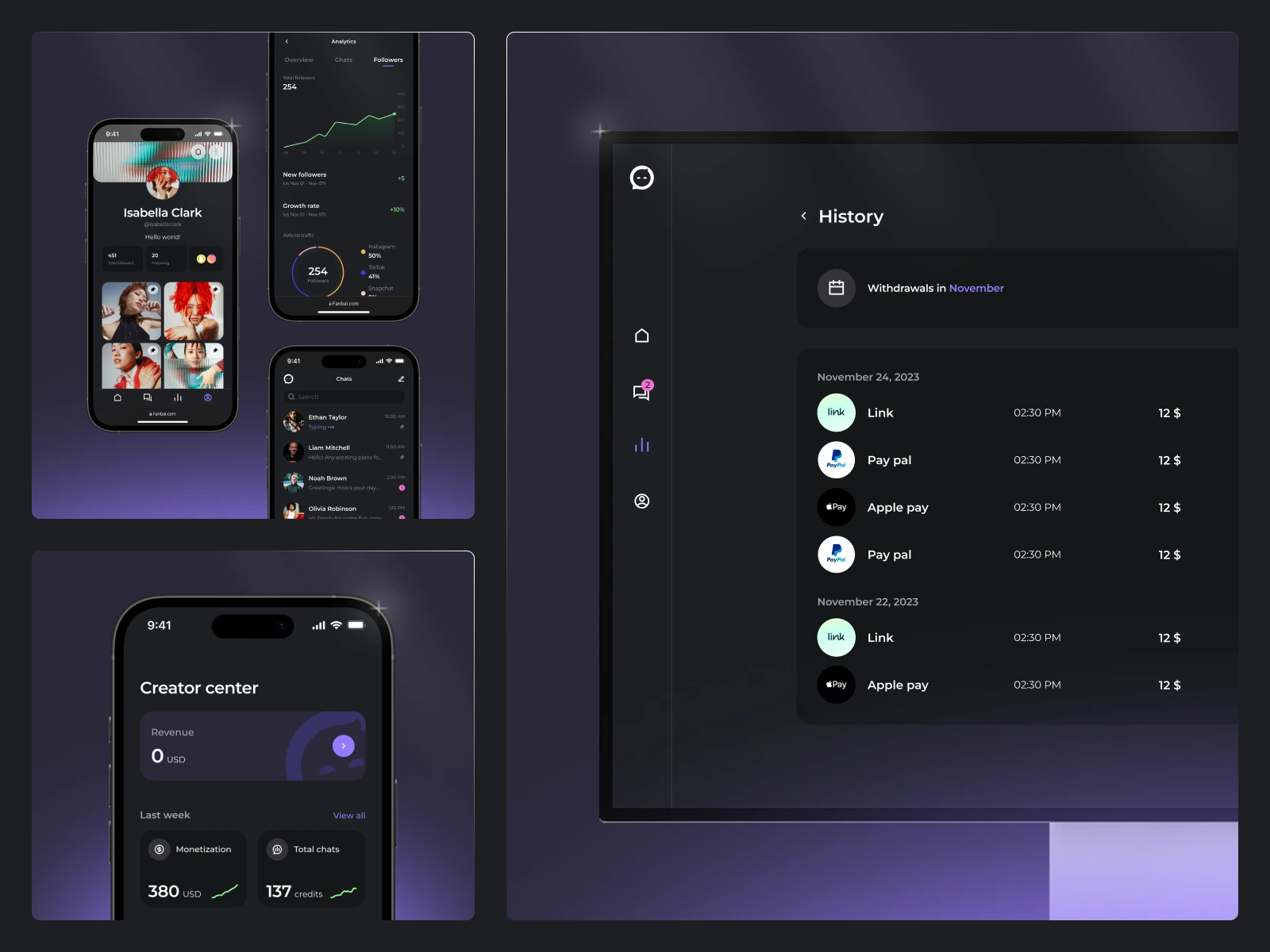
AI-Based Fan Engagement Platform

Lumitech built a mobile-first platform for interactive engagement between audiences and artists or experts, enabling personalized experiences through seamless connections.

Output boundariesBrand safetyModerationPersona control

AI-Powered Investment Intelligence Platform

AI investment intelligence platform that helps investors understand portfolio performance and its drivers, turning complex market data into clear insights for better decisions.

Grounded outputsKnowledge controlsData integrationExplainability

Clients bring Lumitech in when technical depth, regulatory understanding, and delivery accountability all have to be present at once.

Governance Designed by People Who Build and Operate AI Systems

Responsible AI governance consulting has to reach into product decisions, software architecture, data access, model evaluation, deployment, and monitoring. Lumitech works as an AI governance consulting firm with an engineering core, so the controls we design are the controls your teams can implement.

decor

Governance That Moves AI Forward

We turn AI governance from policies into everyday practices — embedding controls, accountability, and oversight into the workflows where AI is built and used.

decor

Policy and Engineering Combined

Bringing policy, engineering, and operations together to create AI controls that work in practice — not just on paper.

decor

Risk-Based Approach

Controls are risk-based, matching the system’s purpose, impact, autonomy, data sensitivity, affected stakeholders, and relevant regulatory expectations.

decor

Framework-Agnostic Design

The model is built around your organization, your portfolio, and your regulatory footprint, so it survives a change of vendor or platform.

decor

Integration With Existing Governance

We build on the data, security, privacy, procurement, risk, compliance, audit, SDLC, and MLOps capabilities that already work for you.

decor

Practical, Reusable Deliverables

Teams receive decision rules, templates, control requirements, workflows, and playbooks they can apply to the next AI use case on their own.

decor

Technical Depth Across Modern AI

Our AI governance consultants work across machine learning, generative AI, RAG, multimodal systems, embedded models, and tool-using agents.

decor

Full Ownership

Everything created during the engagement — from governance documentation and templates to control libraries and technical deliverables — stays with the client.

Our partners

Our Custom Software Quality is Proven By Our Partners

Our partners include companies from the Inc. 5000 and Europe's 1000 Fastest-Growing Companies

Good to know

  • What is included in AI governance consulting services?

  • When does an organization need AI governance?

  • Is AI governance the same as AI compliance?

  • Can AI governance be applied to existing AI systems?

  • Can Lumitech support AI governance requirements in the UAE and MENA?

MOVE FROM AI POLICY TO AI CONTROL

Build an AI Governance System Your Teams Can Actually Use

Create visibility across your AI portfolio, apply controls according to real risk, assign accountable owners, and embed governance into the workflows where AI decisions happen. Lumitech will help you define the operating model, controls, evidence, and sequence required to scale AI responsibly.

Clear ownership. Risk-based controls. Operational evidence. Responsible AI at scale.

Ready to bring your idea into reality?

  • 1. We'll sign an NDA if required, carefully analyze your request and prepare a preliminary estimate.
  • 2. We'll meet virtually or in Dubai to discuss your needs, answer questions, and align on next steps.
  • Partnerships → partners@lumitech.co

Email us at info@lumitech.co

or fill out the form below

Advanced Options

What is your budget for this project?

How did you hear about us? (optional)

Prefer a direct line to our CEO?

linkedinemail
whatsup