


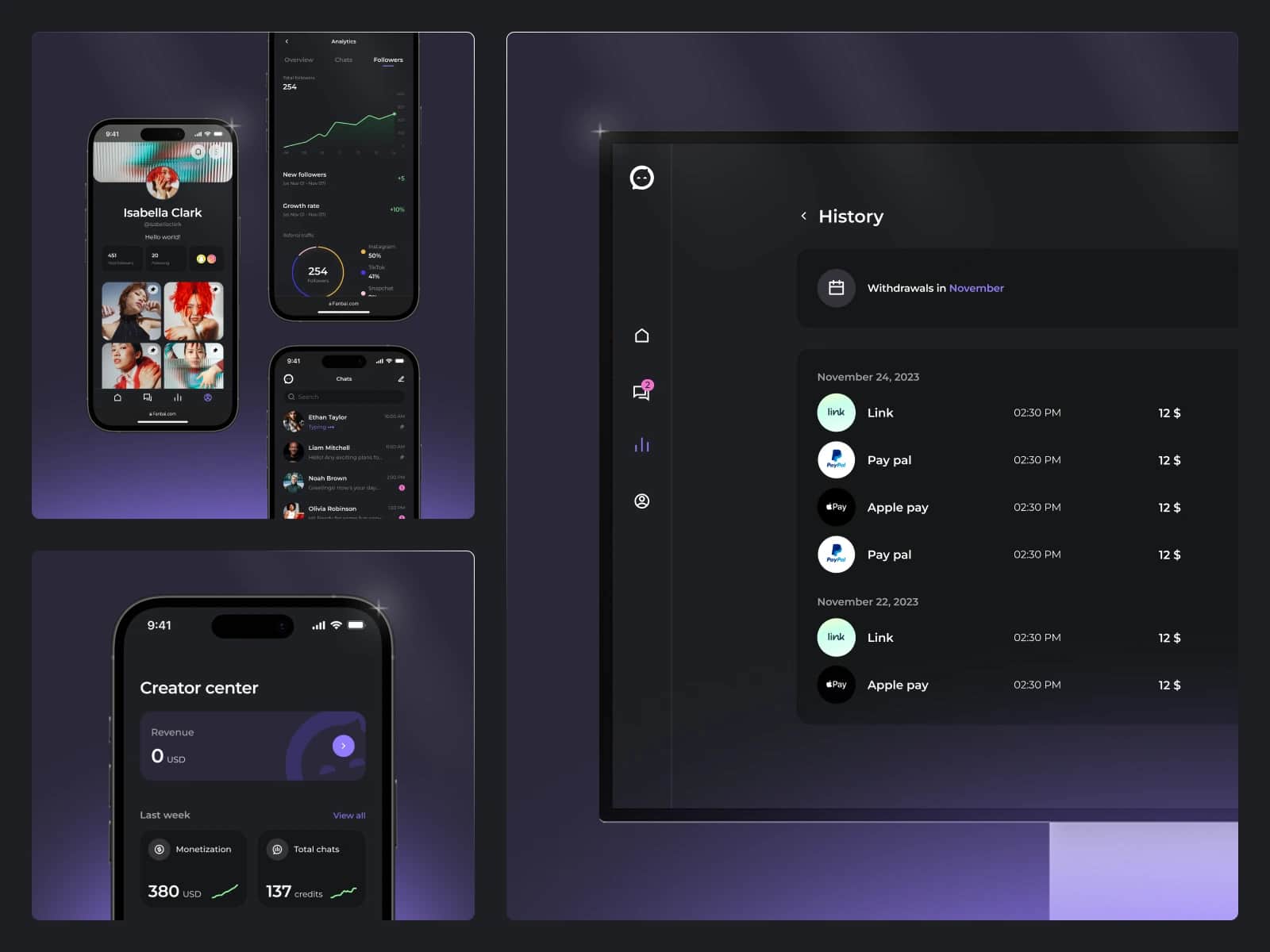




Fanbai is an AI-powered fan engagement system that helps creators stay present for their audience 24/7 without being constantly online. It transforms the way creators build relationships with their audience. While others focus on 'engagement,' it empowers genuine one-to-one connections on a scale never seen before.
The core concept of Fanbai is to "multiply your personality" by allowing creators to generate an AI double — a sophisticated digital twin — that mirrors their personality, communication style, and knowledge base. This AI double provides 24/7, personalized, and authentic fan interaction, enabling creators to nurture their community and unlock new monetization avenues while they focus on content production.
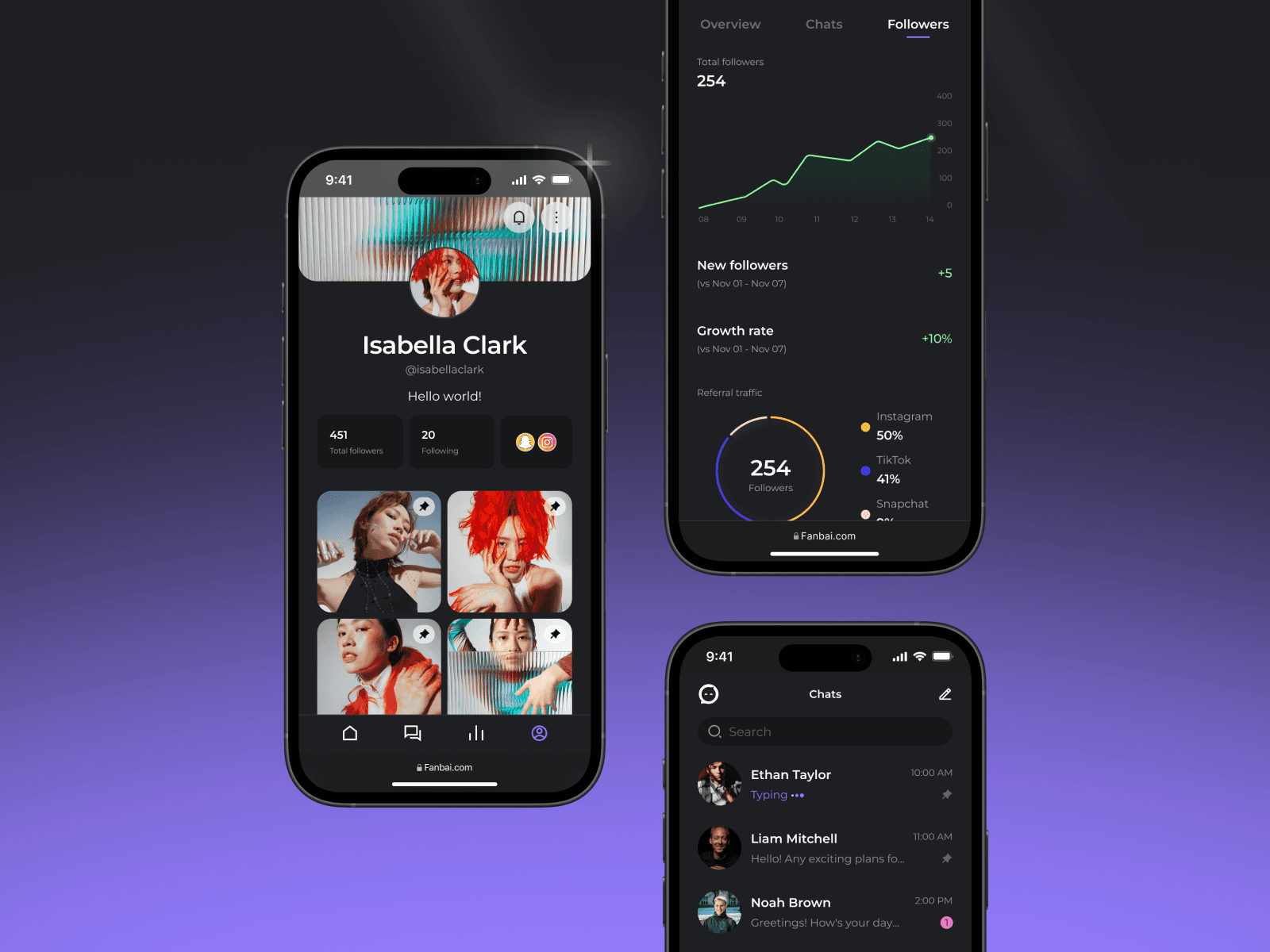
Client Request
Our client’s vision was clear: to move beyond generic chatbots and create a service that truly felt like a one-on-one conversation with the creator, enabled by AI-driven content personalization. The creator economy demands constant connection, but successful influencers and streamers quickly hit a scaling limit. They cannot manually reply to thousands of fans across different time zones and languages, leading to missed engagement opportunities and audience attrition.
We defined the following business problems behind the vision:
Time Constraints: The creator's time is finite, limiting their reach and ability to monetize and retain a large, global audience actively.
Lack of Personalization at Scale: Traditional automation tools feel impersonal and risk eroding the creator's unique brand authenticity.
Monetization Leakage: Inability to capture revenue from personalized, high-frequency interactions due to manual limitations.
The central request was to build a robust, responsive web application that could ingest a creator's content, define their AI persona through an intuitive dashboard, and securely deploy this "digital double" for continuous, authentic fan engagement.
Our Approach
We adopted an agile approach, focusing our expertise on the core user experience: design and frontend development. Our process included rapid prototyping, iterative feedback loops, and a component-based architecture to ensure flexibility and responsiveness across devices (web MVP with a responsive foundation).
Development was organized as a hybrid collaboration. Our team handled UX, UI, and the frontend implementation in React, Next.js, and TypeScript, while the backend was built by a team on the client’s side. To keep everyone aligned across time zones, we put a lot of emphasis on clear API contracts, written specifications, and asynchronous communication.
We started with a focused discovery phase to turn the idea of an “AI double” into a concrete product. Together with the founder, we clarified what this digital version of a creator should actually do: how it would onboard creators, what information it would need to learn their voice, and what a fan conversation should feel like when it “just works." In defining the product vision, we also explored how AI real-time highlight generation could help creators see what fans react to most and amplify those moments across channels.
From there, we mapped the core journeys for two primary roles: the creator, setting everything up, and the fan, engaging with the AI double. That gave us a clear backbone for the MVP and a shared language for the whole team.
On the design side, our main challenge was to make Fanbai feel like a tool for authenticity, not a generic chatbot builder. We shaped the interface around that idea. The creator sees a guided setup that lets them configure their personality, tone, and boundaries naturally, rather than filling out technical forms. For fans, we designed a chat experience that keeps the creator’s identity front and center, so every interaction feels personal and connected instead of transactional.
We delivered the MVP iteratively, moving from wireframes to detailed UI and then into working front-end screens. As the backend APIs were implemented, we integrated them and refined the flows based on real interactions. Even when the founder couldn’t join every workshop or demo, we structured our updates to make their feedback easy: short, focused reviews, side-by-side design options, and explicit questions where their input was critical. This helped us keep the product close to the original vision while still moving quickly toward a tangible, demo-ready platform.
Tools We Used
To build a high-performance, scalable, and maintainable platform, we utilized the following technologies:
Frontend Framework: React (with Next.js). Provided server-side rendering (SSR) capabilities for improved SEO and performance, crucial for a platform targeting public-facing creators.
Language: TypeScript. Ensured code quality, maintainability, and early error detection, especially vital when integrating with an externally managed backend API.
Cloud Infrastructure: AWS (Architecture). Provided the scalable, secure, and globally available infrastructure necessary to support 24/7 real-time chat processing with AI across global time zones.
Design: Figma. Used for collaborative design and prototyping, ensuring a seamless handover to the frontend development team.
This stack allowed us to build a production-ready MVP that is easy to iterate on, extend, and eventually integrate with additional services (analytics, billing, etc.) as the product matures.
Core Features
We successfully delivered a comprehensive MVP that allowed creators to leverage the power of AI to manage and monetize their audience. The core features included:
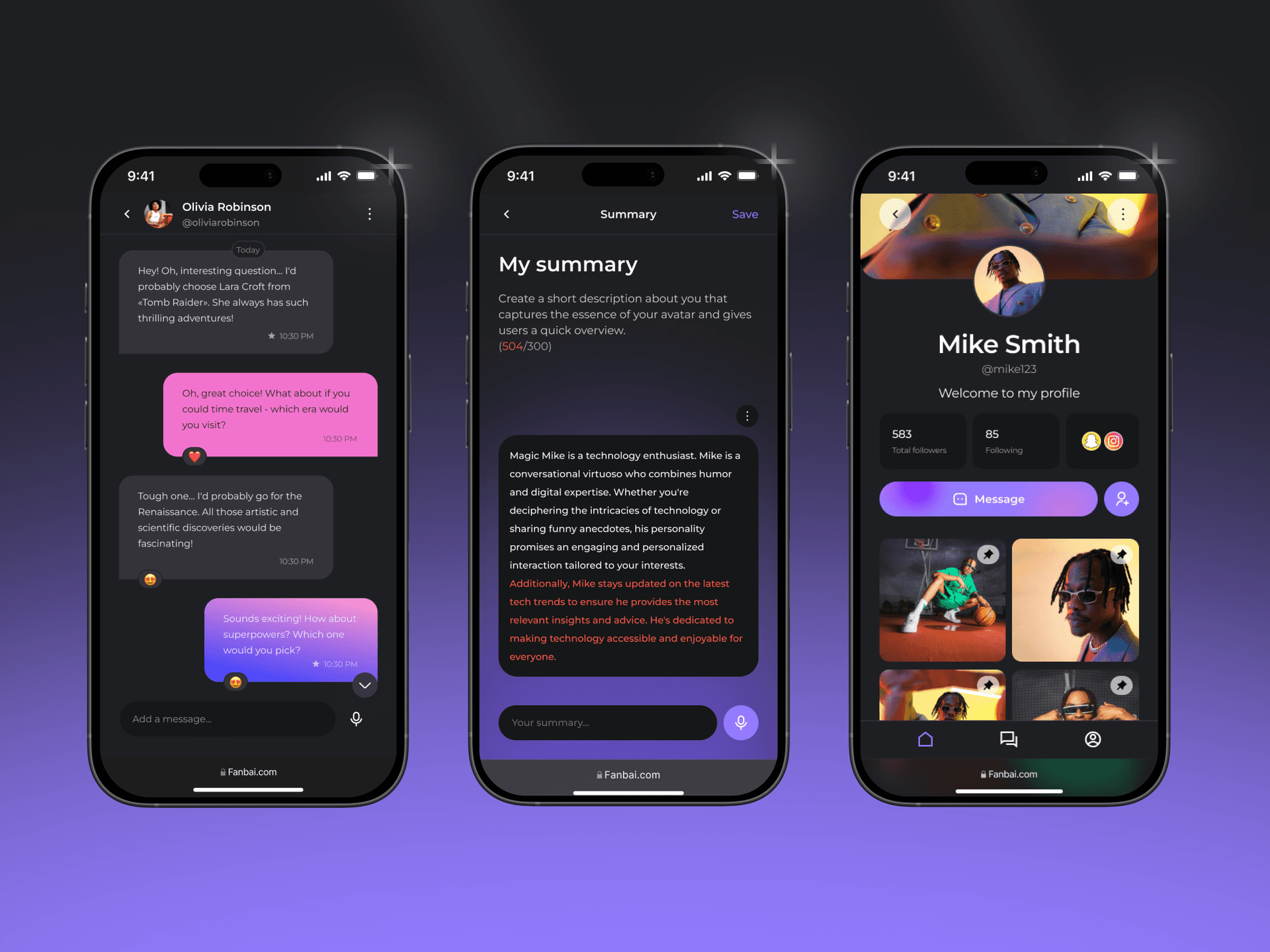
AI Double Configuration Dashboard: An intuitive, multi-step interface allowing creators to upload their existing content (video transcripts, posts, social media data) and define their lookalike's knowledge base, communication style, tone, and specific brand restrictions. The platform provides clear steps, so onboarding feels “easy as 1–2–3” rather than technical setup: upload → configure → go live.
Multilingual & 24/7 Interaction Engine: The frontend interface to display and manage real-time conversations handled by the AI double, demonstrating its ability to operate across time zones and communicate effectively in multiple languages. In the fan-facing chat, live content augmentation using AI allows the system to pull in relevant moments, quotes, or references from the creator’s material as the conversation unfolds.
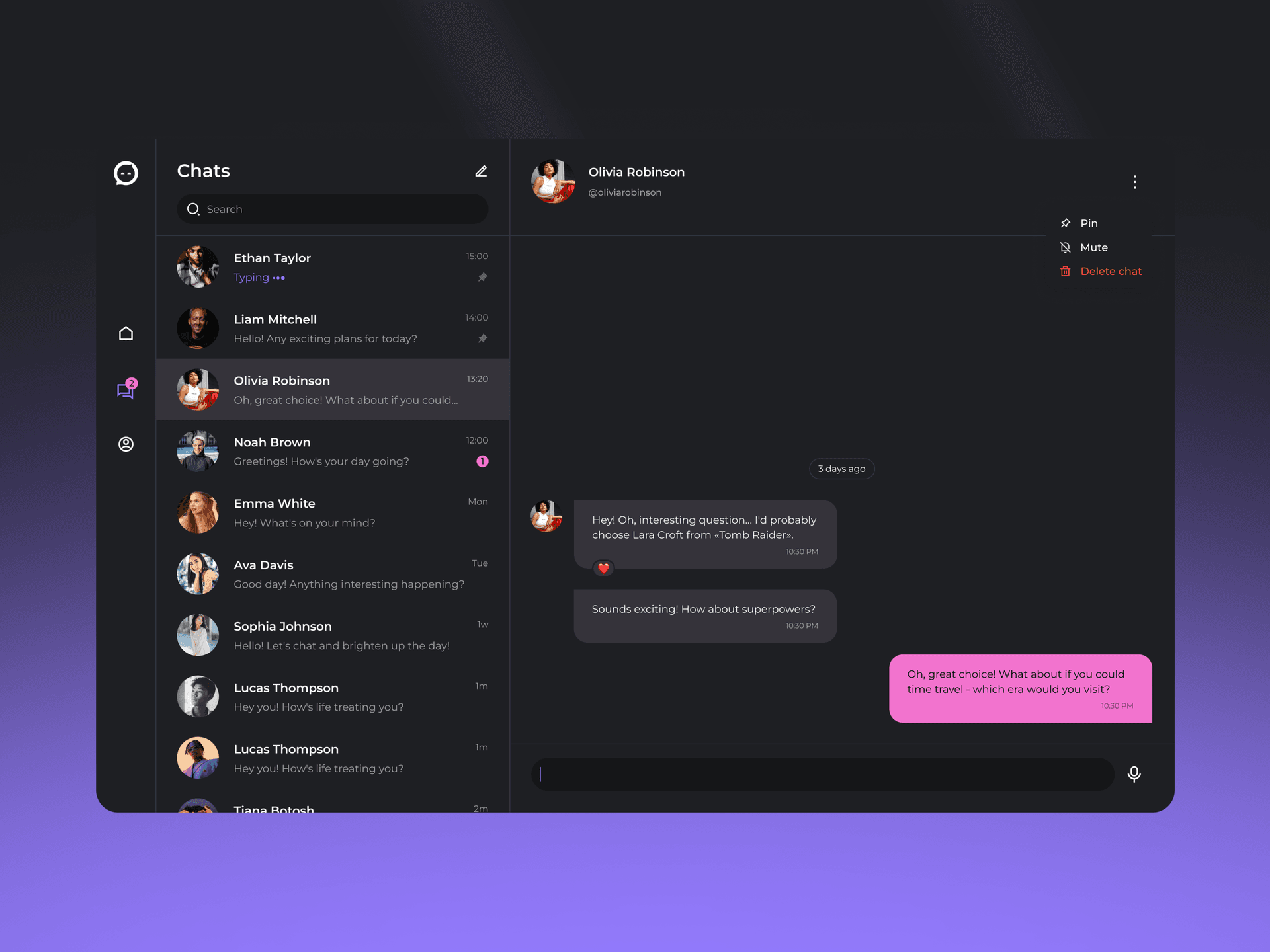
Safety & Moderation Controls: Tools for setting brand safety parameters, allowing the AI to maintain professional standards and adhere to pre-defined content restrictions, protecting the creator’s personal brand.
Web-First Experience with Responsive Prototype: Ensuring the application's interface was fully responsive, laying the groundwork for future mobile applications. Additionally, a responsive layout and prototype that set the groundwork for future mobile development, without over-investing in platforms not yet in scope for the MVP.
Challenges
Throughout the project, we faced a mix of product, process, and collaboration challenges that shaped both how Fanbai was built and what we learned along the way.
Making AI Feel Authentic
A key challenge was making Fanbai feel like a true extension of the creator, not a generic chatbot. We had to design configuration as a creative process (defining tone, boundaries, and knowledge) and build a chat experience that felt like a personal DM while still embedding moderation and brand-safety controls.
Hybrid Team Across Time Zones
The biggest hurdle was the daily communication and synchronization required between our frontend team and the external backend team. The time zone disparity and different organizational cultures required constant, proactive alignment from our project leader to prevent integration blockages. We relied on detailed API specs, example payloads, and documentation, with our team lead acting as the main bridge between all parties to keep everyone aligned despite the distance.
“Hands-Off” Founding vs. Vision-Driven Product
A key learning point in this project was the importance of active client participation. The founder initially sought a "hands-off" development experience. While we respected this desire for autonomy, it quickly became apparent that high-quality product iteration requires consistent feedback. We established the necessity of concise demos and feedback sessions to ensure the product evolved in lockstep with the client's evolving vision. This experience underscores that for early-stage products, the founder's consistent interaction is not optional, but a vital part of the development process.
Results
While marketing performance was outside the scope of our development contract, we successfully delivered a high-quality, fully functional MVP that validated the core hypothesis: it is possible to scale authentic fan-creator connections using AI. Even without large-scale metrics yet, the product structure already supports context-aware engagement suggestions for creators, helping them understand where their audience is most active and what types of interactions are worth doubling down on.
With this release, Fanbai gained:
Authenticated Concept: We successfully translated an ambitious concept into a working, real-time application, validating the market demand for "AI doubles" in the creator economy.
A tangible, investment-ready product. The founder now has a working web platform that clearly demonstrates how an AI double can scale authentic fan interactions, turning the idea from a pitch deck into something that can be shown, tested, and experienced. The product is ready for demonstration to potential investors and for gathering real-world user feedback on its personalized interaction capabilities.
A robust UX and front-end foundation. The core flows — creator onboarding, persona setup, fan conversations, and safety controls — are designed and implemented in a way that is ready to evolve. The team can now add new features and run experiments without having to rethink the entire interface or rebuild the product from scratch.
These outcomes give Fanbai a solid base: a working product that encodes the core vision and a set of learnings about the market, the UX, and the collaboration model that will inform the next iteration of both the platform and the team structure around it.


