



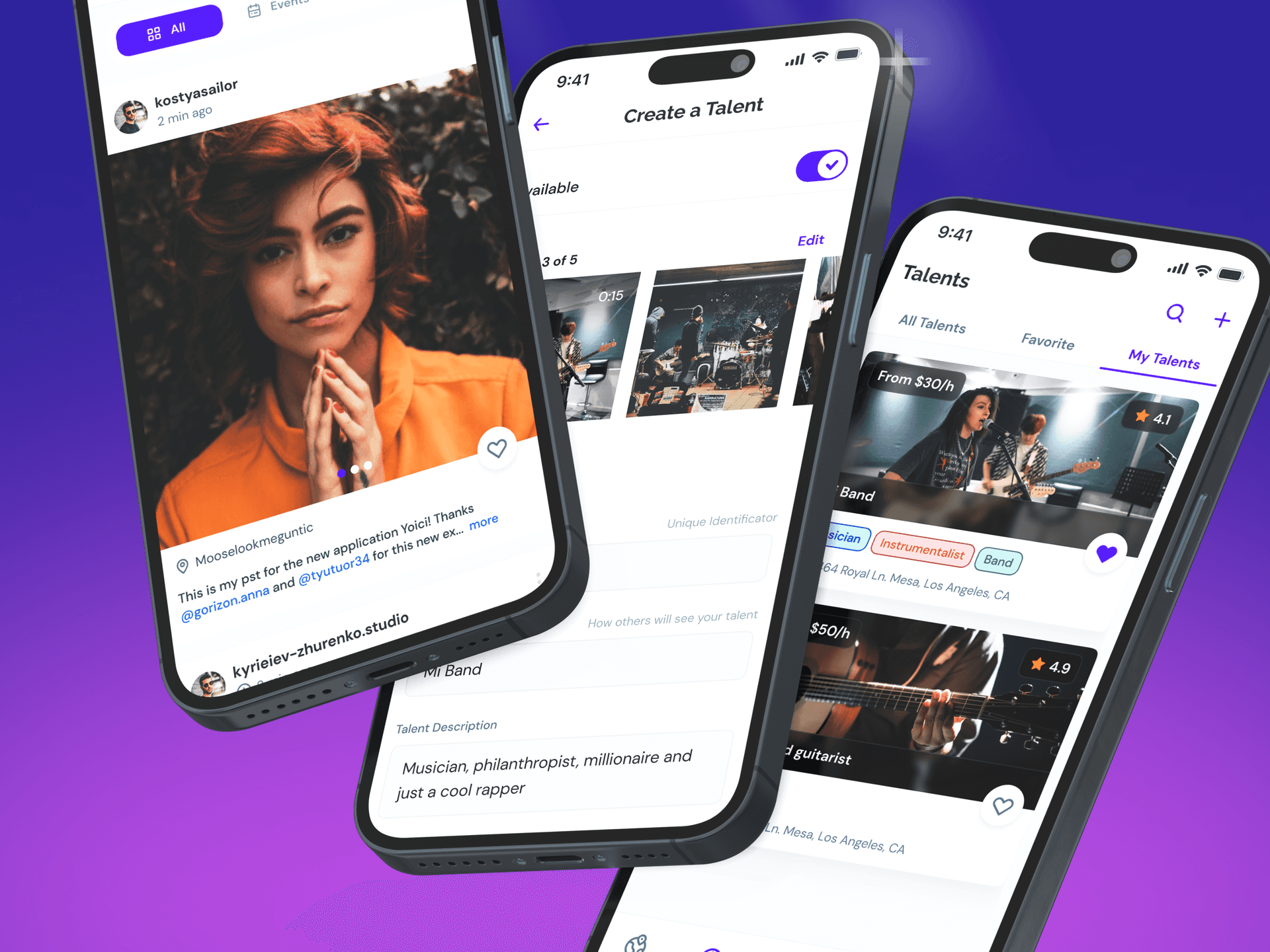


About the Project
Our client is a Los Angeles-based startup founded by a live-music enthusiast. The idea for the event management app development arose from a simple yet revealing observation: in California, there are practically no convenient mobile apps that let you quickly see nearby events, join them, or buy tickets without unnecessary steps or fees.
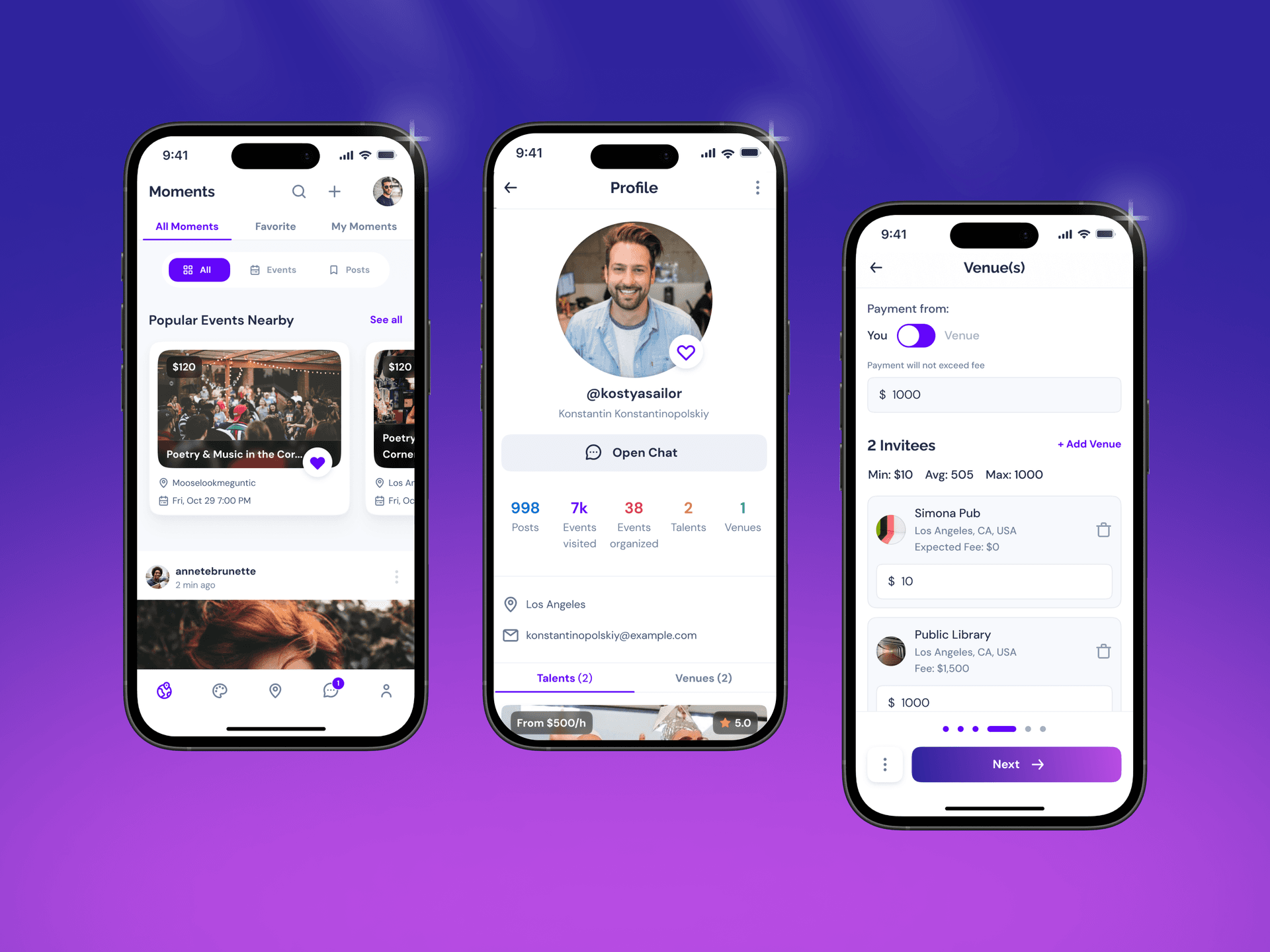
At its core, the event management platform is focused on local communities. Users can open a map to find nearby music, cultural, and social events, create their own events, invite other participants, and sell tickets online directly, without overpayments or complex integrations.
The project was also developed with a focus on local experiences: small concerts, chamber events, and community events that are often overlooked by extensive ticketing services. At the same time, the vision of the event ticketing app laid the potential for scaling across the United States, with the ability to adapt to different cities and event formats.
Interesting Facts
In the US, over 60% of local events are not represented on major platforms. Small concerts, community events, and pop-ups are often promoted only through social media or offline – this is the niche that our client’s local events app is designed to fill.
Los Angeles is one of the most fragmented event markets in the country: hundreds of venues, independent organizers, and weekly events, with no single aggregation center. This makes geo-based discovery not a “nice-to-have” but a key product feature.
Spontaneous decisions dominate the urban lifestyle in California: users often search for events “for today” or “just now” rather than planning them. Therefore, the speed at which an event is discovered and a ticket is purchased directly affects conversion.
Event organizers in the US are increasingly becoming users themselves. The same user can buy a ticket today and create their own event tomorrow – that’s why the client’s event booking app was designed from the very beginning as a two-way solution.
Event-tech startups in the U.S. often fail not because of the idea, but because of product complexity. With our client, we intentionally avoided feature overload in favor of simplicity and speed of interaction.
Client Request
The client wanted to partner with a team that knows how to build an event management app, creating a simple, visually appealing solution that would bring together local music, cultural, and social events in one place. In the event market, information is usually scattered across social networks, venue websites, and ticketing services, making it difficult for users to quickly understand what is happening nearby and where to go right now.
The goal was to give users a single point of entry: open a map, see nearby events in real time, and purchase a ticket in a few clicks, without unnecessary transitions between platforms. Particular emphasis was placed on the convenience, speed, and local relevance of the content, as users increasingly seek spontaneous cultural activities nearby rather than pre-planned events.
An additional challenge was to combine content, navigation, and the event app with payments into a single intuitive flow, so the application remains easy to use and does not overload users with functionality.
Thus, the ticket booking mobile app needed to:
allow venues and talents to create detailed public profiles;
offer an intuitive search to match talents with suitable venues and vice versa;
provide chat functionality to streamline communication;
enable users to promote upcoming events to their audiences;
include booking management tools to track and confirm arrangements;
and support a community-driven model with messaging, reviews, and profile stats.
Our Approach
We worked as a compact, cross-functional team: two React Native developers, a designer, and a QA, which allowed us to make quick decisions and maintain flexibility at all stages of the event app MVP development. This format was ideal for a startup project, where speed, constant iterations, and close interaction with the founder are essential.
The process was built according to a startup approach – without rigid frameworks, but with a clear focus on the result. We did not just fulfill the set tasks; we proactively offered solutions: quickly prototyped ideas, discussed them with the client, tested hypotheses, and adapted the product based on feedback.
Special emphasis was placed on design and user experience, as well as on mobile app development for startups. It was critical to the client that the application looked bright, lively, and conveyed the atmosphere of live events – the energy of concerts, the spontaneity of events, and the local vibe. All decisions were made with a focus on the end user, so that interaction with the product was intuitive, emotional, and easy from the first touch.
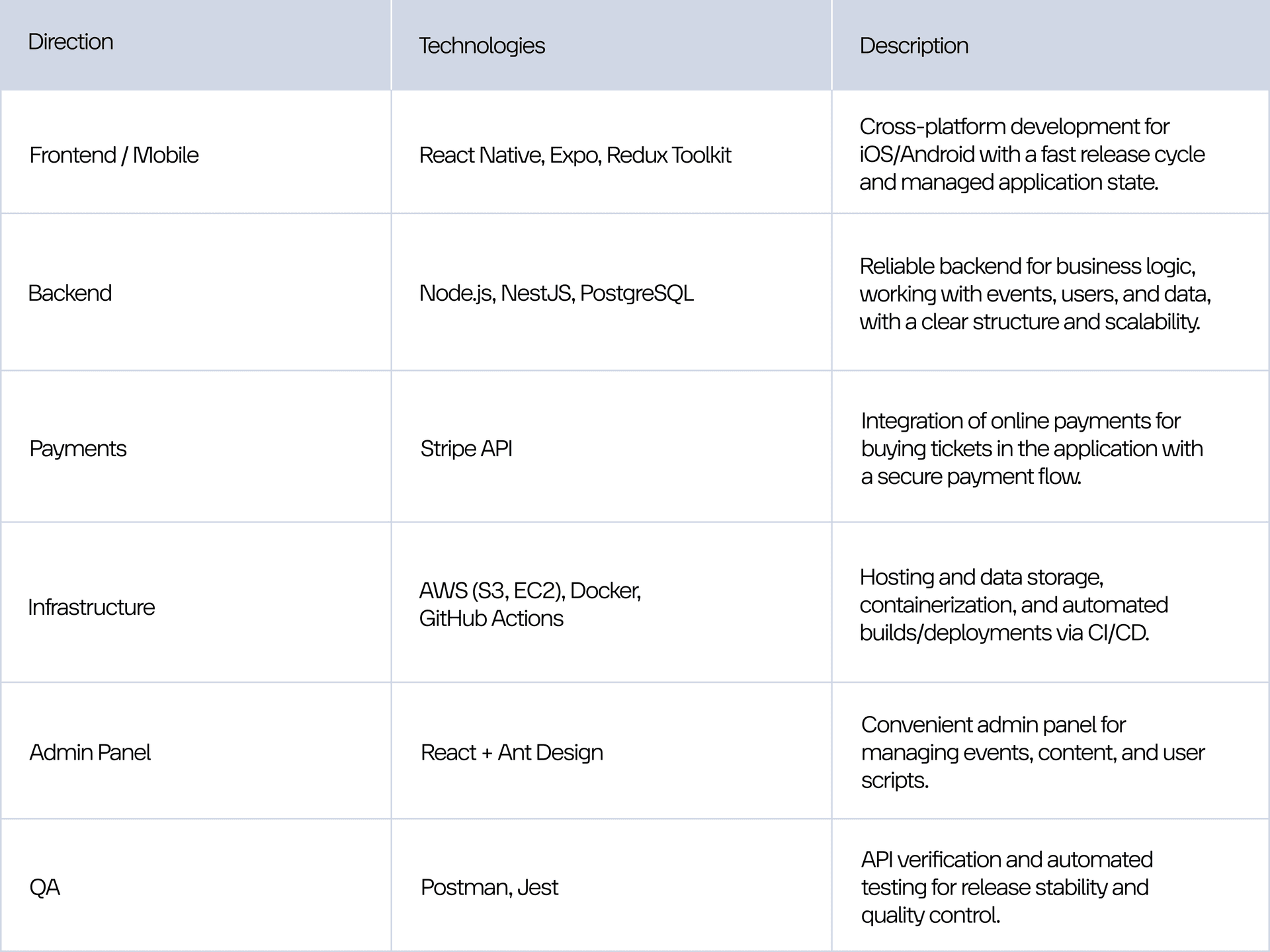
Technology Stack
For this project, we chose a stack well-suited to a startup: it allows you to launch an MVP quickly, flexibly develop functionality, and scale the product painlessly in the future. The technologies cover the full cycle – from the mobile application and admin to payments, infrastructure, and testing.
Challenges
The project required assembling a full-fledged turnkey product – from the basic architecture to convenient user scenarios, while maintaining a bright style and stable operation of the application. Here are some of the challenges we had to overcome.
Build an application from scratch: implement a full cycle of a location-based event app with a map, nearby search, and the ability to pay for tickets online.
Design UX for different scenarios: make the flow equally clear for a user who buys a ticket, an organizer who creates an event, and a participant who joins the event.
Coordinate business rules across the process: during the music and concert event app development, the logic for commissions, sales/return rules, and user roles was refined to ensure the product worked correctly in real conditions.
Balance design and performance: maintain a lively, bright visual style without sacrificing the speed, smoothness, and stability of the interface across different devices.
Core Features
We have put together a set of key features that closes the full cycle of interaction with events – from nearby search to ticket purchase, participation, and event management by organizers and admins.
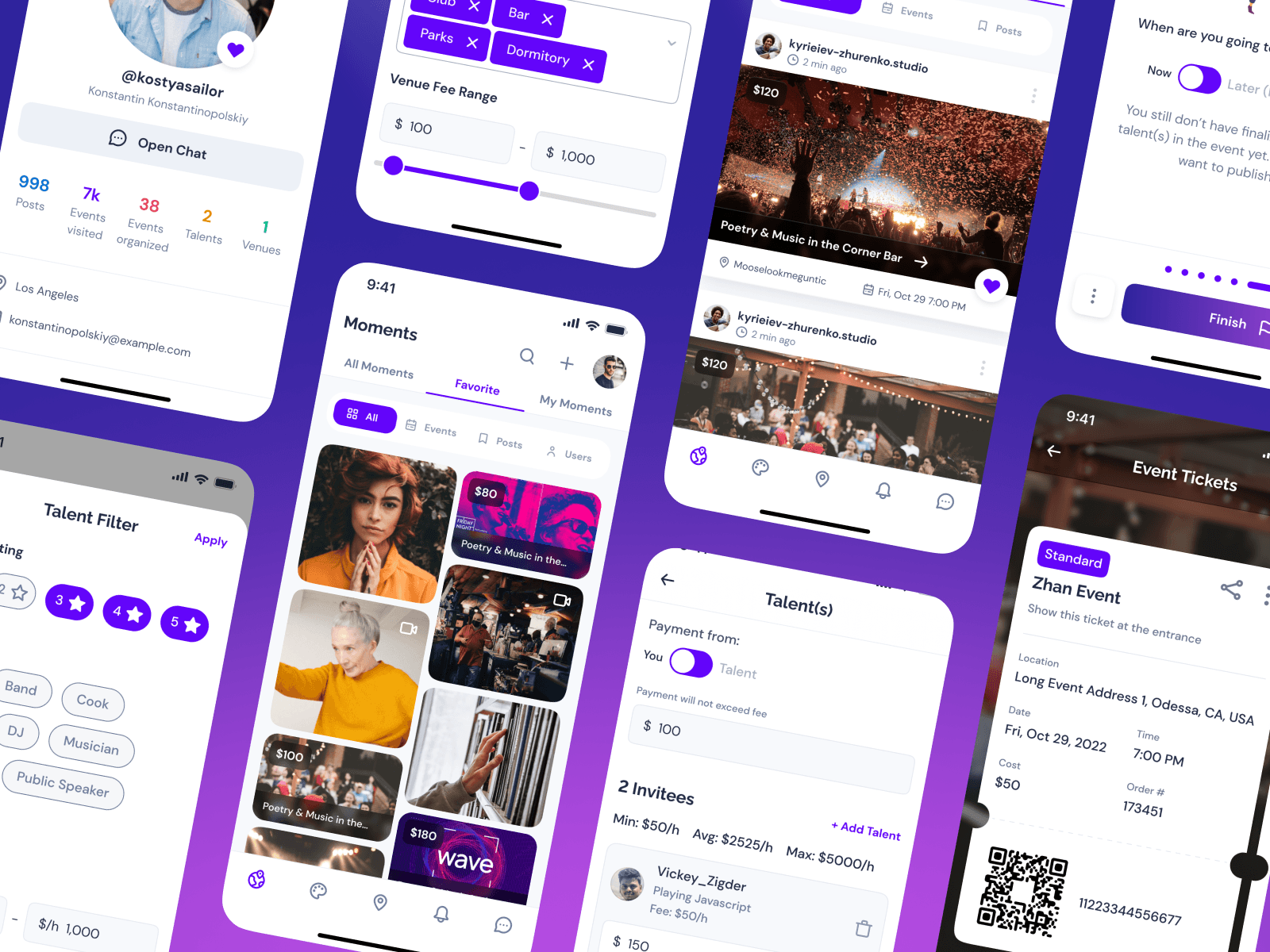
Viewing events nearby by geolocation: in the community-driven event app, users see current events on the map and can quickly select events happening nearby.
Creating your own events: organizers can add events with descriptions, locations, times, and other details.
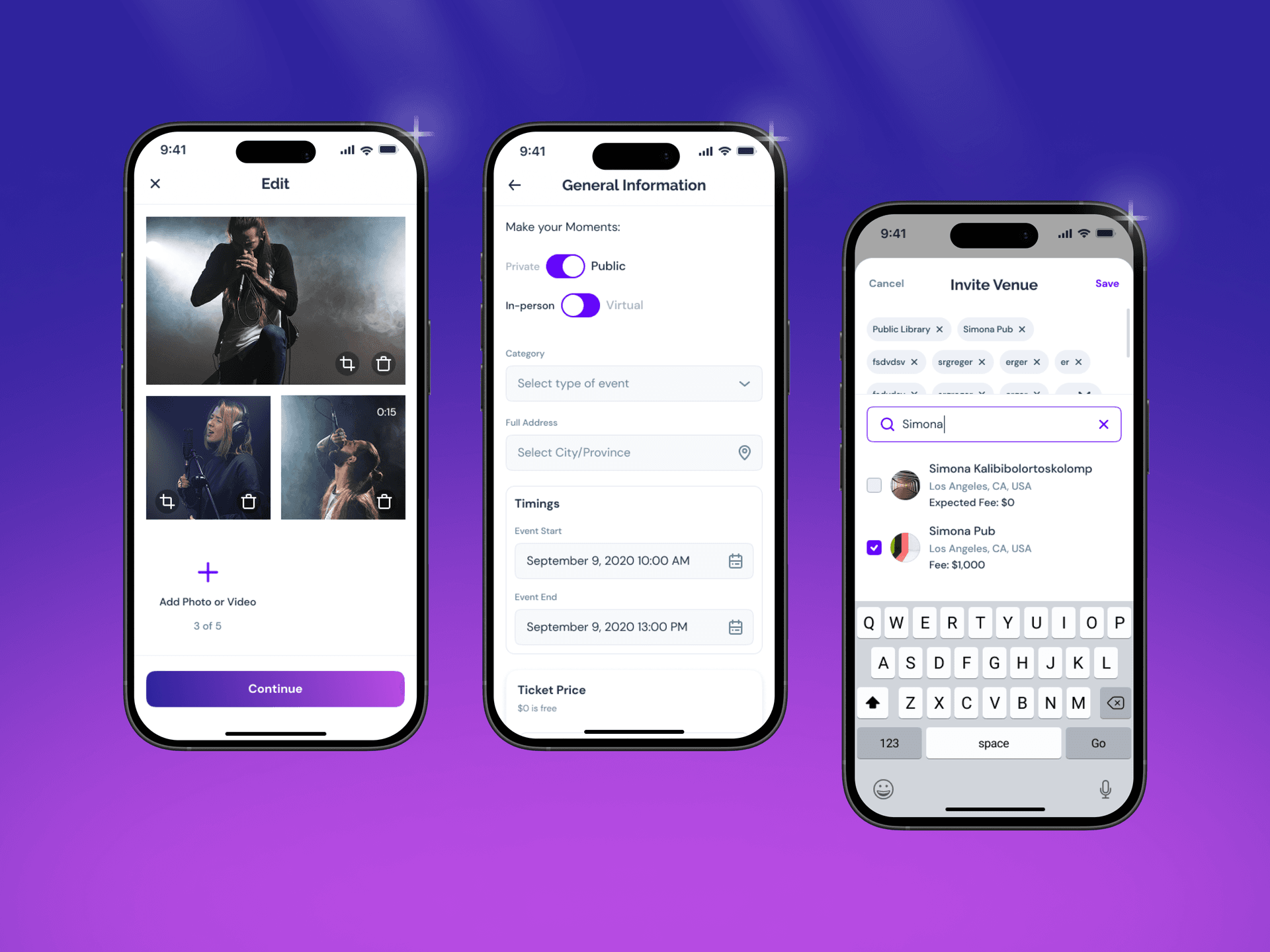
Online ticket purchase (Stripe): payment is made directly in the application via Stripe integration.
Admin panel for managing events and users: a convenient interface for content moderation, event, and role management.
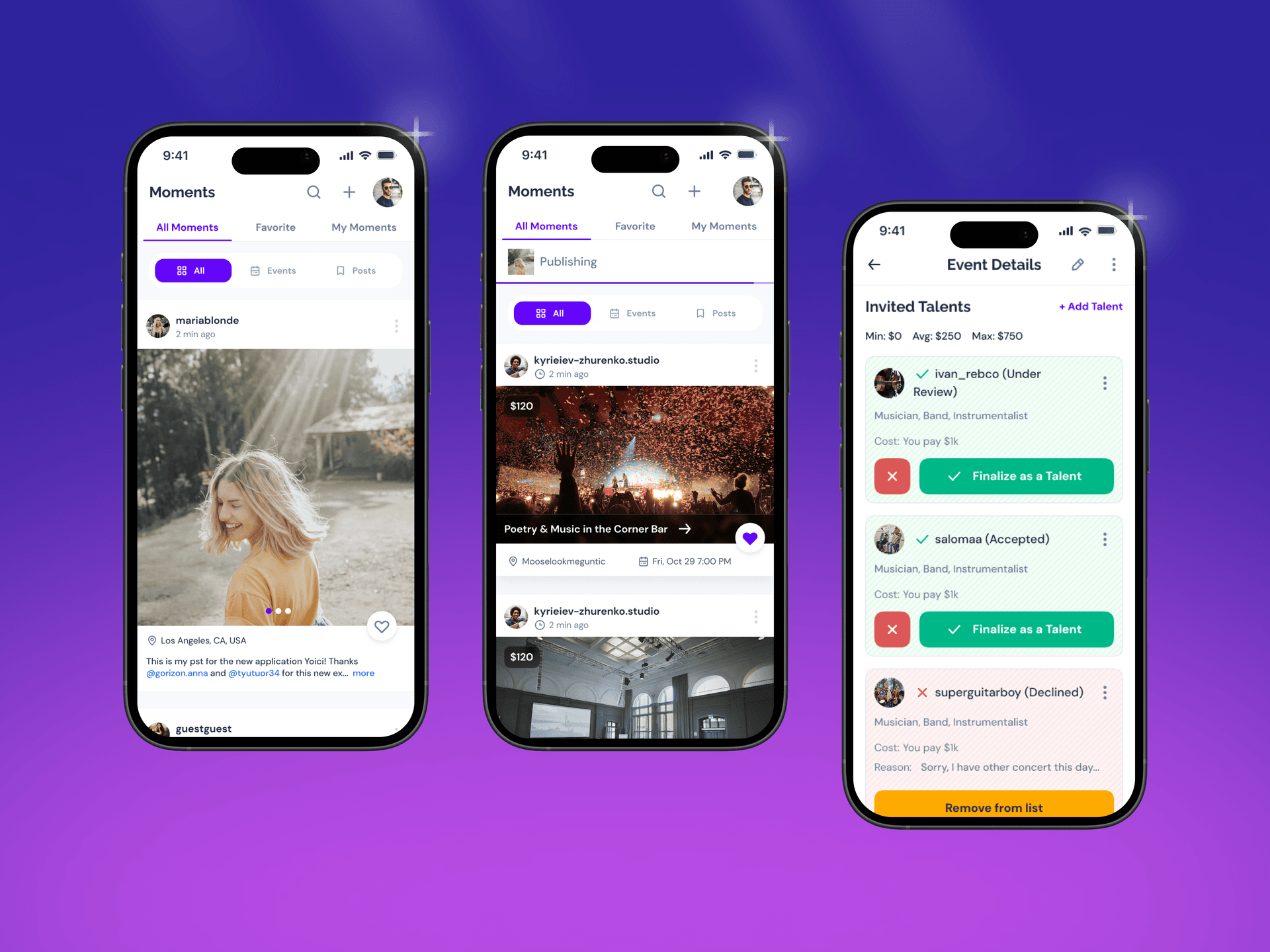
Push notifications and status updates: users receive important updates about events, changes, or confirmations.
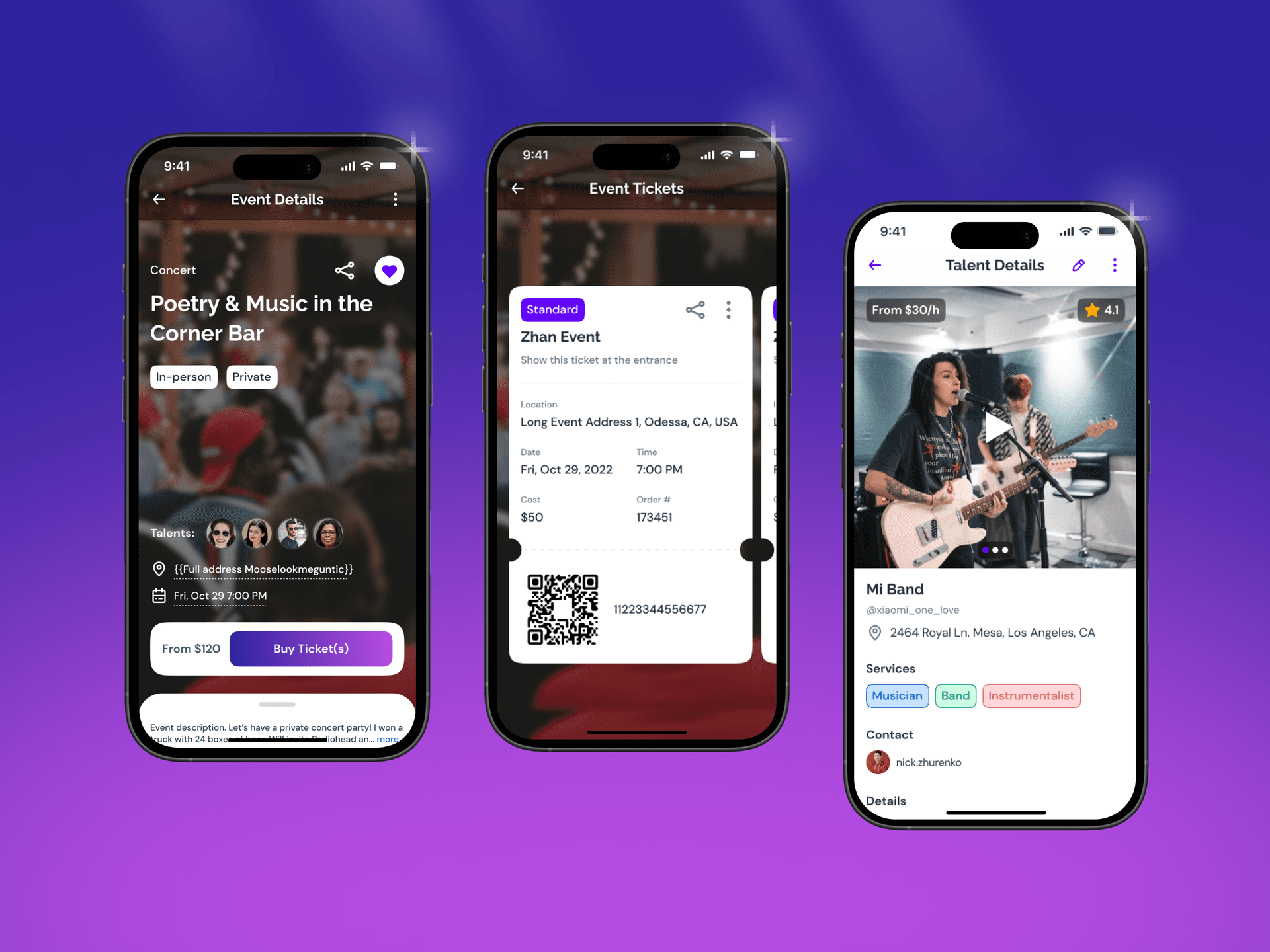
Modern, visually rich interface: a bright design that conveys the atmosphere of live events and makes interaction with the product emotional and easy.
Summary
In 9 months, we implemented a full-fledged event application that combined a bright, emotional design with technological stability and readiness for real use. We closed the project on a turnkey basis: we developed a mobile application in React Native, performed UI/UX design, implemented the backend and integrations, conducted QA and manual testing, and created an admin panel for managing events and users.
The product was integrated with the payment system and internal ticketing logic, enabling simple transactions with minimal commissions and a precise user flow. In parallel, we provided product support and consulting, helping the client make decisions quickly and confidently.
Most importantly, the platform helped the client confirm the hypothesis with real users and reach a live audience. This is no longer just an idea or a prototype, but a working product that has the potential to scale from local communities in California to the broader US market.
At Lumitech, we bring products like this to life—combining technical expertise with a deep understanding of user needs. Have an idea you want to build? Let's talk.


