





About Project
Our client is an Amsterdam-based company that works in the defense and national security sector, focusing on safeguarding strategic infrastructure and high-risk environments. They have been operating in the market since 2011 and have over 100 experts who have already delivered a solid patent portfolio of reliable, ultra-sensitive solutions for early warning systems.
The client’s solutions are supplied worldwide across energy, transportation, defense, and R&D, outperforming classic electrical technologies in extreme environments such as strong fields, radiation, high/low temperatures, and liquids. The company’s mission is to equip integrators with flawless sensing systems and accurate data for early fault detection and industry transformation through fiber-optic innovation.
At some point, they needed a solution that could monitor long perimeters, such as borders, pipelines, airfields, and military zones, in real time. Traditional surveillance tools often fall short in remote or high-noise environments. The goal was to implement a fiber optic-based sensing platform capable of detecting minute vibrations, footsteps, or tampering attempts, instantly and accurately. That’s when the client and Lumitech first crossed paths.
“Every second matters. The system had to detect the smallest threat signals over vast distances — without delay or false alarms.”
Interesting Facts
The company’s focus is on serving the government and energy sector. So, their solutions are built with a strong emphasis on security and data protection. However, that doesn’t make the product dry. The robust compliance layer hides many smart, technologically innovative engineering solutions and functionality.
First of all, note that the company’s tech stack combines two advanced fiber-optic methods on a single foundation: high-precision interferometry paired with the latest Fiber Bragg Grating (FBG) sensing.
A single fiber line can protect tens of kilometers of perimeter, like a smart, invisible fence around an entire territory.
The system detects movement, digging, pressure shifts, and other disturbances with sub-meter precision, so you know exactly where something is happening.
Runs 24/7 no matter what: dust, rain, heat, even intense electromagnetic noise don’t throw it off.
Sends alerts instantly through a secure dashboard and API, helping teams react before a situation ramps up.
Trusted for high-stakes facilities, from military bases and nuclear plants to data centers and government sites.
Client Request
The client aimed to build a software platform to complement its fiber-optic sensing hardware. They wanted a system that would:
visualize live data from fiber optic lines;
detect, categorize, and prioritize threats in real time;
minimize false positives through intelligent signal analysis;
integrate with third-party security systems and command centers;
be highly secure, offline-ready, and deployable in isolated zones.
The final product had to deliver actionable intelligence, not just raw data, because security teams needed to respond quickly to any changes in sensor behavior. And the Lumitech team knew how to make it real, drawing on all its expertise.
Our Approach
Our cooperation with the client began with the Design phase, which lasted approximately 2 months. The initial focus was on business analytics, rather than software development.
During this phase, our team, consisting of four experts, conducted numerous user interviews. We communicated closely with more than 20 members of the client’s team, including hardware engineers, data scientists, and field security experts, to gain a clear picture of the real business needs before starting development.
Thus, we received a solid foundation, with numerous examples and mockups provided by the client, which enabled us to keep pace with them and fully understand their business vision.
The Lumitech team had to balance software and hardware development to reach the required results. We were given access to sensors and other assets so we could view and use the existing code via their SDK, enabling us to build a solution that was aligned with what they already had.
Here’s the detailed overview of what we did and how we collaborated with the client:
Signal Processing Pipeline
We built a robust pipeline to interpret raw fiber-optic vibration streams in real time. Using custom filtering and signal-analysis algorithms, the system separates meaningful intrusion signatures (footsteps, climbing, digging) from environmental noise like wind, rain, or nearby machinery.
Event Detection & Prioritization
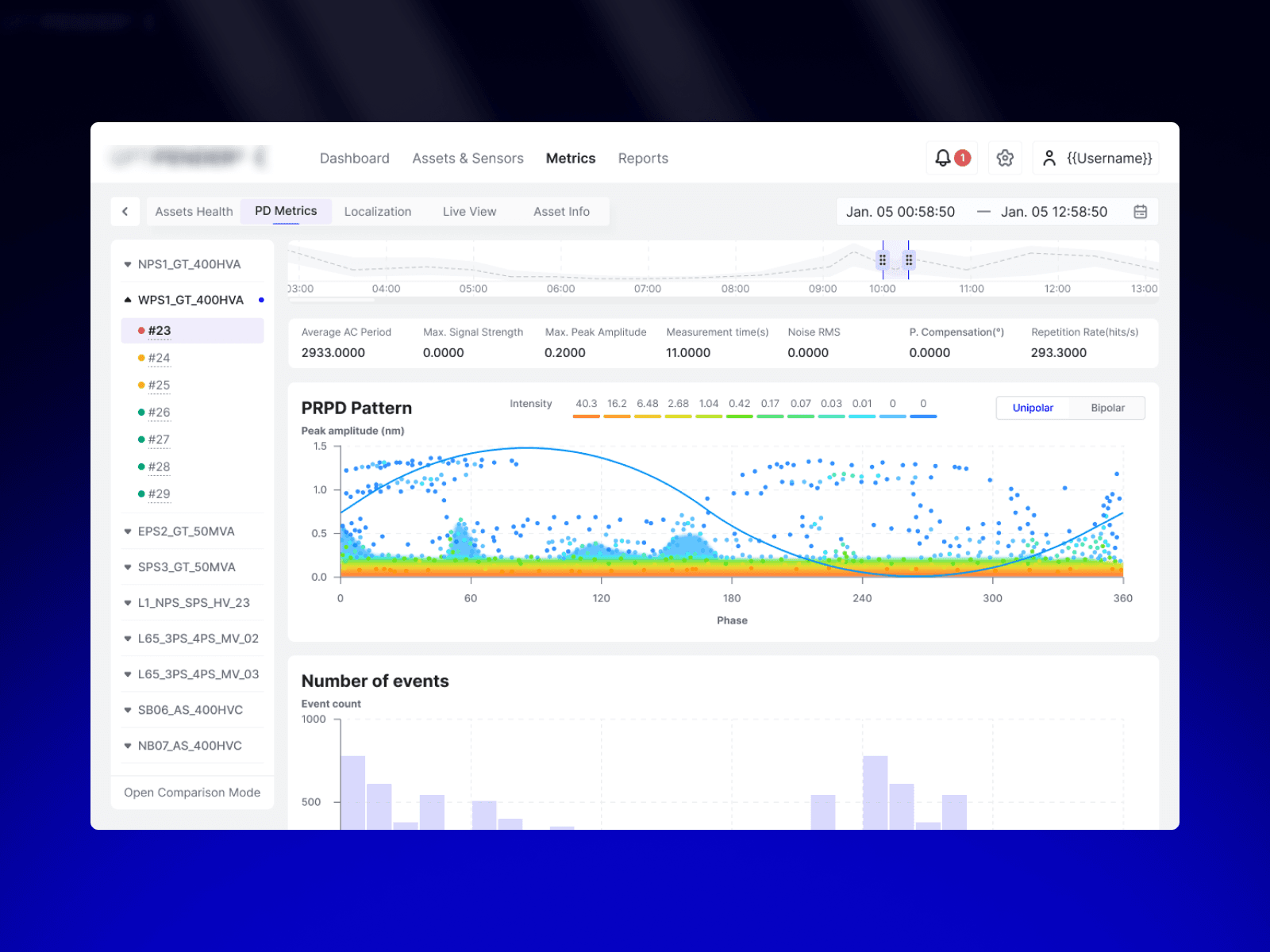
We developed a detection and classification engine that automatically identifies events and assigns threat levels. It evaluates vibration patterns by frequency, amplitude, duration, and geospatial context, so operators see only relevant incidents with the right priority.
Command Interface & Alerting
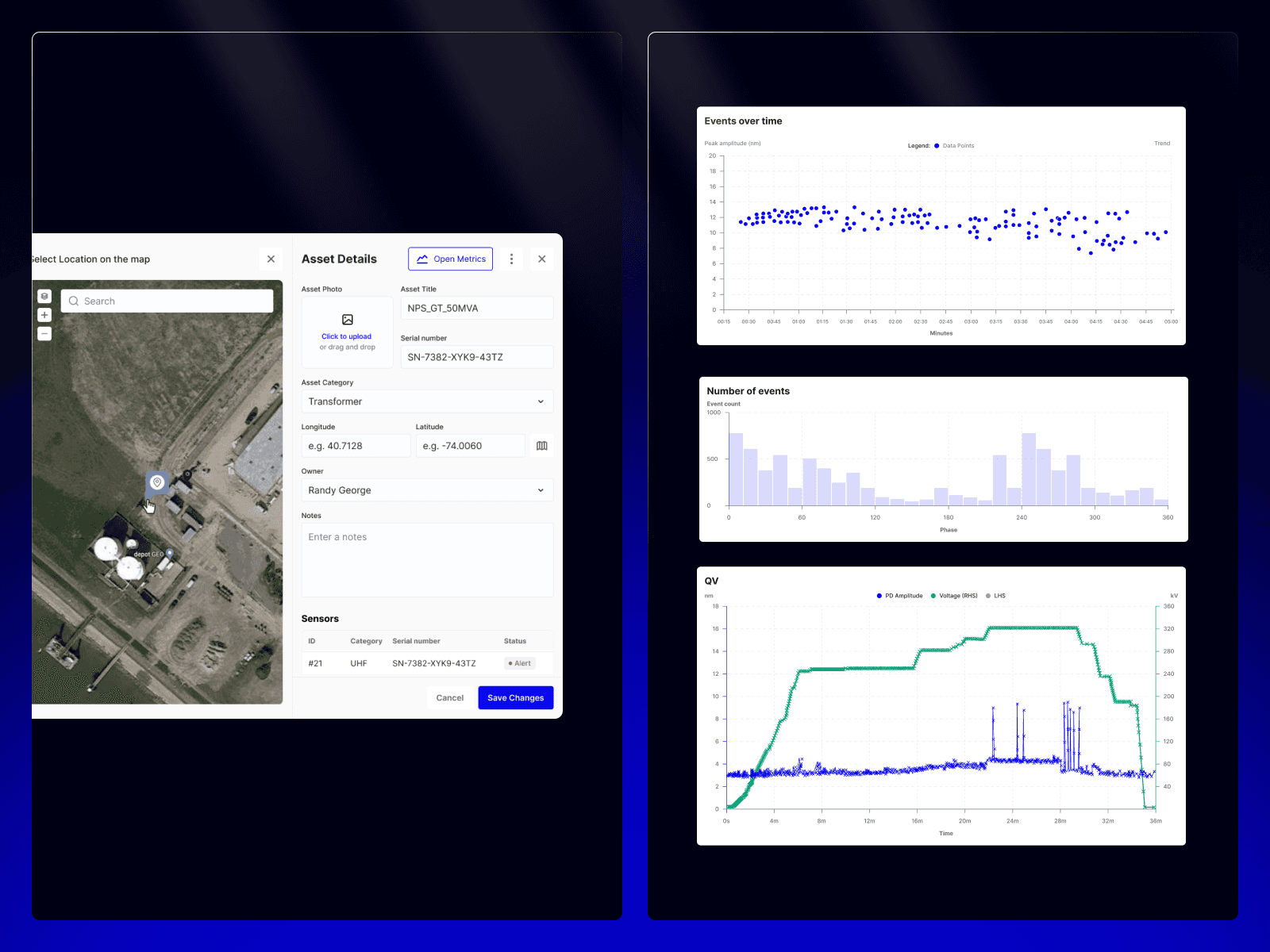
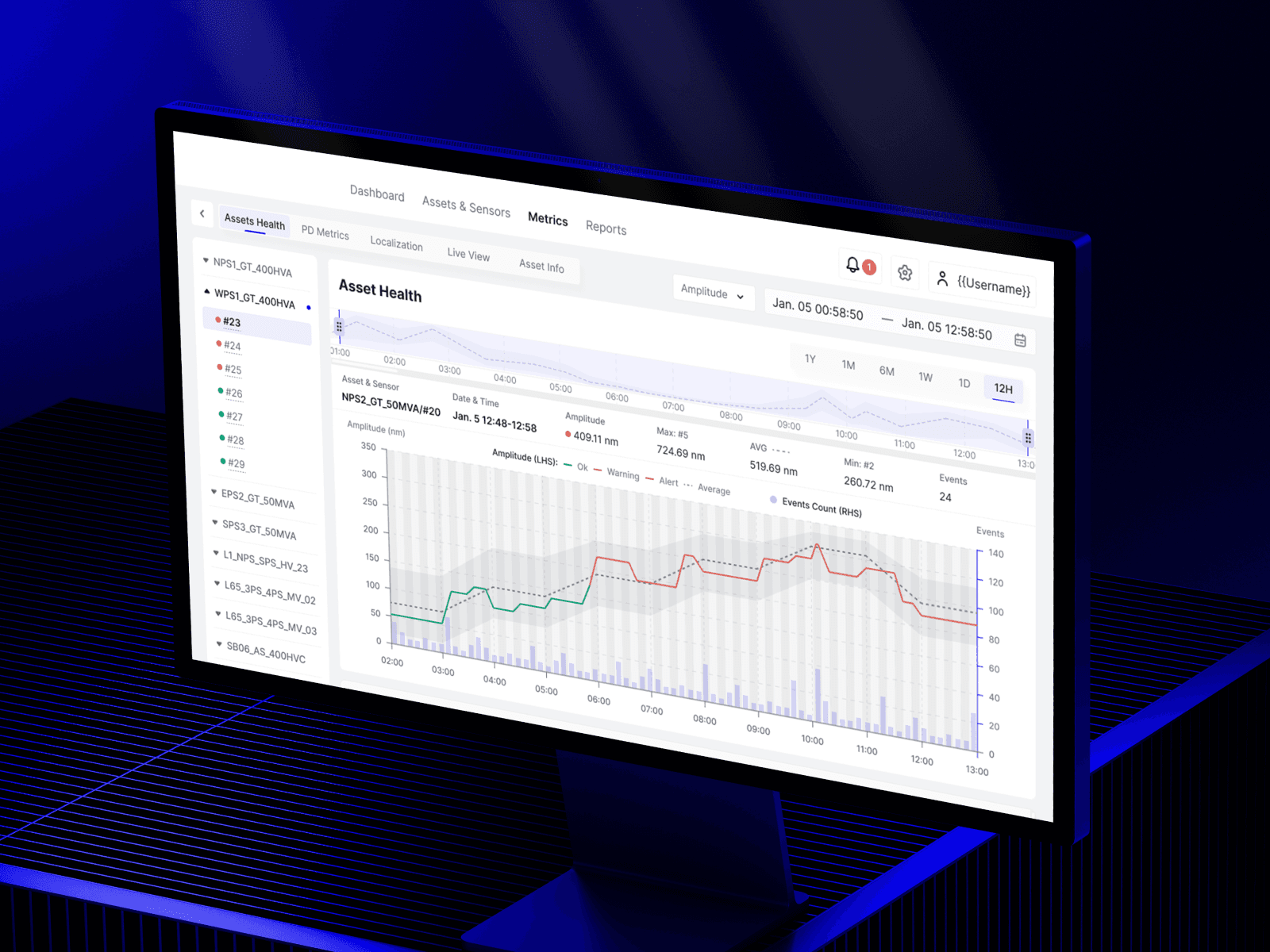
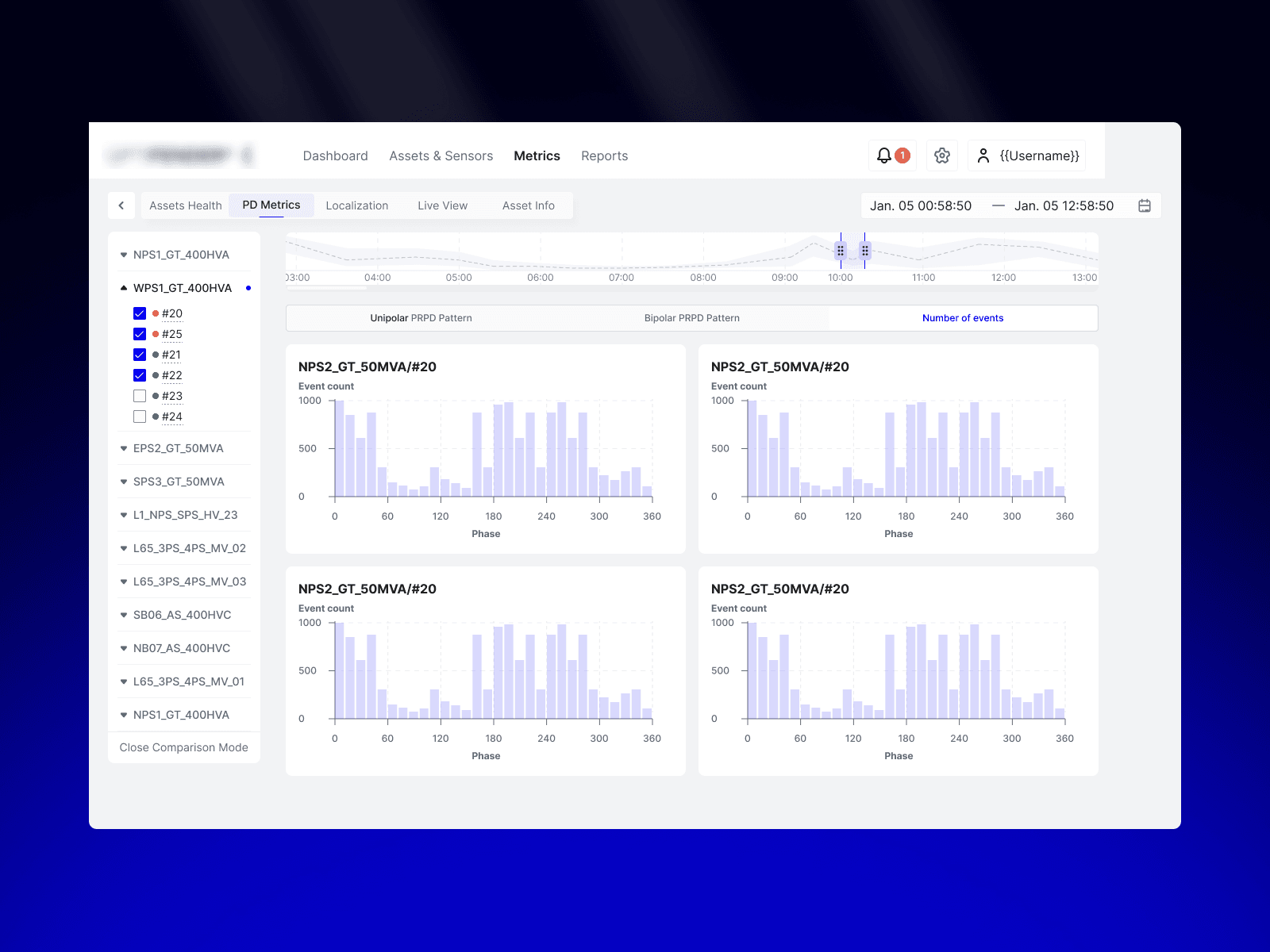
On the frontend, we delivered a secure command dashboard with a live, map-based view of the perimeter. Operators get instant alerts with exact coordinates, event type, severity, and the ability to review historical activity and replay incident timelines.
Security & Resilience
Because deployments may run in sensitive, disconnected environments, we designed the system to operate on air-gapped servers with optional cloud extensions. Offline-first operation, delayed sync, role-based access, and audit logging ensure resilience and compliance without sacrificing speed.
Tools & Technologies
For this solution, we have assembled a stack that simultaneously provides accurate signal processing, real-time visualization, and reliable deployment in remote environments. Below are the key technologies on which the system is built.
Python for signal processing and machine learning models.
React + WebSocket for real-time visualization and alerts.
PostgreSQL + PostGIS for Geospatial data storage and querying.
Docker + Ansible for secure deployments on isolated environments.
OpenCV + NumPy for analyzing and classifying vibration signatures.
Challenges
Working on this project, we faced challenges typical of high-precision security systems in the real world. Below are the key technical tasks that had to be solved to ensure the product worked stably, quickly, and without false alarms even in the most challenging conditions.
High Sensitivity, Low Noise
The system had to capture very weak, high-frequency signals while not turning the operators’ work into a fight against false alarms. We analyzed in detail the typical patterns of useful events and background noise for different environments (wind, rain, traffic, and nearby machinery). Then we adjusted multi-level filters and sensitivity thresholds for real conditions. We also trained custom anomaly recognition models that account for context and behavioral signatures, not just signal peaks. As a result, the system became both highly sensitive to real intrusions and significantly quieter, thanks to a sharp reduction in false positives.
Remote & Harsh Environments
Some installations operated in remote areas with unstable or no connectivity, where an error or delay could cost the facility’s safety. We designed the solution to work autonomously on edge devices: locally process signals, identify incidents, and raise alarms without relying on the cloud. For cases with intermittent internet, we added a delayed synchronization mechanism: events are reliably buffered, and after connectivity is restored, they are seamlessly uploaded to the central system. This ensured a stable 24/7 operation even in harsh field conditions.
Real-Time Performance
Signals came in a continuous stream and had to be processed “on the fly”, without delays or skips. We rebuilt the data processing pipeline so that events were validated, aggregated, and prioritized immediately, and the operator saw only relevant triggers. We optimized the backend for high loads: we reduced the processing time of critical paths, configured queues and caching, and also distributed heavy calculations to asynchronous workers. As a result, the system consistently displayed events within 1 second, even during peak times when traffic increased sharply.
Core Features
We designed the key features around three priorities: accuracy, fast response, and operator convenience in real-world conditions. Below is the core functionality that makes the system reliable for critical facilities and the daily work of security teams.
Sub-Meter Detection
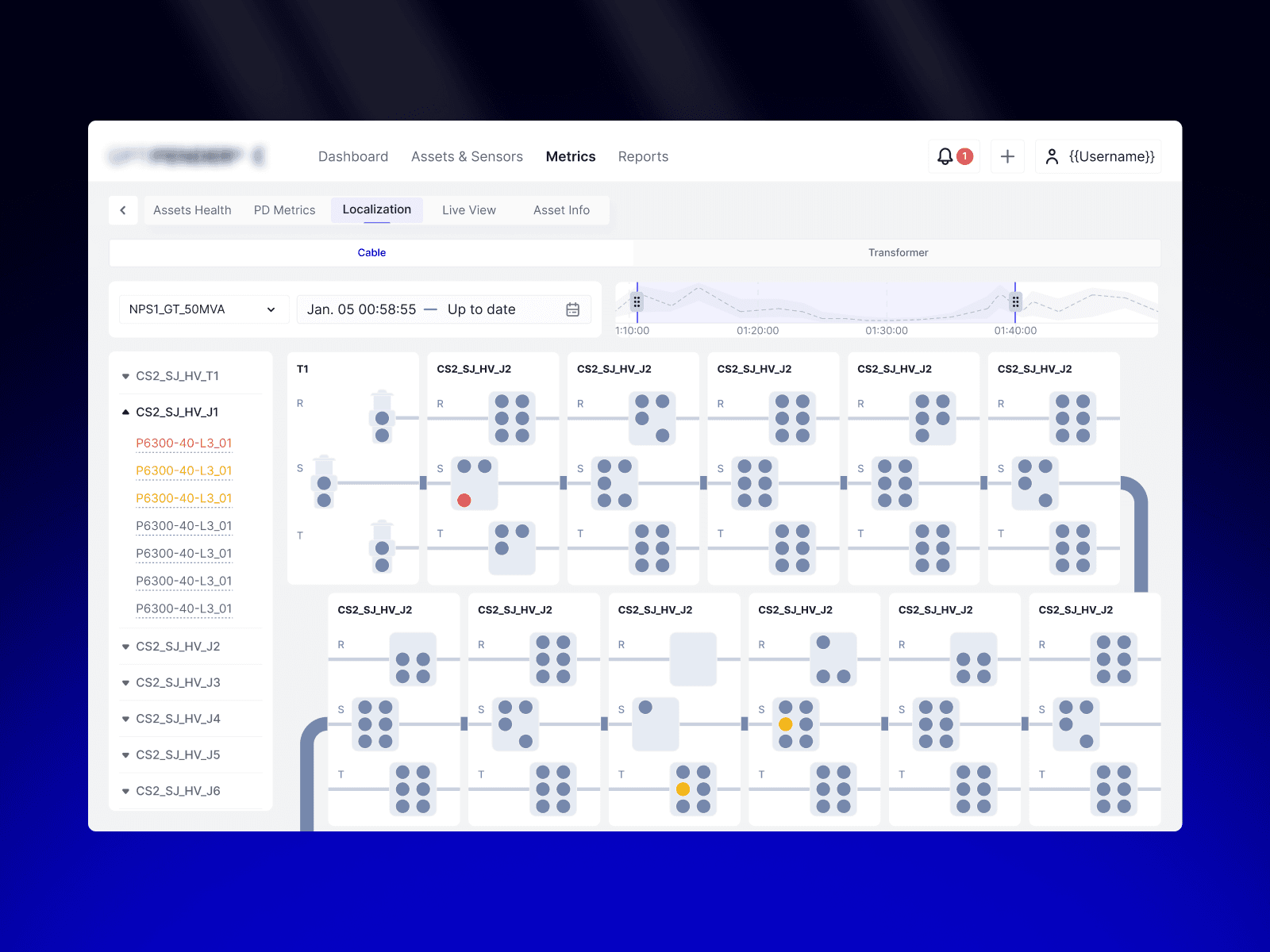
Operators can see precisely where a disturbance occurs, with precision down to less than a meter over dozens of kilometers.
Threat Categorization
From footsteps to digging or climbing, the system intelligently classifies events based on vibration patterns.
Secure Command Dashboard
Real-time alerts, historical playback, and zone configuration tools: all built with military-grade security standards.
Third-Party Integration
Custom APIs enable the system to connect with surveillance cameras, access control systems, and emergency response tools.
Summary
Working with this client, we would like to emphasize smooth communication and a clear understanding of the final goal: we managed to find a balance and deliver high-quality solutions, both business and technical.
This project brought together advanced fiber optic sensing with high-speed analytics to create a real-time perimeter protection platform. Designed for defense, critical infrastructure, and high-security environments, the system empowers operators to respond faster, smarter, and more confidently.
At Lumitech, we specialize in turning next-gen sensing technologies into user-friendly, mission-critical platforms. If you're building something that needs to detect, process, and act fast, we’re here to help. We have a team of experts with years of experience and a proven track record of serving the government and public sectors.


