



About the Project
The platform is a niche educational LMS for high-level engineers, created by practitioners for practitioners. The project was born of a real need for large-scale corporate training and for AWS certification preparation.
The corporate IT training platform was built on the vision of an engineer with over 20 years of experience, who rose from developer to VP of Engineering at a large American corporation with about 7,000 employees. Working as an AWS Solution Architect, a specialist in Java and large-scale systems architecture, she managed departments of up to 200 engineers.
The platform content is based on the real experience of the client and her colleagues: architects and tech leads from large IT companies. It helps engineers in AWS, GCP, and Azure certification preparation, and other certifications through practical case studies, real-world project scenarios, and a structured learning approach.
The internal training platform for engineers is not aimed at the mass market. It is a tool for experienced engineers who value depth, consistency, and compliance with corporate standards.
Interesting Facts
The organizational learning system for tech departments was developed in a pure MVP format: a small team, a clearly defined scope, and a focus on key features that deliver value to users from the first version. This helped launch the product fast and efficiently.
We established a strong connection between the client and the team: as a technical stakeholder, the client understood development processes, valued quality, and supported transparent cooperation, which significantly accelerated decision-making.
Asynchronous communication was a real efficiency booster: fewer unnecessary meetings, more structured updates, fixed agreements, and a stable pace of work regardless of time zones.
We worked within the logic of UX-oriented development: we tested hypotheses, collected feedback, and iteratively improved the flow and structure to make the enterprise learning solution for engineers convenient for the tech audience.
This is an excellent example of how a niche product can be highly successful when built around a specific pain point and the real-world needs of engineers.
Client Request
The client’s request was to create a unified learning environment that would address key problems in corporate IT training and help engineers prepare for certifications, including Azure certification training and AWS training courses for engineers.
The main challenge was scaling training for a large number of engineers. Certification preparation required a systematic approach that was difficult to achieve, given fragmented internal training materials. External educational platforms didn’t always align with corporate standards or real business needs, with training content scattered across tools, including Confluence, Google Drive, and Slack. As a result, the client had to overcome challenges such as using unreliable third-party courses and decentralized corporate training, and suffered from a lack of structured training paths for engineers.
So, Lumitech’s task was to create a convenient, structured company-wide certification training space where engineers can:
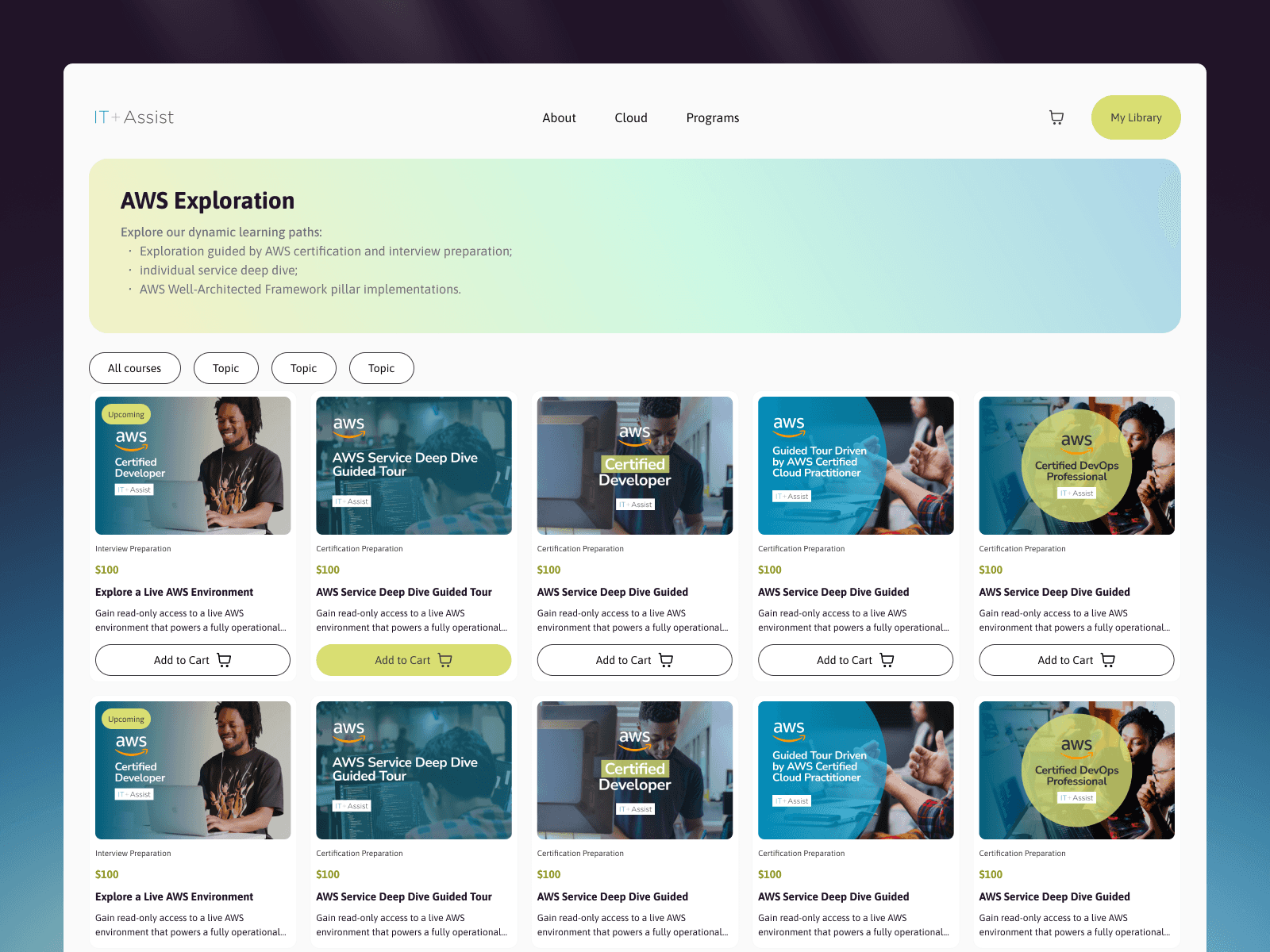
take courses divided into logical modules and chapters;
watch video lectures;
study practical cases;
take mini-tests after each chapter;
prepare for certification exams in scenarios that are as close to real ones as possible.
The key requirements were to provide expert-driven training content, ensure flexibility in managing training programs, and scale the platform for internal teams and the professional community.
Our Approach
We worked as a small but highly coordinated team, where each role had clear ownership and fast alignment. The team included a front-end developer, a team lead, a designer, and the client acting as CTO and technical mentor. She stayed involved in key stages, joining code reviews, suggesting architectural solutions, and shaping course logic to align with real-world engineering training scenarios.
Our Team Setup:
Role | Contribution |
|---|---|
Front-end developer | Implemented core features and UI flows |
Team lead | Ensured technical direction, consistency, and delivery quality |
Designer | Worked on UX flows, iterations, and content structure |
Client (CTO & Technical Mentor) | Code reviews, architecture input, and course logic alignment |
To keep the process efficient across time zones and busy schedules, we designed it to be as asynchronous as possible. We minimized the number of calls and instead relied on transparent daily chat updates. Loom recordings replaced most meetings, while every decision was made after a short research cycle and backed by data. This eliminated unnecessary communication and kept the focus on product quality.
We started with an MVP to quickly validate the hypothesis around internal training, collect feedback from the company’s engineers, and identify which courses were truly in demand. In parallel, we tracked user behavior – how they navigated the content, completed tests, and returned to the platform – to determine what to improve first.
Beyond delivery, we acted as a product team, proactively suggesting improvements, simplifying the interface, optimizing course navigation, and helping to create scalable training for large engineering teams.
This approach was especially valuable for the client because her time is limited: we maintained an efficient, predictable workflow without constant meetings, while keeping complete quality control.
Technology Stack
Although the client has deep expertise in Java and backend systems, Lumitech handled the entire frontend development and design direction, ensuring a holistic user experience and high-quality interface implementation.
The frontend was based on a JavaScript stack. This provided flexibility in development, rapid MVP iteration, and convenient scaling of functionality in the future. The product architecture was also designed with an eye toward scalability: it was important that the platform could be easily expanded with new modules and be ready for integrations.
A separate focus is the future mobile version with structured training for tech teams. That is why we immediately laid out an approach that would allow us to painlessly adapt the product to a mobile application and ensure consistency of logic and UI between web and mobile.
Challenges
Despite the small team and clear MVP focus, the project had its challenges, mainly related to the specifics of the audience, high quality requirements, and the need to test the product hypothesis in a real environment quickly.
High quality standards due to the technical background of the client
The client, as CTO and mentor, was deeply immersed in the solution development, so it was essential to keep the implementation level, architectural logic, and code cleanliness at the relevant senior level.
A niche product for experienced engineers
The interface and content needed to be as practical and straight to the point as possible. Otherwise, the audience would quickly lose interest.
UX for complex content
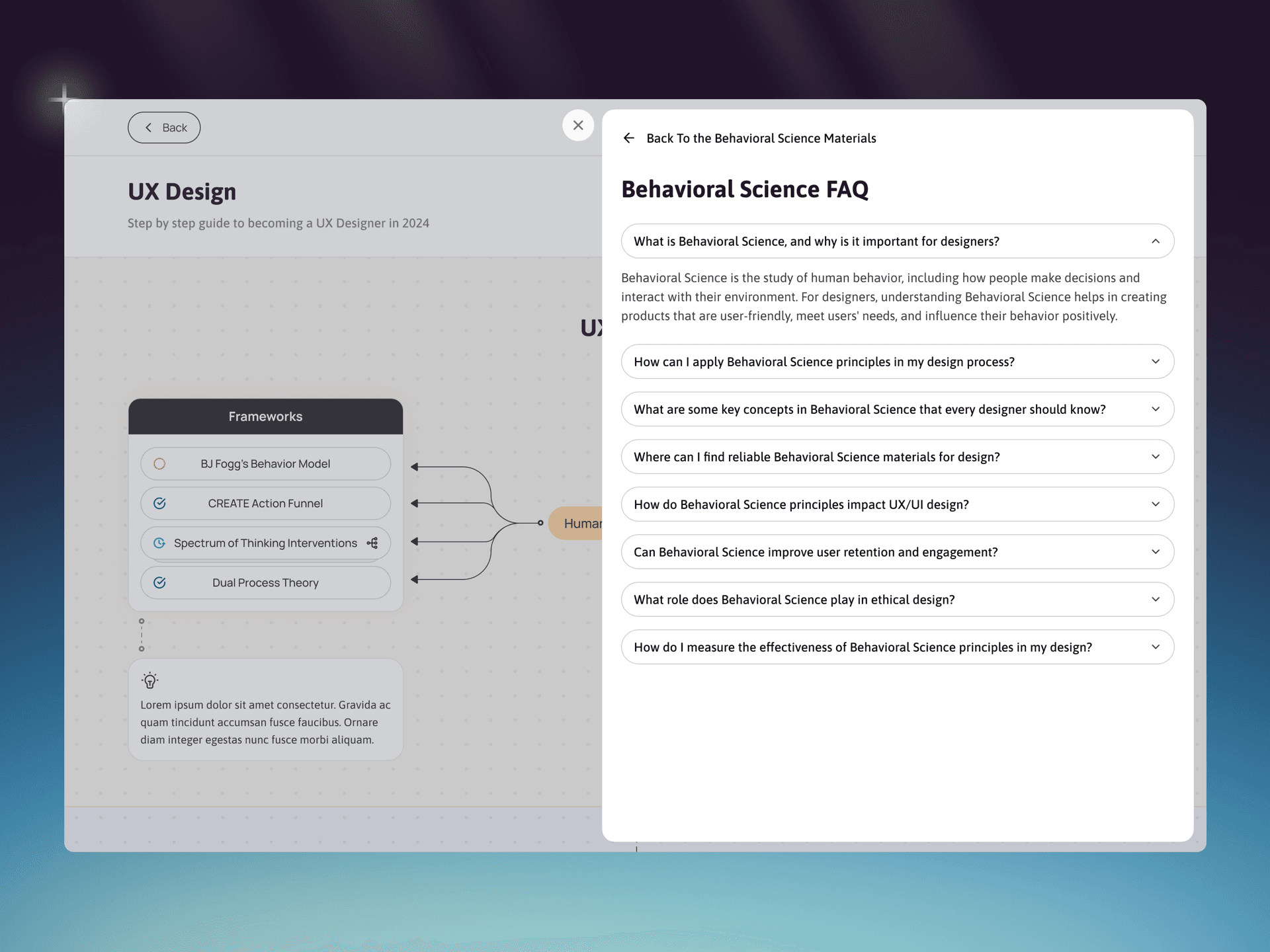
It was necessary to make the navigation and structure of the courses intuitive, despite the large number of levels (courses/chapters/modules/tests) and different formats of architect-led training materials.
Asynchronous collaboration instead of constant meetings
It was important to build transparency, quick approvals, and quality control without synchronous meetings to avoid losing momentum.
Rapid MVP validation without over-engineering for the future
It was necessary to find a balance between launch speed and the right solutions so the platform could scale easily after the hypothesis was confirmed.
Constant iterations based on feedback
After the first launches, the UX, structure, and navigation logic had to be quickly adapted, based on the behavior of engineers and their requests.
Lay the foundation for integrations and a mobile version development
The frontend architecture and UI had to be designed in a way that would make it easier to integrate a mobile app and connect internal corporate systems the next year, as planned.
Core Features
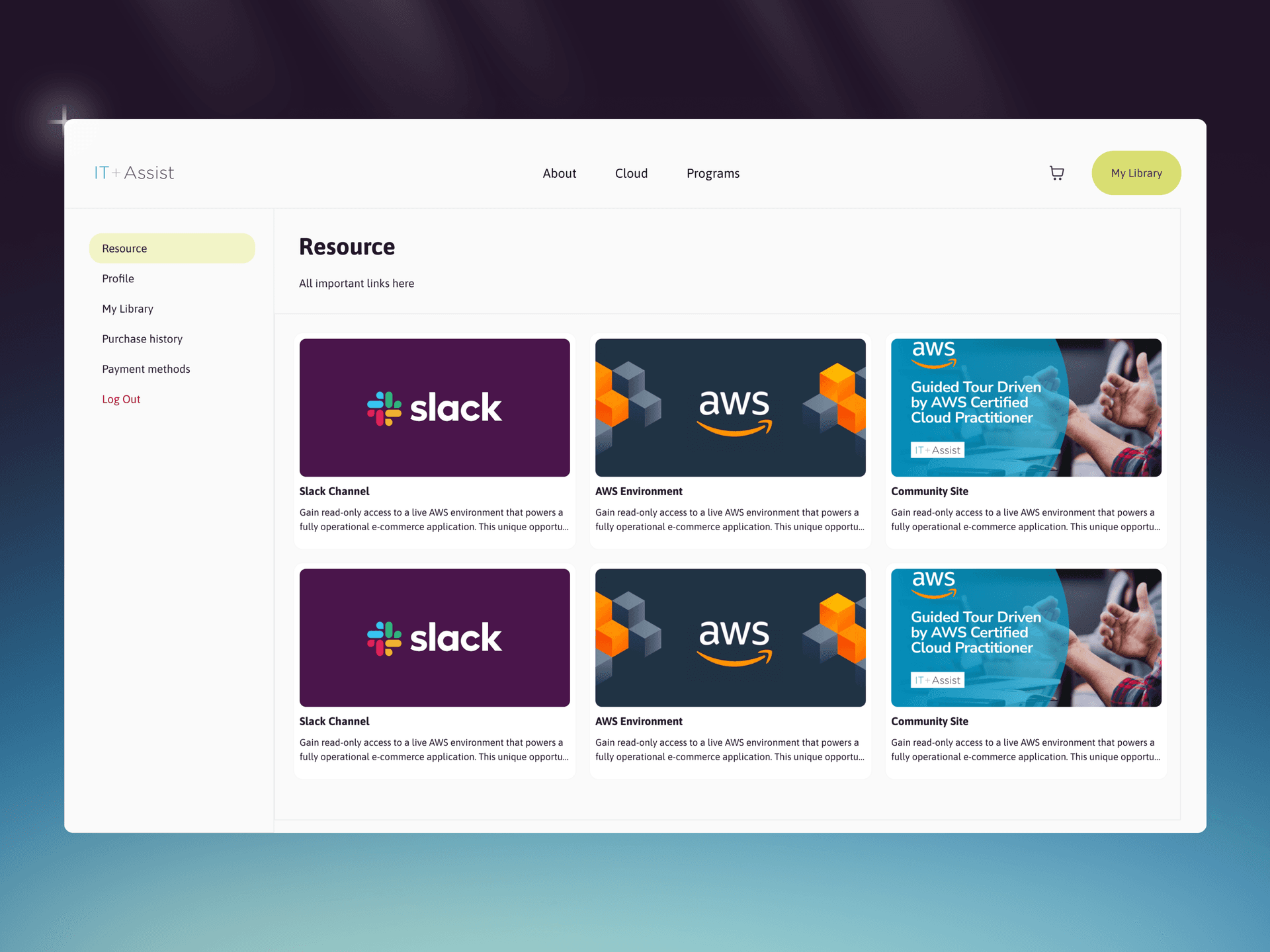
The platform is designed as a practical tool for engineers, with learning structured logically, consistently, and as closely as possible to real-world scenarios. All key features are designed to ensure that users don’t just go through the material, but actually apply the knowledge in practice.
Structured LMS logic
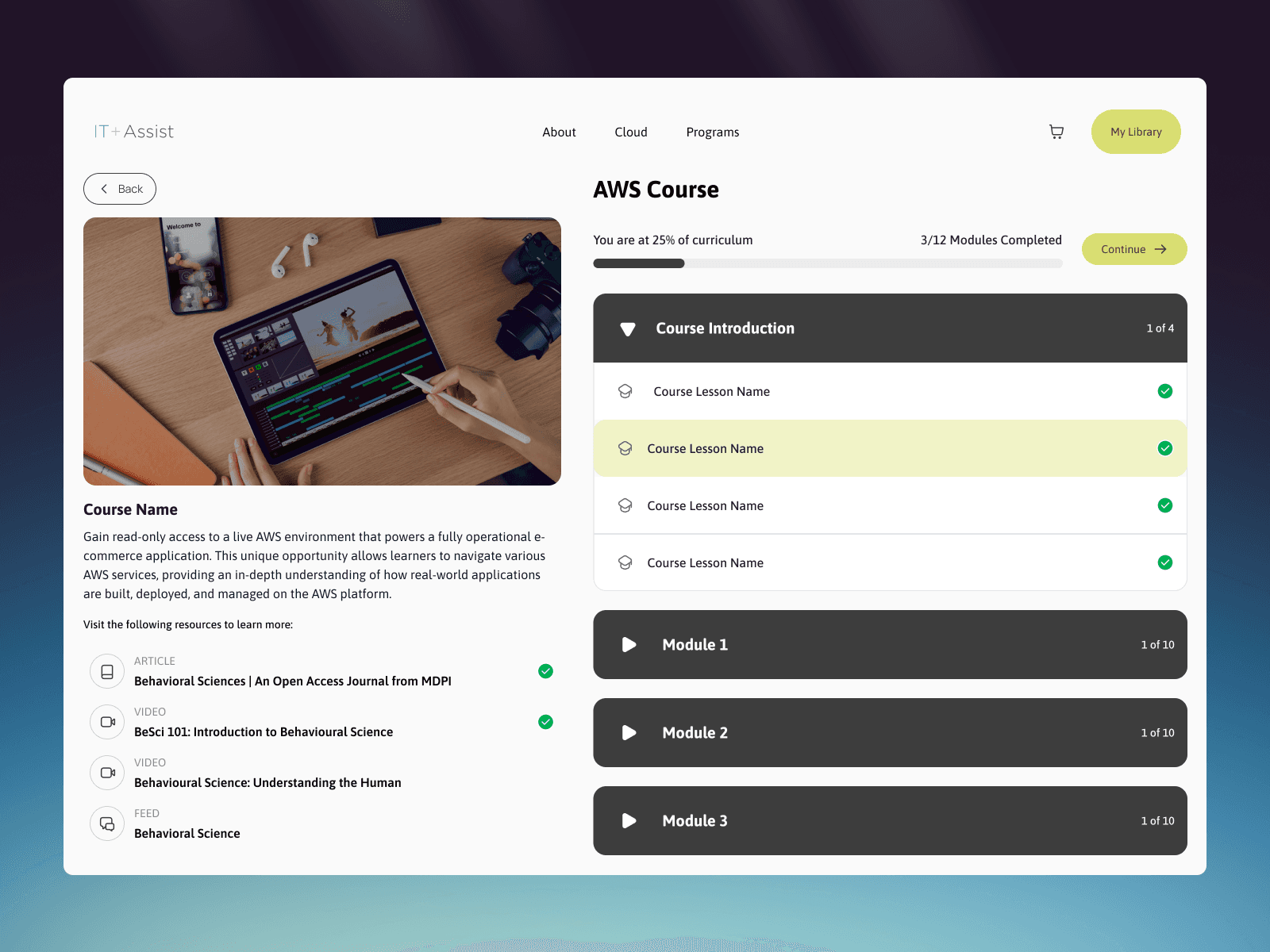
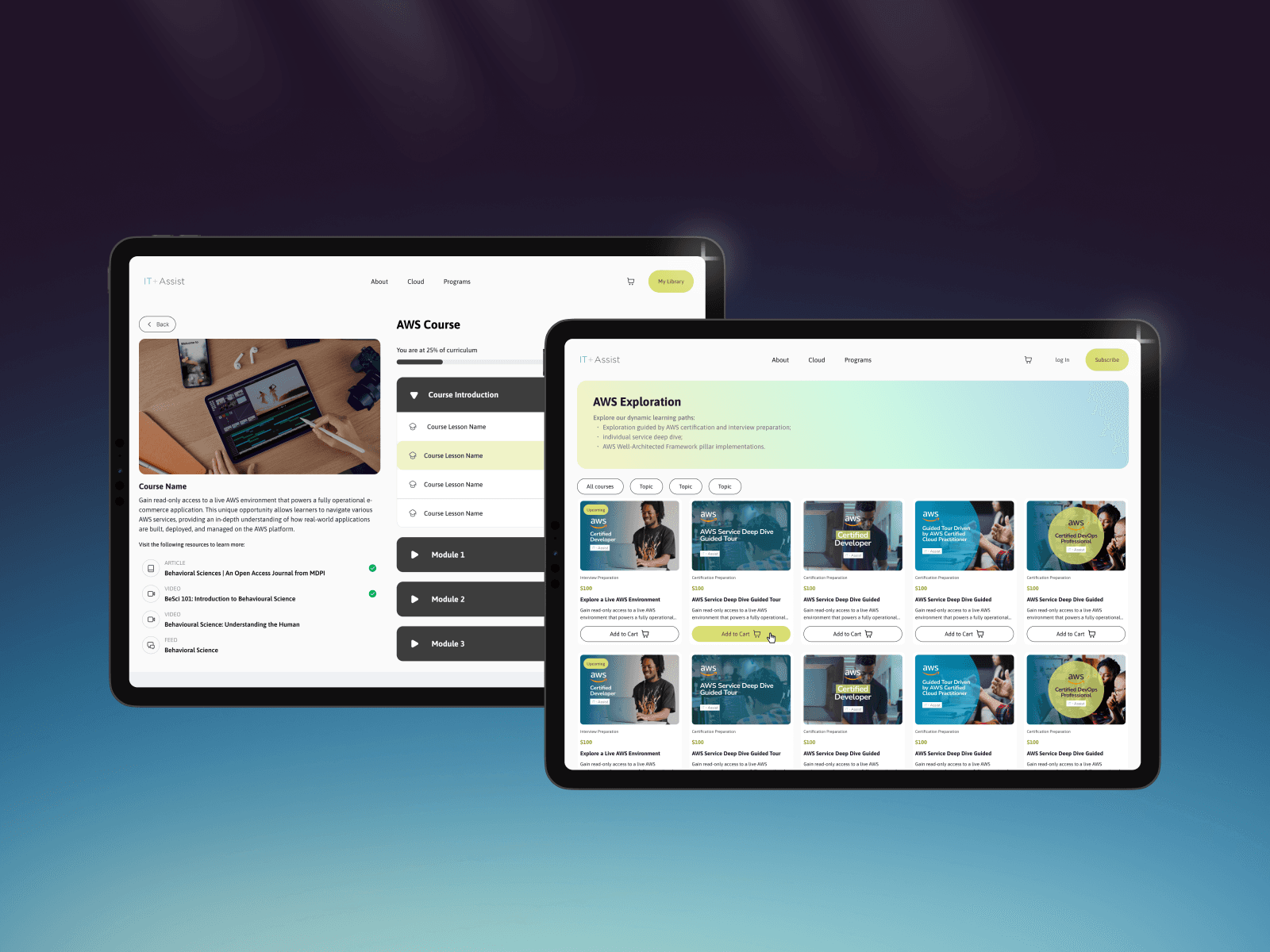
The training is built according to the classic LMS model: courses → chapters → modules → tests. This structure helps you easily navigate the materials, move from general to specific, and not lose context during training.
Video lessons with time codes
The platform supports video lectures with time codes, allowing you to quickly jump to the relevant sections and return to specific topics without re-watching the entire video.
Progress tracking
Users can see their progress in courses, return to skipped sections, and continue learning from where they left off, without losing the logic of passing.
Test assessments after each block
After completing each module, test assessments are provided, helping to consolidate the material and check the level of knowledge acquisition before moving on to the next stage.
Step-by-step approach to learning
The courses are built on the principle of gradual immersion: from theory to application in production and then to practice on real projects. This allows engineers to see how knowledge works in real conditions immediately.
Focus on practical value
The main emphasis is not on the question-and-answer format, but on the applied value of knowledge and its relevance to the daily work of an engineer, with real scenarios, cases, and challenges.
Summary
Today, the MVP is already actively used within the client’s company. The platform helps dozens of employees systematically prepare for AWS certifications, and the client regularly updates it with new courses and improves the content, keeping the training materials relevant.
The project is in the support and gradual scaling stage: functionality is being developed in line with the team's needs. The next steps are the development of a mobile version and its adaptation, and the integration with internal corporate systems.


