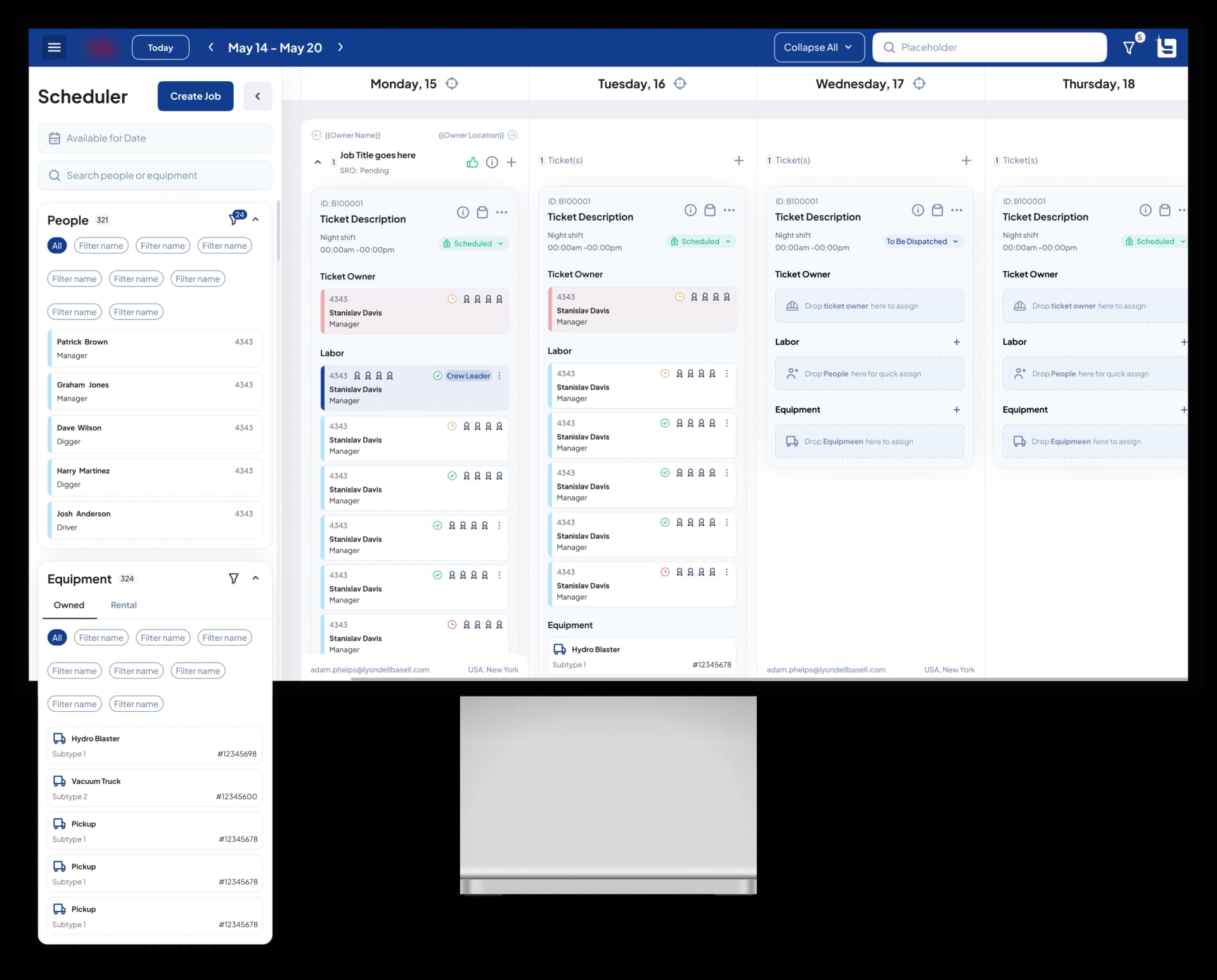
Valorian Scheduling Board Development: From Whiteboards to Real‑Time Scheduling

Bringing structure to chaos – transforming manual scheduling, wall boards, and scattered spreadsheets into a real‑time, multi‑tenant web platform for industrial teams.​

industry

Industrial Sector

platform

Web & Mobile SaaS Ecosystem​

timeline

July 2023 – Now

client

Valorian​

Valorian Scheduling Board Development: From Whiteboards to Real‑Time Scheduling

About the Project

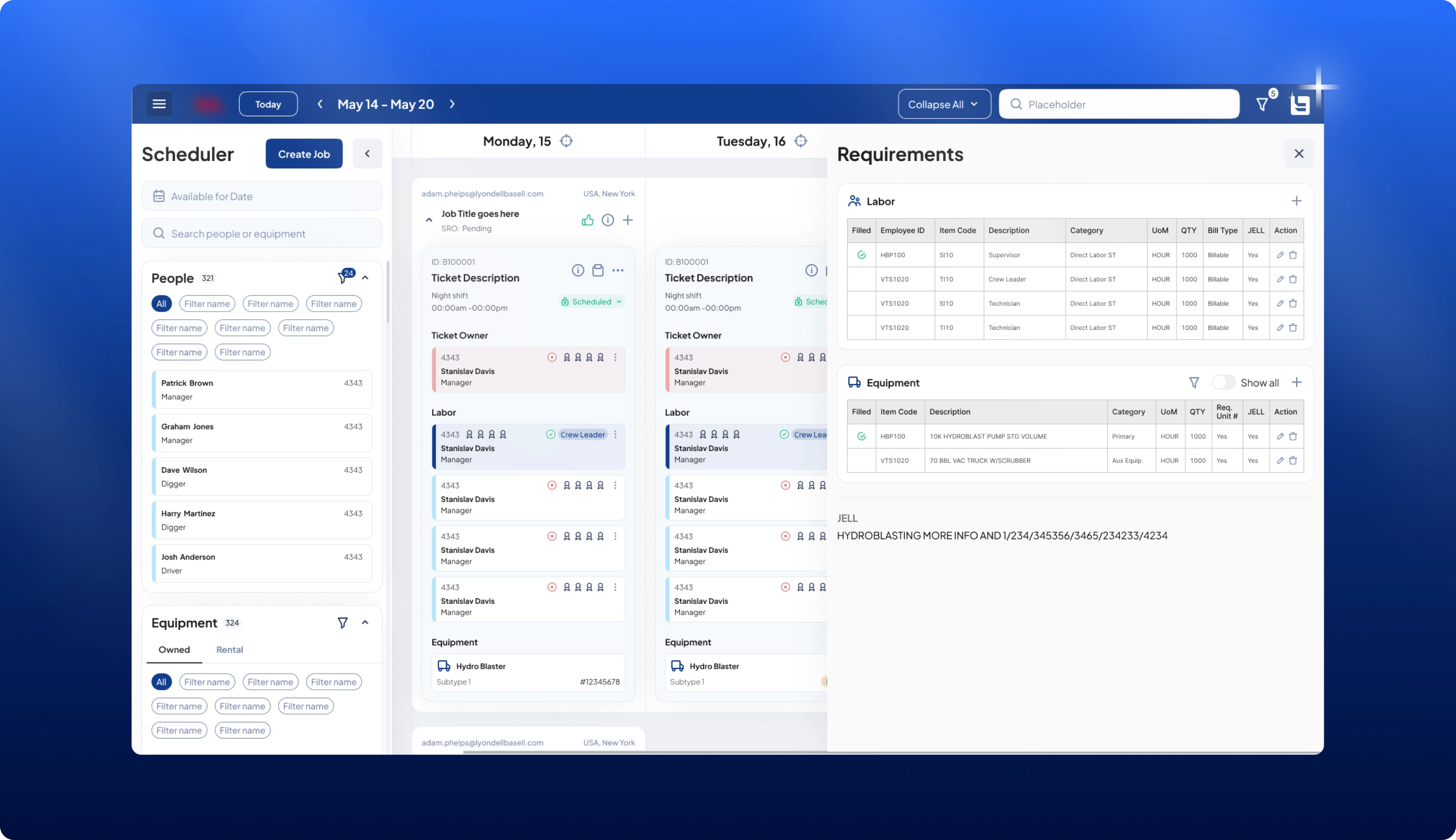
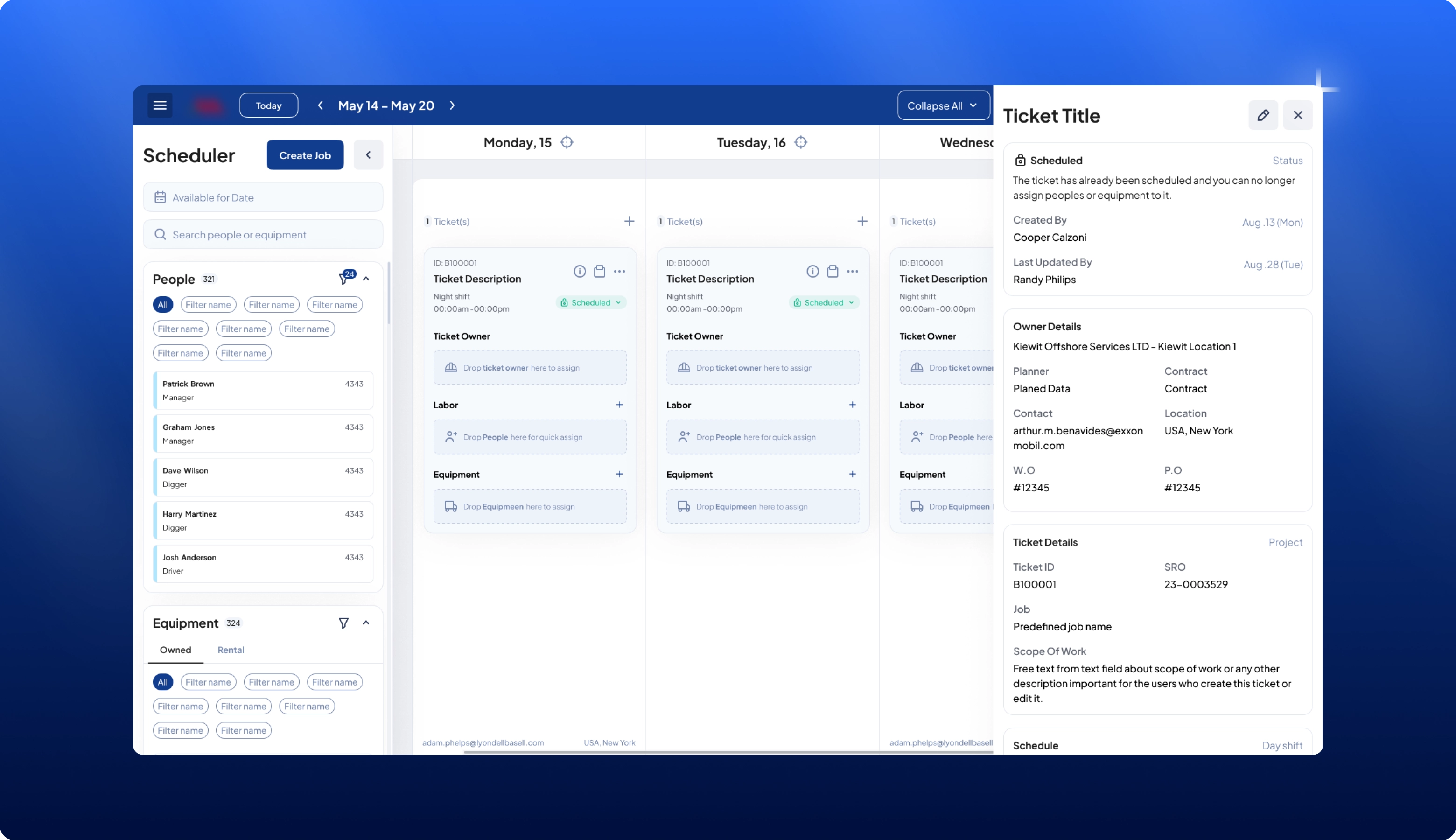
Scheduling Board is the core web application in Valorian’s platform – the place where labor, equipment, and projects come together in one real‑time schedule instead of on physical boards and paper notes.

The product started as a lean MVP built on Firebase, with a clear goal: give industrial service providers a simple, visual way to manage shifts, work orders, and resources without losing control as operations grow.

Over time, the Scheduling Board evolved into TrueView Ops – a multi‑tenant, enterprise‑grade scheduling and dispatch platform that also links to safety, ticketing, and contract compliance modules across Valorian’s ecosystem.​

Interesting Facts

01

Scheduling Board was the very first product Lumitech built for Valorian – the starting point for the entire SaaS ecosystem that exists today.

02

The initial MVP was created in about three months, combining Firebase, a basic frontend, and early UX to validate the idea with real industrial clients.

03

After proving traction, the platform was re‑architected to Nest.js + PostgreSQL, giving Valorian the foundation for a production‑ready, multi‑tenant system.

04

Scheduling Board is tightly connected to other TrueView products, including Safety App and Contract & Compliance module, making it a central hub for operational data.

05

The same dedicated Lumitech team has been working on the Scheduling Board and related modules for more than two years, which is quite rare for fast‑moving SaaS products.

Client Request

Valorian came to Lumitech with a clear pain point they saw at almost every industrial site they worked with: schedules, rates, and resource plans were managed on whiteboards, printed sheets, and Excel files that lived on individual laptops.

They wanted to replace this fragmented setup with:

  • A modern scheduling app where supervisors can plan work orders, assign crews and equipment, and see availability at a glance.
  • A single source of truth for workers, projects, and sites – instead of multiple spreadsheets maintained by different people.
  • A platform that could scale from one client to many, with separate tenants and sites, but still using the same codebase.

The request was not to build a flashy UI for the sake of it. The goal was very practical: reduce friction in day‑to‑day scheduling, improve transparency, and make sure the data behind labor and equipment is solid enough for safety, billing, and compliance decisions.

Project Challenges

Turning industrial scheduling into a digital product sounds straightforward, but Valorian and Lumitech had to solve several tricky problems along the way.

Replacing deeply ingrained manual workflows

Teams were used to updating whiteboards, sticky notes, and personal Excel files. Any new system had to be intuitive enough so people on the ground would actually adopt it instead of falling back to old habits.

Handling multi‑tenant and multi‑site reality

Valorian serves multiple industrial service providers, each with their own sites, crews, and contracts. The Scheduling Board had to support multi‑tenant deployments and separate data boundaries, while still giving Valorian a unified way to manage the platform.

Balancing speed and long‑term architecture

The first version had to ship fast to validate demand, but at the same time, Valorian could not afford a dead‑end prototype. The architecture needed a clear path from Firebase MVP to a robust backend without rewriting everything from scratch.

Connecting scheduling to other critical workflows

Scheduling does not exist in isolation. It is linked to safety, ticketing, and contract rules. The challenge was to design the Scheduling Board in a way that future modules (Safety App, TrueView, Talos) could plug into it naturally.

Our Approach

Lumitech’s approach to the Scheduling Board followed the same principle as the overall partnership: start lean, prove value quickly, then deepen the architecture and feature set step by step.

Phase 1 – MVP on Firebase

  • Build a working prototype in 2–3 months to cover core scheduling workflows: assigning workers, planning jobs, tracking basic statuses.
  • Use Firebase for data and auth to minimize setup overhead and focus on UX and business rules first.
  • Validate with Valorian’s early adopters, gather feedback directly from supervisors and managers using the app in real operations.

Phase 2 – Re‑architecture to Nest.js + PostgreSQL

  • Once the concept proved itself, migrate to a custom backend that could support more complex queries, multi‑tenant patterns, and integrations with other TrueView modules.
  • Keep the evolution incremental – reuse what worked in the MVP, introduce improved data models and APIs instead of turning everything into a “big bang” rewrite.

Phase 3 – Scaling and integrations

  • Expand Scheduling Board to cover more types of work orders, sites, and roles as Valorian signed new industrial clients.
  • Integrate with Safety and future Contract & Compliance features, so scheduling decisions are aligned with safety requirements and commercial rules.

Throughout all phases, the dedicated team model remained the same: Lumitech engineers worked as Valorian’s internal tech department, communicating directly with the CTO, Engineering Manager, and business decision‑makers. This reduced misalignment and helped prioritize features that actually made scheduling easier for people in the field.

Features

While the Scheduling Board is part of a bigger ecosystem, it stands on its own with a focused feature set that replaces manual planning with structured, real‑time operations.

01

Core scheduling and planning

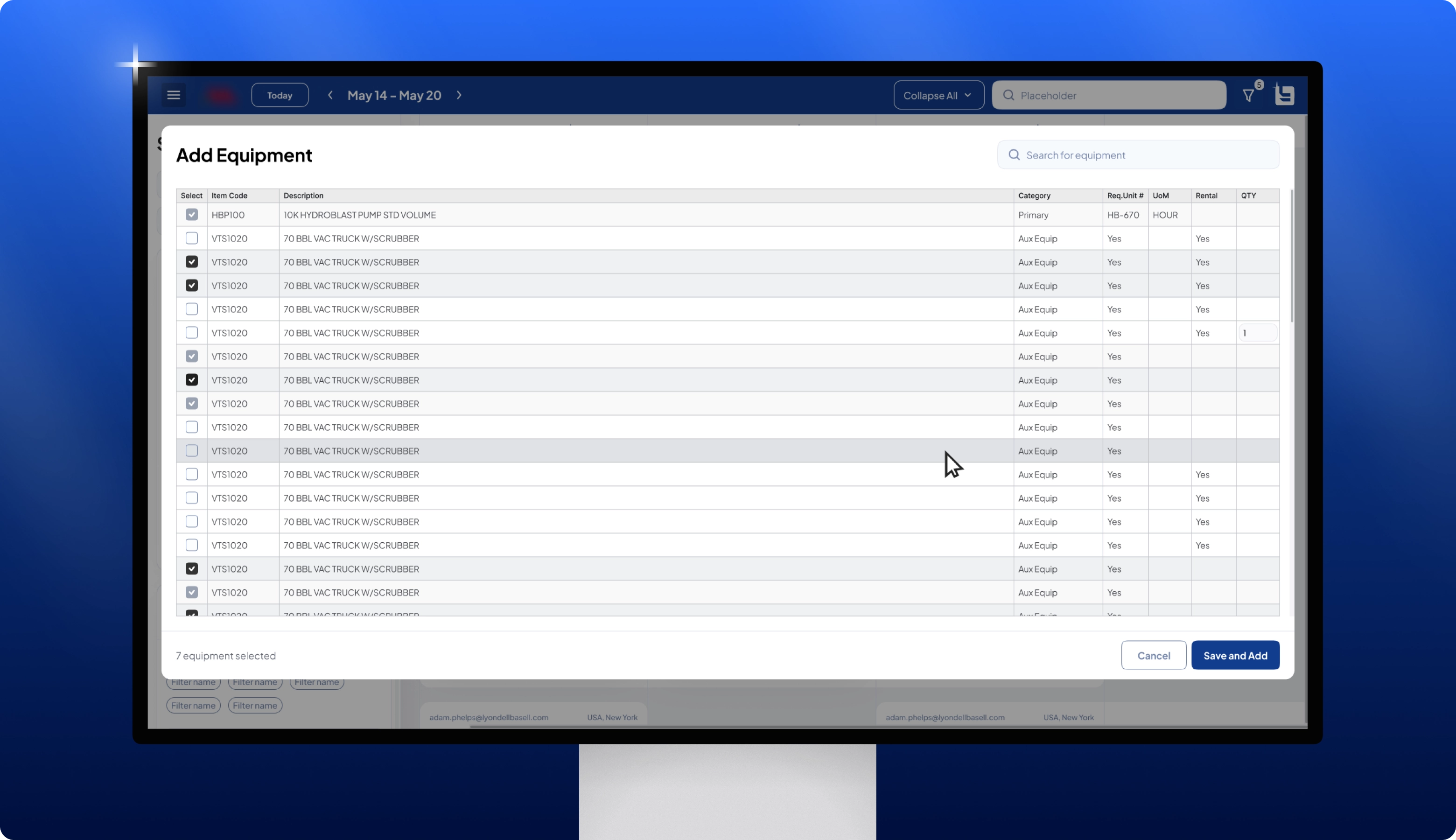
  • Visual planning board for assigning crews and equipment to work orders, with clear timelines and statuses instead of handwritten notes.
  • Centralized view of workers, projects, and sites, which reduces duplicate data and conflicting versions across different spreadsheets.
02

Multi‑tenant and multi‑site architecture

  • Support for multiple tenants (different service providers) living in the same platform, each with their own data and configuration.
  • Ability to manage multiple sites within a tenant, reflecting how industrial companies actually operate across several plants and locations.
03

Safety and operations linkage

  • Integration points for safety modules, where scheduling can reflect safety‑critical tasks, inspections, or survey requirements.
  • Foundation for linkages with ticketing and contract compliance, so scheduled work and billable work do not drift apart.
04

Scalability and extensibility

  • Backend and data layer designed to handle growing numbers of users, jobs, and tenants without changing the core architecture.
  • Shared UI patterns and components reused across the Scheduling Board and other Valorian modules, ensuring a consistent experience whether users are scheduling work or managing safety forms.

Summary

The Scheduling Board is where the Valorian & Lumitech partnership truly began – a focused attempt to digitize one of the most painful parts of industrial operations: planning who does what, where, and with which equipment.

By starting with a lean MVP and then carefully evolving toward a multi‑tenant, production‑grade platform, Valorian and Lumitech turned a manual, fragile process into a structured, scalable system that now sits at the center of the client's ecosystem.

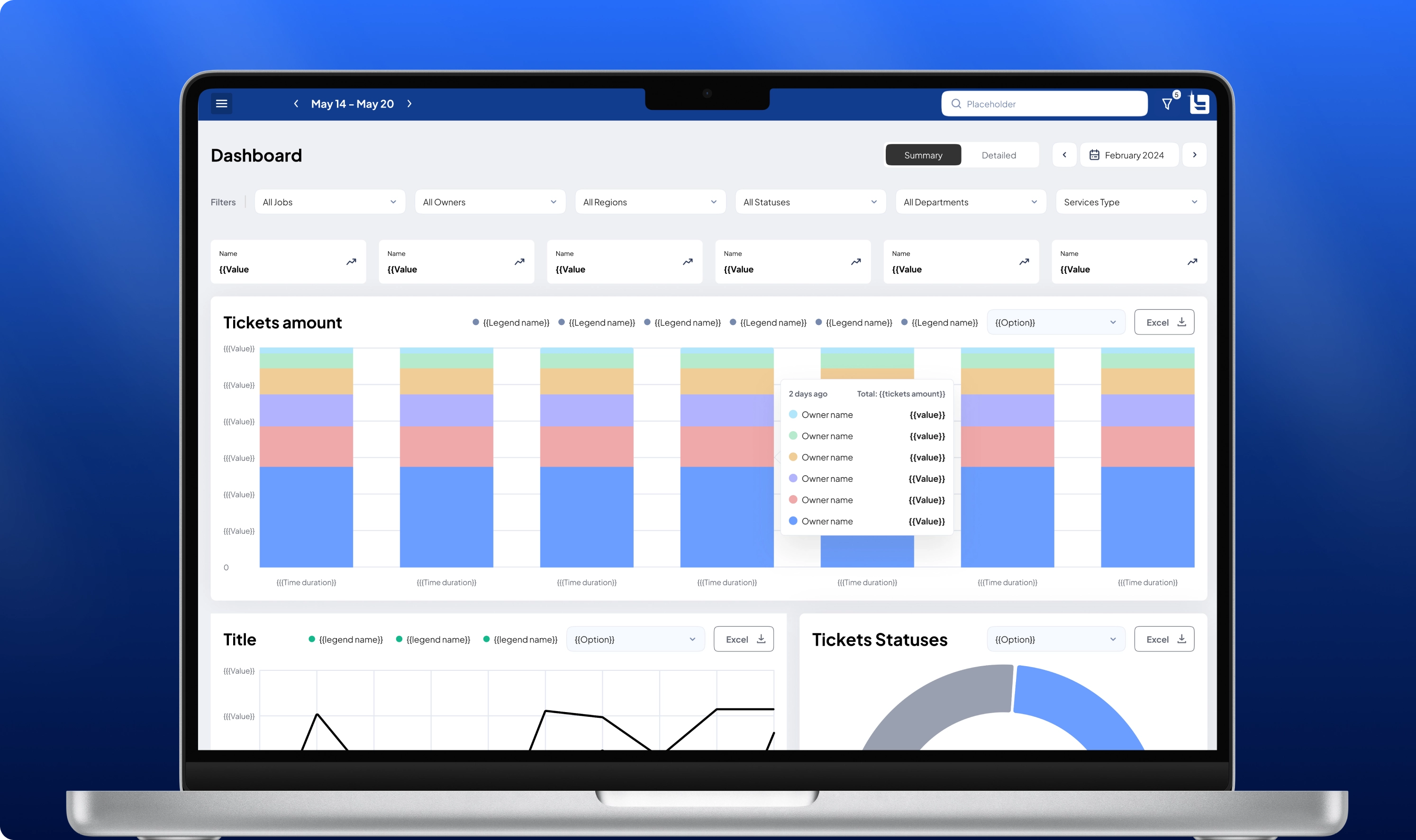
More importantly, the Scheduling Board is not just a standalone tool. It is the backbone that supports safety, turnaround tracking, and compliance modules, proving that when scheduling becomes reliable and transparent, everything else in industrial services has a better chance to work as it should.

Working with complex field processes, legacy systems, and data scattered across spreadsheets?

Lumitech can help you consolidate that into a clear web and mobile product, built for harsh conditions and long‑term growth.

Working with complex field processes, legacy systems, and data scattered across spreadsheets?

Ready to bring your idea into reality?

  • 1. We'll carefully analyze your request and prepare a preliminary estimate.
  • 2. We'll meet virtually or in Dubai to discuss your needs, answer questions, and align on next steps.
Attach file

Budget Considerations (optional)

How did you hear about us? (optional)

Prefer a direct line to our CEO?

founder
Denis SalatinFounder & CEO
linkedinemail