

Elections are often decided by margins so slim that an organized group can matter. Sway was built around that simple fact, but the product challenge was not simple at all. It had to make collective voting feel private, credible, and easy to use at the same time.
That is where Lumitech helped Sway turn a civic idea into a working cross-platform product, with the hard parts - ballot data, identity, privacy, and post-election proof, treated as core architecture from the start.
About the Client
Sway is a startup operating in the civic technology space. Its platform is strictly nonpartisan, which matters a lot here. It does not promote candidates or viewpoints. Instead, it provides neutral infrastructure for people who want to organize around voting together.
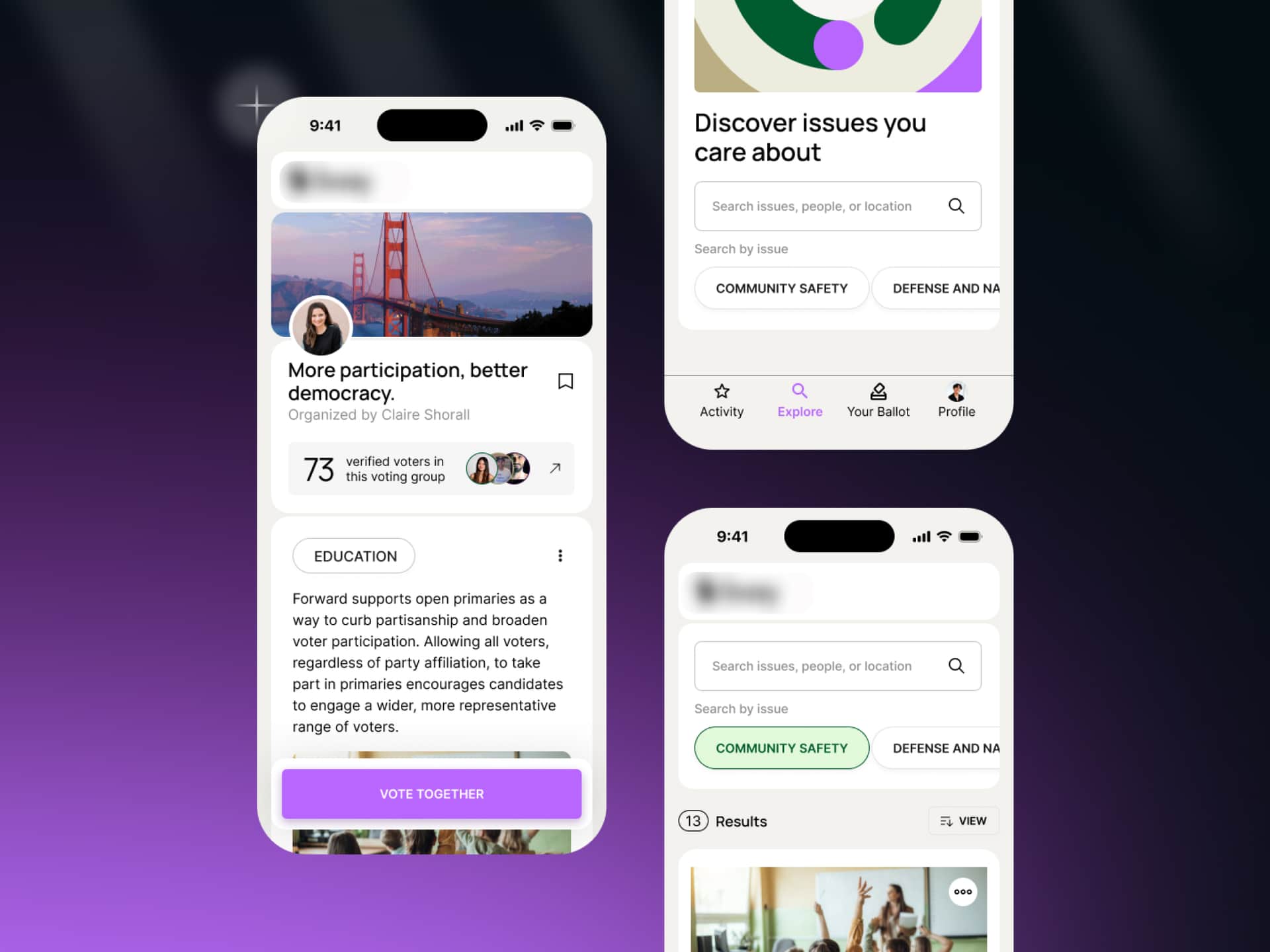
At the core, Sway lets anyone create a voting group, share ballot recommendations, and vote as a bloc. Members get a personalized voter guide tied to their own ballot, while organizers get a way to coordinate a group without turning the product into advocacy software. The platform is free to use and private by default, which raises the bar for trust from the very first interaction.
That combination is not easy to build credibly. A civic voting platform has to feel useful to ordinary people, but also careful enough to handle privacy, verification, and election data without crossing lines. Sway’s model depends on that balance.
Interesting Facts
Sway is a Public Benefit Corporation, and the platform is deliberately nonpartisan, so it provides neutral infrastructure for collective voting rather than backing any candidate or cause.
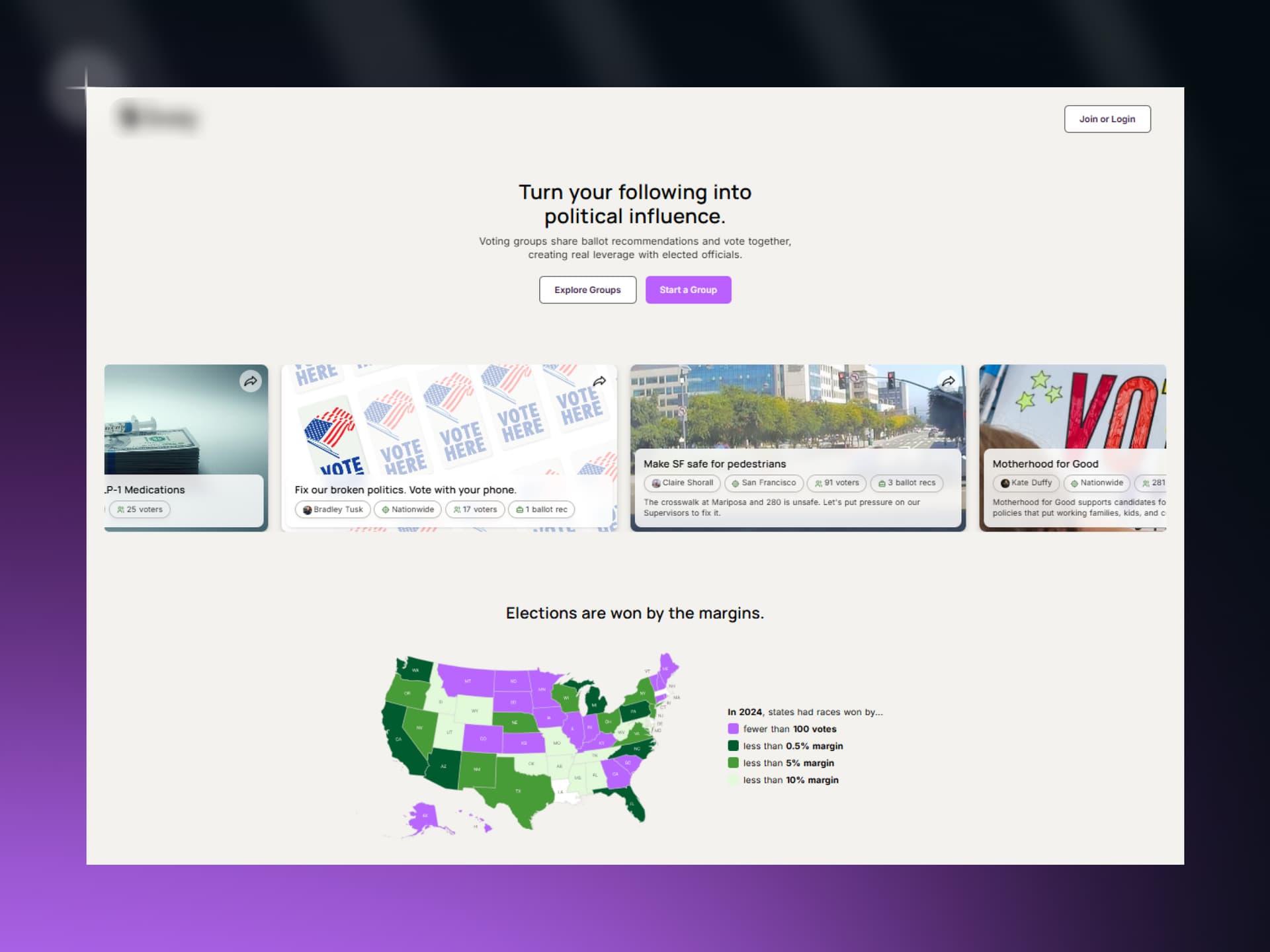
The product is built around a hard fact: in 2024, many U.S. races were decided by fewer than 100 votes, under a 0.5% margin, or under 5%, which means a coordinated bloc can tip an outcome.
Groups have already documented swinging real races: in one, group members who voted outnumbered the margin of victory 946 to 365; in another, 26 to a margin of 9.
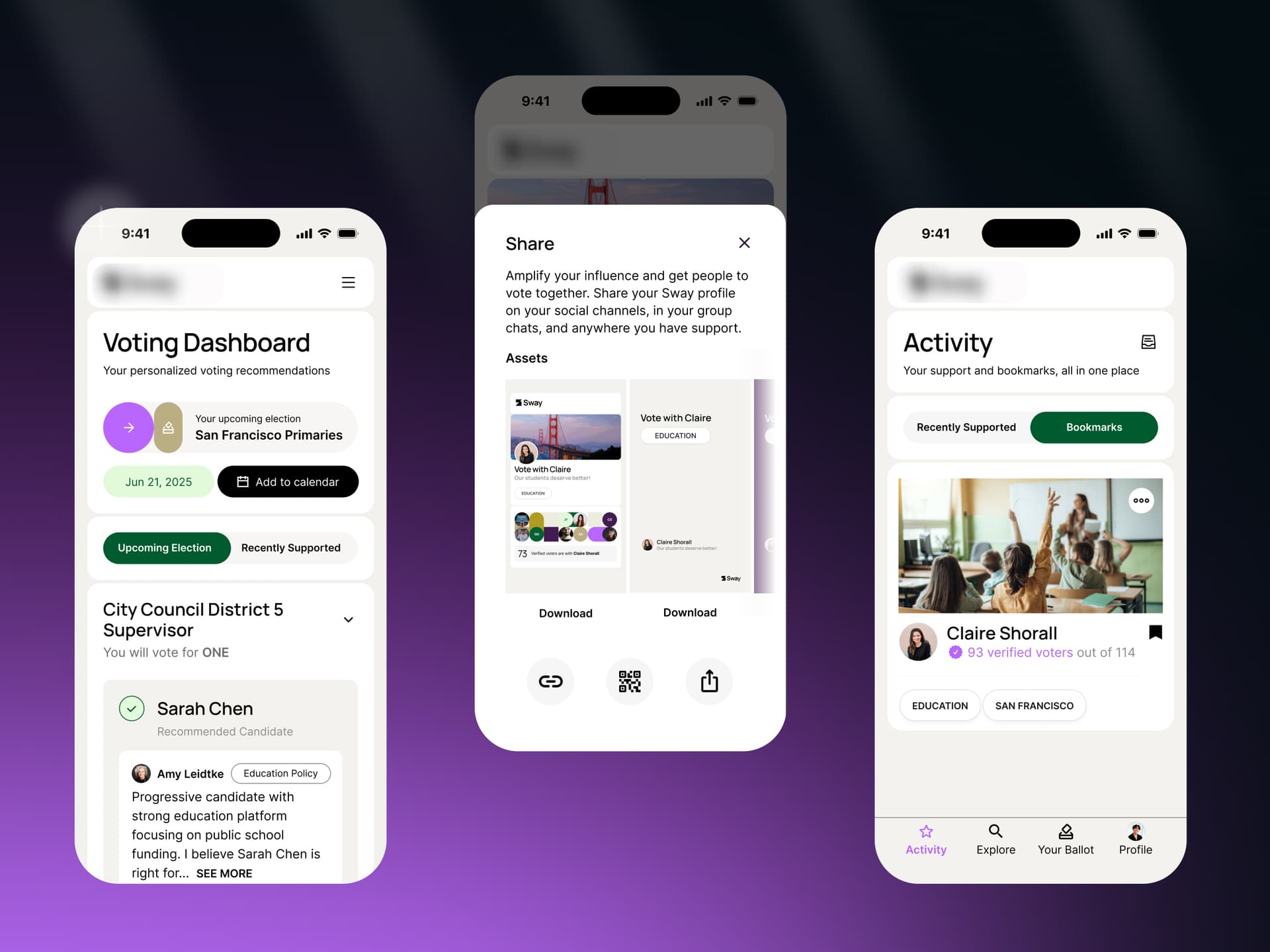
Each member receives a personalized voter guide mapped to their own specific ballot, generated from the organizer's recommendations and the member's registered address.
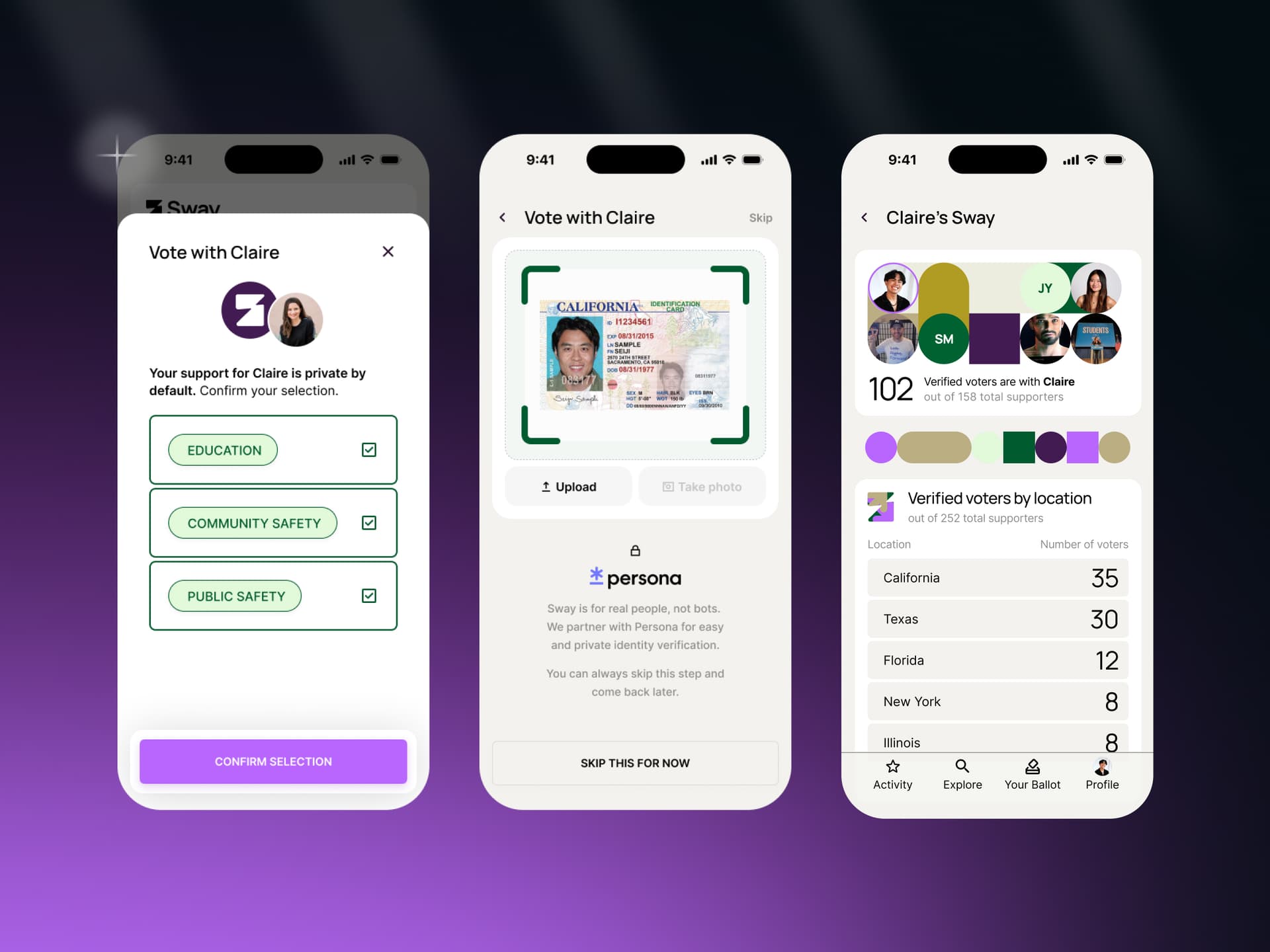
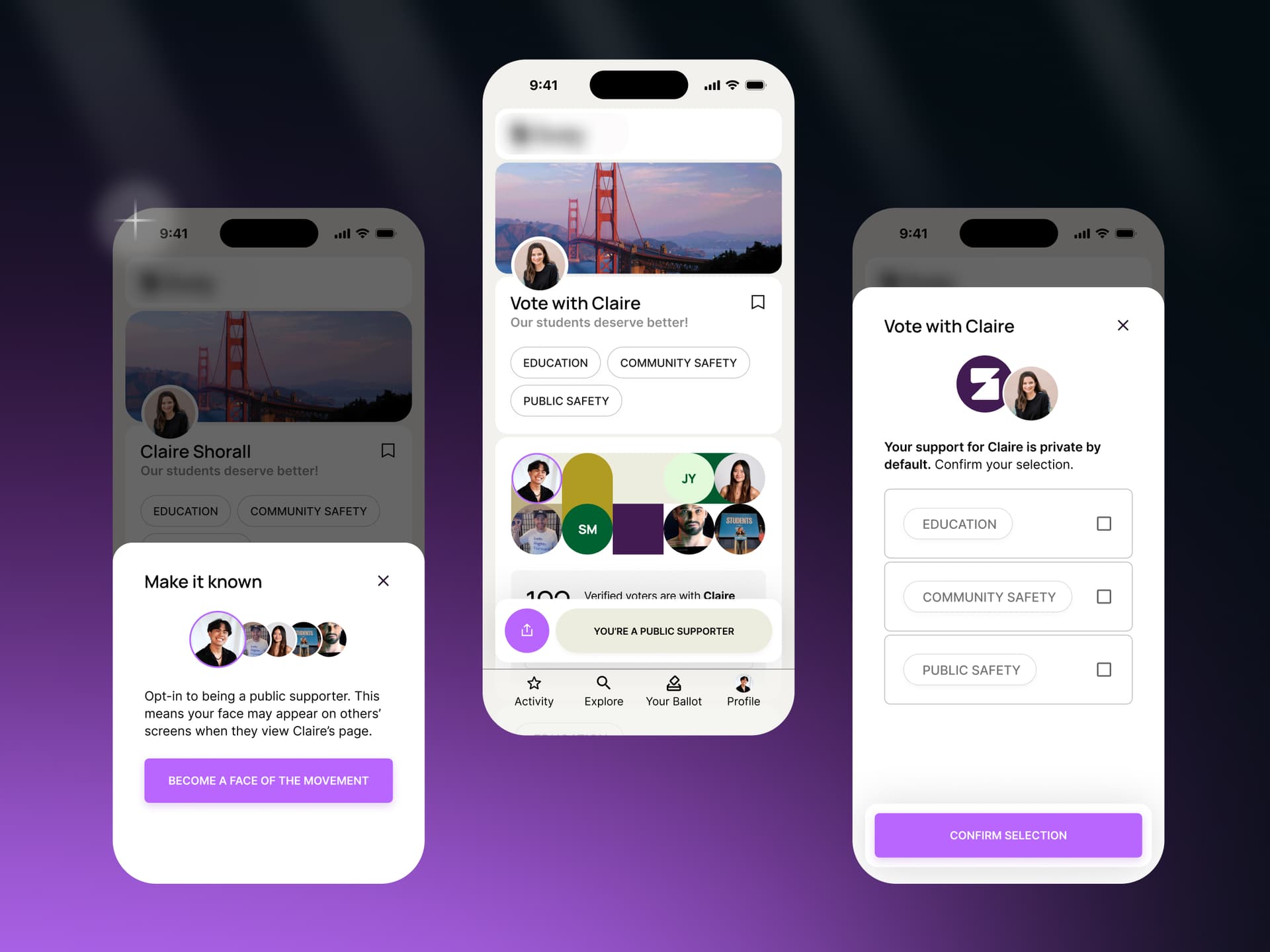
Support is private by default, so users can stay completely anonymous, and email and phone numbers are never shared with anyone.
Identity is verified privately through a Persona integration, and members can complete it now or skip it and return later.
The Challenge
What made this interesting was the gap between social influence and electoral action. Plenty of people have a network, a community, or a following, but very few have a practical tool that turns that reach into real voting impact. They can talk to people, but they cannot easily know who is actually registered, who is voting where it matters, or whether their group made a difference after the election.
The product challenge sat right at the center of trust. Sway had to verify real people without making identity visible. It also had to keep anonymity available at all times. Those goals usually pull in opposite directions, which is why the privacy model could not be treated as a setting or a later-stage preference.
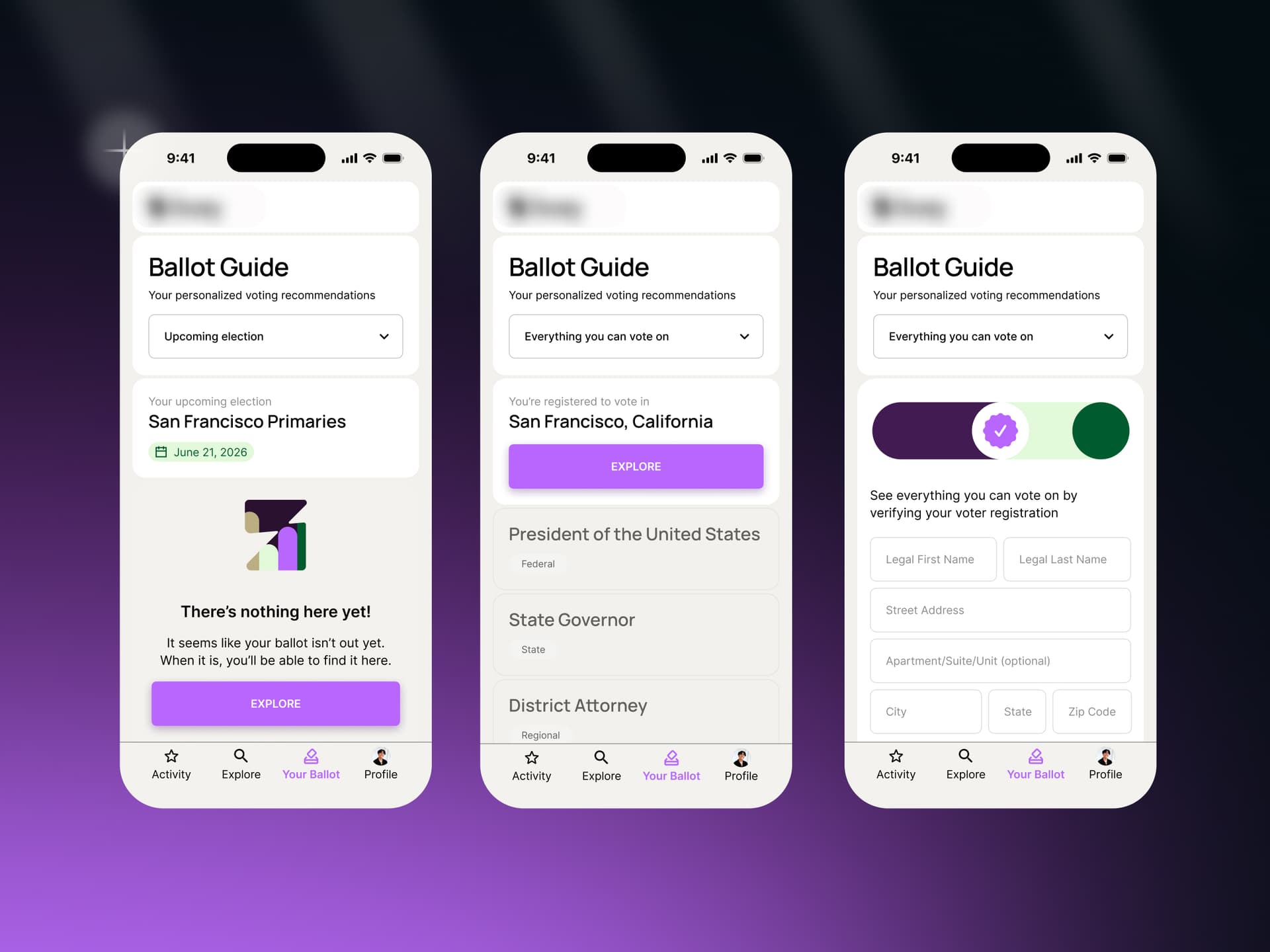
Another layer was ballot data. Generic civic tools can talk about elections in broad terms, but they do not map recommendations to a member’s actual ballot. Sway needed address-level accuracy so a group organizer could share meaningful guidance and each member could see the races that were truly relevant to them. Short version: it had to be real.
Then there was scale. The same experience had to work across web, iOS, and Android, with consistent behavior and no cracks in privacy or data handling. As the project evolved, it also had to support group growth without making the product feel heavier or less trustworthy.
Our Approach
At the core, Lumitech treated the difficult parts as the product, not the extras. Privacy, ballot data, identity, analytics, and referral growth were all handled as foundational architecture, because that was the only way to make a civic voting platform credible in the real world.
Privacy was designed into the data model from the beginning. Anonymity, consent-gated visibility, and separation of contact data were built into the schema and APIs so the platform could protect users by default rather than by exception. That mattered because Sway had to be private without feeling brittle or artificial.
We also integrated authoritative ballot data and resolved it to each member’s address. In practice, that meant every personalized voter guide reflected the member’s actual local races, not a generic national feed. The experience became more useful because it became more local.
Identity verification was handled through Persona in a way that stayed private, optional, and low-friction. Members could verify when they were ready, which kept onboarding light while still giving groups a way to build trust. Geographic analytics then gave organizers visibility into where their group actually held leverage, including district-, state-, and race-level views.
Finally, referral mechanics were built into the product so groups could grow organically. That was important because civic products do not scale well when growth depends only on paid acquisition. They scale when members bring in other members.
Technologies
The stack supported a cross-platform product with a shared backend and several specialized integrations. Specific framework names are withheld under NDA, but the architecture is confirmed and was shaped around web, mobile, data, and trust from day one.
Technology | Role in the platform |
|---|---|
Web framework | Browser-based application for group creation, ballot guidance, and organizer tools |
Mobile framework | Cross-platform mobile apps for iOS and Android |
Backend / API | Groups, memberships, ballots, recommendations, and messaging |
Ballot / election data provider | Authoritative races and candidates resolved to each member's address |
Persona - identity verification | Private, optional voter and identity verification |
Geospatial / mapping | Voter maps and drill-downs by district, state, and race |
Data analytics | Electoral-leverage scoring, turnout vs. margin comparison |
Privacy and consent layer | Anonymity, consent-gated visibility, and contact data protection |
Notifications / messaging | Location-targeted outreach to members by district or state |
Features
In practice, the best way to understand Sway as a civic voting platform is to look at what it lets organizers and members actually do, feature by feature.
Voting Groups and Vote-Together
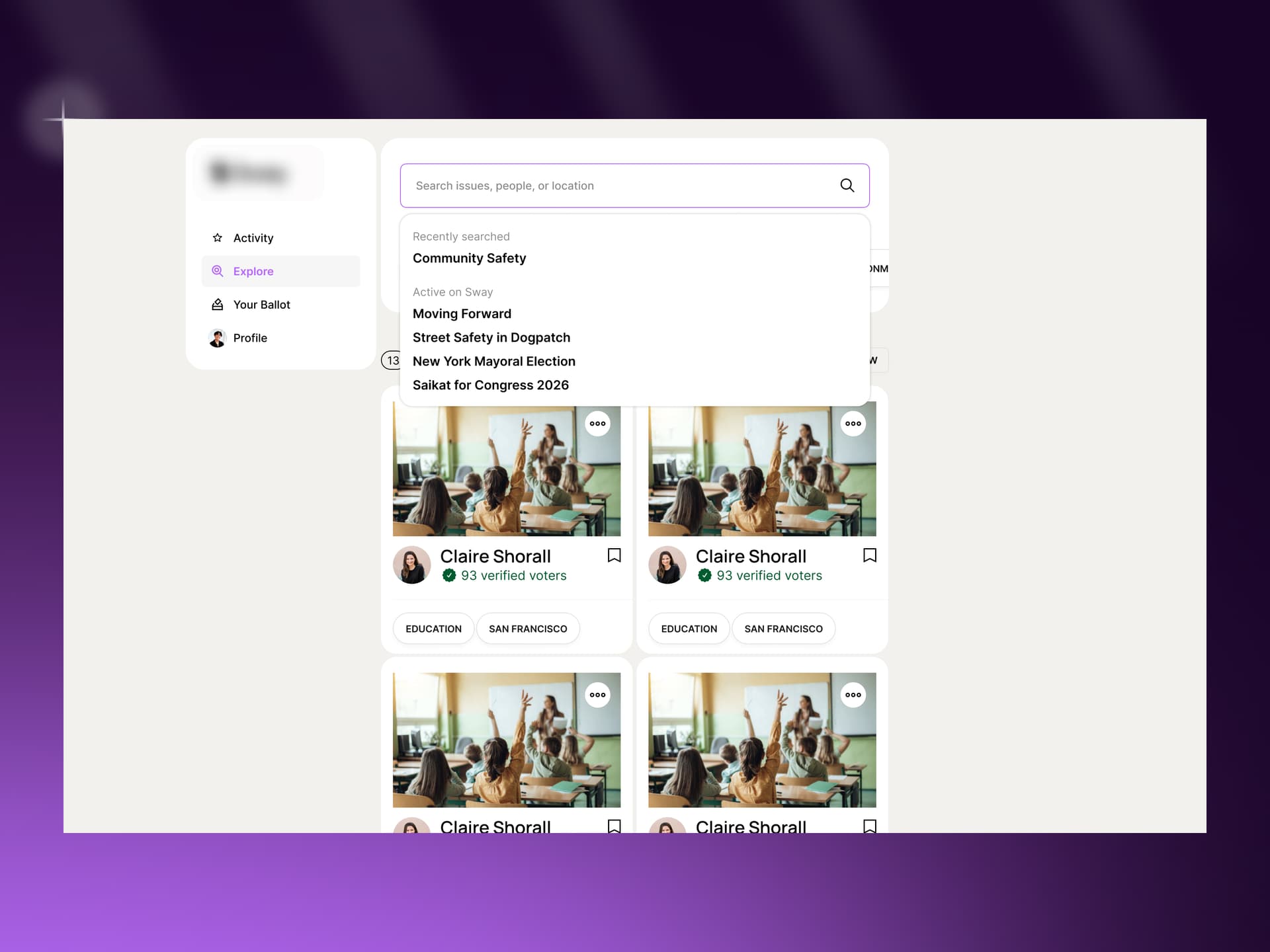
Sway gives anyone a way to build a voting group around the issues and races they care about. Members join, organize, and vote as a bloc, which turns a loose network into something with real electoral weight. That simple structure is what makes the platform useful.
Personalized Ballot Guides
Organizers share recommendations, and Sway turns them into a personalized voter guide for each member’s own ballot. Because the guide is resolved from the member’s address, it reflects the races that actually matter to them. This keeps the guidance practical instead of generic.
Verified Voters and Privacy by Default
The platform keeps trust and privacy in the same frame. Members can verify privately through Persona, while anonymity stays available and contact details remain protected. That balance makes the group feel credible without exposing people unnecessarily.
Voter Map and Electoral Leverage
Organizers can see where their group can vote and where that cluster of voters might actually move a race. The map is not decorative. It helps people understand whether their network has leverage in a district, state, or specific contest.
Location-Targeted Messaging
Outreach can be focused on the places where the race is close and turnout matters most. That means organizers are not sending the same message to everyone all the time. They can act with more precision, which makes the whole group more effective.
Results, Turnout, and Proof of Impact
After an election, the platform compares turnout with the margin of victory and shows whether the group helped swing the race. That proof matters because civic coordination is easier to believe when it can be measured. One race result carries more weight than a hundred claims.
Built-in Referral Growth
Sway is designed so members can invite other members, and groups grow from inside the product itself. That makes adoption feel natural rather than forced. Over time, the network compounds.
Cross-Platform Experience
The same product works on web, iPhone, and Android, so people can join and participate wherever they already are. Consistency matters here because trust breaks quickly when the experience changes from one device to another. Sway kept it unified.
Our Results
Sway is now a working, cross-platform civic voting platform in production, with real-world proof that group turnout can exceed a race margin. In one documented case, the group voted 946 to a margin of 365. That is the kind of outcome that makes the product’s value clear without needing much explanation.
The platform now spans web, iOS, and Android, with the hardest systems - personalized ballots, private verification, geographic analytics, and privacy by default - running as part of the product, not beside it. Anonymity is always available, and personal contact data stays protected.
Just as important, Sway gives organizers a measurable way to understand their own civic leverage. It turns diffuse networks into something visible, coordinated, and testable. As the platform grows, the adoption numbers will tell their own story.
For Lumitech, this project is a good example of where civic technology gets serious. Trust, privacy, and complex data integrations all have to work under public scrutiny. Sway shows that it is possible to build something technically careful and still genuinely usable.