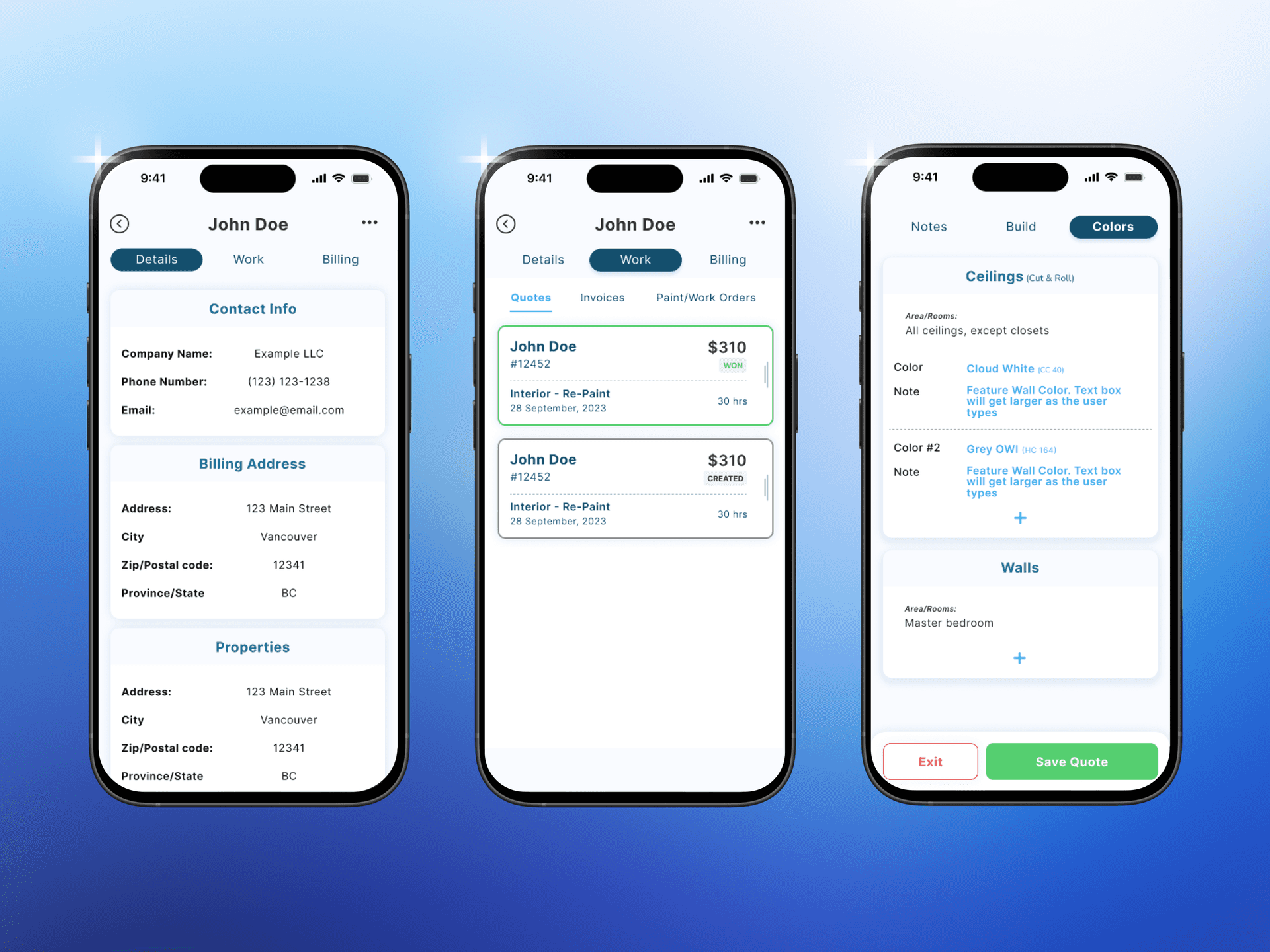




PaintBid started from a very practical pain: a painting company founder who was tired of guessing on estimates and losing time on manual calculations. Together with Lumitech, Hemlock Painting turned that pain into a focused mobile product that now helps dozens of field employees create accurate quotes directly on site – with or without the Internet.
About the Client
Hemlock Painting is a Vancouver‑based company that specializes in residential and commercial painting – both interior and exterior. The founder started back in 2004 as a hands‑on painter on job sites, gradually growing the operation into one of the leading painting agencies in the local market.
The business model is typical for North America but quite unique if you look at it from the outside. Houses are big, layouts vary a lot, and repainting walls – often in simple finishes like white – is a regular, sometimes seasonal service. Crews travel to different neighborhoods, suburbs, and even small towns, where connectivity is not always stable. On top of that, a significant part of the team are Spanish‑speaking specialists from Latin America, which directly influenced how simple and clear the app needed to be.
Interesting Facts
PaintBid is not a generic SaaS product rebranded for one client – it is a mobile app tailored to the way Hemlock Painting actually works in the field.
The founder began in 2004 as a frontline painter on job sites and, step by step, built that work into one of the leading painting companies in the local market.
The idea was born directly from the founder’s own experience of doing estimates for years and seeing how often other painters “just guess” when pricing jobs.
Today, PaintBid is an internal product that around 50 employees use on a daily basis for estimating jobs. The team is preparing the app for a broader, public‑facing release, so other painting contractors can benefit from the same workflows.
Design for the app came from Hemlock’s own side; Lumitech’s role was to build the product end‑to‑end from the engineering and architecture perspective.
Client’s Pain Point
For Hemlock Painting, estimation was the core bottleneck. A typical process looked like this: a visit to the site, manual measurements of walls (height, width, surfaces), consideration of woodwork and prep work, calculation of crew size, and finally – a price for the client. Without a dedicated tool, this workflow was slow, error‑prone, and hard to standardize across estimators.
In practice, that meant:
Estimates took too long to prepare on site.
Different people calculated jobs differently, so there was no single repeatable standard.
Mistakes and omissions creeped in, affecting profitability and trust.
Scaling the business became harder, because every new estimator brought their own “spreadsheet in the head”.
Client’s Request
The client’s goal was straightforward but ambitious: a single tool that would let field staff create quick, consistent, and accurate estimates directly on the property – internal or external – without relying on guesswork or a stable internet connection.
On the technical side, the request included several non‑negotiable items:
A mobile app for field employees, not an office‑only system.
Full offline mode as a must‑have, not a nice‑to‑have.
The ability to create clients and projects on site.
Flexible measurements for walls, heights, widths, and different surfaces.
Support for internal and external painting scenarios.
Accounting for woodwork and preparatory tasks.
Reliable synchronization once connectivity is back.
An interface simple enough for busy crews, including Spanish‑speaking workers, to use without friction.
Our Approach
The collaboration started as many product stories do – with a clear business problem and a set of high‑level requirements that evolved as the team went deeper. Initially, the app was planned and built as an online‑first solution. Only after seeing how estimates are done in small towns, on remote sites, and in areas with unreliable coverage, it became obvious that offline mode is not an extra feature but the foundation. This was not fully formalized at the requirements stage, so the architecture had to be reconsidered mid‑project.
From Lumitech’s side, the team was intentionally compact: one React Native developer for the mobile application and one Python developer for the backend. From the client’s side, there was high involvement, open communication, and a lot of practical input from a non‑technical founder who knows the painting business in and out. Work moved in iterations, with frequent adjustments based on how the app behaved in real‑world conditions on the job sites.
The technical approach focused on three pillars.
Offline‑first architecture Data is stored locally on the device, and all key flows – from creating a client to finishing an estimate – must work with no connection. Sync happens later, in the background, once there is internet. This is different from “offline support” as an add‑on; it shapes every part of how data is handled in the app.
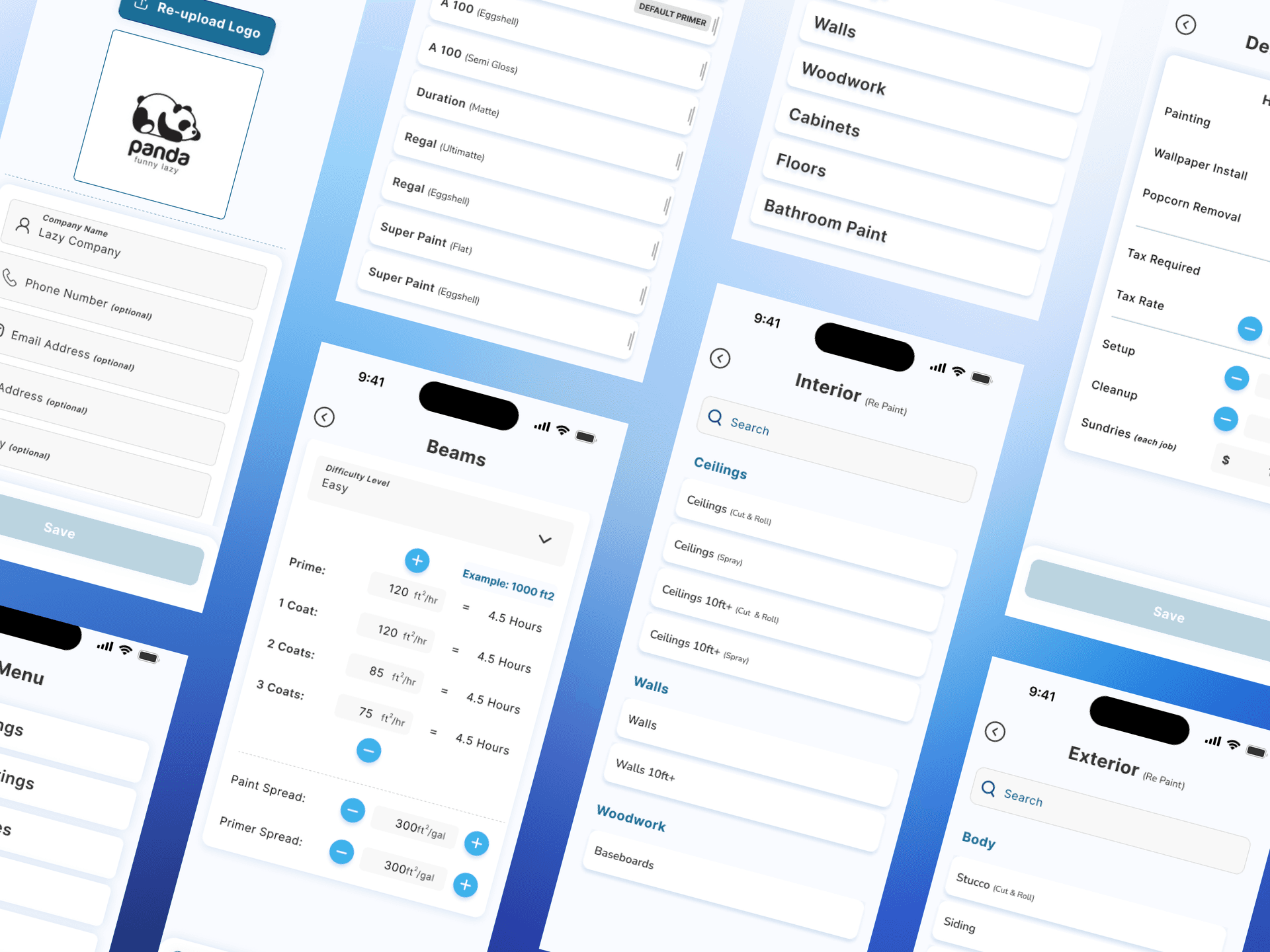
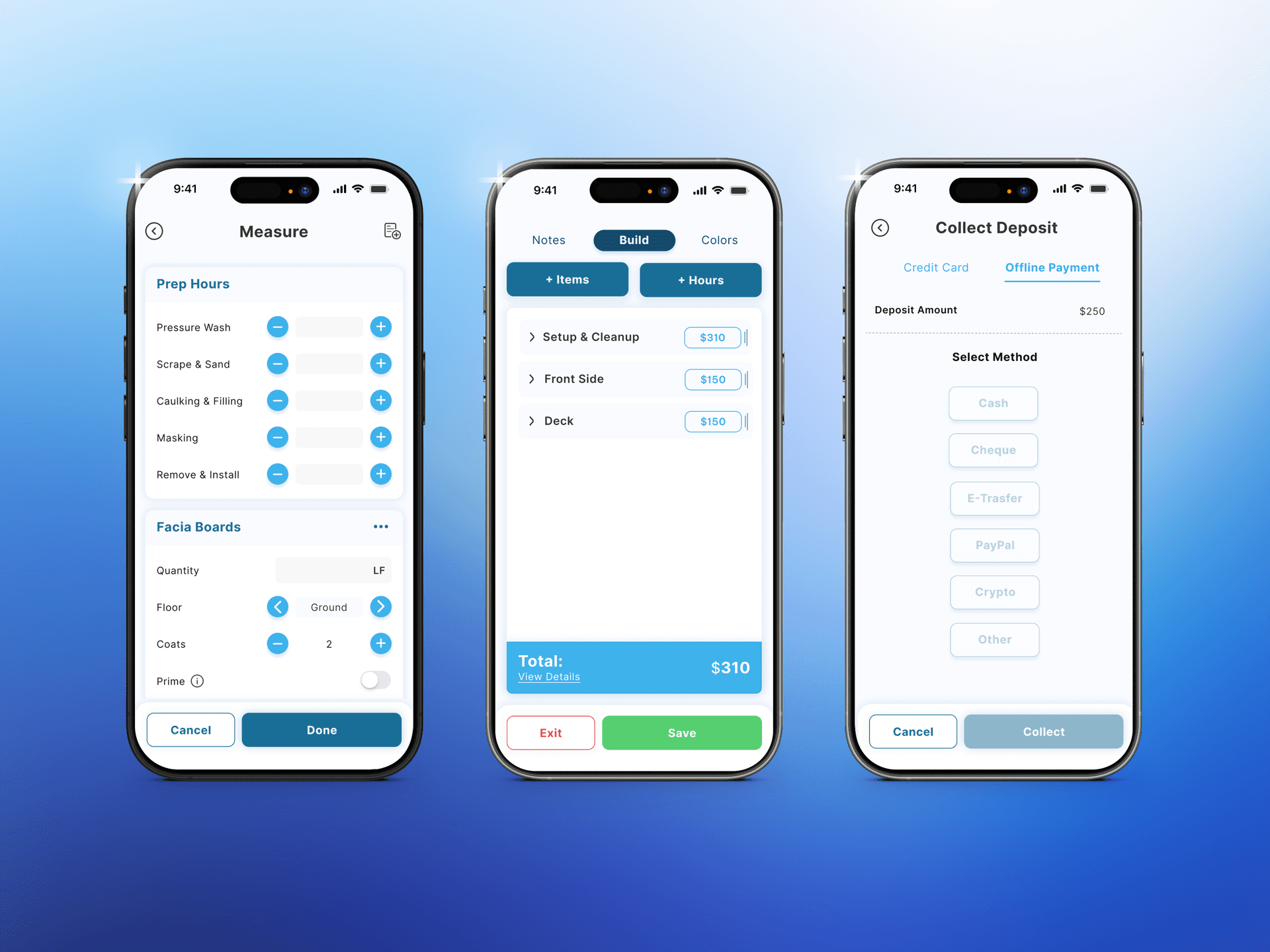
Clear, field‑friendly UX The client’s design team led the UX and UI, and Lumitech made sure the implementation stays fast and predictable on real devices. The flows were built around how estimators move through a property: choosing internal or external painting, adding rooms or surfaces, capturing wall dimensions, marking woodwork and prep tasks, and seeing costs update.
Robust synchronization logic
Because estimates can be created, updated, and edited in offline conditions, synchronization needed to handle:
Unstable internet (dropping in and out).
Partial updates.
Conflict situations when the same entity changes from different devices or sessions.
This logic became one of the most complex and time‑consuming parts of the project. It required revisiting assumptions, handling many edge cases, and testing against real scenarios rather than “clean” lab data.
Despite the mid‑project shift from online‑first to offline‑first, the teams kept the collaboration steady. The founder remained deeply involved, ready to adjust expectations and validate changes in the field. Lumitech, in turn, owned the technical side – from mobile and backend code to synchronization design and production readiness.
Features
Over the course of the engagement, PaintBid grew into a focused toolkit for estimators, centered around the way Hemlock Painting works day to day.
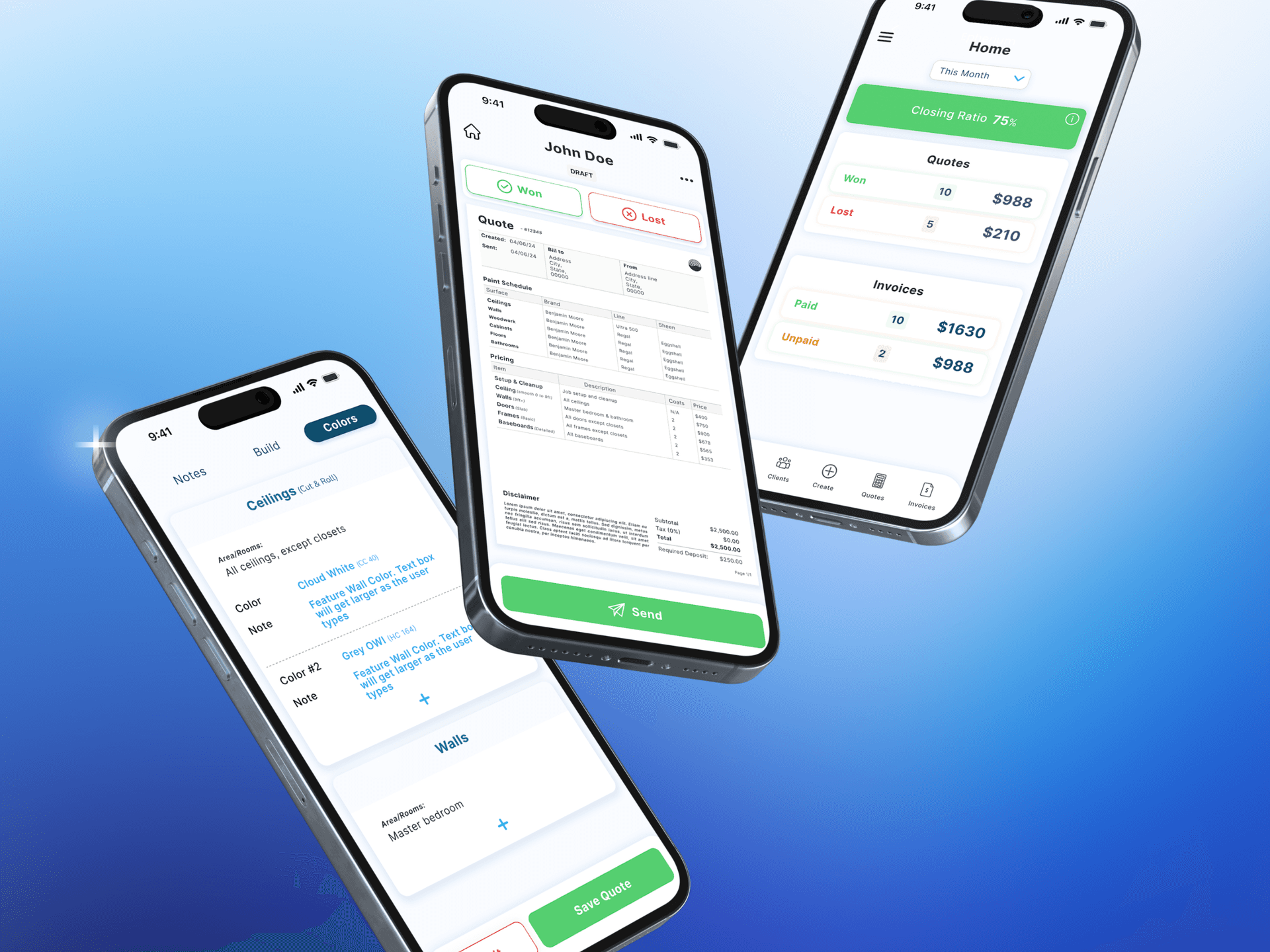
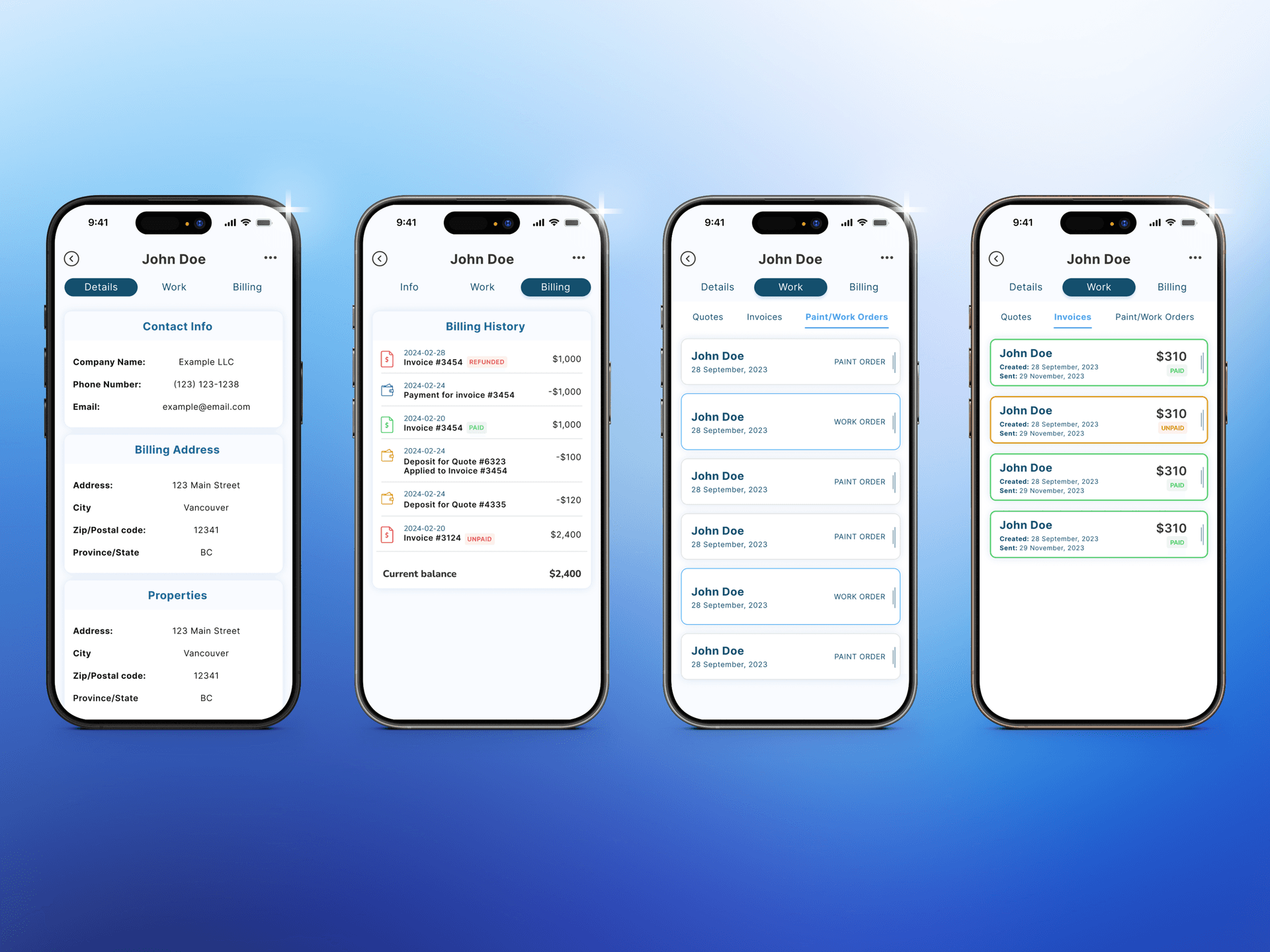
On‑site client and project creation. Estimators can create a new client and project directly at the property, without waiting to get back to the office. This is especially useful for new leads discovered via word of mouth or walk‑ins, which are common in local service businesses.
Internal / external painting workflows. The app supports both internal and external painting scenarios. That distinction matters because surfaces, access, prep work, and even crew composition can differ a lot between interior rooms and exterior facades.
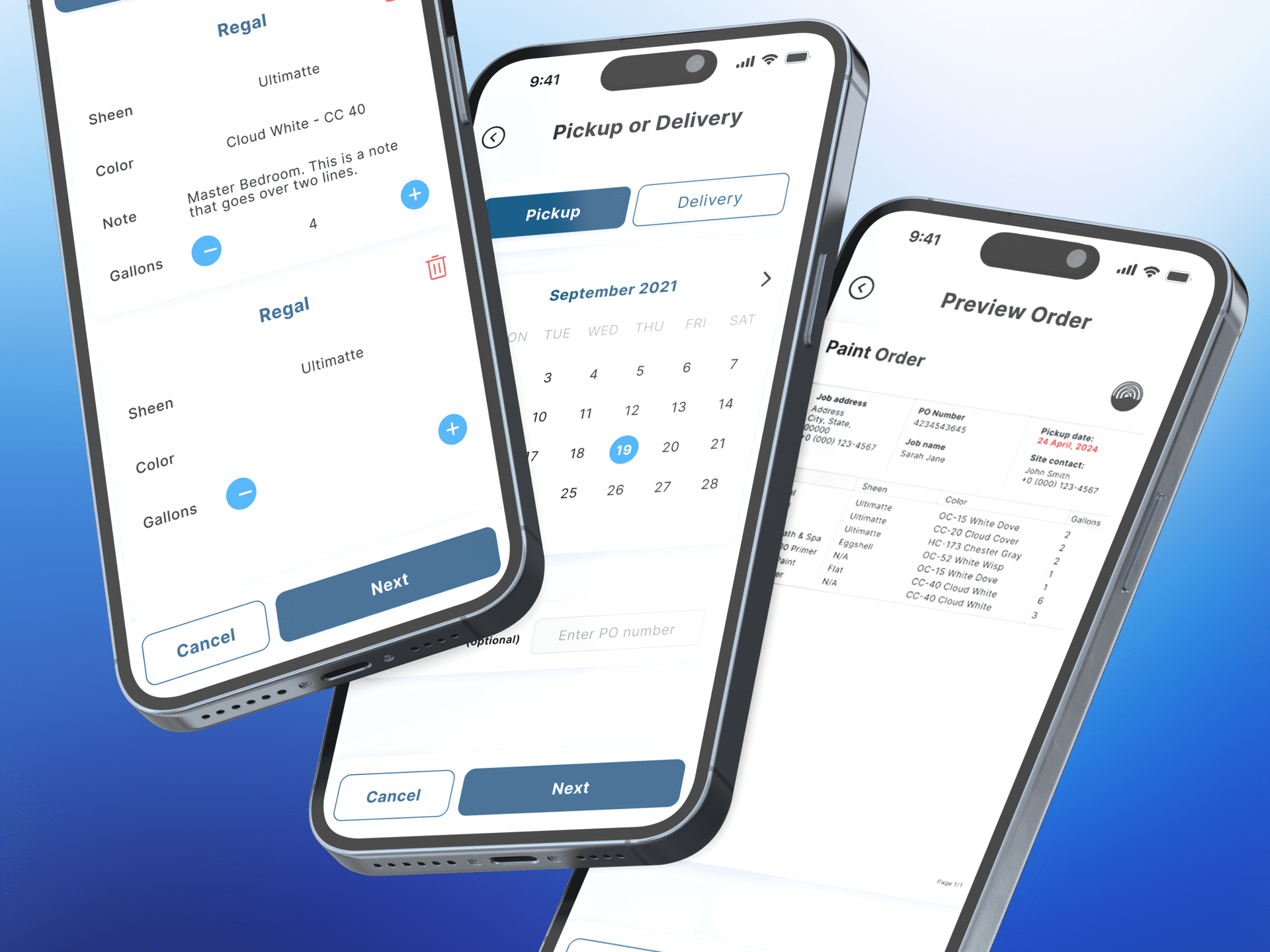
Detailed wall measurements. Users record wall dimensions – height, width, surfaces – and other parameters relevant for calculating paint and labor. Instead of keeping numbers on paper or in memory, estimators enter them once into PaintBid and let the app handle the math.
Woodwork and prep work. Beyond basic walls, the app allows marking woodwork (frames, trim, etc.) and preparatory tasks that often take significant time but are easy to underestimate if they are not included explicitly. This helps Hemlock standardize how these elements are estimated.
Crew size calculation. PaintBid factors in the number of people required for a job, which is crucial for scheduling and profitability. Instead of rough guesses, the app supports a more repeatable way of thinking about labor allocation.
Automatic cost calculation. Once key inputs are in place, PaintBid automatically calculates the project cost. This reduces manual calculation time, limits human errors, and gives clients faster answers on site – something that directly affects close rates and customer experience.
Full offline operation. All the core flows listed above work without an internet connection. Estimators can arrive on site, create clients and projects, run through measurements, and finalize estimates even in areas with no signal. For Hemlock’s reality – houses outside city centers, smaller towns, or semi‑rural areas – this is critical.
Deferred data synchronization. When the device comes back online, PaintBid synchronizes locally stored data with the backend. The synchronization logic accounts for unstable networks and possible conflicts, ensuring that estimates are not duplicated or lost and that the central system remains accurate.
Our Results
By the end of the first year, Hemlock Painting had a working mobile app that is now an active part of their internal operations. Around 50 employees use PaintBid daily to estimate jobs, and the app is being prepared for a public release so other painting contractors can adopt it as well.
The impact is tangible. The company has significantly accelerated and standardized its estimation process. Instead of each estimator having their own method or relying on experience‑based guesses, there is a shared, repeatable system. This reduces human error, makes pricing more consistent, and supports growth – new estimators can ramp up faster because the logic lives in the app.
Most importantly, the original business problem has been fully addressed. Hemlock no longer depends on manual calculations under time pressure or on spotty connectivity. Estimates are created on site, in a structured way, and stored safely. And because the app was built as offline‑first, it works in exactly the conditions where painters actually operate, not only in perfect network coverage.
For Lumitech, PaintBid is a strong example of how a compact, focused team can take a very specific operational workflow and turn it into a product that makes everyday work easier. For Hemlock, it is a concrete step from being a successful local company to building a digital asset that can support both their own operations and, soon, the wider painting community.