





About Project
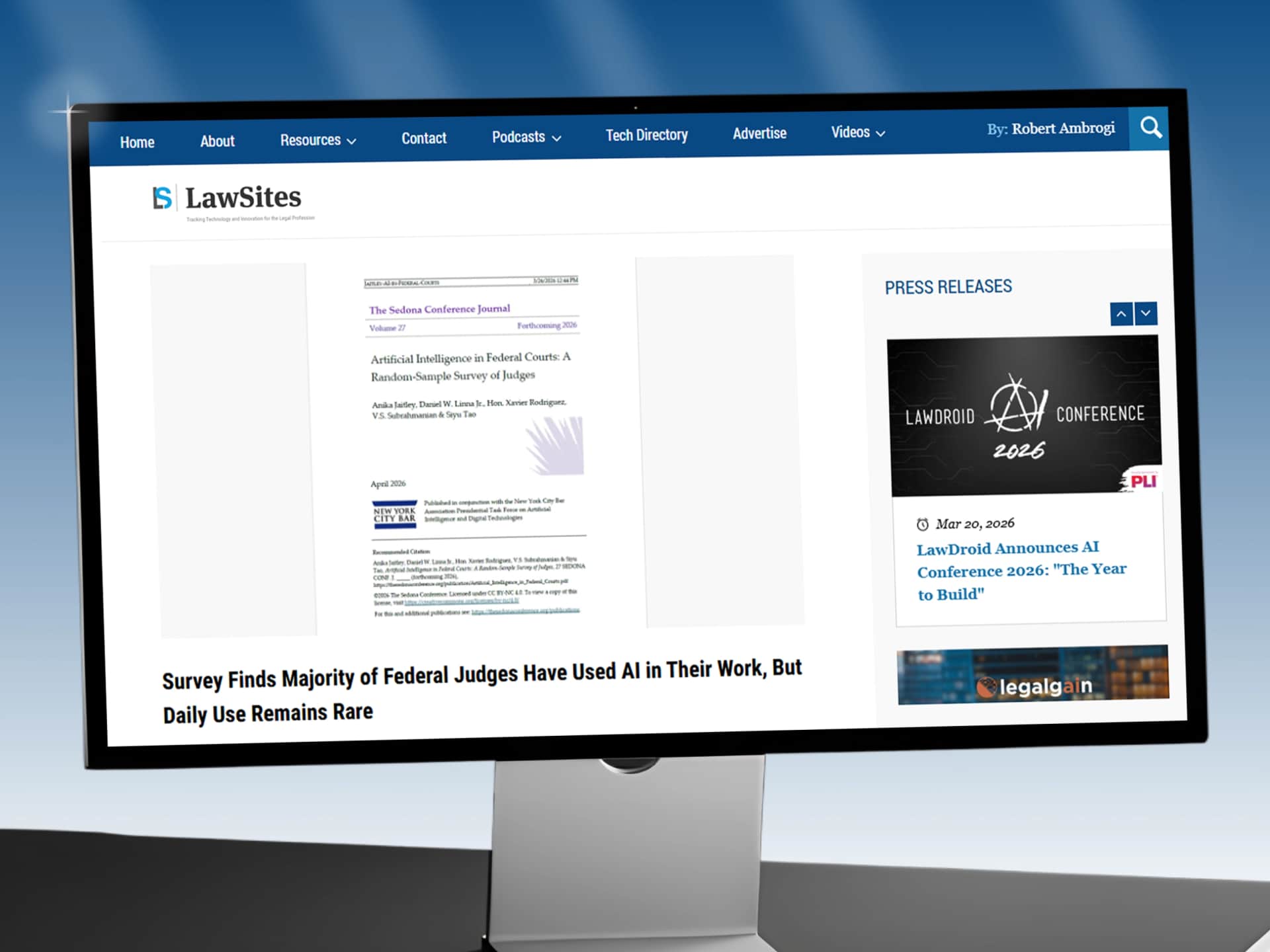
LawNext is a digital publishing platform focused on the legal industry, covering legal technology, regulatory developments, and broader changes in the profession. The platform publishes podcasts, interviews, articles, and expert commentary for legal professionals.
By the time Lumitech joined the project, LawNext was already an established product with active publishing workflows and a growing content ecosystem. The challenge was not to build a new platform from scratch, but to support and evolve an existing system that had expanded over time across multiple components, tools, and integrations.
Because the platform operated as a live content environment with continuous publishing activity, reliability, maintainability, and performance were core technical requirements. Lumitech became the client’s long-term technology partner, responsible for maintaining the system, strengthening its engineering foundation, and supporting its continued development without disrupting day-to-day operations.
Interesting Facts
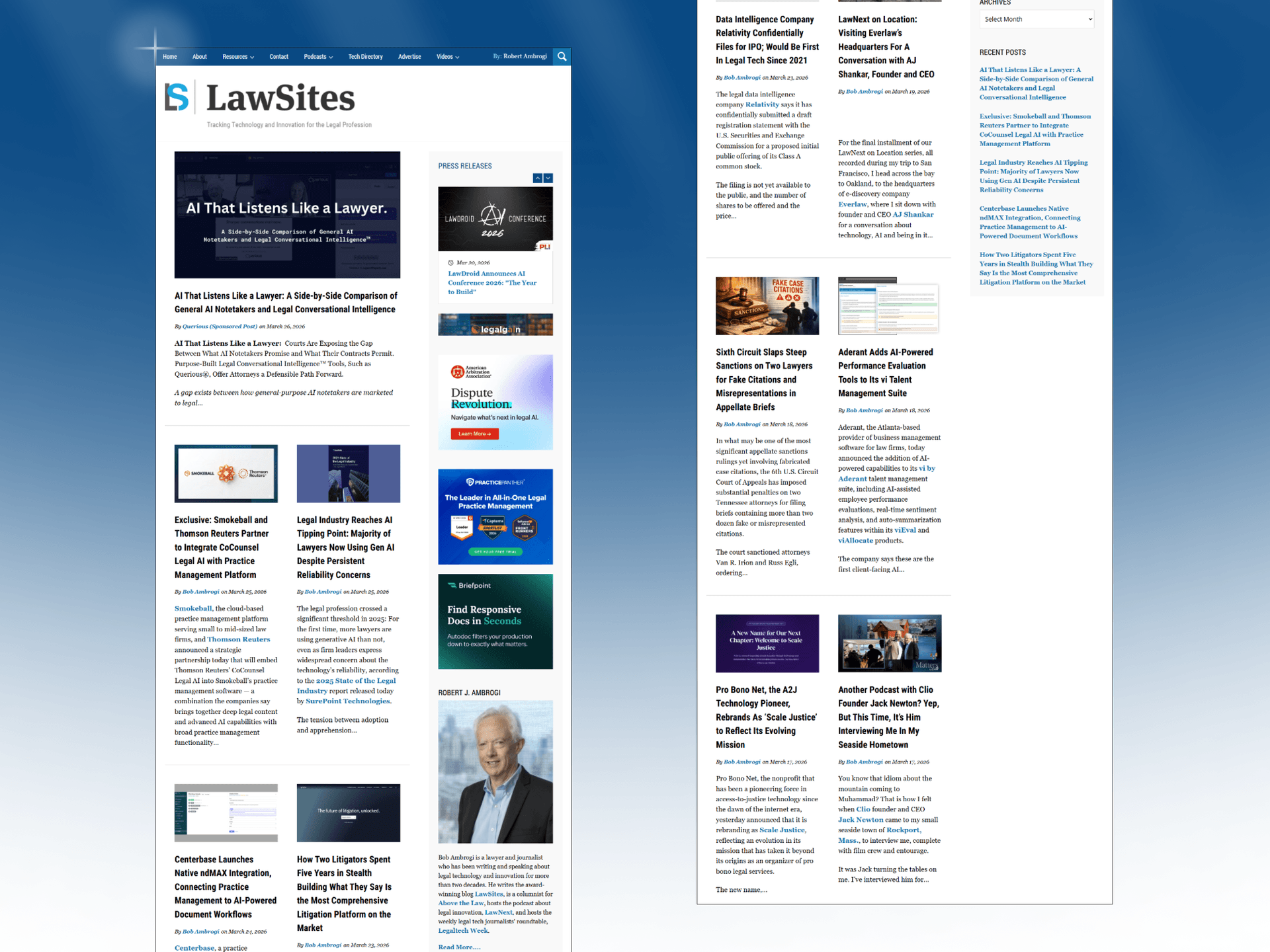
LawNext was created by one of the best-known voices in legal tech media. Our client, Robert Ambrogi, has been documenting the intersection of law and technology since 1993.
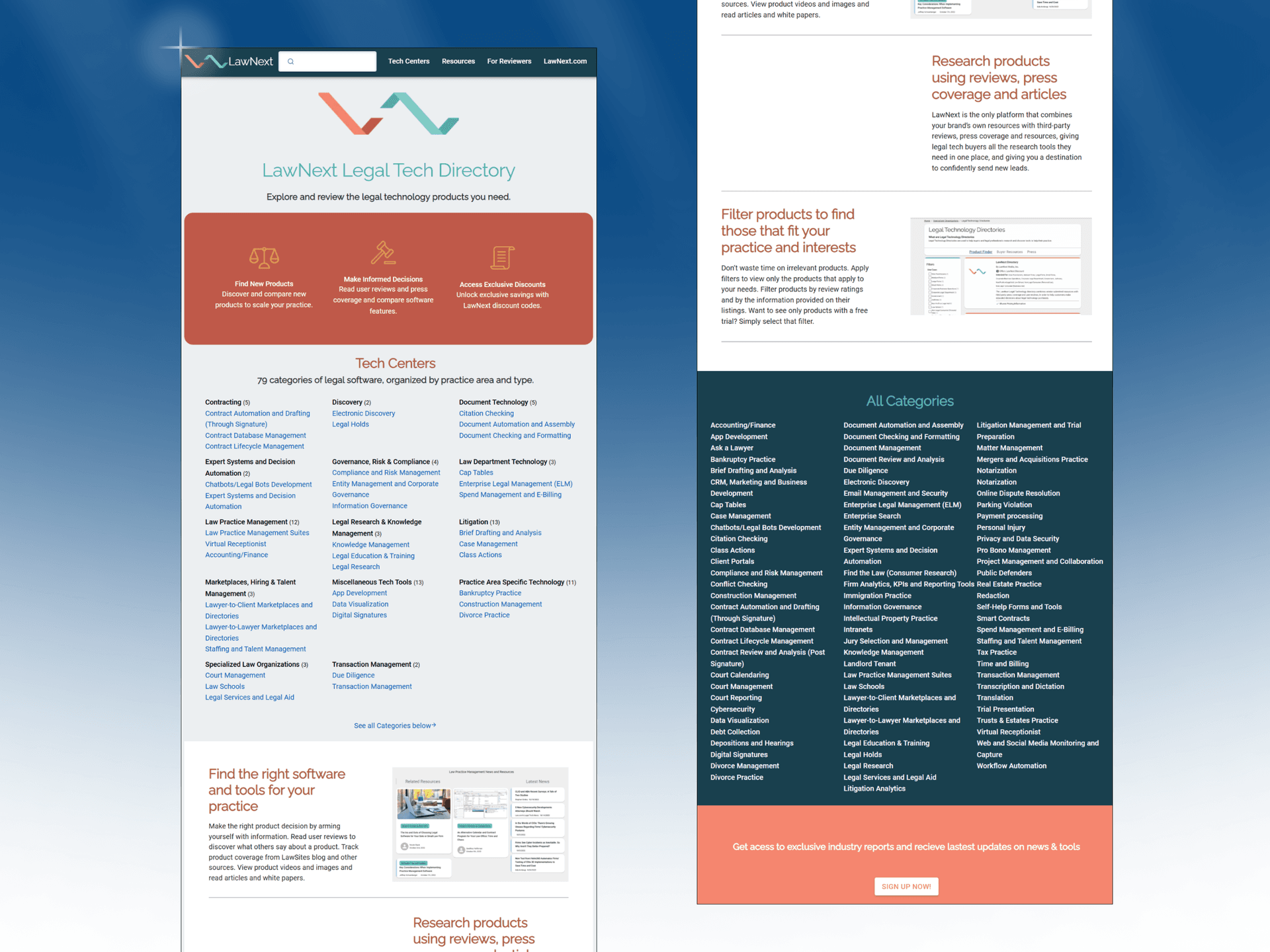
The public website was only one layer of the product. Behind the frontend, the platform relied on a broader ecosystem that included a headless CMS, custom backend services, internal portals, and external publishing and media integrations.
A large part of day-to-day work depended on internal operational tools. In addition to publishing content externally, the platform supported editorial and administrative workflows for managing articles, interviews, podcasts, and media distribution.
The platform was modernized gradually rather than rebuilt from scratch. Instead of replacing the existing system in one risky step, Lumitech improved architecture, integrations, and workflows incrementally while keeping the platform fully operational.
Client Request
When LawNext approached Lumitech, the platform already had an established audience and mature content operations. The client was looking for a technology partner who could take ownership of the existing ecosystem, ensure stable operation, and support its further development.
More specifically, the client needed a team that could support a complex platform environment, modernize legacy system components, streamline editorial and administrative workflows, and make the introduction of new features more efficient. The goal was to maintain reliable day-to-day operation and to improve the underlying infrastructure and content workflows over time.
Challenges
Although LawNext was a well-established platform, its technical foundation had evolved organically over the years rather than through a single unified architecture. As a result, the product ecosystem consisted of multiple independent components created at different stages of its growth.
The platform included a WordPress-based public website, a Strapi-powered content management layer, several custom backend services, internal editorial and administrative portals, integrations with podcast publishing and media distribution platforms, and additional tools for managing articles, interviews, and podcast workflows. WordPress represented only one part of the broader system, while much of the operational work depended on internal tools that had expanded over time and required ongoing support and improvement.
This created several key challenges:
Fragmented architecture across multiple independent components
Legacy code that was increasingly difficult to maintain and extend
Manual editorial workflows that slowed down content operations
Limited automation in publishing and internal processes
Reduced agility when introducing new features and improvements
The challenge was not simply to maintain a legacy CMS. The platform’s public site, internal editorial tools, backend services, and publishing integrations had to continue operating together while parts of the system were being improved. Any modernization effort had to reduce technical risk without interrupting active content operations.
Our Approach
Lumitech approached the project as a production modernization effort focused on stabilizing the existing ecosystem, improving maintainability across legacy components, and streamlining editorial operations without interrupting publishing. Rather than treating the engagement as a rebuild initiative, we combined maintenance, modernization, and feature development to strengthen the platform while it remained in active use.
Our engineers worked across a fragmented technological landscape to ensure everything from public-facing interfaces to internal administrative tools operated as a high-performance, unified system.
Core Engineering Work
Platform maintenance and engineering support
Because the platform published continuously and depended on multiple connected services, stability of the public site, backend services, and integrations was a core engineering requirement. Lumitech assumed full responsibility for the stability and performance of the existing infrastructure.
Sustaining the Public Interface
We maintained the WordPress-based public platform, ensuring it remained responsive and secure in a continuous publishing environment.
Backend and API Resilience
Our team provided ongoing support for critical backend services and APIs, which act as the core backend layer between the public site and the content management layers.
Integration Integrity
We took ownership of complex integrations with external publishing and media distribution systems, ensuring podcast episodes and multimedia content were delivered seamlessly across all end-user platforms.
Proactive Issue Resolution
By monitoring and fixing issues across multiple system components before they impacted the user experience, we significantly improved overall platform reliability.
Legacy platform modernization
A significant part of our job involved working with a complex legacy codebase that had evolved over time. Rather than recommending a full rebuild, we adopted a controlled modernization approach that kept the platform fully operational while improvements were introduced gradually.
This work included restructuring backend services, improving integrations between system components, cleaning up legacy modules, increasing codebase maintainability, and optimizing platform performance. As a result, the system became easier to support and extend, while long-term technical risk was reduced.
AI and workflow automation
A major part of the work focused on reducing manual editorial coordination by automating workflows and improving internal tools.
Streamlined Publishing Workflows
We implemented automation within the content publishing cycle, reducing the manual steps required to move an article from draft to live status.
Intelligent Editorial Tools
Our team improved the internal tools used to manage complex metadata for articles and podcasts, allowing the editorial staff to focus on high-quality content production rather than data entry.
AI-Assisted Processing
We integrated AI-assisted processes designed to help organize, tag, and process content more efficiently, turning fragmented information into structured, searchable assets.
Routine Task Automation
By developing internal tools that handle routine operational tasks, we allowed the client to reduce time spent on routine tasks, shifting the focus back to content production.
Internal portals and feature development
Alongside maintenance and modernization, we also delivered new functionality across the platform ecosystem. This included enhancements to the publishing platform, development of internal administrative portals, improvements to podcast and media management workflows, and additional features requested by the editorial team.
Some improvements were added to existing components, while others were created as new modules that fit into the overall system.
Tools
The platform combined legacy publishing infrastructure with newer backend and automation layers, so the technology stack had to support both day-to-day reliability and gradual modernization across multiple system components.
The core tech stack we used included:
Technology | Role in the platform |
Next.js (React) | Frontend framework used to support fast, dynamic, and scalable user-facing pages |
Node.js | Runtime for backend services, APIs, and core platform logic |
TypeScript | Shared type-safe development across frontend and backend components |
Strapi | Headless CMS used for structured content management and editorial workflows |
WordPress | Legacy publishing layer integrated into the broader platform ecosystem |
PostgreSQL | Primary database for structured content and platform data |
ElasticSearch | Full-text search across articles, podcasts, and other legal content |
Redis | Caching layer used to improve speed and overall platform performance |
OpenAI API | AI-assisted automation for content processing and editorial workflows |
AWS (S3, CloudFront, EC2) | Cloud infrastructure, media storage, and scalable content delivery |
Results
Lumitech helped stabilize the LawNext platform and improve its maintainability while supporting its continued growth as a live publishing product. By taking ownership of a complex production system, we enabled the client to continue expanding content operations and introducing new functionality on a more reliable technical foundation.
Key outcomes of the project included:
Improved platform stability across the public website, backend services, and connected systems
Better maintainability of legacy components through gradual modernization and codebase improvements
More efficient internal workflows for editorial and administrative operations
Reduced operational friction through automation and improvements to internal tools
Greater flexibility for future development by making the platform easier to extend and support
Just as importantly, the project showed that a fragmented production system could be modernized without a disruptive rebuild. Through incremental engineering improvements, the platform remained fully operational while becoming easier to maintain, adapt, and develop further.


